Prayagraj is not a city visited once but a tirtha returned to. In the devotional understanding of Sanatan Dharma, the Triveni Sangam — the confluence of Ganga, Yamuna, and the Saraswati (held to flow underground) — is the king of all tirthas. A snan here at the Sangam is held to grant the merit of bathing at every sacred water in Bharat, taken together.
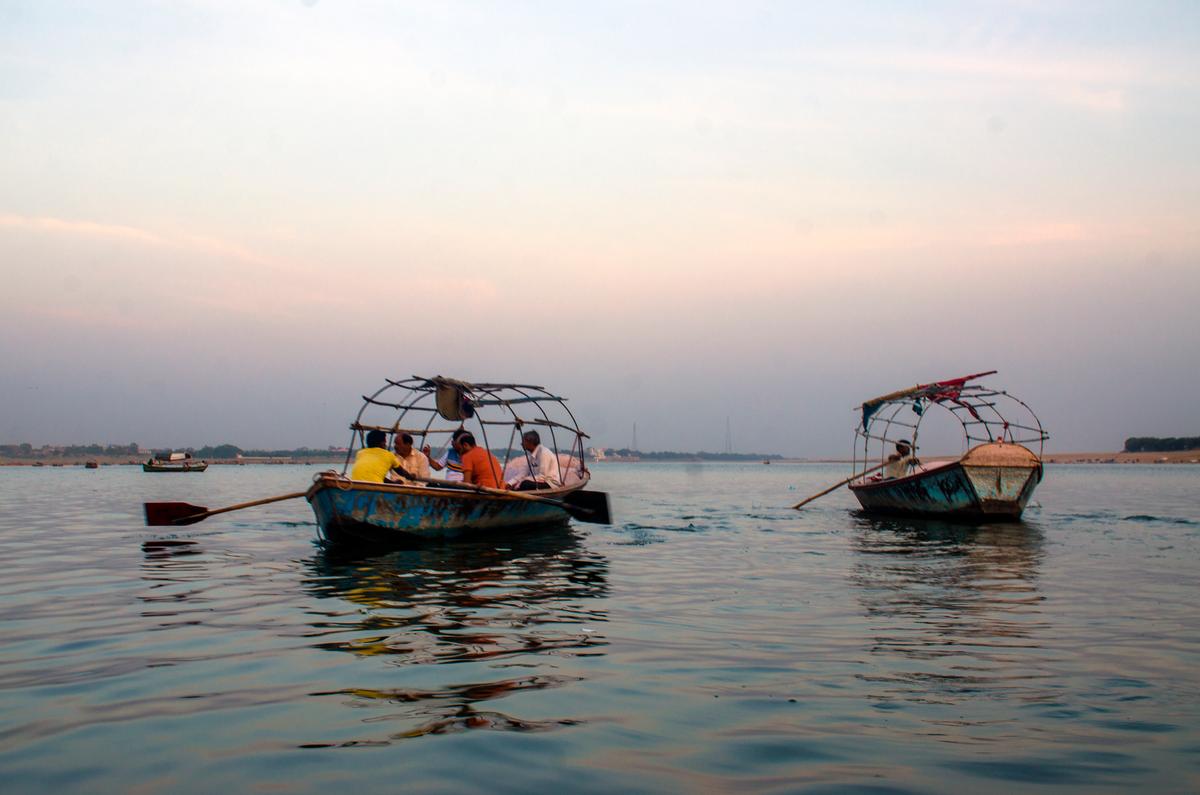
The city centres on the Triveni Sangam, where pilgrims take a boat from the Sangam-ghat to the actual meeting-point of the rivers and bathe in the still, churning waters. Akshay Vat — the eternal banyan tree at the Patalpuri Mandir inside Allahabad Fort — is one of the oldest sacred trees of Hindu tradition. Bharadwaj Ashram, where the Ramayana tells that Shri Ram, Sita, and Lakshman stayed during their vanvas, is also visited.
Katha and local belief
Tradition holds that the first Yagya of the world was performed by Brahma at Prayag — the city as Prayag-raj (king of tirthas). The Mahabharata tells how Yudhishthir performed the Ashvamedha here. The Padma Purana places the gathering of Ganga (Bhagirathi) and Yamuna at Prayag as the beginning of the great river of liberation that flows on to Kashi. The Magh Mela, observed annually, and the great Kumbh Mela every twelve years draw the pilgrim-flow of the world to these banks.
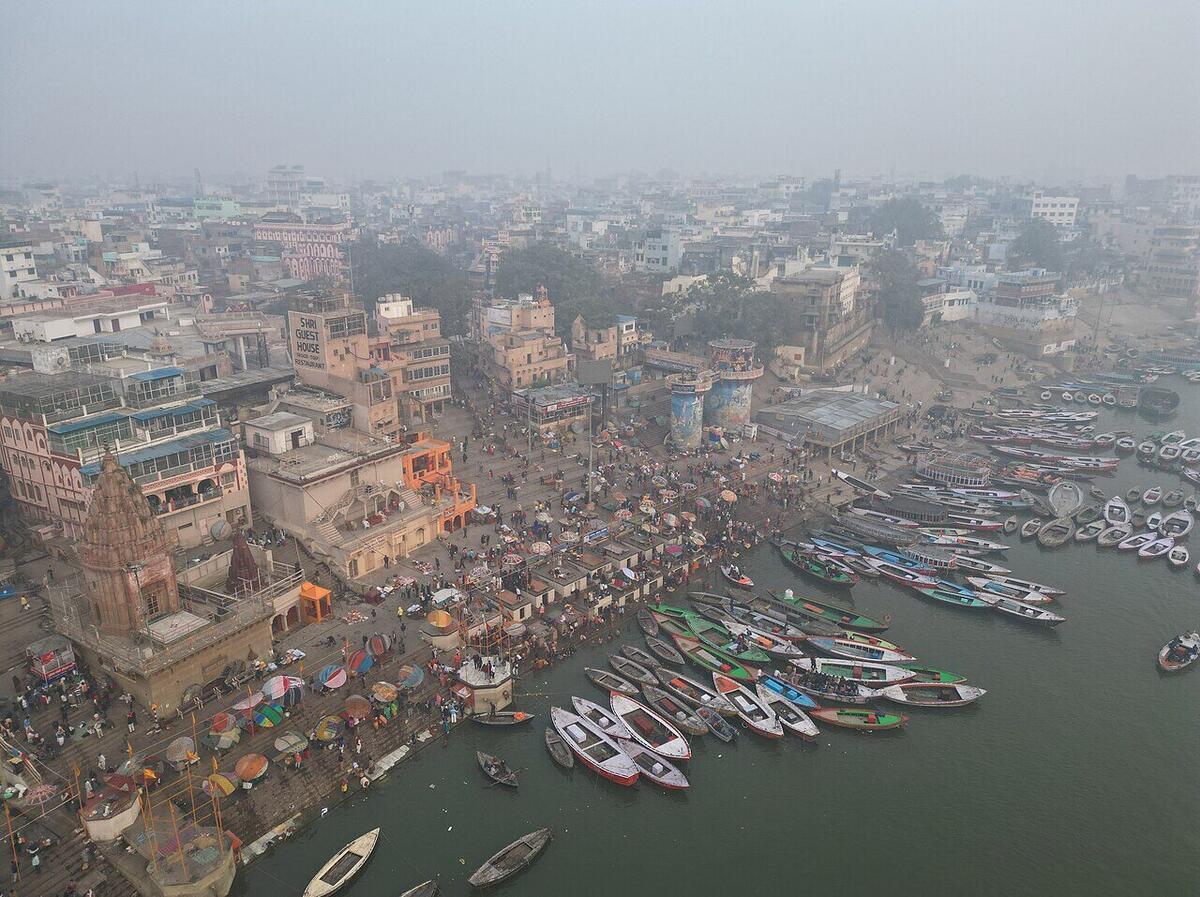
Prayagraj is the Tirtha-raj — the king of all tirthas. The Puranas praise the city as the navel of the earth (prithvi-nabhi), the place where the celestial Saraswati emerges to bless the meeting of Ganga and Yamuna. To bathe at the Sangam during the Magha month is held to liberate the soul from countless past karmas; the Kumbh bath is held in tradition to confer the merit of all yagyas performed since the beginning of time.
The Kumbh Mela of Prayagraj — observed every twelve years — is the largest peaceful human gathering on earth. The 2025 Mahakumbh was attended by over fifty crore pilgrims across the 45-day mela period. The Magh Mela, observed annually, draws lakhs of Kalpavasis who live by the Sangam for the entire month of Magha (January-February), bathing daily and observing devotional rules.
History
Prayagraj's history reaches into deep antiquity; the name Prayag — the place of yagyas — is tied by tradition to the prakrishta-yajna of Brahma, though the Rig Veda itself does not name the city. The early-historical city was a major centre of the Vatsa janapada. The Allahabad Pillar of Ashoka stands within the fort, bearing the inscriptions of the Mauryan and later Gupta emperors. Samudragupta's prashasti on the pillar is one of the most important historical documents of ancient India.
The Akbar-era Allahabad Fort enclosed the Akshay Vat. The city was renamed Allahabad by Akbar in the sixteenth century and renamed back to Prayagraj in 2018. The Triveni Sangam, the Magh Mela, and the Kumbh Mela have continued unbroken through every political change for many centuries.
Architecture
The Sangam itself is an open expanse where boats are taken from the ghats. The Allahabad Fort, a Mughal-period structure on the bank, houses the Akshay Vat and the Patalpuri Mandir. Hanuman Mandir on the Sangam bank — known for its reclining Hanuman murti, said to be the largest such in India — is among the most visited shrines. Anand Bhavan (the ancestral home of the Nehru family, now a museum) and the Allahabad High Court (a colonial heritage building) are also in the city.
Rituals & Practices
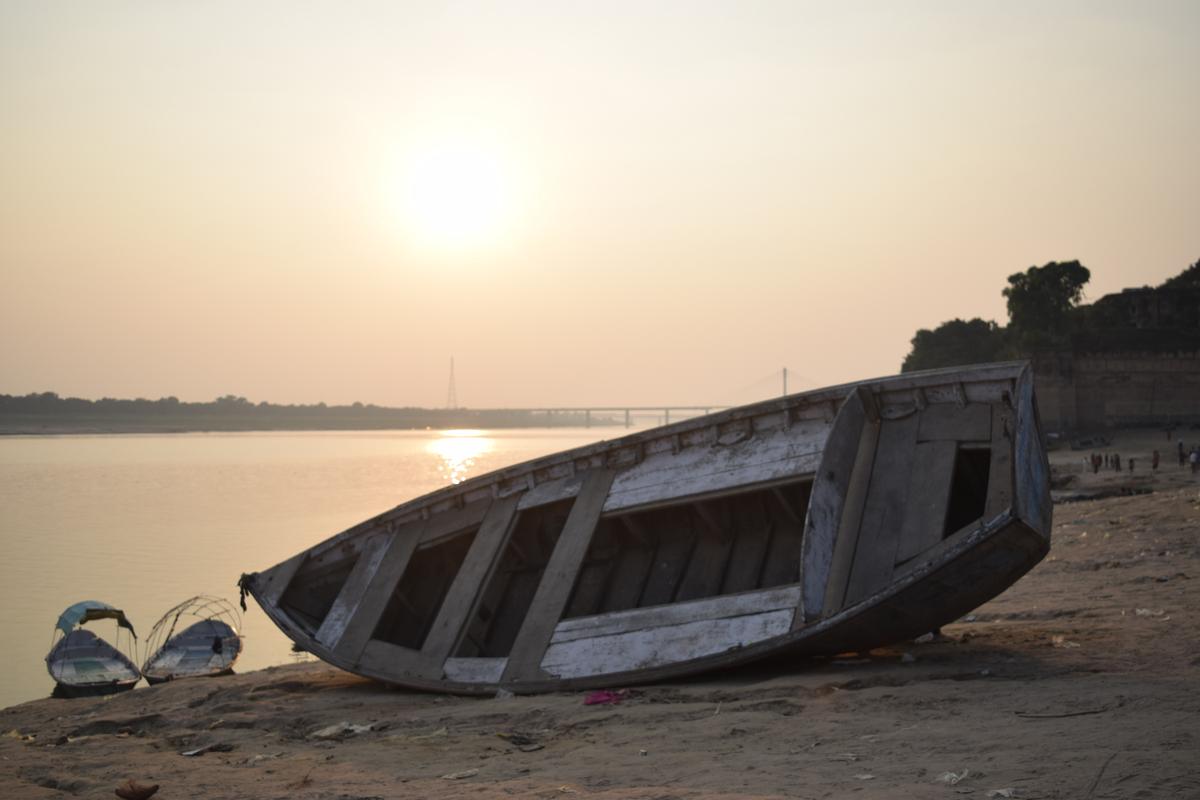
Snan at the Sangam is offered daily; boats run from sunrise to sunset. Special timings apply during the Magh Mela (full month of Magha) and the Kumbh. Akshay Vat darshan is offered with special permits inside the Fort; verify timing with the Allahabad Fort administration. Bharadwaj Ashram and the Sangam-bank temples have their own daily aarti rhythms.
The traditional sequence on a Prayagraj yatra is: snan at the Sangam (taking a boat out to the meeting point), tarpan and pind-daan on the ghats, darshan at Akshay Vat (if permits available), darshan at the reclining Hanuman, and Bharadwaj Ashram. Pind-daan at Prayag is held to be especially powerful — the city is among the major north Indian tirthas for ancestor rites.
Festivals & Celebrations
| Festival | When | Crowd |
|---|---|---|
| Mauni Amavasya | — | very_high |
| Vasant Panchami | — | very_high |
| Maghi Purnima | — | very_high |
| Magh Mela (full month) | — | very_high |
| Mahakumbh | — | very_high |
Mauni Amavasya: The peak day of the Magh Mela and Kumbh.
Vasant Panchami: Honours Saraswati who flows beneath the Sangam.
Maghi Purnima: The conclusion of the month-long observance.
Magh Mela (full month): The most ancient continuous gathering on the Sangam-bank.
Mahakumbh: The Mahakumbh of Prayagraj is the greatest of the four Kumbhs.
Prepare for Your Visit
Practical guidance to help you plan your pilgrimage
| Pilgrim Guidance | How to reach PrayagrajPrayagraj is well-connected. The nearest airport is Prayagraj International Airport (Bamrauli), with direct flights from Delhi, Mumbai, Bengaluru, and other cities. Prayagraj Junction is a major railway hub. Prayagraj is 130 km from Varanasi (3 hours), 270 km from Ayodhya (5 hours by road), and 670 km from Delhi (10 hours by road or 10-12 hours by train). Preparation for pilgrimsThe Sangam-snan requires a boat ride from one of the Sangam ghats. Carry a change of clothes (a separate kit-bag for the wet ones after snan). Boats are licensed by the Mela authorities; settle the rate in writing before boarding. During the Magh Mela and Kumbh, the boat ghats become extremely crowded; book through the licensed Akhada or operator. October to March is the most pleasant weather. Magha (January-February) is the Magh Mela period — special tents, communal pind-daan sessions, and a different rhythm to the city. The Sangam bank in summer is hot; carry sun protection. Pind-daan and tarpan can be arranged at the ghats; a qualified pandit is part of the local pilgrimage economy. Best time to visitThe peak occasions are the Kumbh Mela (every 12 years), Ardh Kumbh (every 6 years), and Magh Mela (every year through Magha). The next major Magh Mela is in January-February 2027; the next Mahakumbh is in 2037. The annual Mauni Amavasya, Vasant Panchami, and Maghi Purnima snans are the most spiritually charged single days at the Sangam. |
Location
Prayagraj, UP
Pilgrim photos
No pilgrim photos yet.
Community corrections
No corrections yet.
Edit history
No revisions yet.
Plan Your Visit to Prayagraj
Get a custom itinerary and pricing for your trip.
Recommended
Packages for this destination
Pilgrim Notes
On-ground observations from fellow pilgrims
No pilgrim notes yet. Be the first to share on-ground observations!
Sign in to share a note.
Pilgrim Reviews
Be the first to share your experience at Prayagraj.
Sign in to write a review.
Nearby sacred places
Discover other sacred places near Prayagraj
Explore temples, tirthas, and pilgrimage sites in UP
Explore nearbyPart of these circuits
Walk the traditional pilgrimage routes this destination belongs to.