Pilgrimage Package
Prayagraj Yatra from Delhi — Sangam Weekend in 2 Days by Train
From ₹6,499 pp twin-share | Sangam-Snan + Akshayavat | Ex-Delhi Train Weekend
Traditional order
Priority bookings
Gentle pacing
Briefing included
A two-day Prayagraj weekend from Delhi by the morning Vande Bharat express — Triveni Sangam boat with a Pragwal pandit-led sankalp and confluence snan, the Akshayavat darshan at Patalpuri, Bade Hanuman, Bharadwaj Ashram, and Anand Bhavan. Stay one night at a 3-star Sangam-area hotel, Hindi-first ops throughout.
Day-by-day
Itinerary
2 days · click to expand
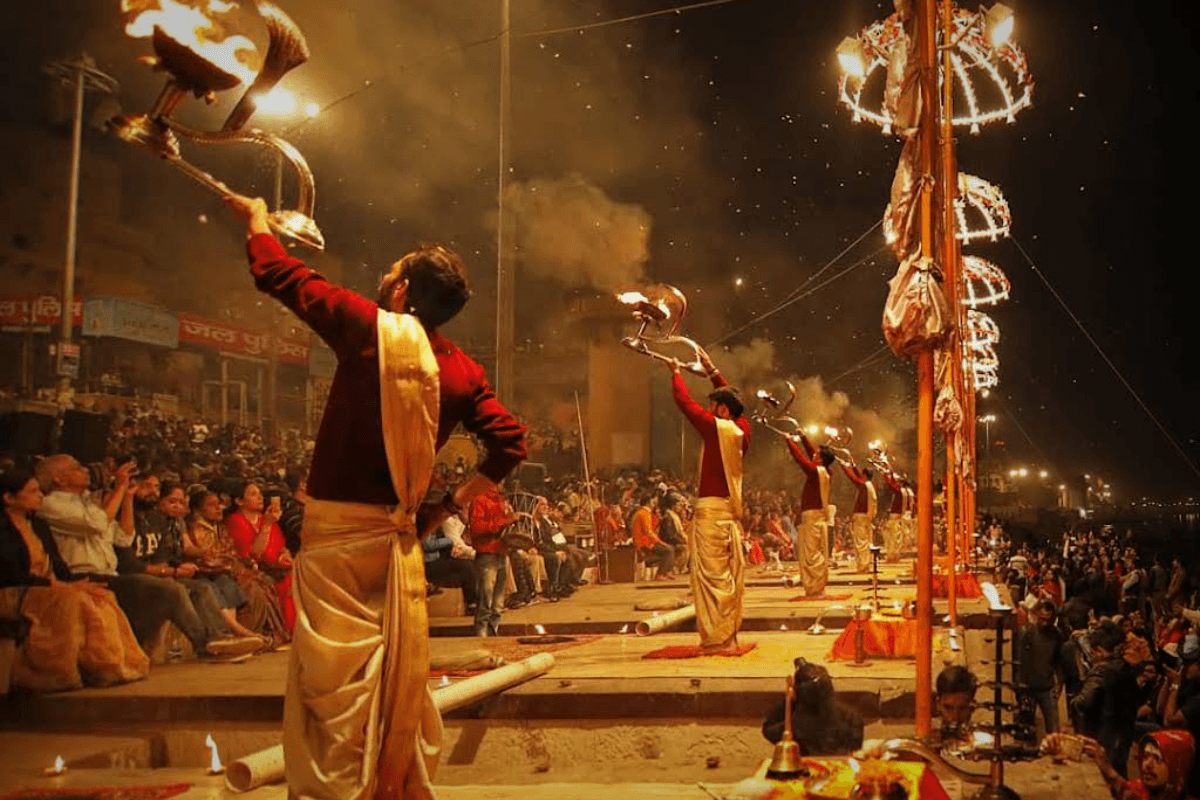
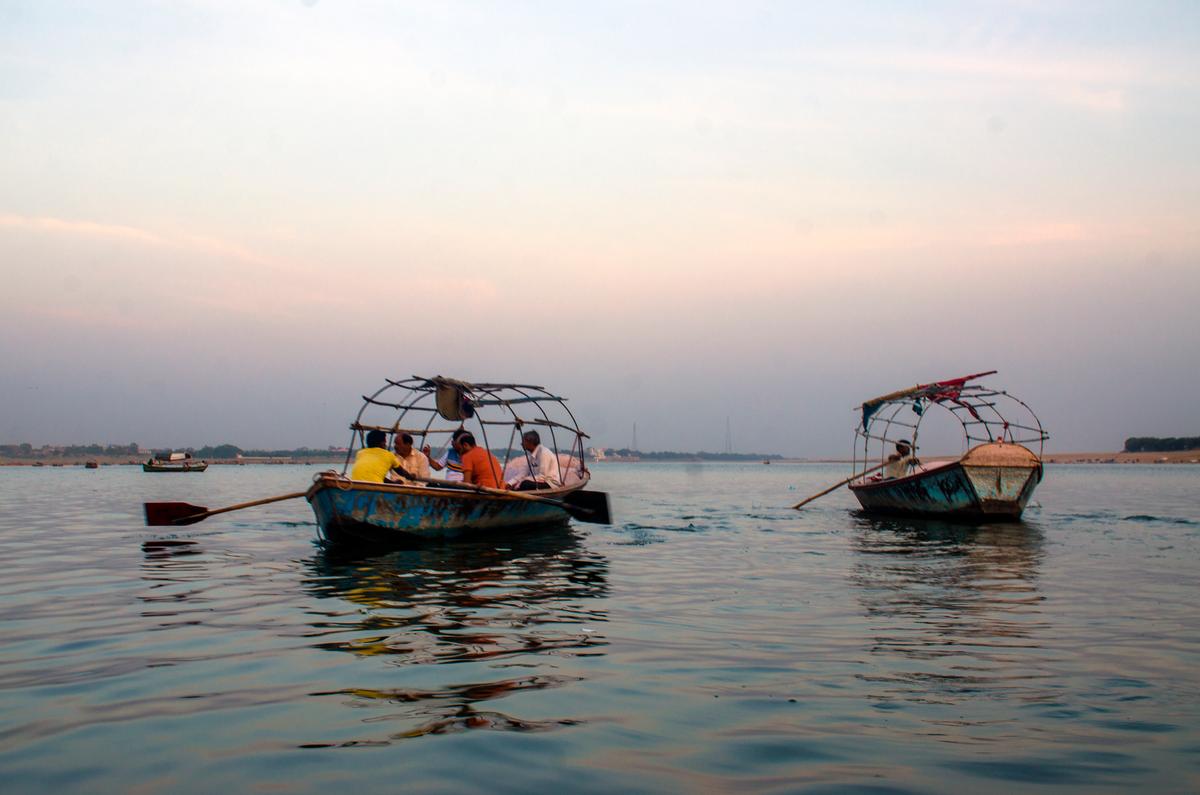
The morning Vande Bharat Express from New Delhi to Prayagraj Junction departs early; we coordinate your arrival at the station so you board comfortably. The run is about 6 hours in CC class — far less tiring than the road, and the catered meal on board (or a Satmarg packed thali we hand you at boarding) keeps lunch sorted. We pick you up at Prayagraj Junction by mid-afternoon in the local AC sedan, check you in at the 3-star hotel in the Sangam / Civil Lines belt, and drive first to Patalpuri Mandir inside Allahabad Fort for the Akshayavat darshan — the undying banyan said to have survived the great deluge, inside the army-administered fort gate. The corridor keeps daytime hours and closes by about 6 PM, which is why we take it before the river. From there we head to Saraswati Ghat (or Kila Ghat depending on river level) for the Triveni Sangam boat. A wooden boat takes us out to the actual confluence — the visible meeting line of the Ganga and the Yamuna, with the unseen Saraswati joining beneath — about 20–40 minutes from the ghat depending on boat type and river level. The Pragwal pandit, from the lineage that holds the Prayag sankalp records for your gotra, leads the sankalp on the boat platform and the confluence-snan from the boat itself. After the snan we drift back towards Saraswati Ghat in time for the sandhya aarti at sunset — quieter than the Varanasi Ganga aarti, but the sangam-light on the riverline is among the most affecting darshans in the plains. Dinner at a Civil Lines restaurant or near the hotel; early to bed for a dawn start on Day 2.
Note Train tickets are issued in your name on your booking ID; please carry a government photo ID. Sangam boat fare is a shared boat by default; private boat upgrade available on enquiry (₹1,500–3,000 extra for the boat). Bring a change of clothes and a small towel for the snan — there is a curtained changing area on the larger boats at the confluence platform. The Pragwal pandit dakshina (for sankalp + snan) is covered in the package; any extended ritual (pind-daan, shraddh) is paid separately and directly to the Pragwal. Akshayavat entry is through Allahabad Fort's army-controlled gate; the corridor keeps daytime hours and closes by about 6 PM, which is why we do it before the boat — carry photo ID, no large bags. Modest dress; covered shoulders and legs at the temple sites.
An early start. We leave the hotel by 5:45 AM for Bade Hanuman Mandir near Sangam — the only Hanuman in the country who lies down, partially submerged when the Ganga rises in monsoon. The dawn darshan window is quiet, before the local pilgrims arrive. From there we drive about 5–6 km across the city to Bharadwaj Ashram, the seat of the sage who hosted Ram, Sita, and Lakshman on their way to Chitrakoot — the Ramcharitmanas places this visit on the third day of vanvas, and the Mahabharata says Bharadwaj revealed the Bharadwaj Samhita here. The ashram complex includes the Bharadwajeshwar Mahadev mandir; allow 45 minutes. We return to Civil Lines for breakfast at the hotel. Mid-morning we visit Anand Bhavan, the Nehru ancestral home turned museum — the original house where Motilal, Jawaharlal, and Indira lived, the rooms preserved as they were, the Congress Working Committee porch, the planetarium next door. Lunch in Civil Lines, hotel checkout by 2 PM, and we drive to Prayagraj Junction for the evening return Vande Bharat or Tejas Express to New Delhi. About 7 hours back; late-night drop at New Delhi Railway Station. From there your onward arrangement (radio cab, metro, family pickup) is your call — our coordinator can book a Delhi taxi on enquiry.
Note Bade Hanuman early-morning darshan beats the post-7 AM local rush. No bags or mobiles inside the inner sanctum — cloakroom at the entrance. Bharadwaj Ashram has uneven steps; older travellers should pace themselves. Anand Bhavan tickets (₹20 per person for the ground floor, ₹70 for the full house) are paid at the gate; the museum is closed on Mondays. Train timing for the return — we book the Vande Bharat / Tejas slot that gives a comfortable late-night New Delhi arrival; precise PNR confirmed at booking. Carry photo ID. Onward Delhi drop from station is not included; we can arrange a cab on request.
The story
About this package
The Sangam weekend, done by train. A two-day, one-night yatra from Delhi to Prayagraj — the meeting of Ganga, Yamuna, and the unseen Saraswati — built around the one rite every Prayag visitor comes for: the confluence snan, taken from a boat at the actual sangam, with a Pragwal pandit reciting the sankalp on your behalf.
Most Delhi-based pilgrims try to do Prayagraj as a day-trip add-on to Varanasi and run out of time at the ghats. We fix that by taking the train down on Saturday morning, doing the Sangam boat and Akshayavat in a single unhurried Day 1, the heritage-and-Hanuman half of Prayagraj on Day 2, and a return train to Delhi the same Sunday evening. One leave-free weekend, one full Sangam darshan.
What this package is
- Two days, one night, train both ways. The morning Vande Bharat Express from New Delhi to Prayagraj Junction (about 6 hours), CC class — far less tiring than the road or the overnight sleeper, and you arrive fresh enough to do the Sangam boat the same afternoon.
- 3-star Sangam-area hotel. A clean, well-rated hotel within a short drive of Triveni Marg and Civil Lines, on twin-share. Hot water, AC, Hindi-speaking front desk.
- Sedan in Prayagraj for both days. Local AC sedan with a Hindi-speaking driver who knows the Sangam parking, the Akshayavat queue, and the back lanes between Bharadwaj and Bade Hanuman.
- Triveni Sangam boat with Pragwal pandit. A shared or private wooden boat from Saraswati Ghat or Kila Ghat to the actual confluence, where the Pragwal — the traditional Prayag pandits whose lineage holds the sankalp record for your gotra — leads the sankalp and the snan. You bathe at the meeting of the rivers, not at a ghat-side substitute.
- Akshayavat darshan at Patalpuri Mandir. The undying banyan inside the Akbar-era fort — entry through the army-administered gate, controlled timings, our coordinator handles the queue.
- Bade Hanuman, Bharadwaj Ashram, Anand Bhavan. The lying Hanuman at Sangam, the sage Bharadwaj's ashram (Ramayana site), and the Nehru family museum on Day 2 — the heritage triangle of Prayagraj.
- From ₹6,499 per person on twin-share. Quoted on enquiry — final price depends on train class, dates, and hotel category. Hindi-first operations throughout.
How the two days unfold
Day 1 starts at New Delhi Railway Station for the morning Vande Bharat Express to Prayagraj Junction (about 6 hours). Lunch on board or a packed thali we hand you at boarding. We pick you up at Prayagraj Junction by mid-afternoon, check in at the Sangam-area hotel, and drive first to Patalpuri Mandir inside Allahabad Fort for the Akshayavat — the undying banyan said to have survived even the great deluge — because the fort corridor keeps daytime hours and shuts by about 6 PM. From there we go on to Saraswati Ghat or Kila Ghat for the Triveni Sangam boat. The boat ride out to the actual confluence takes 20–40 minutes depending on boat type and river level; the Pragwal pandit leads the sankalp and the snan from the boat platform at the meeting point. We return to Saraswati Ghat for the sandhya aarti at sunset — the Prayag aarti is quieter than the Varanasi Ganga aarti, but the riverline at confluence-light is among the most affecting darshans in the plains. Dinner near the hotel, early to bed.
Day 2 starts with a 6 AM darshan at Bade Hanuman Mandir near Sangam — the only Hanuman in the country who lies down, partially submerged when the Ganga rises in monsoon. From there we drive about 5–6 km to Bharadwaj Ashram — the sage who hosted Ram, Sita, and Lakshman on their way to Chitrakoot, and the place where the Mahabharata says Sage Bharadwaj revealed the Bharadwaj Samhita. Breakfast in Civil Lines. Mid-morning we visit Anand Bhavan, the Nehru ancestral home turned museum — the Indian freedom-movement archive, with the porch where the Congress Working Committee met; Indira Gandhi was born not here but next door in Swaraj Bhavan, the older Nehru house the family gave to the nation. Lunch, hotel checkout, and we drive to Prayagraj Junction for the evening return Vande Bharat / Tejas to New Delhi. Late-night drop at the station.
Who this is for
Book this if:
- You live in or around Delhi and want a Prayag yatra over a single weekend without a leave application
- You want the Sangam snan done properly — from a boat at the actual confluence, with a Pragwal pandit sankalp — and not from a ghat-side substitute
- You are travelling with family including older parents who cannot do the overnight road or sleeper-class route
- You prefer train over road for a 600 km one-way leg — the Vande Bharat / Tejas window seat is the right pace for this distance
- Hindi is comfortable for you and you would rather the operations run in it than in English
When to go
Prayagraj has clear yatra seasons. October to February is the cool window — pleasant boat ride, comfortable morning Bade Hanuman darshan, no haze on the river. Mid-January to mid-February coincides with the annual Magh Mela on the Sangam sands — a focused month of kalpvas and snan; the city is busier, book 4–6 weeks ahead. March to mid-April is warm but tolerable. July to September is monsoon — the Ganga and Yamuna run high, the Sangam boats run on revised timings and shorter routes; we still operate but the riverline is muddier. May and June are the hottest months — we recommend the cool-weather window if you can choose.
What you get
Highlights
Logistics
What's included
Inclusions
- Return train fare New Delhi to Prayagraj Junction by Vande Bharat or Tejas Express, CC class (one onward, one return)
- One night's stay on twin-share at a 3-star hotel within a short drive of Triveni Marg, Prayagraj
- Breakfast on Day 2 at the hotel
- Local AC sedan in Prayagraj for both days with Hindi-speaking driver, fuel, parking
- Triveni Sangam boat (shared) from Saraswati Ghat / Kila Ghat to the actual confluence and back
- Pragwal pandit dakshina for the sankalp and confluence snan at the meeting point
- Akshayavat darshan assistance at Patalpuri Mandir inside Allahabad Fort
- Bade Hanuman, Bharadwaj Ashram, and Anand Bhavan entry coordination
- Station pickup at Prayagraj Junction and return drop
- 24×7 Hindi-speaking ground coordinator on call through both days
Not included
- Lunch and dinner on Day 1, lunch on Day 2 (we recommend Civil Lines vegetarian thali or El Chico for a sit-down meal; ₹250–500 per meal)
- Anand Bhavan museum entry tickets (₹20 per person for the ground floor, ₹70 for the full house — pay at the gate; the museum is closed on Mondays)
- Personal expenses, prasad, donations, telephone calls
- Additional Pragwal sankalp items if you choose an extended ritual (pind-daan or shraddh — costs ₹1,500–5,000 per person, paid directly to the Pragwal)
- Travel insurance — optional for this short pilgrimage
- Anything not specifically listed in the inclusions
Before you book
Questions pilgrims ask
What does ₹6,499 cover, and what's extra?
The price includes return CC-class train travel between New Delhi and Prayagraj Junction, one night's hotel on twin-share near Triveni Marg, breakfast on Day 2, a local AC sedan with driver for both days, the shared Sangam boat, and the Pragwal pandit's dakshina for the sankalp and snan. You'll pay for lunch and dinner on Day 1 and lunch on Day 2 separately, the Anand Bhavan ticket if you go in, and any onward transport once you're back at New Delhi station.
What does the two-day plan look like?
Day 1 is a morning Vande Bharat from New Delhi (about 6 hours), afternoon arrival and hotel check-in, then Akshayavat at Allahabad Fort, the Sangam boat and snan, and sandhya aarti at Saraswati Ghat at sunset. Day 2 starts early with Bade Hanuman Mandir at dawn, then Bharadwaj Ashram, breakfast, Anand Bhavan mid-morning, and an evening train back to New Delhi, arriving late night.
What's the train journey like — which train, and what class?
You'll travel by Vande Bharat Express in CC (chair car) class, both ways where available, with the return sometimes on a Tejas Express depending on the day's schedule — we confirm the exact train and timing at booking. The one-way journey runs roughly 6–7 hours each way, so it's a full travel day on both ends rather than a quick hop.
How does the Sangam boat and snan work on this trip?
It's the same shared boat and Pragwal-led sankalp as our Prayagraj day trip — a 20–40 minute ride out to the actual confluence, where the Ganga and Yamuna visibly meet, with snan done from the boat itself. Carry a change of clothes and a towel, since the changing facilities at the ghats are basic curtained areas rather than proper rooms.
Do we need special permission for Akshayavat and Patalpuri inside the fort?
Akshayavat is inside Allahabad Fort, an active Army installation, so access has historically been more controlled than a regular temple — sometimes requiring fort clearance, occasionally opened more freely during mela periods. We handle the entry on the day as part of the itinerary, and we'll confirm the current access position with you before you travel rather than promise unrestricted entry.
Why is Bade Hanuman Mandir visited at dawn on Day 2?
Early morning is genuinely the calmer window at this temple, before the day's crowds build up around Kila Ghat, and it lets us fit in Bharadwaj Ashram and breakfast before the rest of the day's plan. The deity here is shown reclining rather than standing, which is the temple's distinctive feature, and local tradition holds that the Ganga's monsoon floodwaters rise to touch its feet.
What do Anand Bhavan and Bharadwaj Ashram add to the trip?
Anand Bhavan is the Nehru family's ancestral home turned museum (₹20 ground floor, ₹70 full access; closed Mondays), and Bharadwaj Ashram is associated with the sage Bharadwaj, traditionally held to be where Lord Rama halted on his way to exile — both are quieter stops than the Sangam or Bade Hanuman, good for a slower second morning.
Is 2027 a Kumbh year at Prayagraj?
No — 2027 isn't a Kumbh year here; the last major gathering was the 2025 Kumbh, and the next one on the traditional cycle is still years off. Prayagraj does hold the smaller annual Magh Mela most years (typically mid-January to February), and we'll confirm the exact 2027 dates once the Mela Authority publishes them, since the lunar calendar shifts the dates year to year.
What should we pack, and is ID needed?
Carry a government photo ID for both the train (checked at boarding) and fort entry, plus a towel and change of clothes for the Sangam snan and modest clothing for temple visits. October to February is the most comfortable travel window; July–September brings monsoon-affected river levels and occasional train delays, so build in some flexibility if you're traveling then.
Send an Enquiry
Leave your name and number — our team will call you.
Starting price
₹6,499
per person
Replies in minutes on WhatsApp · 7 AM–10 PM
Trusted by Pilgrims
“We came for my mother's 75th birthday darshan. Satmarg arranged wheelchair access, a pandit who spoke her dialect, and a private boat for her Ganga aarti.”
“Third time using Satmarg. The cab service is top-notch — AC Innova, polite driver, no surprise charges.”
Udyam-registered MSME · UDYAM-UP-75-0177698
Varanasi-based operator · local guides & pandits
Hindi & English support · 7 AM–10 PM