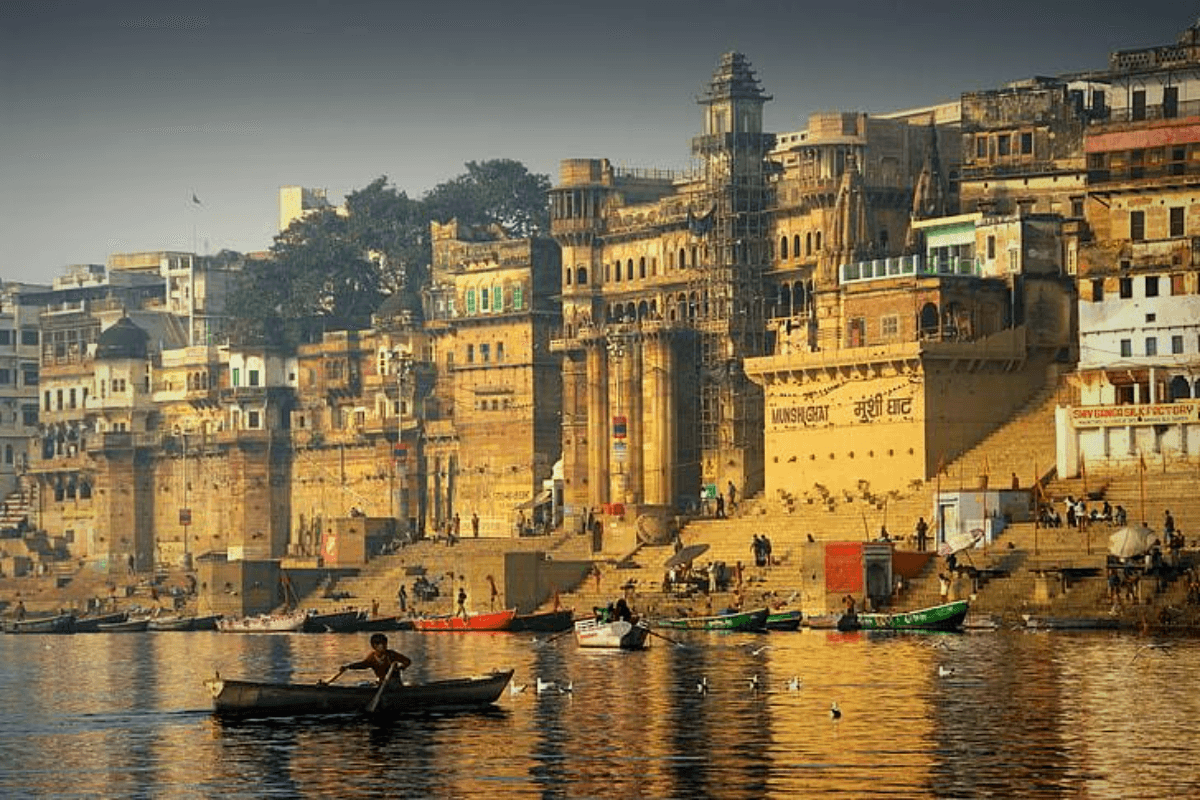
Ram Ghat Temple Complex is the cluster of Ram-bhakti shrines that gives Ram Ghat its name. Tucked between Panchganga Ghat and Lalita Ghat in the old riverfront of Kashi, the complex is approached not as a single temple but as a small mandala of Vaishnava worship — Sri Ram with Sita, Lakshman beside, and Hanuman in steady service.
For many Banarasi devotees the Ram-bhakti life of the city flows through three currents — the Ramcharitmanas of Goswami Tulsidas at Tulsi Ghat, the Hanuman of Sankat Mochan in the south, and the small ghat-side Ram shrines like this complex that keep the daily rhythm of Ram-nam alive on the Ganga itself. Devotees hold that to bathe in the Ganga and then bow before Sri Ram and his parivar in a single visit is among the dearest forms of Vaishnava darshan in Kashi.
The complex is compact rather than grand. Its strength lies in continuity: morning aarti, tulsi offerings, a few verses of the Ramcharitmanas read aloud, and the soft repetition of Sita Ram, Sita Ram carried along the riverfront. Pilgrims often pair darshan here with the broader sequence of bathing ghats, returning quietly through the gallis with the feeling of a complete Ram-parivar darshan received in one short walk.
Katha and local belief
Banarasi tradition holds that Sri Ram, in his role as Maryada Purushottam, is present in Kashi not only through the great Ram temples but through these small ghat-side shrines where the Ram-parivar is worshipped together. Devotees hold that wherever Ram is invoked, Hanuman is present in service; wherever Sita is honoured, Lakshman stands beside. The Ram Ghat shrines preserve this complete tableau in a single courtyard, allowing pilgrims to offer a full pranam to the Ram-parivar without leaving the riverside.
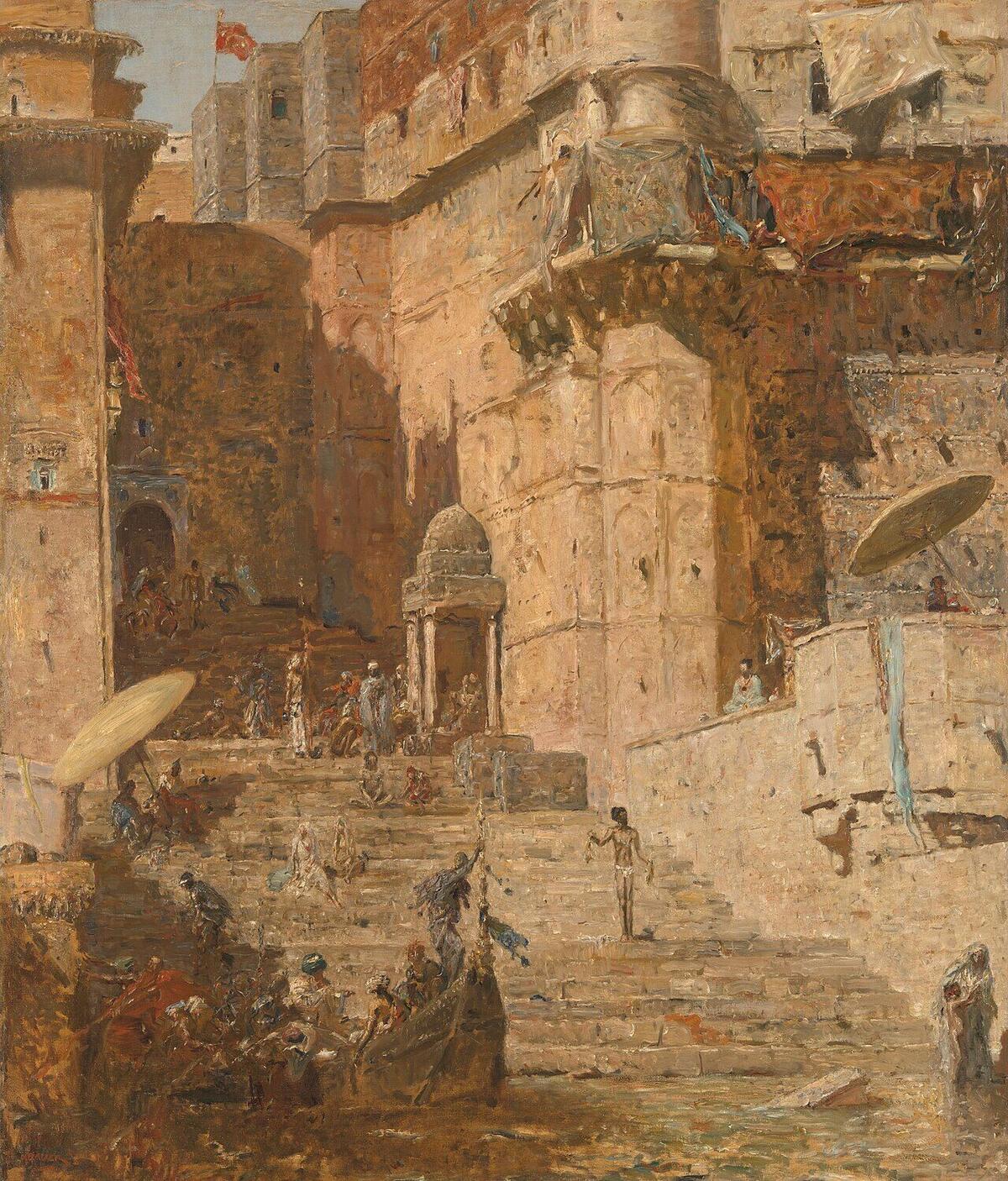
Ram-bhakti is among the most beloved devotional streams of Hindu tradition, especially deep in North India and woven into the everyday life of Banaras. At Ram Ghat the focus is not on a single great murti but on the complete Ram-parivar — Sri Ram with Sita, Lakshman, and Hanuman together. Banarasi tradition holds this as the fullest form of Ram-darshan, where the Lord is worshipped not in isolation but within the sacred family that defines his story.
For the devotee, each member of the parivar carries a particular bhava. Sri Ram as Maryada Purushottam represents dharma held with grace under every trial. Sita Devi is honoured as Janaki Mata, the Mother whose patience and steadfast love sanctify the household and the heart. Lakshman embodies brotherly devotion and the willingness to forgo comfort for the sake of dharma. Hanuman stands as the supreme bhakta, in whose service the entire Ram-katha is sustained.
Devotees hold that even a brief darshan of the Ram-parivar carries the blessing of kutumb-rakshā — the protection and harmony of one's own family. This is why many Banarasi families bring children, newlyweds, and elders here, asking for the same bonds of love and dharma that the Ramcharitmanas celebrates.
The Ram-bhakti memory of Kashi
The Ram-bhakti tradition of Banaras owes much to Goswami Tulsidas, whose Ramcharitmanas made Sri Ram's story accessible in the language of the people. Through Tulsidas, Ram-nam moved from the Sanskrit Valmiki Ramayana into the streets, courtyards, and ghats of Kashi. The small ghat-side Ram complexes are part of that wider current: places where the verses of the Manas are read aloud, where Hanuman Chalisa is recited on Tuesdays, and where the simple offering of tulsi and a sweet remains the heart of worship.
History
The Ram-bhakti life of Kashi rests on a long continuity of Vaishnava worship along the Ganga, and the Ram Ghat shrines belong to that older lineage. Banaras has, since at least the early modern period, sustained a parallel stream of Ram-bhakti alongside its more famous Shaiva identity — most visibly through Goswami Tulsidas's residence at Tulsi Ghat and the Sankat Mochan Hanuman tradition he established further south.
The complex at Ram Ghat reflects this Vaishnava continuity in a smaller, intimate form. Tradition holds that ghat-side Ram shrines have been maintained here through the patronage of Banarasi Vaishnava families and the steady devotion of pilgrims who included Ram darshan as part of their wider Kashi yatra. Worship at the complex is attested across generations of local memory, kept alive through daily aarti and the recitation of the Ramcharitmanas.
Like many smaller ghat-side temples of Banaras, the Ram Ghat complex carries the marks of repeated repair and care by local patrons rather than any single grand restoration. Its history is the quieter, unbroken kind — a small flame of Ram-nam kept burning on the Ganga's bank while the larger story of the city moved around it.
Architecture
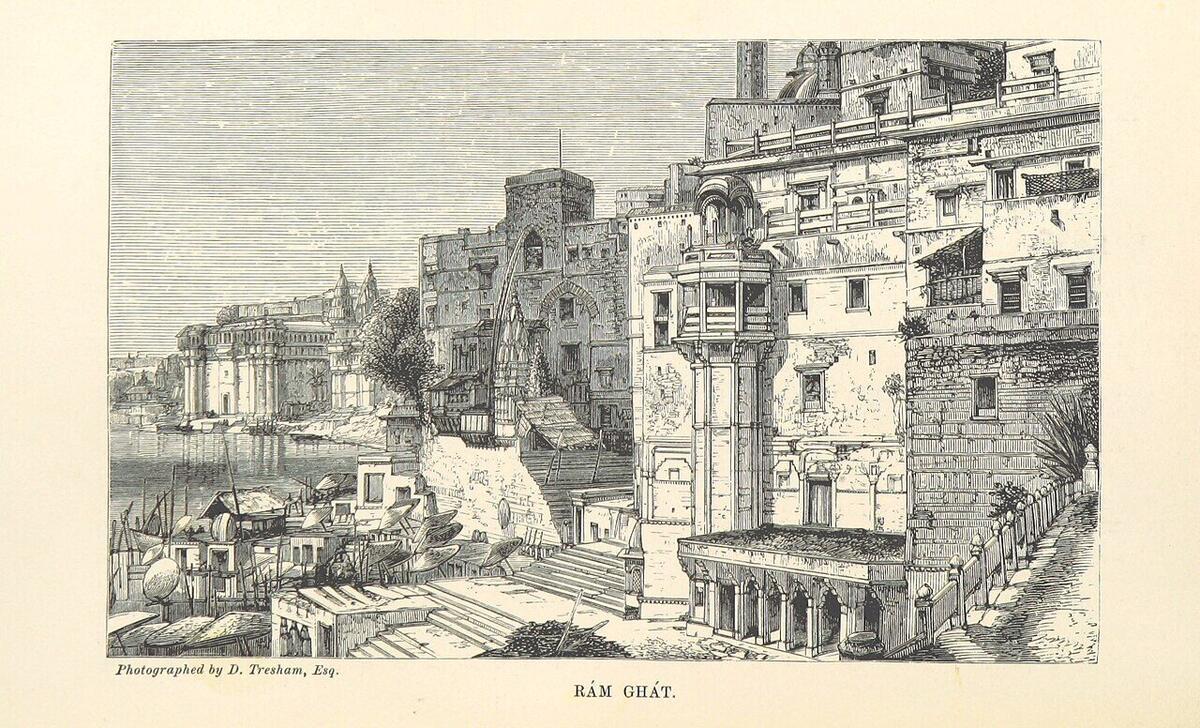
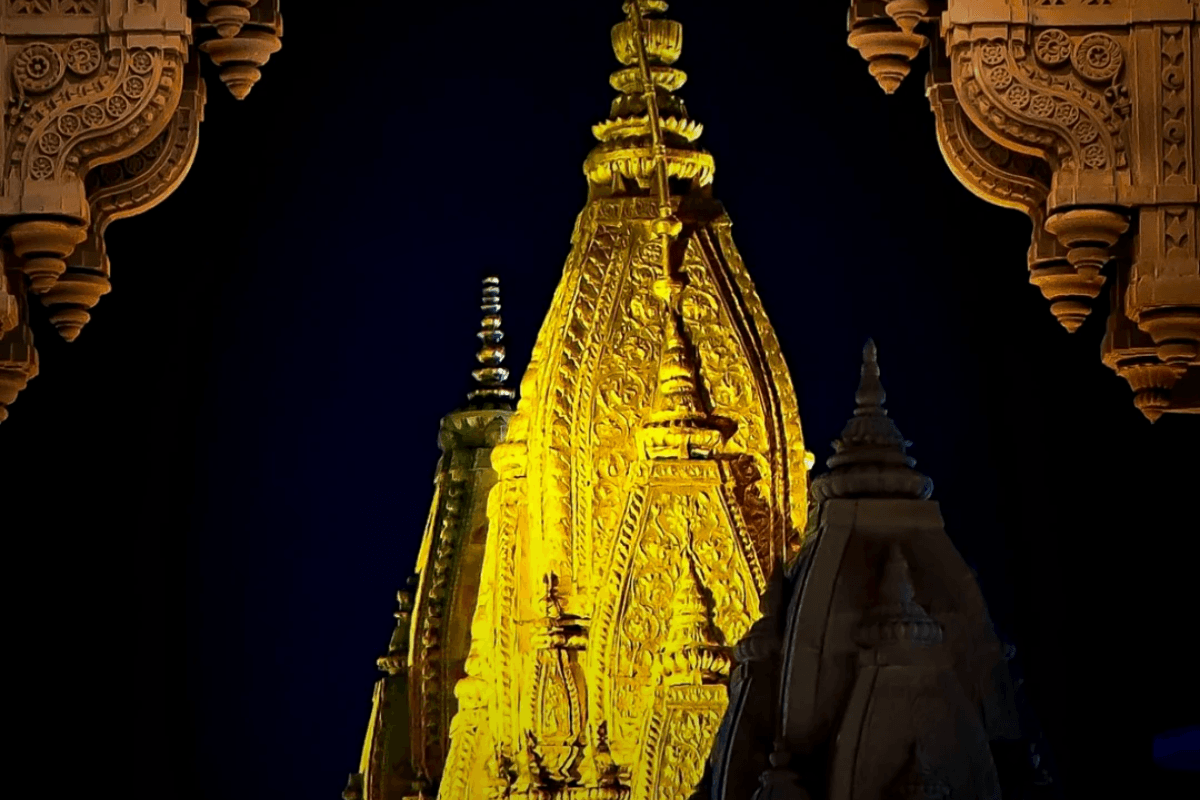
The complex is built in the compact, ghat-side idiom of old Banaras: several small shrines arranged within a single courtyard, opening towards the river. There is no towering shikhara and no expansive prakara. The strength of the architecture lies in nearness — the devotee can move from Sri Ram to Sita, to Lakshman, to Hanuman within a few steps, completing the full parivar darshan in one quiet round.
Each shrine houses its own murti in the iconographic tradition shaped by the Ramcharitmanas. Sri Ram stands with his bow, the gentle Maryada Purushottam ready to act when dharma calls. Sita Mata is placed beside him in queenly grace. Lakshman stands close, the watchful brother. Hanuman is shown in service — folded hands, bowed head, the Ram-nam carried in every line of his form.
The masonry is simple, painted and re-painted by local hands over generations. River-facing thresholds, low domes, and small dwajas above the shrines give the complex its riverside character. Sound and atmosphere matter more than scale: the bells, the call of Sita Ram, and the breeze off the Ganga together create the devotional space.
Rituals & Practices
Worship at the Ram Ghat complex follows the gentle daily rhythm of a Vaishnava shrine. Exact timings vary and pilgrims should verify with the temple authorities, but the broad pattern is familiar to anyone who has visited Ram temples in North India.
The day opens with mangala aarti and the awakening of the Ram-parivar. Through the morning, devotees come with tulsi patra, flowers, mauli (red thread), and sweet prasad. Recitation of the Ramcharitmanas — sometimes a single chaupai, sometimes a longer sundar kand path — is the heart of devotional practice here. Many devotees also offer the Hanuman Chalisa, especially before the Hanuman murti and especially on Tuesdays.
Offerings most beloved in this complex include:
- Tulsi patra placed at the feet of Sri Ram and Sita
- Mauli tied at the threshold or wrist as a vow of devotion
- Sweet prasad — boondi, ladoo, or simple gud
- A small diya, lit at the river-facing side of the courtyard
Weekly observance carries its own rhythm. Tuesdays and Saturdays draw Hanuman bhaktas in larger numbers. Ekadashi, twice a month, is observed as the Vaishnava fast and is one of the quieter, more inward days at the complex. Ram Navami (Chaitra Shukla Navami) is the principal annual occasion, with continuous Ramcharitmanas recitation through the day. Verify festival schedules and special aarti timings with the temple authorities before planning a visit.
Festivals & Celebrations
| Festival | When | Crowd |
|---|---|---|
| Ram Navami | — | Very high |
| Vivah Panchami | — | High |
| Hanuman Jayanti | — | High |
| Dussehra / Vijayadashami | — | High |
| Ekadashi | — | Moderate |
Ram Navami: The most cherished day of the Ram-bhakti calendar. Devotees hold that offerings made at Ram Navami carry the special grace of the Lord's birth-tithi.
Vivah Panchami: Devotees hold that Vivah Panchami darshan blesses marital harmony and the dharma of the household.
Hanuman Jayanti: Honours Hanuman as the foremost bhakta of Sri Ram, whose service sustains the entire Ram-katha.
Dussehra / Vijayadashami: Devotees hold this day as the assurance that dharma, however tested, ultimately prevails.
Ekadashi: Part of the regular Vaishnava rhythm of devotion at the shrine.
Prepare for Your Visit
Practical guidance to help you plan your pilgrimage
| Pilgrim Guidance | Approach and the ghat sequenceRam Ghat sits on the western bank of the Ganga between Panchganga Ghat and Lalita Ghat in the old riverfront of Kashi. Most pilgrims approach in one of three ways:
Many devotees pair the visit with a snana at the Ganga before darshan, especially in the early morning. The complex sits a short climb up from the river, so darshan can be done with feet and hair still damp from the Ganga — a small but cherished detail of Banarasi pilgrimage. Preparation for Pilgrims
Best Time to VisitOctober to March is the most comfortable period for most pilgrims, with cool mornings ideal for combined Ganga snana and darshan. Ram Navami in Chaitra (March-April) is the principal annual occasion and draws large crowds with continuous Ramcharitmanas recitation. Vivah Panchami in Margashirsha (November-December) marks the marriage of Ram and Sita and brings a special bhava to the complex. Tuesdays bring Hanuman bhaktas in greater numbers, and Ekadashi twice each month is observed as a quieter Vaishnava fast. |
Location
Varanasi, UP
Pilgrim photos
No pilgrim photos yet.
Community corrections
No corrections yet.
Edit history
No revisions yet.
Plan Your Visit to Ram Ghat Temple Complex
Get a custom itinerary and pricing for your trip.
Recommended
Packages for this destination
Pilgrim Notes
On-ground observations from fellow pilgrims
No pilgrim notes yet. Be the first to share on-ground observations!
Sign in to share a note.
Pilgrim Reviews
Be the first to share your experience at Ram Ghat Temple Complex.
Sign in to write a review.
Nearby sacred places
Discover other sacred places near Ram Ghat Temple Complex
Explore temples, tirthas, and pilgrimage sites in UP
Explore nearbyPart of these circuits
Walk the traditional pilgrimage routes this destination belongs to.