Triyuginarayan sits at 1,980 metres above Sonprayag, in the high Mandakini valley of Rudraprayag district. The temple is one of the most ancient and most beloved wedding-tirthas in Hindu tradition. The principal deity is Bhagavan Vishnu in his Narayan form — but the temple's identity in the popular imagination rests on the local belief that this is the very spot where Shiva and Parvati were married, with Vishnu himself acting as Parvati's brother who gave her away and Brahma as the priest who performed the rite.
The temple is famous for the akhand dhuni — the sacred fire said to have been burning continuously since the divine wedding, across the three yugas (Satya, Treta, Dvapara — and now the Kali yuga). Pilgrims add fragments of sandalwood and small offerings to the fire; the resulting smoke is held to carry blessings of marriage, family, and right partnership. Many Hindu couples in modern times perform their wedding ceremony here, completing their marriage in the presence of the dhuni and Bhagavan Narayan.
The wedding katha
The Skanda Purana and the Shiva Purana both tell the long katha of Shiva's wedding to Parvati. After Parvati's tapas at Gauri Kund (yes, the same Gauri Kund) and her boon-receipt at Triyuginarayan, Shiva sought her hand. Bhagavan Vishnu, accepting the role of Parvati's brother (since she had no living elder), conducted the kanyadaan; Brahma, taking the priestly role, performed the saptapadi and the homa-rites. The sacred fire kindled for the wedding was kept burning as a memorial — the akhand dhuni that pilgrims still see today.
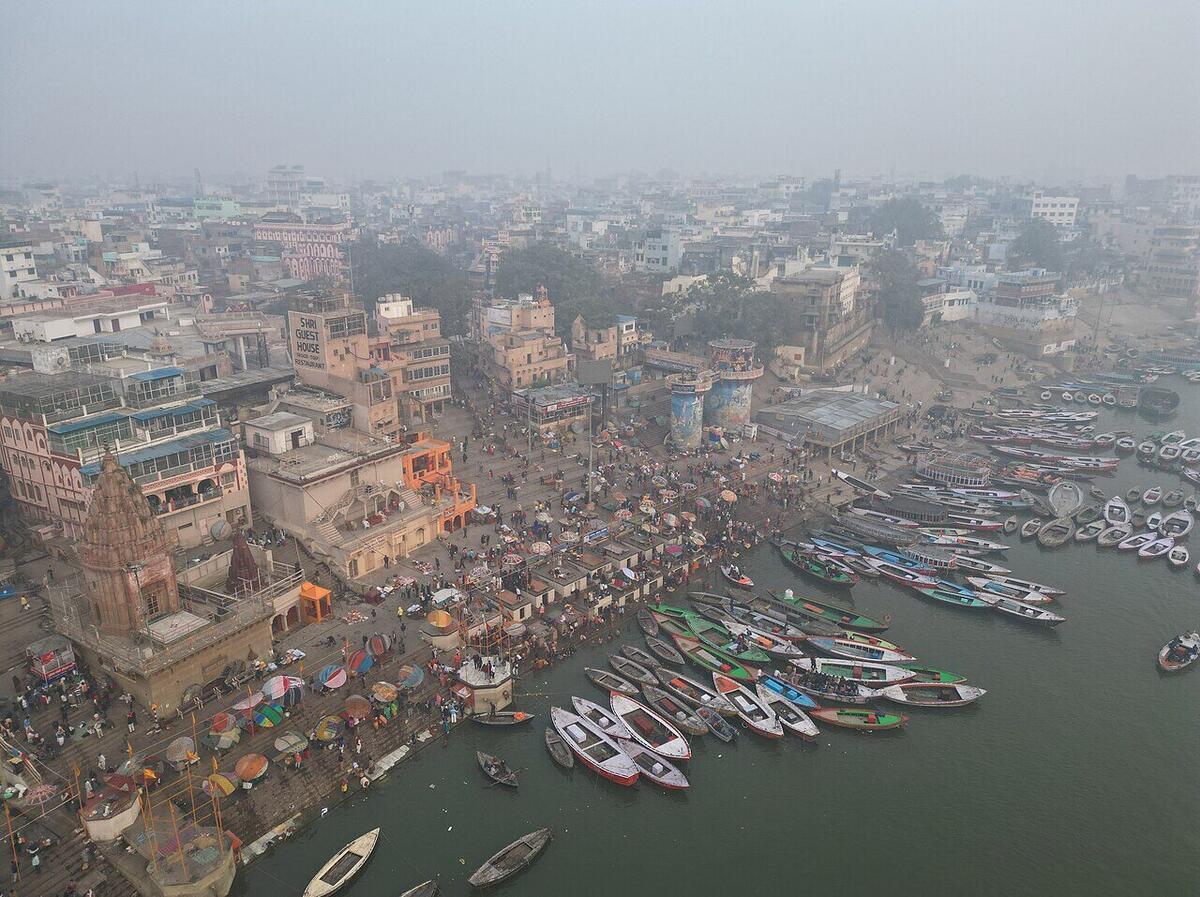
Triyuginarayan is the supreme wedding-tirtha of Hindu tradition. Couples come here specifically to perform their wedding ceremony in the presence of the akhand dhuni; the rite is held to bind the couple in the same sacred fire that bound Shiva and Parvati. The site is also revered as a Vaishnava-Shaiva-Smarta synthesis — the only major Hindu shrine where Vishnu, Shiva, and Parvati are equally honoured in their family roles.
History
The temple is held by tradition to have been built by Adi Shankaracharya in the eighth century during his Char Dham rounds. The present structure is a small but ancient stone shrine; renovations through the medieval and modern periods have preserved the original sanctum-form. The temple and the akhand dhuni are in the care of hereditary priest-families of the Jamloki Brahmins, who have served continuously for generations.
Architecture
Triyuginarayan is a small stone temple in regional Nagara style — pyramidal shikhara, courtyard around, sanctum with the Narayan murti. The akhand dhuni is in a separate stone hearth-pit within the temple courtyard, sheltered by a small canopy. Adjoining the temple are Brahma Shila (where Brahma sat as priest), Vishnu Shila (where Vishnu sat as Parvati's brother), and the small Rudra Kund.
Rituals & Practices
The temple opens around 6 AM and closes around 8 PM with morning and evening aartis. The akhand dhuni is visible continuously through the day; pilgrims approach it, add fragrant wood, and circle the fire-pit. For a wedding ceremony to be performed at Triyuginarayan, the couple books in advance with the temple priests; the rite is conducted by a temple pandit, typically takes 2-3 hours, and is followed by a parikrama of the temple together with the akhand dhuni smoke.
The traditional sequence is: arrive from Sonprayag, darshan at the temple, time at the akhand dhuni, parikrama, return. For pilgrim couples wishing to renew their wedding vows (a beloved tradition for many), a simpler rite is also available.
Festivals & Celebrations
| Festival | When | Crowd |
|---|---|---|
| Bhadra Kanya Sankranti | — | high |
| Akshaya Tritiya | — | very_high |
| Wedding season | — | high |
| Maha Shivratri | — | high |
Bhadra Kanya Sankranti: Honours Parvati.
Akshaya Tritiya: Beginning of accessibility.
Wedding season: The wedding-tirtha tradition.
Maha Shivratri: The night of Shiva-Parvati union.
Prepare for Your Visit
Practical guidance to help you plan your pilgrimage
| Pilgrim Guidance | How to reachTriyuginarayan is 12 km from Sonprayag — about 30 minutes by car or 2 hours by foot. The road from Sonprayag to Triyuginarayan is narrow and steep; shared jeeps run. Many Kedarnath pilgrims add a half-day Triyuginarayan visit on the way to or from Kedarnath. PreparationModest clothes; for those performing wedding rites, traditional attire. Carry sandalwood pieces or jaggery for the akhand dhuni. The altitude is 1,980m; comfortable for most. Hotels at Triyuginarayan are basic; most pilgrims stay at Sonprayag and day-trip up. Best time to visitMay to November — the Kedarnath yatra season. Akshaya Tritiya (kapat-opening of the higher dhams) and Bhadra Kanya Sankranti are spiritually significant. For wedding ceremonies, October-November and February-March are popular. |
Location
Rudraprayag, UK
Pilgrim photos
No pilgrim photos yet.
Community corrections
No corrections yet.
Edit history
No revisions yet.
Plan Your Visit to Triyuginarayan Temple
Get a custom itinerary and pricing for your trip.
Recommended
Packages for this destination
Pilgrim Notes
On-ground observations from fellow pilgrims
No pilgrim notes yet. Be the first to share on-ground observations!
Sign in to share a note.
Pilgrim Reviews
Be the first to share your experience at Triyuginarayan Temple.
Sign in to write a review.
Nearby sacred places
Discover other sacred places near Triyuginarayan Temple
Explore temples, tirthas, and pilgrimage sites in UK
Explore nearbyPart of these circuits
Walk the traditional pilgrimage routes this destination belongs to.