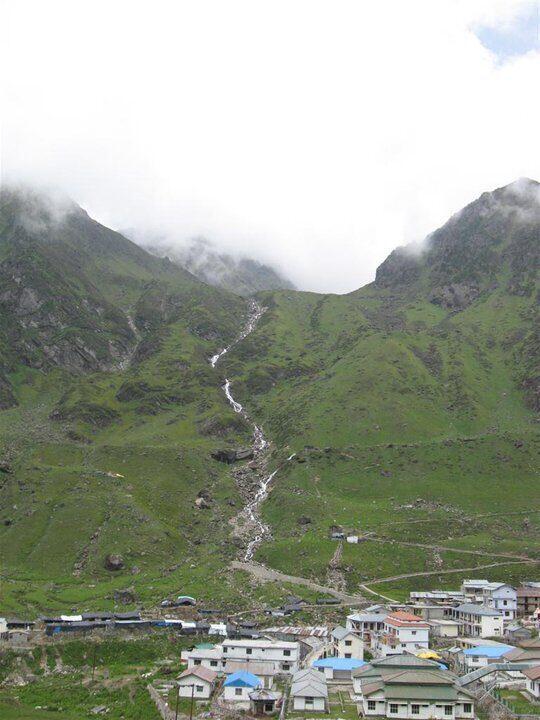
A circuit Package
Char Dham Yatra Sampoorna — 11 Days
From ₹24,999 pp twin-share ex-Haridwar — the full clockwise Char Dham in eleven unhurried days, Hindi-speaking driver, 3-star hotels, private cab.
Traditional order
Priority bookings
Gentle pacing
Briefing included
The full Char Dham circuit — Yamunotri, Gangotri, Kedarnath, Badrinath — in the traditional clockwise order, over eleven days from Haridwar. Private cab the whole way, Hindi-speaking driver, 3-star hotels and well-rated dharamshalas, pony and helicopter options at Yamunotri and Kedarnath arranged on your behalf. Designed for the family that wants the complete yatra without skipping a single dham.
Day-by-day
Itinerary
11 days · click to expand
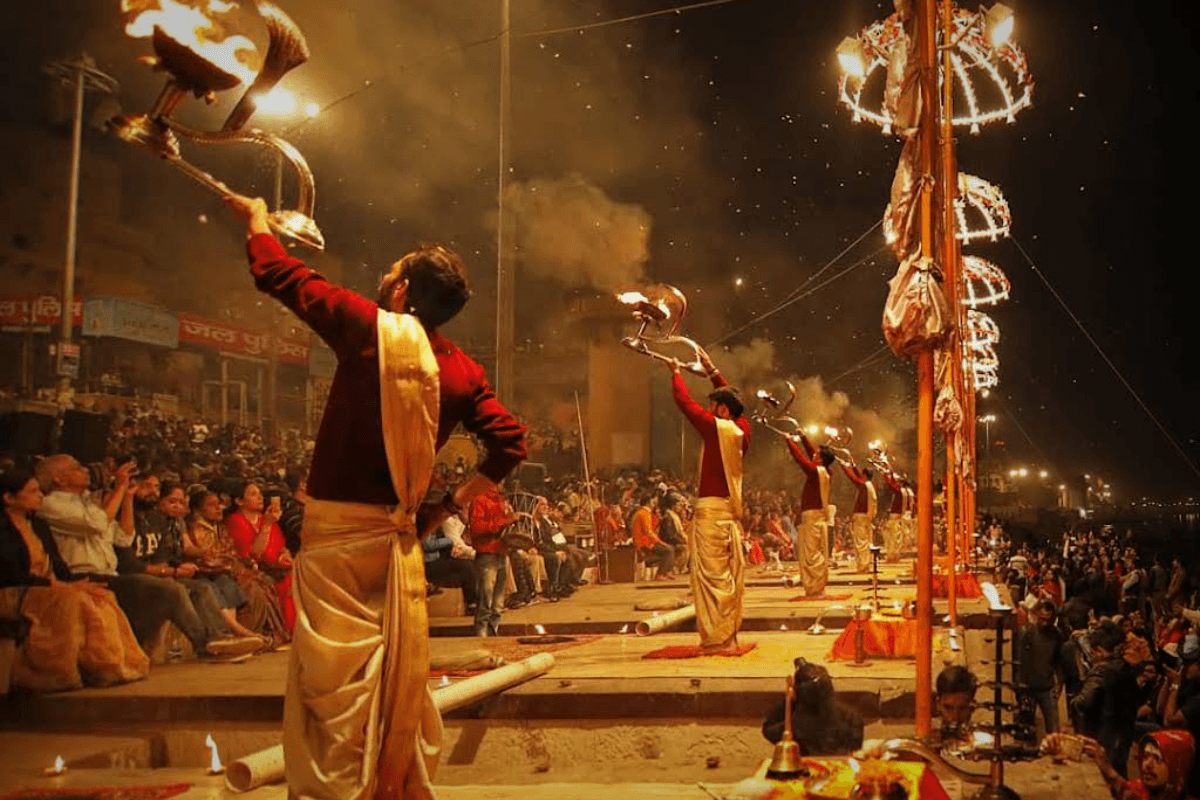
Day 1 is light on purpose. You arrive at Haridwar railway station or Dehradun airport in the afternoon and we drive to a 3-star hotel within walking distance of Har Ki Pauri. After a short rest, we walk to the ghats for the evening Ganga Aarti — the daily 6:30 PM rite at Brahma Kund, the spot where the Garuda is held to have dropped a drop of amrit. Back at the hotel, a briefing dinner: the eleven-day plan, what to expect at each dham, what to pack for the trek days, how the registration and pony bookings work. Early to bed; tomorrow we drive into the mountains.
Note Altitude: 314m (Haridwar). Comfortable for everyone. No acclimatisation needed yet. Dinner at the hotel — pure vegetarian, Hindi-speaking staff. Briefing in Hindi with English translation if needed.
After an early breakfast we leave Haridwar and drive into the Tehri Garhwal mountains. The road climbs through Dehradun, Mussoorie, and over Kempty Falls before descending into the Yamuna valley. Barkot sits at 1,220m on the banks of the Yamuna, the base for the Yamunotri trek tomorrow. We arrive by late afternoon, settle into a 3-star hotel or a well-rated lodge, rest. Dinner at the hotel — simple, hot, plenty of dal-chawal-roti.
Note Altitude: 1,220m (Barkot). The first proper climb of the trip — some travellers feel mild headache; drink water, no alcohol, light dinner. Mobile network strong till Mussoorie, patchy after. Hindi-speaking staff at the Barkot hotel.
Pre-dawn breakfast at Barkot, then the drive to Janki Chatti (45 km, about 1.5 hours) where the road ends and the trek begins. From Janki Chatti it is 6 km one-way up to Yamunotri temple at 3,293m — a steady stone-paved climb through pine forest, with chai stops every kilometre. Pony, palki, and porter are widely available at rates fixed by the district administration; a helicopter charter to Kharsali (booked in advance) still leaves a ~6 km pony, palki or trek to the temple. At Yamunotri: a darshan of Devi Yamuna, a prasad of rice and potatoes cooked in the Surya Kund hot spring, the dip in Jamunabai Kund. We return to Janki Chatti by late afternoon and drive back to Barkot for the night.
Note Trek: 6 km one-way, ~700m elevation gain. Allow 5–7 hours round-trip on foot, 4 hours by pony, 2 hours by palki; the Kharsali helipad is still ~6 km from the temple, so heli pilgrims also take a pony or palki. Pony approx ₹2,500–3,000 round-trip; palki ₹6,000–8,000 (4 porters); helicopter only by private charter, quoted on request. Carry water, light snacks, sun protection, a light raincoat. Altitude 3,293m at the temple — mild headache common; descend if it worsens.
An easier driving day. From Barkot the road crosses the watershed between the Yamuna and the Bhagirathi-Ganga, descending into Uttarkashi (1,158m), the largest town in upper Garhwal and the home of the Vishwanath Mandir of Uttarkashi — a 1,000-year-old shrine to Shiva. We reach by early afternoon. Time for a darshan at Uttarkashi Vishwanath and a walk along the Bhagirathi before sunset. Dinner and rest at the hotel; tomorrow is Gangotri.
Note Altitude: 1,158m (Uttarkashi). Comfortable. The Uttarkashi Vishwanath Mandir is a 10-minute walk from most hotels; the priest will conduct a short darshan if you arrive in the afternoon. Strong mobile network at Uttarkashi.
An early-morning drive from Uttarkashi up the Bhagirathi valley to Gangotri (3,100m, 100 km, about 4 hours). The road is paved throughout; the last 25 km from Harsil winds through deodar forest along the river. Gangotri temple sits on the right bank of the Bhagirathi — a simple white stone shrine built by the Gorkha general Amar Singh Thapa in the early 19th century. Darshan, tarpan for ancestors at the Bhagirathi, Ganga-jal collection in your own small container, and the short walk to Bhagirath Shila where King Bhagirath is held to have done the tapas that brought Ganga to earth. We return to Uttarkashi by evening (or stay at Harsil for travellers who prefer the quieter overnight at 2,620m).
Note Altitude: 3,100m at Gangotri. Mild AMS possible; move slowly, drink water, no alcohol. The temple is a 5-minute walk from the parking; pilgrim flow is steady. Ganga-jal containers (small steel kalash) are sold near the temple — carry yours if you have one. Photography permitted outside the sanctum.
The longest road day of the yatra. From Uttarkashi the road descends to the Tehri reservoir, crosses the Bhagirathi dam, climbs to Chamba, then descends to Tilwara and Rudraprayag — the great sangam of the Mandakini and Alaknanda — and continues along the Mandakini to Guptkashi (1,319m, 220 km, 8–9 hours). We stop for lunch on the way at a dhaba near Rudraprayag and reach Guptkashi by evening. Guptkashi is the road-base for Kedarnath; the Vishwanath Mandir here is held by tradition to be where Shiva hid from the Pandavas during their search. A quiet evening at the hotel; tomorrow is the Kedarnath trek.
Note Long day on a winding mountain road — motion-sickness tablets advisable for those prone. The road from Tehri to Rudraprayag is well-paved; some sections after rain may have minor landslide debris. Stops every 2 hours for chai and stretch. Dinner at the Guptkashi hotel; early to bed — tomorrow's start is pre-dawn.
Pre-dawn breakfast at Guptkashi, then the drive to Sonprayag (30 km, 1 hour). At Sonprayag — the vehicle road-head — we transfer to a shared jeep for the 5 km up to Gaurikund (1,982m) where the trek begins. From Gaurikund it is 16 km one-way to Kedarnath at 3,583m — a stone-paved trail along the Mandakini, with chai stops every 3 km, pony and palki stands at regular intervals, and porters for luggage. For those who choose, the helicopter from Phata (about 15 km before Sonprayag) or Sersi runs every 8–10 minutes during season — booked in advance through our coordinator. At Kedarnath we settle into a basic dharamshala or GMVN lodge near the temple. Evening aarti at the Jyotirlinga.
Note Trek: 16 km one-way, ~1,600m elevation gain. Allow 7–9 hours on foot for the fit, 5–6 hours by pony, 4–5 hours by palki, 15 minutes by heli. Pony approx ₹3,500 one way (₹6,500–7,000 round-trip); palki approx ₹9,200 one way; heli round-trip ₹6,390 (Sirsi), ₹10,164 (Phata), ₹12,762 (Guptkashi) at 2026 IRCTC rates. Altitude 3,583m — AMS real risk for the unacclimatised; ascend slow, hydrate, no alcohol. Accommodation at Kedarnath is simple — dharamshala-style, shared bathrooms; bring warm clothes (5°C nights even in May).
Pre-dawn darshan and abhishek at Kedarnath — the 4:00 AM Mahabhishek with our coordinator's help on booking, or the regular 5:00 AM darshan. After darshan we trek (or pony / heli) back down to Gaurikund by mid-morning, transfer to Sonprayag, and the private cab takes us through Rudraprayag, along the Alaknanda, up to Joshimath (1,890m, 180 km from Sonprayag, 7–8 hours). Joshimath is the seat of the southern Adi Shankaracharya math and the road-base for Badrinath. Late dinner at the 3-star hotel; rest.
Note Long day combining a steep descent with a long drive. Most travellers feel tired by the time we reach Joshimath — that is normal. Adi Shankaracharya's math has a small shrine open till evening if you have energy after dinner. Mobile network strong at Joshimath. Hot water at the hotel — welcome after the trek.
An early breakfast at Joshimath, then the drive up to Badrinath (3,133m, 45 km, 2 hours) along the Alaknanda — past the gates of the gorge at Govindghat, past Hemkund road, through the high meadows. At Badrinath: the Tapt Kund hot springs (a snan before darshan, as tradition prescribes), then the darshan of Bhagavan Badri-Vishal in his Vaishnava shrine — one of the 108 Divya Desams and the seat of Vishnu's northern dham. After darshan we drive 3 km further to Mana — the last village before Tibet, the cave of Vyasa and Ganesha, the start of the Saraswati. For the willing, a ~12 km round-trip trek to Vasudhara Falls. Back at Joshimath by evening.
Note Altitude: 3,133m at Badrinath. The road is paved throughout but narrow in places. The Tapt Kund snan is in two pools — men and women separate; carry a change of clothes. Vasudhara trek is longer than it looks — 6 km one-way (~12 km round-trip) through rocky meadow; skip if AMS-prone or unfit. Mana village shops sell the famous Garhwali woollens at fair rates.
The yatra winds down. From Joshimath we descend along the Alaknanda — past Karnaprayag, Rudraprayag, Devprayag, and through the Garhwal foothills. Most groups stop at Pipalkoti (1,260m, 75 km, 3 hours) for an easy overnight; those who prefer to be back at the plains can continue to Rishikesh (250 km, 7–8 hours) and stay near the Ganga at Lakshman Jhula or Tapovan. Either way, the final dinner of the yatra together at the hotel — a chance to talk through what each dham felt like, and what to carry home.
Note Pipalkoti is a small mountain town with good 3-star hotels and a quiet evening — recommended for older travellers. Rishikesh is busier — better for those wanting to extend with yoga, Ganga aarti at Triveni Ghat, or river-front cafes. We confirm Pipalkoti vs Rishikesh at booking based on your preference.
From Pipalkoti we drive down to Haridwar (180 km, 6–7 hours) — or from Rishikesh, a short 25 km. The cab drops you at Haridwar railway station for the afternoon trains, or at Dehradun airport for the evening flights. The yatra ends as it began: at the river that carries the prayer of every dham you have just bowed at. A Ganga-jal kalash to take home. The four dhams done in their proper order. The blessing carried.
Note We aim to reach Haridwar by 2 PM if starting from Pipalkoti, by 11 AM if starting from Rishikesh. Confirm your onward train or flight time at booking so the drop matches. Last meals — light breakfast at the hotel, lunch on the way at a clean dhaba.
The story
About this package
The full Char Dham, in its proper order. Eleven days from Haridwar to Badrinath and back — Yamunotri first, then Gangotri, Kedarnath, Badrinath. The order matters: this is the clockwise circuit Adi Shankaracharya is held to have laid down, and we hold to it.
Most operators sell the Char Dham as a nine-day rush. The yatra deserves more than that. Yamunotri sits at 3,293m at the end of a 6 km trek. Kedarnath is a 16 km climb from Gaurikund. The road between Uttarkashi and Guptkashi is long. Eleven days lets the body catch breath between dhams; nine days does not.
What this package is
- Standard tier. 3-star hotels and well-rated dharamshalas. Private cab (Innova or Ertiga for groups of 2–6, Tempo Traveller for 7–12). The driver speaks Hindi and knows the road.
- Ex-Haridwar. You arrive at Haridwar railway station or Dehradun airport; we drive from there. The package ends with a Haridwar drop on Day 11.
- From ₹24,999 per person on twin-share. Quoted on enquiry — final price depends on dates, group size, and pony/helicopter add-ons. Comparable aggregator packages typically list at ₹32,000–40,000. We undercut them because we run lean and don't pay aggregator fees.
- Hindi-first operations. The driver, the hotel staff at every stop, and our coordinator on the ground all speak Hindi as their first language. The yatra is conducted in the language the dhams are sung in.
How the eleven days unfold
Day 1 you arrive at Haridwar and we keep it light — an evening at Har Ki Pauri for the Ganga Aarti, a briefing over dinner, an early night. Day 2 we drive to Barkot, the base for Yamunotri. Day 3 is the Yamunotri trek — pony available, helicopter on request — and back to Barkot in the evening. Day 4 to Uttarkashi. Day 5 the Gangotri darshan. Day 6 is the long driving day to Guptkashi, the base for Kedarnath.
Day 7 is the Kedarnath trek itself — 16 km from Gaurikund, with pony and palki widely available and the helicopter from Phata or Sersi for those who choose it. Day 8 darshan at Kedarnath then back down to Joshimath. Day 9 is the Badrinath darshan, Mana village, and Vasudhara Falls for the willing. Day 10 back down to Pipalkoti or Rishikesh. Day 11 a comfortable Haridwar drop.
Who this is for
Book this if:
- You want the full Char Dham, all four dhams, in the traditional clockwise order
- You prefer a private cab and Hindi-speaking driver to a coach with strangers
- You are reasonably fit — Yamunotri 6 km one-way, Kedarnath 16 km one-way (pony and heli available)
- Your budget is in the ₹25,000–35,000 per person range and you want value, not luxury
- You can travel between May and mid-June, or mid-September to October — the open-kapat months
When to go
The kapat at all four dhams open on Akshaya Tritiya (late April / early May) and close around Diwali. The two clean weather windows are May to mid-June (busy, hotels tight, book early) and mid-September to October (quieter, settled weather, our preferred window). July and August are monsoon — landslide risk on the Kedarnath and Gangotri roads is real, and we do not run the yatra in those months.
What you get
Highlights
Logistics
What's included
Inclusions
- Private non-AC cab (AC does not run well at altitude) ex-Haridwar for all eleven days
- All hotel/dharamshala stays on twin-share (Haridwar 1N, Barkot 2N, Uttarkashi 1N, Guptkashi 1N, Kedarnath 1N basecamp, Joshimath 2N, Pipalkoti 1N)
- Daily breakfast and dinner at the hotels
- Driver allowance, fuel, toll, parking, all state taxes
- Mandatory Char Dham yatra registration via the Uttarakhand Tourist Care portal (registrationandtouristcare.uk.gov.in) handled for every traveller
- Briefing dinner at Haridwar on Day 1
- Ganga Aarti evening at Har Ki Pauri on Day 1
- Help with pony/palki bookings at Yamunotri and Kedarnath
- Help with helicopter bookings at Kharsali (Yamunotri) and Phata/Sersi (Kedarnath) if you choose them
- 24×7 Hindi-speaking ground coordinator on call through the yatra
Not included
- Pony, palki, and helicopter charges at Yamunotri and Kedarnath (quoted separately at booking — pony approx ₹2,500/Yamunotri, and at Kedarnath approx ₹3,500 one-way / ₹6,500–7,000 round-trip at 2026 prepaid rates; helicopter at Yamunotri only by private charter (quoted on request), and at Kedarnath ₹6,390–12,762 round-trip per person at 2026 IRCTC rates depending on helipad)
- Lunch on driving days (we recommend dhabas along the way; ₹150–250 per meal)
- Personal expenses, prasad, donations, telephone calls, laundry
- Any darshan-acceleration tickets (no paid fast-track darshan is offered at the four Char Dham shrines)
- Travel insurance — strongly recommended for the trekking days
- Travel to and from Haridwar (we begin and end at Haridwar)
- Anything not specifically listed in the inclusions
Before you book
Questions pilgrims ask
What does the ₹24,999 cover?
Ten nights of hotel stay on twin sharing, a private cab for the whole circuit with a hill driver, daily breakfast and dinner, your Uttarakhand yatra registration, and a Satmarg coordinator you can reach throughout. Pony, palki and porter at Yamunotri and Kedarnath, any helicopter leg, pujas and personal expenses are not included — those depend on what each family wants and we quote them separately.
Is registration compulsory for the Char Dham Yatra?
Yes, and it is enforced. Every pilgrim must be registered on the Uttarakhand government portal and carry the QR-coded registration letter, which is checked at each shrine. In past seasons pilgrims who arrived without it were turned back without darshan. We complete the registration for every person in your booking and hand you the letters before you travel.
When do the dhams open in 2027?
Not announced yet. Kedarnath's date is declared on Maha Shivratri and Badrinath's on Basant Panchami, both in February 2027, so the dates are usually known six to eight weeks before the season starts. Yamunotri and Gangotri open on Akshaya Tritiya. As a guide, in 2026 Yamunotri and Gangotri opened on 19 April, Kedarnath on 22 April and Badrinath on 23 April. Anyone quoting you a firm 2027 date today is guessing.
How much walking does the Char Dham Yatra involve?
Gangotri is the easy one — the vehicle reaches the temple. Yamunotri is about five to six kilometres each way from Janki Chatti, and Kedarnath is the hard one at roughly sixteen to eighteen kilometres uphill from Gaurikund, six to nine hours up and four to six down. Pony, palki and porter are available at both, and we arrange them. Badrinath needs no walk at all.
Which is the best month to go?
There are two clean windows. May to mid-June is dry and busy — hotels near Kedarnath and Badrinath fill early, so book well ahead. Mid-September to October is cooler and quieter after the monsoon clears, and it is what we recommend to most families. July and August are the monsoon and carry a real chance of a suspension of a day or more.
What happens if the yatra is suspended by weather while we are on it?
It happens most years, usually in late July and early August, and it is the honest risk of a monsoon-season booking. In 2026 the yatra was suspended more than once, with over a hundred roads shut across the state and a landslide blocking the Kedarnath route near Gaurikund. We do not travel against a red alert. If a road closes we hold you in the safest place on the route, keep you fed and housed, and move when the administration reopens it. Build a spare day into your return travel if you are coming in July or August.
Who should think twice before attempting this yatra?
Anyone with a heart, blood-pressure or respiratory condition should get medical clearance first and tell us about it. In the 2026 season the state's own reporting put existing medical conditions, not the trekking, as the leading cause of pilgrim deaths on these routes. The altitude is the real strain: Kedarnath sits at about 3,583 m and Badrinath at about 3,133 m, and thin air is hard on a heart that is already working. We would rather plan around a condition than be told about it in Gaurikund.
How do I know a Char Dham booking is genuine?
Fake booking sites are a live problem on this route — a pilgrim lost ₹65,000 to a Kedarnath helicopter booking scam in September 2026 alone. Helicopter seats are sold only through the government's IRCTC HeliYatra portal, and registration only through the Uttarakhand government portal. We book through both of those and nowhere else. If any operator asks you to pay a personal account for a heli seat or a registration, stop.
How many people travel together?
We cap this departure at twelve pilgrims, which is what keeps the vehicle comfortable and lets the group move without waiting on stragglers at every stop. It also means we can change the plan on the day if the weather asks us to.
Send an Enquiry
Leave your name and number — our team will call you.
Starting price
₹24,999
per person
Replies in minutes on WhatsApp · 7 AM–10 PM
Trusted by Pilgrims
“We came for my mother's 75th birthday darshan. Satmarg arranged wheelchair access, a pandit who spoke her dialect, and a private boat for her Ganga aarti.”
“Third time using Satmarg. The cab service is top-notch — AC Innova, polite driver, no surprise charges.”
Udyam-registered MSME · UDYAM-UP-75-0177698
Varanasi-based operator · local guides & pandits
Hindi & English support · 7 AM–10 PM