Vishalakshi Devi is worshipped in Kashi as the Shakti counterpart of Vishwanath, and the temple stands near Meer Ghat, a short walk from the Jyotirlinga. The name Vishalakshi means "she whose eyes are wide and all-seeing" — a form of the Divine Mother approached for her watchful grace and her closeness to the city's daily life.
Tradition counts this shrine among the classical Shakti Peethas of India. The Pithanirnaya records that Sati's earrings (mani-karnika) fell at Kashi; the Devi Bhagavata names the Devi's eyes as the relic here. The different scriptural lineages agree on the sanctity of the site, while each carries its own recollection of what was left behind.
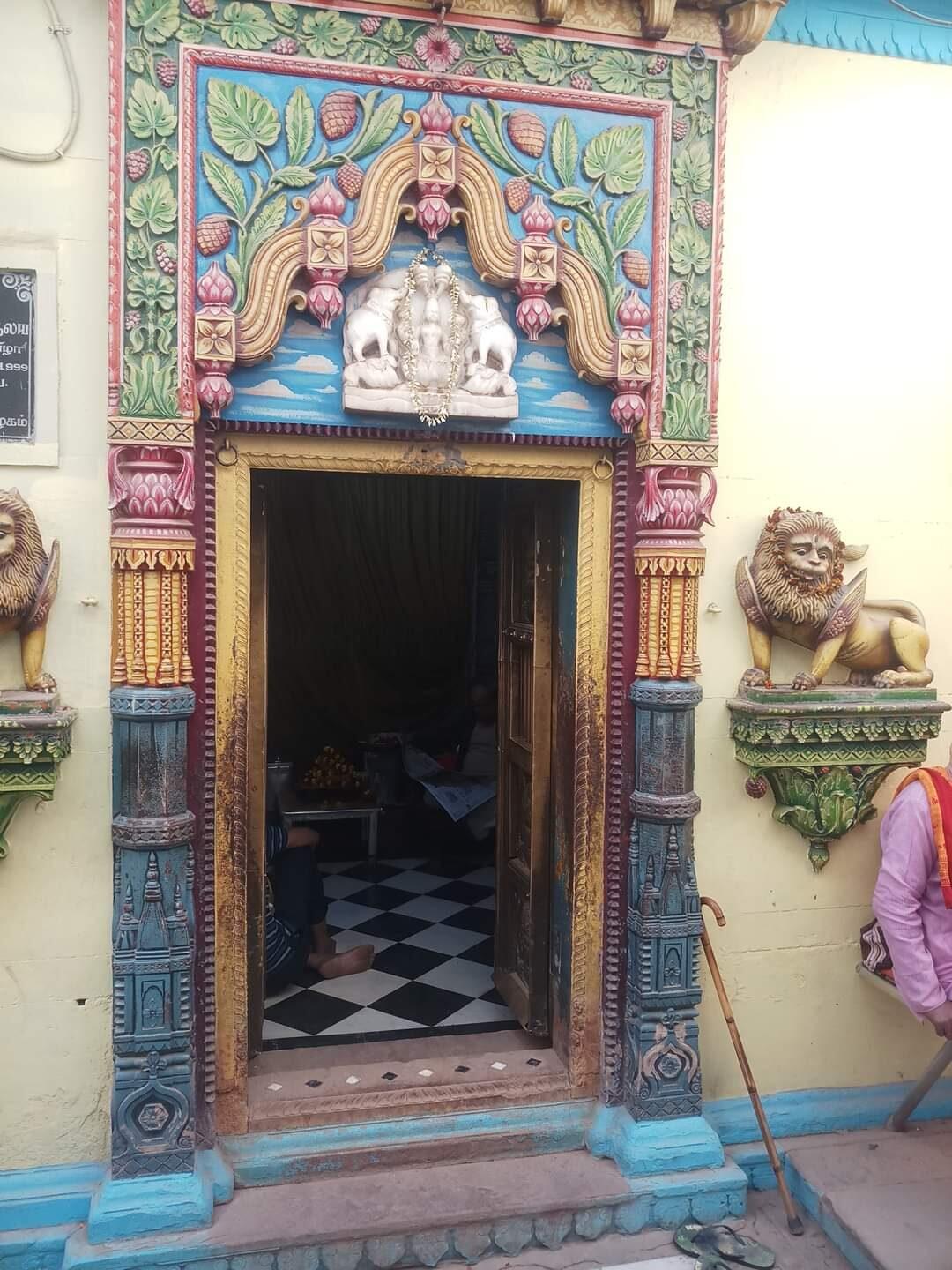
The temple is set in a haveli-style building on the lane from Meer Ghat — ornate balconies, carved jali screens, a sanctum smaller than many of Kashi's more visible temples, and worship that has continued within it for centuries. A tradition of Banaras holds that Vishwanath and Vishalakshi are never approached apart: a pilgrim who has stood at the Jyotirlinga is said to complete the yatra only at the Devi's darshan.
A Shakti Peetha is held in Hindu tradition to be ground upon which a relic of Sati fell, and therefore a place where the Divine Mother's presence is understood to remain. Devotees come to Vishalakshi not only to see the image, but to stand within that charged field of presence. The Bhairava paired with this Peetha is Kala Bhairav himself — the Kotwal of Kashi — and this pairing draws the temple into the central devotional geometry of the sacred city.
For Kashi tradition, Vishwanath and Vishalakshi are inseparable. The city is held as the meeting of Shiva and Shakti, and a yatra that honours only one side is not considered complete. Devotees often approach Vishalakshi in the same walk that takes them through Vishwanath and Annapurna, holding the three in one circuit.
Katha and local belief
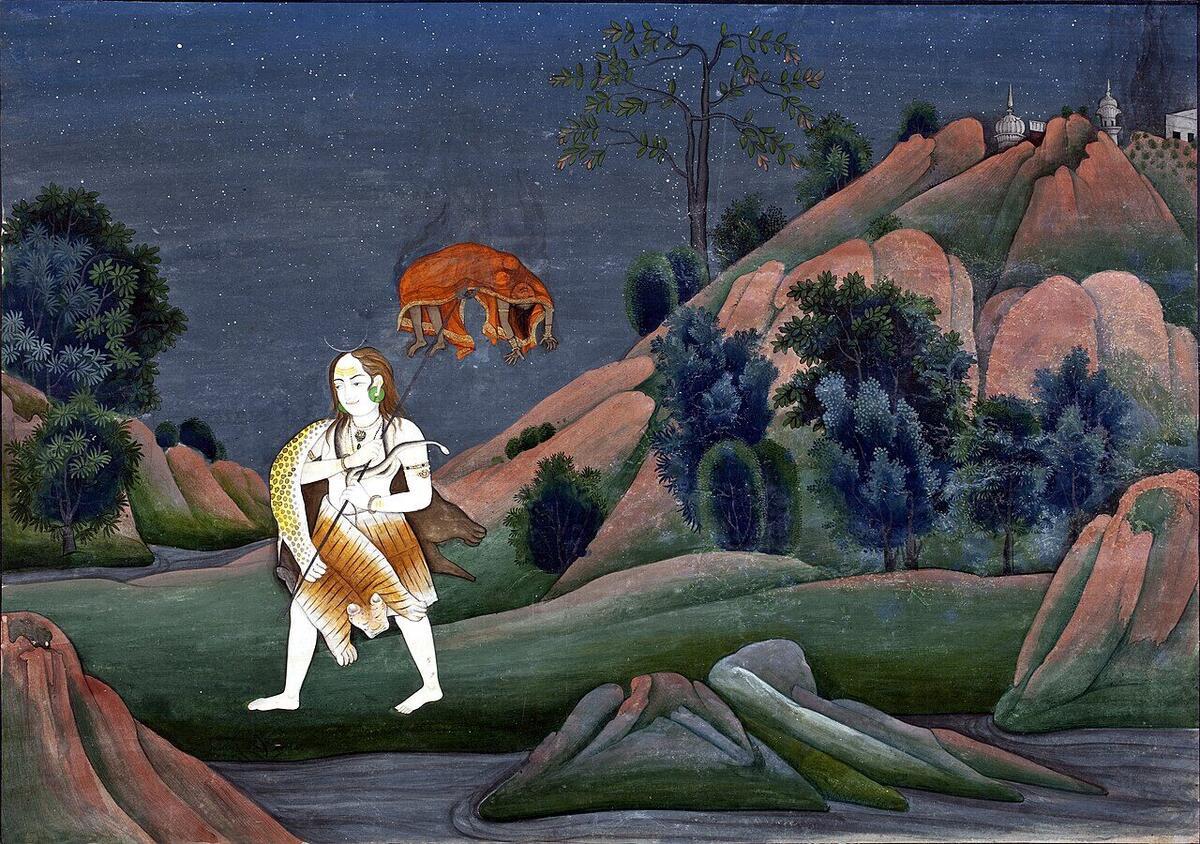
The Shakti Peethas belong to the katha of Sati and Daksha. Tradition holds that after Sati's departure, the Mother's presence remained in the places where her relics fell — fifty-one sites according to the Pithanirnaya, one hundred and eight according to the Devi Bhagavata. Kashi is named as a Peetha in both traditions, and this temple is where her presence is worshipped here.
A belief cherished in Banaras is that Vishalakshi's wide gaze misses no devotee who arrives at her door. Women come to her for protection, mothers for the well-being of children, and families in times of difficulty. Friday is held to be her particular day, when the Lalita Sahasranama is recited within the sanctum.
History
The identification of Kashi as a Shakti Peetha is ancient and is recorded across multiple Tantric and Puranic sources. The sixteenth-century Pithanirnaya names this site with Vishalakshi as the Devi and Kala Bhairava as her Bhairava; the Devi Bhagavata independently places Kashi among the Peethas with the Devi's eyes as the relic. Over time, the two accounts have been held together rather than contested — each marks the same ground as sacred to the Mother.
The temple's present haveli-style form is likely of the 18th or 19th century; Devi worship at the site predates any surviving structure by many centuries. The Nagarathar community — a South Indian trading lineage with deep historical ties to Kashi — has long been associated with the temple's upkeep, and South Indian elements of worship are still carried in the daily rhythm here.
Through the generations the shrine has been supported by Banarasi families, pilgrim traders, and visiting devotees who see in Vishalakshi the Shakti who holds the city.
Architecture
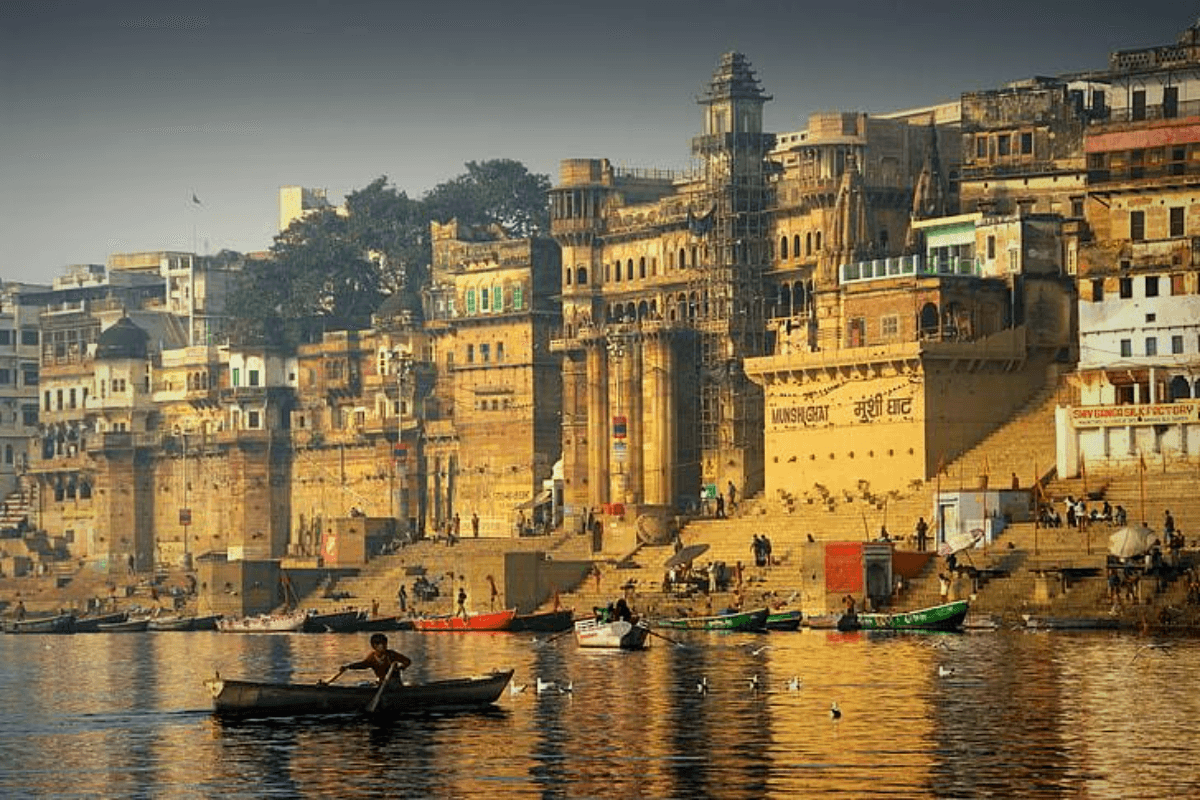
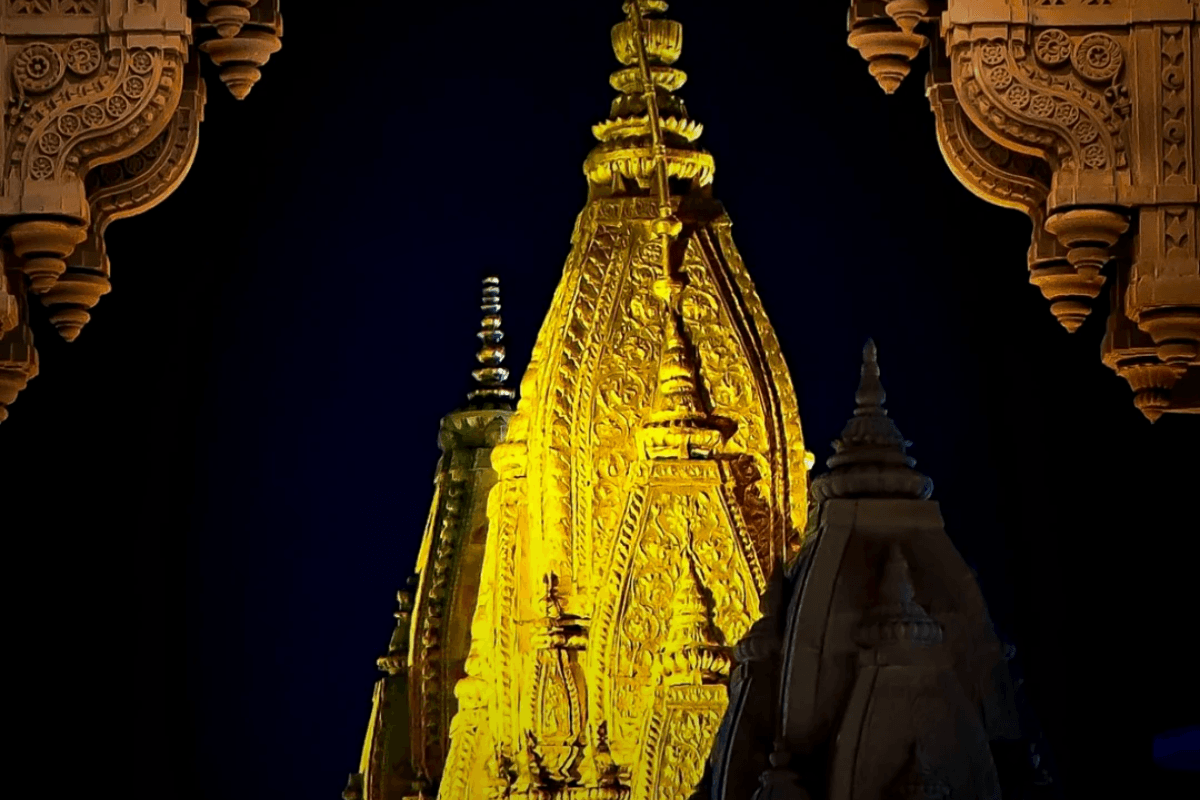
The Vishalakshi Temple reflects the quiet architecture of Banaras's ghat-side shrines. The outer form is that of a haveli — a multi-storey building with carved balconies, jali screens, and an internal layout centred on the sanctum rather than on external grandeur. This gives the temple a domestic, intimate character appropriate to the worship of the Mother.
The garbhagriha is small. The murti is ancient, anointed in sindoor and turmeric, and dressed in new garments each day. The mandapa holds the day's offerings — red flowers, jasmine, kumkum — and the sound of the nadaswaram at morning aarti carries the temple's South Indian inheritance clearly.
The surrounding lane, with its old residential buildings and narrow access, is itself part of how the temple is experienced — the Devi is approached through the everyday textures of the old city, not through an imposing gateway.
Rituals & Practices
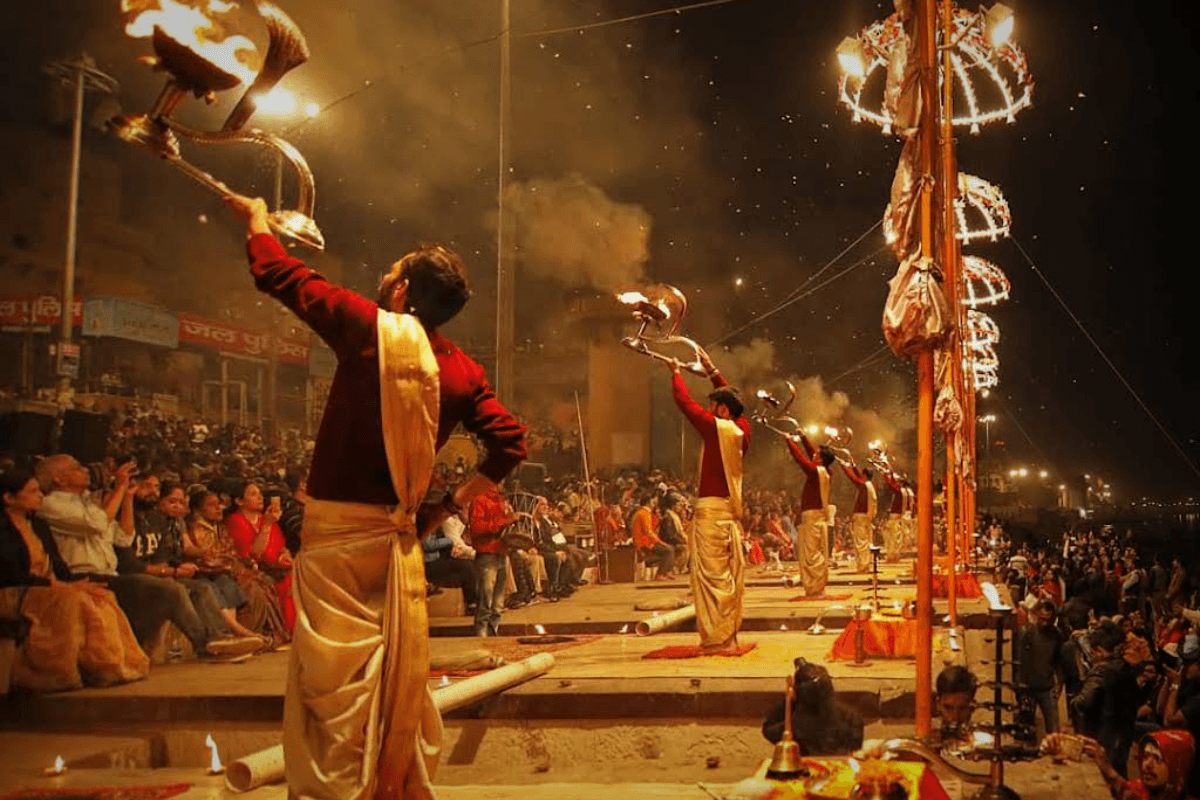
The worship at Vishalakshi blends North Indian Shakta tradition with elements carried here by the Nagarathar lineage from the South. The daily worship begins with the Mangala Aarti at dawn, when the Devi is awakened. The panchamrit abhishek follows, and the murti is dressed and adorned with fresh flowers — red roses and jasmine are most commonly brought by devotees.
The aartis carry on through the day in their customary sequence. At the morning aarti the sound of the nadaswaram is heard alongside the bells and conches — a small but distinctive mark of the temple's heritage.
Offerings usually preferred at Vishalakshi:
- Red flowers — especially rose and jasmine
- Kumkum and turmeric
- Small pieces of red or yellow fabric (odhani or chunari)
- Sweets, especially laddoo
Friday worship, when the Lalita Sahasranama is recited, is particularly loved by devotees. During Sharad and Chaitra Navratri the temple keeps an extended schedule of puja. Specific timings may vary; pilgrims are encouraged to verify before planning.
Festivals & Celebrations
| Festival | When | Crowd |
|---|---|---|
| Kajali Teej | — | High |
| Sharad Navratri | — | Very high |
| Vasant Panchami | — | Moderate |
| Diwali | — | High |
Kajali Teej: A characteristic Banarasi observance connecting the arrival of the monsoon, married life, and the protective grace of the Devi. Held to be the most atmospheric day of the year at this temple.
Sharad Navratri: Tradition holds that the Shakti Peetha's presence is most accessible during Navratri, when the Divine Mother is most actively worshipped across the subcontinent.
Vasant Panchami: Marks the arrival of spring and the Devi's aspect as Saraswati, the source of knowledge and the arts.
Diwali: Celebrates the Devi's benevolent, auspicious aspect and the triumph of light over darkness.
Temple Details
| Timings | note: Incredible India (Govt. of India) lists 5:30 AMâ12:00 PM & 4:00 PMâ9:00 PM; timings can change on festival days â confirm locally daily: 6:00 AM â 10:00 PM (per Kashi Official Web Portal, kashi.gov.in) |
| Management | Present structure completed in 1893; rebuilt and maintained since the 19th century by the Nattukottai Nagarathar mercantile community of Tamil Nadu |
Prepare for Your Visit
Practical guidance to help you plan your pilgrimage
| Best Time to Visit | Navratri draws the largest gatherings. The temple's principal festival is Kajali Teej, observed in the waning fortnight of Bhadrapada (August–September), especially by women for the welfare of their brothers. |
| How to Reach | by air: Lal Bahadur Shastri International Airport (VNS) is approximately 25 km away; taxis and app-based cabs are readily available by train: From Varanasi Junction (BSB), hire an auto-rickshaw or taxi to the old city; the final stretch through the lanes to Mir Ghat is best covered on foot location: At Mir Ghat in the old city (Kashi Lahori Tola, near Ganpati Guest House) â about 250 m from Shri Kashi Vishwanath Temple and 200 m from Annapurna Temple |
| Pilgrim Guidance | Approach and the Kashi Yatra sequenceVishalakshi is visited at the close of the traditional Kashi Yatra — after Vishwanath darshan — as the Shakti counterpart who completes the yatra. A commonly followed sequence is:
The temple is near Meer Ghat, a five-minute walk from the Vishwanath Dham Corridor. The most atmospheric approach is along the ghats from Dashashwamedh northward to Meer Ghat, then up the short lane to the temple. From Godowlia, the temple is a ten- to fifteen-minute walk through the old lanes. Preparation for Pilgrims
Best Time to VisitFriday is held in special regard at Vishalakshi, when the Lalita Sahasranama fills the sanctum. Sharad Navratri (September–October) and Chaitra Navratri (March–April) bring extended pujas and larger gatherings. Kajali Teej in Bhadrapada (August) is the temple's most distinctive day. For quieter darshan, early mornings on ordinary weekdays are ideal; October to March is the most comfortable window for pilgrimage overall. |
| Pilgrim Tips |
|
Location
Varanasi, UP
Pilgrim photos
No pilgrim photos yet.
Community corrections
No corrections yet.
Edit history
No revisions yet.
Plan Your Visit to Vishalakshi Temple
Get a custom itinerary and pricing for your trip.
Recommended
Packages for this destination
Pilgrim Notes
On-ground observations from fellow pilgrims
No pilgrim notes yet. Be the first to share on-ground observations!
Sign in to share a note.
Pilgrim Reviews
580 reviews
Be the first to share your experience at Vishalakshi Temple.
Sign in to write a review.
Nearby sacred places
Discover other sacred places near Vishalakshi Temple
Explore temples, tirthas, and pilgrimage sites in UP
Explore nearbyPart of these circuits
Walk the traditional pilgrimage routes this destination belongs to.