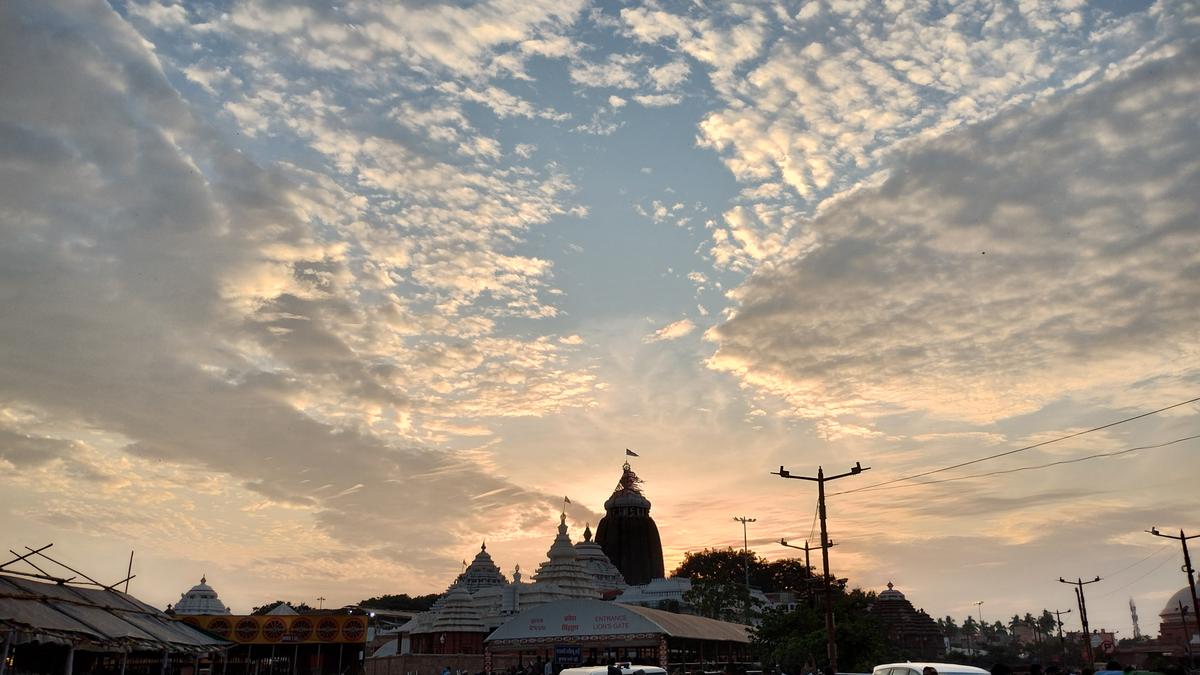
Pilgrimage Package
Jagannath Puri Rath Yatra — 3 Days (Peak Festival)
From ₹13,999 pp twin-share | Rath Yatra Peak Season | Rooftop Viewing on Bada Danda
Traditional order
Priority bookings
Gentle pacing
Briefing included
The once-a-year Festival of Chariots at Puri — when Bhagavan Jagannath, Balabhadra, and Subhadra are pulled in three towering chariots down Bada Danda to Gundicha Temple by lakhs of devotees. Three days ex-Kolkata by train, a rooftop viewing seat on Bada Danda for the procession day, Hindi-first ground ops, hotel within walking distance of the Grand Road.
Day-by-day
Itinerary
3 days · click to expand
Day 1 begins at the Howrah or Shalimar platform in Kolkata. You board the overnight Howrah-Puri Express (12837), which leaves Howrah at about 10:30 PM the night before — we book the berth at the time of confirmation, 3AC standard, Tatkal backup if needed. The journey is about nine hours along the Bay of Bengal coast through Kharagpur, Balasore, Bhadrak, and Bhubaneswar, reaching Puri around 7:30 AM. At Puri station our cab and driver are waiting; we drive directly to the hotel we have chosen within walking distance of Bada Danda — no auto rides through sealed festival roads. Check in, freshen up.</p><p>What you see next depends on which side of the calendar your travel dates fall. If you have come before Rath Yatra day but after Snan Yatra (the bathing ceremony), the deities are in Anasara — the fortnight of seclusion when they are unseen by the public, recovering from the 108-pot snan. In this period we go for darshan of the Patitapavana — a small Jagannath murti placed at the outer wall of the Shri Mandir for the public during Anasara. If you have come at the time of Adhar Pana — the Ashadha Shukla Dwadashi rite the day after the Bahuda return, when the chariots stand at the Simhadwara and huge earthen pots of sweet pana are offered to the deities on them — we walk down to Bada Danda for that ceremony. If your dates fall in the week the deities are at Gundicha, we take you instead for the Adapa Mandapa darshan there. Either way, dinner at the hotel; tomorrow is the procession.
Note Train: the Howrah-Puri Express (12837) is the festival-week workhorse, leaving Howrah around 10:30 PM the previous night and reaching Puri around 7:30 AM. The 12277 Howrah-Puri Shatabdi is a daytime service that leaves at about 2:15 PM and gets in near 10:10 PM, which is too late for the Day 1 programme. Festival-week trains are heavily booked; Tatkal opens 24 hours before departure and we run that as backup. Light cotton clothing (Odisha is hot and humid in this window, 32–36°C), small umbrella for monsoon showers, ORS sachets for the heat. Hindi-speaking hotel staff at every touchpoint.
The day itself. Early breakfast at the hotel by 7:00 AM, then we walk you to the rooftop on Bada Danda. The rooftop is owned by a family we have coordinated with for three festival seasons — covered shade, plastic chairs, drinking water, and a packed Odia thali lunch served on the roof at midday. We are seated by 8:00 AM so we are above the crowd by the time the police barricades close the road.</p><p>Around 9:00–10:00 AM the three deities are brought out of the Shri Mandir in the Pahandi procession — a swaying, dancing walk-down from the temple to the chariots, with each murti carried on the shoulders of pandas while drums and conches sound. Balabhadra first to Taladhwaja, then Subhadra to Darpadalana, then Jagannath last to Nandighosha. Each Pahandi takes time; the whole transfer can run two to three hours. Around midday, the Gajapati Maharaja of Puri arrives in a palanquin, climbs each chariot in turn, and performs the Chhera Pahanra — sweeping the chariot floor with a gold-handled broom and sprinkling sandal-water. The king, before his Lord, becomes the sweeper. This is the moment that defines the festival.</p><p>The ropes are tied. The pull begins, usually around 2:00–4:00 PM. Lakhs of devotees press at the ropes. The wheels turn. The chariots move slowly — sometimes only a few feet at a time, then a steady pull — down the three-kilometre Grand Road towards Gundicha Temple. They will not reach today; the pull continues into Day 3 if needed. We watch from the rooftop until evening, then descend after the crowd thins around 8:00 PM. Dinner at the hotel. If your dates fall on the fifth day of the festival, the Hera Panchami ceremony at Gundicha in the evening — when Lakshmi Devi visits in anger at having been left at the Shri Mandir, and a symbolic piece of the Nandighosha chariot is broken in protest.
Note The rooftop view: third or fourth floor of a private home, covered with a canvas/tin canopy, plastic seating for our group, fan if electricity holds (festival-day load is heavy). Packed Odia thali lunch with rice, dal, ghantatarkari, dalma, sweet — pure veg. Drinking water and ORS provided. Phones permitted; respectful clothing requested. We stay on the rooftop through the heat of the day — coming down only in evening when the police barricades open. No washroom on the rooftop; one comfort break to the host family's ground floor at lunchtime. If you have small children or elderly with mobility limits, please let us know at booking — we choose the lower-floor rooftop in that case.
The closing day. Early breakfast at the hotel, then depending on calendar one of two things. If your dates align with the ninth day of the festival, today is Bahuda Yatra — the return procession from Gundicha back to the Shri Mandir along the same Bada Danda. We walk you back to the rooftop (the family's seat is held for the return procession too) and you see the three chariots come the other way, the deities returning home after their week at Gundicha. If your dates align with the day after the chariots have reached Gundicha (Day 3 of the festival), today is the Adapa Mandapa darshan at Gundicha Temple — darshan of Jagannath, Balabhadra, and Subhadra on the Adapa platform of the smaller Gundicha temple, where they stay through the week. The Gundicha is half a mile from Bada Danda; we go by short cab. The crowd here is lighter than the Shri Mandir, the deities are accessible for darshan without the long corridor wait.</p><p>By midday we are back at the hotel for checkout. Lunch is on your own — we recommend a Mahaprasad thali at Anand Bazaar (the temple's prasad kitchen, which sells thalis at ₹50–250) or a local Odia thali place near the hotel. Our cab takes you to Puri station for the afternoon train back to Howrah / Shalimar. The return is 8–9 hours; you reach Kolkata by evening or early next morning depending on the train. The festival witnessed, the once-a-year darshan of Jagannath stepping out of His sanctum carried in your eyes back home.
Note Mahaprasad at Anand Bazaar: pure-veg, served on banana leaf, the temple's own kitchen. The thali changes with the day's bhog; full thali ₹150–250, snack thali ₹50–100. ID check at entry on festival days. The return train Puri → Howrah runs either as an afternoon service or as an evening overnight — we confirm the exact train at booking based on your onward plans. Light cotton clothing for the return; ORS for the heat; the Puri-Kolkata train is fully AC in 3AC and 2AC.
The story
About this package
The one day of the year Bhagavan Jagannath steps out of His sanctum. Rath Yatra at Puri — the Festival of Chariots — when Jagannath, His elder brother Balabhadra, and His sister Subhadra are brought out of the Shri Mandir in procession, placed on three colossal wooden chariots built fresh each year, and pulled by lakhs of devotees down Bada Danda (the Grand Road) to Gundicha Temple — the garden-house held to be the birthplace of Jagannath. It happens once a year, in the bright half of Ashadha — the date moves with the panchang between mid-June and mid-July; in 2027 the chariots roll on 5 July. It is the single greatest festival of eastern India.
This 3-day package is built around that one day. We bring you from Kolkata by the early morning train on Day 1, settle you in a hotel within walking distance of Bada Danda, take you through whichever observance your dates fall on (Snan Yatra darshan before the festival, the Adapa Mandapa darshan at Gundicha in the days after the chariots arrive, or the Adhar Pana offering after the Bahuda return), put you on a rooftop viewing seat on the procession route on Day 2, and bring you back to Kolkata on Day 3 with the Adapa Mandapa darshan at Gundicha and the Bahuda return darshan if the calendar fits. Hindi-first end to end: the rooftop owner, the hotel, the cab driver, our coordinator — all speak Hindi.
What this package is
- Peak festival, peak demand. Puri at Rath Yatra is the most crowded week of the Odisha calendar — hotels are booked six months ahead, the city is sealed for the procession, and walk-in seats on Bada Danda do not exist. We pre-book a rooftop viewing seat with a family we have coordinated with for three festival seasons.
- Ex-Kolkata by train. Howrah / Shalimar to Puri on Day 1 morning, return Howrah on Day 3 afternoon. Train tickets booked on confirmation; Tatkal backup if needed.
- From ₹13,999 per person on twin-share. Quoted on enquiry — final price depends on travel dates within the Rath Yatra week, train class (3AC vs 2AC), and group size. Rath Yatra week is peak surge; we hold a fixed price for our booked guests.
- Hindi-first operations. The hotel staff, cab driver, rooftop host, and our ground coordinator at Puri all speak Hindi — most Odia Jagannath sevaks also speak fluent Hindi for the festival pilgrim flow.
- Rooftop viewing seat on Bada Danda. Not the standing crowd on the road, not the official VIP enclosure (impossible without state contacts). A pre-booked rooftop overlooking the chariot route — three chariots pass below over six to eight hours.
The three chariots
Each year, fresh chariots are built from phassi and dhausa timber by hereditary carpenter families — Maharanas — at the Ratha Khala near the Shri Mandir, completed only in the days before the festival. It is the deities themselves, not the chariots, that are carved from neem — the sacred daru of the Nabakalebara. Nandighosha is Jagannath's chariot — 45 feet tall, 16 wheels, painted yellow and red. Taladhwaja is Balabhadra's — 44 feet, 14 wheels, red and green. Darpadalana (also called Devadalana) is Subhadra's — 43 feet, 12 wheels, red and black. The three are pulled by thick ropes — Shankhachuda, Basuki, and Swarnachuda — by devotees who hold to the belief that to touch the rope is to cancel many lives of karma. Lakhs come.
How the three days unfold
Day 1 you reach Puri at about 7:30 AM on the overnight Howrah-Puri Express (12837, out of Howrah at 10:30 PM the previous night), check into our hotel within walking distance of Bada Danda, and depending on calendar: either go for Snan Yatra darshan (the bathing ceremony before Rath Yatra, where the three deities are bathed in 108 pots of water and then go into Anasara — fortnight of seclusion — to recover) or, if your dates fall after the Bahuda return, witness the Adhar Pana ceremony on Ashadha Shukla Dwadashi — the huge pots of sweet pana offered to the deities on the chariots standing at the Simhadwara.
Day 2 is the procession day. We move you to the rooftop by 8:00 AM — before the chariots come out of the Shri Mandir at around 9:00–10:00 AM, before the Gajapati Maharaja performs the Chhera Pahanra (the ceremonial sweeping of the chariots with a gold-handled broom — the king as servant of the Lord), before the ropes are tied at noon, before the pull begins in the afternoon. The chariots move slowly — three kilometres takes six to eight hours, sometimes longer. We stay on the rooftop with packed meals, water, and view of all three. If the calendar fits, the Hera Panchami ceremony viewing in the evening — when Lakshmi Devi visits the Gundicha temple in anger that Jagannath has left Her in the Shri Mandir.
Day 3 we go to Gundicha Temple for the Adapa Mandapa darshan (the deities on the Adapa platform through their week at Gundicha) or the Bahuda Yatra return procession if the calendar fits, then drive back to Puri station and the afternoon train to Howrah. Three days, one of the great festivals of Sanatana Dharma, witnessed from a seat we held for you.
Who this is for
Book this if:
- You want to witness Rath Yatra at Puri — the once-a-year procession of the three chariots — with a confirmed rooftop viewing seat, not a standing scramble
- You can travel in the Rath Yatra week (mid-June to mid-July depending on the panchang — 5 July in 2027; we share exact dates by year on enquiry)
- You prefer Hindi-speaking ground staff and a hotel within walking distance of Bada Danda
- You accept that Puri at Rath Yatra is the most crowded week of the year and the experience is intensity, not comfort — heat, humidity, lakhs of people, possible monsoon showers
- Your budget is in the ₹12,000–18,000 per person range for the festival weekend
About the festival window
Rath Yatra falls on the Dwitiya tithi of Shukla paksha of Ashadha — by the panchang this lands anywhere between mid-June and mid-July; the next occurrence is 5 July 2027, with Bahuda Yatra on 13 July. The chariot festival proper runs nine days, from Rath Yatra to Bahuda Yatra, but it sits inside a cycle of about a month: Snan Yatra (Jyeshtha Purnima, a fortnight before the chariots roll, the bathing day) → Anasara (fortnight when the deities are unseen, recovering from the snan) → Netrotsava (eye-opening on the day before Rath Yatra) → Rath Yatra (the procession to Gundicha) → Hera Panchami (Lakshmi's visit, fifth day) → Bahuda Yatra (return procession to Shri Mandir, ninth day) → Suna Besha (gold ornamentation darshan on the chariots) → Niladri Bije (re-entry of the deities into the Shri Mandir). Our 3-day package places you on the Rath Yatra day itself; with longer windows we can add Hera Panchami or Bahuda Yatra. The Odisha state weather in this window is hot and humid (32–36°C) with possible monsoon showers; dress in light cotton, carry a small umbrella, hydrate.
What you get
Highlights
Logistics
What's included
Inclusions
- 3AC train ticket Howrah → Puri on the overnight Howrah-Puri Express 12837 (or Shalimar → Puri on the Sri Jagannath Express 18409), reaching Puri on Day 1 morning, return Puri → Howrah on Day 3 afternoon (Tatkal backup at no extra cost if regular booking is closed)
- Both nights at a hotel within walking distance of Bada Danda on twin-share
- Daily breakfast and dinner at the hotel
- Pre-booked rooftop viewing seat on Bada Danda for the full procession day — covered shade, seating, drinking water, packed lunch on the rooftop
- Private AC cab for station transfers at Puri and all in-city movement on Day 1 and Day 3
- Snan Yatra darshan, Adapa Mandapa darshan at Gundicha, or Adhar Pana ceremony viewing on Day 1, as the calendar permits
- Adapa Mandapa darshan at Gundicha Temple on Day 3, or Bahuda Yatra viewing if the calendar fits
- Hera Panchami ceremony viewing on Day 2 evening if the calendar permits
- 24×7 Hindi-speaking ground coordinator on call through the festival
Not included
- Travel to Howrah / Shalimar station on Day 1 (we begin at the Kolkata train)
- Onward travel from Howrah on Day 3 evening
- Lunch on Day 1 and Day 3 (recommended local Odia thali places we know; ₹150–250 per meal)
- Personal expenses, prasad, donations at the Shri Mandir, telephone calls, laundry
- Mahaprasad at Anand Bazaar (the temple's prasad kitchen sells thalis at ₹50–250; we point you to it)
- Any donation at the temples (fully optional, suggested ₹100 per shrine)
- Travel insurance — recommended for the festival week
- Camera fees at any monument (Shri Mandir does not permit cameras)
- Anything not specifically listed in the inclusions
Before you book
Questions pilgrims ask
What does the ₹13,999 price include for Rath Yatra?
The ₹13,999 per-person (twin-share) price covers 3AC train tickets between Kolkata and Puri, 2 nights' hotel near Bada Danda, breakfast and dinner, a pre-booked rooftop viewing seat with shade, seating, water and a packed lunch on festival day, private AC cab transfers, and a 24/7 Hindi-speaking coordinator. It does not cover your travel to Kolkata's stations, lunch on Days 1 and 3, camera fees, donations, or personal expenses.
When exactly is Rath Yatra in 2027?
Based on the Hindu lunar calendar, Rath Yatra 2027 is expected around 5 July 2027 (Dwitiya tithi, Shukla Paksha, Ashadha), with the Bahuda Yatra return procession around 13 July — but temple authorities confirm the exact date only closer to the festival, so we reconfirm it with you before your travel dates are finalised. Please don't book onward travel or other plans until we've confirmed the date against that year's official calendar.
What will I actually see and experience during the festival?
This is the largest and most-visited Rath Yatra in India — expect a dense, slow-moving crowd of hundreds of thousands along Bada Danda, heat, noise, and long stretches of waiting between the real moments: the Pahandi procession bringing the deities out, the Gajapati king's ceremonial sweeping (Chhera Pahanra), and the chariots being pulled by hand. It's an overwhelming, once-in-a-lifetime scene, not a calm pilgrimage day.
Is this a comfortable darshan, or is it a crowd experience?
Be honest with yourself about this: Rath Yatra is a crowd experience, not a comfortable darshan. You'll spend most of Day 2 on a rooftop in the heat watching from a distance rather than getting close to the deities, and the temple itself is closed to general darshan during parts of the festival — if you want quiet, unhurried darshan, a non-festival package suits you better.
What does the rooftop seat actually get us?
It gets you a fixed, shaded vantage point on a rooftop overlooking Bada Danda with a chair, drinking water and a packed lunch, so you're not standing in the open street crowd for the many hours the procession takes. You won't be close enough to touch a chariot or see fine detail — this is an elevated view of the whole procession, not a front-row position.
Can everyone enter or view the temple during Rath Yatra?
The non-Hindu entry rule still applies during Rath Yatra — only Hindus are permitted inside the temple itself, though the chariot procession on Bada Danda is a public street event anyone can watch. Jains, Sikhs and Buddhists remain the recognised exceptions to the temple-entry rule; please flag it in advance if this affects your group.
What happens at the Gundicha Temple on Day 3?
Depending on the festival calendar, Day 3 covers either the Adapa Mandapa viewing at Gundicha Temple — where the deities rest during their week away from the main temple — or the Bahuda Yatra, the return procession pulling the chariots back to Shri Mandir. Which one you see depends on exactly which day of the multi-day festival your package falls on.
What items should I avoid carrying to the festival?
Shoes, cameras, mobile phones and leather items aren't allowed inside the temple, and even on Bada Danda during the festival crush, carrying less is safer — pickpocketing risk rises with the crowd density. Carry only cash, ID and water; leave valuables at the hotel.
Is early July a good time to travel to Odisha otherwise?
Early July sits right at the start of Odisha's monsoon, so expect heat, humidity and the possibility of rain showers around the festival days — this isn't the comfortable October-March travel window, but the date is fixed by the festival, not by weather. Pack for heat and rain both, and expect the trains and hotels in Puri to be at their most crowded of the year.
Send an Enquiry
Leave your name and number — our team will call you.
Starting price
₹13,999
per person
Replies in minutes on WhatsApp · 7 AM–10 PM
Trusted by Pilgrims
“We came for my mother's 75th birthday darshan. Satmarg arranged wheelchair access, a pandit who spoke her dialect, and a private boat for her Ganga aarti.”
“Third time using Satmarg. The cab service is top-notch — AC Innova, polite driver, no surprise charges.”
Udyam-registered MSME · UDYAM-UP-75-0177698
Varanasi-based operator · local guides & pandits
Hindi & English support · 7 AM–10 PM