Pilgrimage Package
Vaishno Devi Yatra from Katra — 2 Days
From ₹5,999 pp twin-share | Katra Base | Trek + Pony Assistance
Traditional order
Priority bookings
Gentle pacing
Briefing included
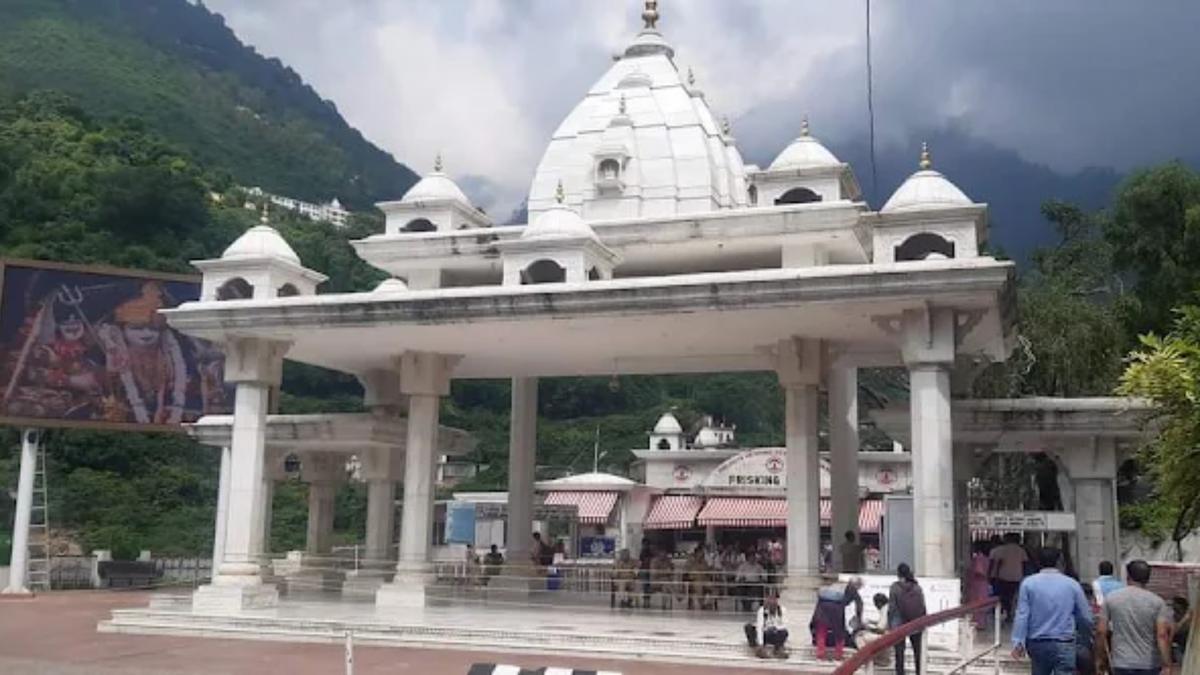
Two days at the foot of Trikuta — a hotel near Banganga in Katra, RFID Yatra Parchi assistance at the SMVDSB counter, the evening Banganga–Charan Paduka–Ardhkuwari leg on Day 1, and the Bhawan darshan plus Bhairon Mandir on Day 2. No helicopter; the trek is on foot, with pony, palki, and electric-vehicle help arranged as you need it. Hindi-first ground coordination throughout.
Day-by-day
Itinerary
2 days · click to expand
You reach Katra in the morning or early afternoon — by train at the Shri Mata Vaishno Devi Katra railway station, or by bus from Jammu. Our coordinator receives you and drops you at the hotel near Banganga, walking distance from the SMVDSB Yatra Parchi counter. After a short rest, we sit down for a quiet briefing: what shoes to wear, what to carry in the daypack (water bottle, light woollen, mobile, ID proof), how to pace yourself on the climb, where the rest stops are at Banganga, Charan Paduka, Ardhkuwari, and Sanjichhat. By late afternoon we walk to the SMVDSB counter and get the RFID Yatra Parchi — your ID proof is needed (Aadhaar works, passport works); the parchi is mandatory for the trek now.</p><p>From the counter we walk to Banganga, the first checkpost — the stream where Mata, fleeing Bhairon, is held to have shot an arrow into the earth and drawn out water for her thirst. A snan or a sankalp here is the traditional beginning of the climb. From Banganga the path climbs gently for the first 1.5 km to Charan Paduka — a small temple at the rock where Mata is held to have rested and left her footprints. We rest a little, then continue another 4.5 km to Ardhkuwari — the cave temple where Mata meditated for nine months before continuing to the Bhawan. The line for the cave-darshan moves slowly; we take darshan and turn back. Either we descend to Katra for the night (our default — you sleep in a proper bed at the hotel), or for groups who want it, we arrange a stay at the Ardhkuwari sarai and continue to the Bhawan early next morning.
Note RFID Yatra Parchi: ID proof mandatory (Aadhaar, passport, driving licence). The parchi is free at the SMVDSB counter; we help you fill the form and queue. The Banganga–Charan Paduka–Ardhkuwari leg is about 6 km one way; pony or palki is available from Banganga if anyone in the group cannot walk the full distance (the battery car runs only between Ardhkuwari and the Bhawan, not from Banganga). Mosquito repellent and a torch for the descent in case it gets dark. Light woollen even in summer — the air thins above Charan Paduka.
Pre-dawn at Katra. We are at the Banganga checkpost by 4:00 AM; the early start gives you the cooler hours of the climb and a shorter darshan queue at the Bhawan. From Banganga you choose on the morning — most pilgrims walk the 12 km, some take a pony (the path is the old paved route), some take a palki for the elderly in the group, and some walk or ride up to Ardhkuwari and take the SMVDSB battery car from there — the battery-car road runs only on the Ardhkuwari–Bhawan stretch. Our coordinator at the Banganga counter helps you choose, and the fare is paid at the SMVDSB-licensed counter (not to touts). The climb passes Charan Paduka, Ardhkuwari, Sanjichhat (where the helipad is, and where many groups have a tea), and reaches the Bhawan area by 8:00–9:00 AM. We join the queue for the cave darshan — the three Pindis, the natural rock formations that are Mahakali (the form of destruction of evil), Mahalakshmi (the form of abundance), and Mahasaraswati (the form of knowledge), all three together as the one Mata. The darshan is short, the queue keeps moving; this is a darshan you bow to and walk past, not sit before.</p><p>After darshan and prasad, the climb to Bhairon Mandir — 2.5 km of switchbacks uphill from the Bhawan, the steepest section of the whole yatra. The mandir sits at the very top of the Trikuta ridge. Bhairon Baba is held in the puranas to be a demon who pursued Mata to her cave; before he died from her hand he asked her forgiveness and was given the boon that no yatra of hers is complete without darshan at his shrine. Most pilgrims skip this climb out of fatigue; we plan the timing on Day 1 so you arrive at the Bhawan with the energy left for Bhairon. The SMVDSB ropeway from the Bhawan to Bhairon — about three minutes each way, ₹100 round trip — runs through the day, and pony is also available for this section. After Bhairon, we descend — back through Sanjichhat, Ardhkuwari, Charan Paduka, Banganga — and reach Katra by mid-afternoon. The cab drops you at the railway station (1.5 km, 5 minutes) or the bus stand for the onward journey. The yatra complete; the parchi stamped; the blessing carried.
Note Pony, pithoo and palki are charged at the official posted rates on the SMVDSB rate board at the counter; the battery car runs only between Ardhkuwari and the Bhawan (₹450 uphill, ₹300 downhill). All paid at SMVDSB-licensed counters on the day; our coordinator helps with the booking and bargains in Hindi. Bhairon Mandir is 2.5 km uphill from the Bhawan; the SMVDSB ropeway from the Bhawan to Bhairon (about three minutes each way, ₹100 round trip) is the easiest way up, and pony is available at the official posted rate. The cave-darshan queue varies — 1–2 hours on a normal day, 6–10 hours during Navratri. Modest dress; no leather inside the cave; phones permitted but discouraged. Confirm your onward train/bus time at booking so the afternoon drop matches.
The story
About this package
Two days at the dwar of Mata Vaishno Devi, from Katra. One night in a hotel near Banganga, the RFID Yatra Parchi at the Shri Mata Vaishno Devi Shrine Board counter, a quiet briefing about what the climb is and how to pace it, and then the trek itself — Banganga, Charan Paduka, Ardhkuwari on Day 1 evening; Bhawan darshan and Bhairon Mandir on Day 2 morning. This is the land-only floor SKU: the simplest, cheapest honest way of doing the yatra from Katra without a helicopter.
The trek from Banganga to the Bhawan is about 12 km one way. Most pilgrims do it on foot with regular rests; those who cannot walk the full distance take a pony (ghoda), a palki (palanquin carried by four bearers), or the SMVDSB battery car, which runs only on the Ardhkuwari–Bhawan stretch (the first 6 km up to Ardhkuwari is walked, or done by pony or palki). Our coordinator at Katra helps you choose the option that fits your group on the morning of the trek — fares are paid at the SMVDSB-licensed counters, not to touts.
What this package is
- Floor land-only SKU. From ₹5,999 per person on twin-share, ex-Katra. No helicopter, no premium hotel. You reach Katra on your own (train to Shri Mata Vaishno Devi Katra station, or bus from Jammu); we receive you there.
- One night in a hotel near Banganga. Walking distance to the Banganga checkpost and the SMVDSB Yatra Parchi counter — no auto at 3 AM to reach the starting point.
- RFID Yatra Parchi assistance. Our coordinator helps you get the RFID-enabled Yatra Parchi at the SMVDSB counter, which is now mandatory for the trek. ID proof needed.
- Pony, palki, and electric-vehicle help. We do not bundle these into the package price — fares vary by season and route — but we walk you through the SMVDSB-licensed counters where they are booked, and we negotiate on your behalf in Hindi.
- Bhairon Mandir. The yatra is held complete only after Bhairon Mandir — 2.5 km uphill from the Bhawan, the shrine of Bhairon Baba whom Mata herself blessed. Most pilgrims skip it because of fatigue; the SMVDSB ropeway from the Bhawan to Bhairon (about three minutes each way, ₹100 round trip) makes it far easier, and we plan the timing so you have the energy left for it.
- Hindi-first ops. The hotel staff at Katra, our ground coordinator, and the licensed pony-walas all speak Hindi as their first language.
How the two days unfold
Day 1 you arrive at Katra (the Shri Mata Vaishno Devi Katra railway station is 1.5 km from the town centre; we can pick you up). Check in at the hotel near Banganga, brief rest, and a quiet briefing from our coordinator: how the climb works, what to carry, what shoes to wear, where the rest stops are. By late afternoon we walk to the SMVDSB counter for the RFID Yatra Parchi, then begin the evening leg — Banganga (where Mata is held to have shot an arrow into the earth and drawn out water), Charan Paduka (the rock with the impressions of Mata's feet), and on to Ardhkuwari (the cave where Mata meditated for nine months). About 6 km from Banganga to Ardhkuwari, mostly uphill. Many groups stop here for the night at the Ardhkuwari sarai; others continue to the Bhawan. Our default is to descend back to Katra for the night so you sleep in a proper bed.
Day 2 we begin pre-dawn — by 4:00 AM at the Banganga checkpost — and either walk, take a pony, or board the electric vehicle for the climb to the Bhawan. By 8:00–9:00 AM we are in the queue for the Pindi darshan: the three natural rock formations (Mahakali, Mahalakshmi, Mahasaraswati) inside the cave that are Mata herself. After darshan and prasad, the climb to Bhairon Mandir — 2.5 km of switchback uphill, the steepest section of the whole yatra. The view from Bhairon is the wide Trikuta range; the darshan is short and quiet. We descend back to Katra by afternoon, drop at the railway station or bus stand for the onward journey.
Who this is for
Book this if:
- You are doing Vaishno Devi as your first Himalayan-foothill yatra and want a simple, honest 2-day plan from Katra
- You prefer the trek on foot or with pony/palki — not the helicopter
- You want a hotel near Banganga so the start of the trek is walking distance, not an auto ride
- You want help with the RFID Yatra Parchi and pony/palki/electric-vehicle booking, in Hindi, at SMVDSB-licensed counters
- Your budget is in the ₹5,000–8,000 per person range for the land portion (excluding travel to Katra)
When to go
The shrine is open year-round. The most comfortable months are March to June (warm days, cool nights) and September to November (clear skies after the monsoon). December to February can see snow at the Bhawan; the trek stays open but the upper sections may be slippery and the cave is cold. July and August are the monsoon — the trek is open but landslides can close sections; we generally recommend against these months for first-time pilgrims. The two festival peaks are Navratri (March–April and September–October) — the Bhawan is at its most alive but the queue can be 6–10 hours. For a shorter wait, travel just before or just after Navratri.
What you get
Highlights
Logistics
What's included
Inclusions
- One night on twin-share at a hotel near Banganga in Katra (walking distance to the SMVDSB Yatra Parchi counter)
- Pickup at Shri Mata Vaishno Devi Katra railway station or Katra bus stand on Day 1
- Drop at the railway station or bus stand on Day 2 afternoon
- RFID Yatra Parchi assistance at the SMVDSB counter
- Hindi-speaking ground coordinator at Katra for the briefing and through the trek
- Help with pony/palki/electric-vehicle booking at SMVDSB-licensed counters (fares paid directly by you on the day)
- Breakfast on Day 2 at the hotel
- 24×7 Hindi-speaking coordinator on call through the yatra
Not included
- Travel to Katra and the return (train tickets, bus tickets, flights to Jammu — we can quote separately)
- Helicopter tickets Katra ↔ Sanjichhat (not part of this SKU; we can arrange separately on request)
- Pony, palki, and electric-vehicle fares (paid directly at SMVDSB-licensed counters on the day; the official posted rates shared at booking)
- Lunch and dinner on both days
- Personal expenses, prasad, donations, telephone calls
- Any donation at the shrine (suggested ₹50–100, fully optional)
- Travel insurance — recommended
- Anything not specifically listed in the inclusions
Before you book
Questions pilgrims ask
What exactly does the ₹5,999 price cover, and what doesn't it?
The ₹5,999 covers one night's hotel near Banganga, pickup/drop at Katra railway station or bus stand, help registering for your RFID Yatra Parchi, a Hindi-speaking ground coordinator for both days, and breakfast on Day 2. It does not include pony, palki or battery-car fares, other meals, helicopter tickets, or temple donations — these are paid directly at official counters as you go.
Do I need any registration before starting the trek?
Yes — every pilgrim must carry an RFID Yatra Parchi issued by the Shrine Board before starting the trek; it's mandatory identification and cannot be skipped. We register you at the SMVDSB counter near Banganga on your first evening in Katra using your Aadhaar, passport or driving licence, so you're ready to start at dawn the next day.
Is there a new rule about completing the yatra within 24 hours?
Under a Shrine Board rule introduced in December 2025, every pilgrim must begin the trek within 12 hours of their RFID card being issued and complete the full round trip back to Katra within 24 hours, whether on foot, pony, battery car or helicopter. We build this into the plan by getting your card on Day 1 evening and having you back in Katra by Day 2 afternoon, comfortably inside that window.
How far is the walk from Banganga to Bhawan, and how long does it take?
The climb from Banganga to Bhawan covers roughly 12-13 km, mostly on a paved but steadily rising path. On our plan you cover about 6 km on the Day 1 evening walk to Ardhkuwari and the remaining distance on Day 2's predawn trek to Bhawan. A reasonably fit adult takes 6-8 hours for the full ascent at an easy pace, more if you stop often.
Do I have to walk the whole way, or can I take a pony or palki?
You can walk the whole way, or hire a pony, palki (four-bearer palanquin) or pithhu at posted rates along the track — these are paid separately at official counters, not something we book in advance. The Shrine Board also runs a battery car between Ardhkuwari and Bhawan (around ₹450 up, ₹300 down); we help you find the right counter but the choice and cost are yours on the day.
Is the Bhairon Mandir visit included, and why do people say the yatra is incomplete without it?
Yes, our Day 2 plan includes the climb to Bhairon Mandir, about 2.5 km uphill from Bhawan — traditionally pilgrims visit it on the way down, since popular belief holds the yatra is incomplete without paying respects there. It's the steepest stretch of the whole trip, so pace yourself after the main darshan.
What about luggage and phones — can I carry my bag all the way?
You shouldn't carry heavy luggage up the trek — leave it at the hotel in Katra or Banganga, since the Shrine Board maintains cloakroom facilities along the route for whatever you do need to carry. Mobile phones and cameras are restricted beyond certain points on the track, so keep this in mind before you start.
Is this doable in 2 days without rushing?
Yes, but it's a brisk two days, not a relaxed one — you arrive, register and do a preparatory evening walk on Day 1, then the main 12+ km push to Bhawan and back starts before dawn on Day 2. If you'd rather spread the climb over calmer days, our 4-day premium package from Jammu gives you more breathing room.
What's the best time of year, and how bad are Navratri crowds?
March to June and September to November are the most comfortable months; December to February can bring snow on the upper track, and the monsoon months of July-August are best avoided by first-timers. Navratri is the busiest period of the year — the Shrine Board's own data shows several million pilgrims visit annually, and queues at Bhawan during Navratri commonly run 6-10 hours, so book outside the festival window if you want an easier trip.
Send an Enquiry
Leave your name and number — our team will call you.
Starting price
₹5,999
per person
Replies in minutes on WhatsApp · 7 AM–10 PM
Trusted by Pilgrims
“We came for my mother's 75th birthday darshan. Satmarg arranged wheelchair access, a pandit who spoke her dialect, and a private boat for her Ganga aarti.”
“Third time using Satmarg. The cab service is top-notch — AC Innova, polite driver, no surprise charges.”
Udyam-registered MSME · UDYAM-UP-75-0177698
Varanasi-based operator · local guides & pandits
Hindi & English support · 7 AM–10 PM