Chitrakoot is the most beloved of the forest tirthas of the Ramayana. After leaving Ayodhya on his fourteen-year vanvas, Shri Ram with Sita and Lakshman first went to Bharadwaj Ashram at Prayagraj, then on the muni's advice came to the forest of Chitrakoot — the hill that the Ramayana calls "the most beautiful of forests, dear to the sages." Here the three lived in a hermitage on the banks of the Mandakini, and here Bharat came from Ayodhya to ask Shri Ram to return. The meeting of Ram and Bharat at Bharat-Milap is one of the most beloved scenes of Vaishnava bhakti.
The town centres on Kamadgiri — the sacred hill of Ram-Sita-Lakshman's vanvas. The 5-km parikrama of Kamadgiri is the heart of the yatra. Ram Ghat on the Mandakini is the most beloved riverbank. Janaki Kund (Sita's bathing pond), Sphatik Shila (the crystal rock where Ram and Sita sat), Hanuman Dhara (the cooling waterfall where Hanuman bathed), and Gupt Godavari (the hidden caves) are visited as part of the wider yatra.
Katha and local belief
The Ramayana places Chitrakoot at the heart of the vanvas-path. Goswami Tulsidas wrote much of the Ramcharitmanas here in the seventeenth century — at the place now called Tulsi Peeth. The bhajans of Tulsidas, Surdas, and many bhakti saints turn to the lila-sthals of Chitrakoot.
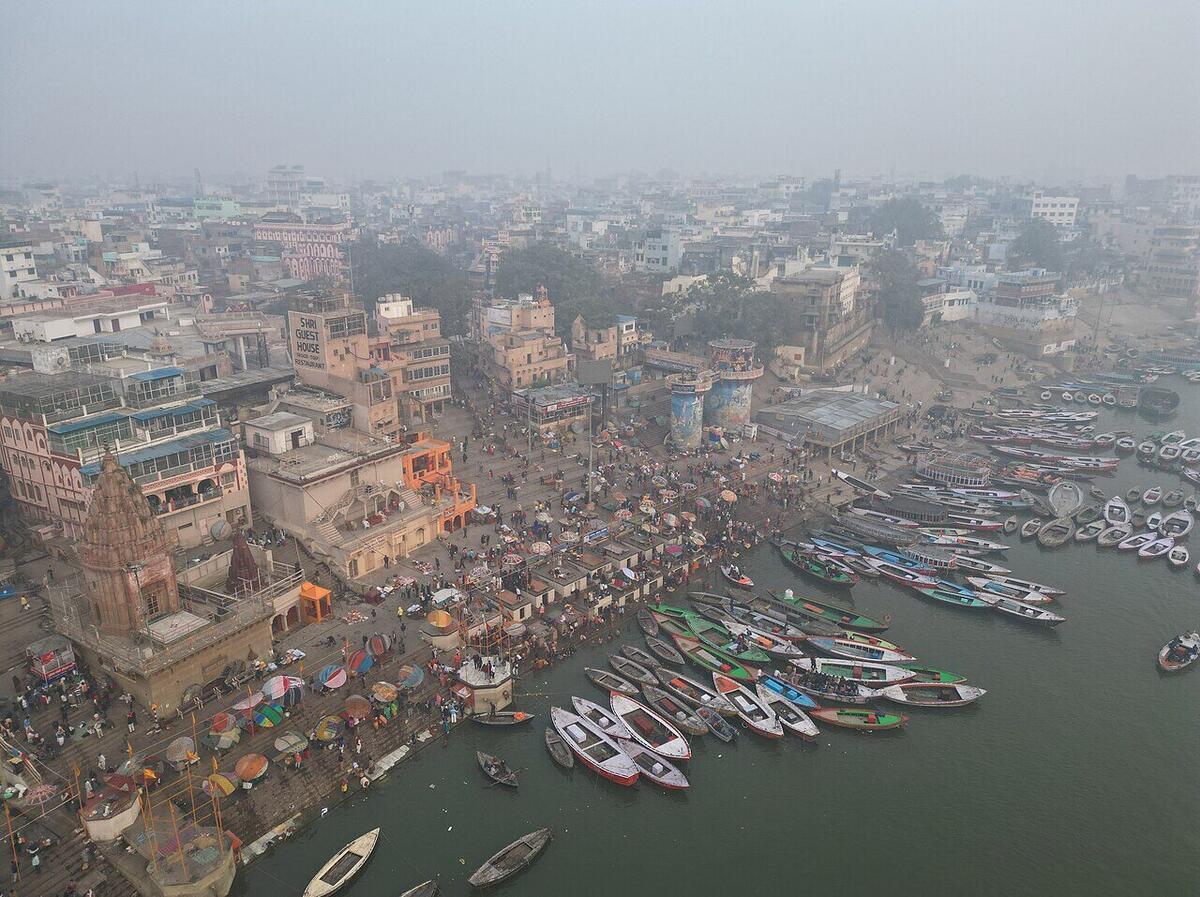
Chitrakoot is held in tradition to be the most blessed of the forest tirthas because the Lord himself made it his home for eleven and a half years. The parikrama of Kamadgiri is held to grant fulfilment of righteous desires (kamad = desire-fulfilling); pilgrims walk barefoot, often early in the morning, often with sankalpa for a specific blessing.
To the devotee, Chitrakoot is the place where Ram is most accessible in his forest-form — not as king, not as warrior, but as the simple ascetic husband of Sita and brother of Lakshman. The Ramcharitmanas of Tulsidas is permeated with the bhav of Chitrakoot.
History
Chitrakoot's sacred history reaches into the Ramayana and the long oral tradition. The town as a pilgrim centre grew through the medieval period. Tulsi Peeth — where Tulsidas composed parts of the Ramcharitmanas — is one of the most important Bhakti-tradition sites in north India. The Bharatpur, Tikamgarh, and Rewa royal families patronised the temples and dharamshalas of Chitrakoot through the eighteenth and nineteenth centuries. The town today sits across the border of Uttar Pradesh and Madhya Pradesh; the main pilgrim infrastructure is on the UP side.
Architecture
Chitrakoot's pilgrim landscape is shaped by forest, hill, and river. Kamadgiri is a low forested hill ringed by the 5-km parikrama path with shrines at intervals. Ram Ghat on the Mandakini is a long stone-paved riverbank; Janaki Kund and Sphatik Shila are intimate forest groves and rocky river-bends. Gupt Godavari is a remarkable system of natural caves with a stream running through. Hanuman Dhara is a hilltop waterfall shrine.
Rituals & Practices
The Kamadgiri parikrama is undertaken in the early morning — barefoot is traditional, and pilgrims complete the 5-km path with darshan stops at every small shrine. The Ramcharitmanas paath is held in many temples through the day. Evening Ganga Aarti at Ram Ghat (which is the Mandakini, not Ganga proper, but the aarti shares the same form) is one of the most beloved spiritual moments.
The traditional sequence is: morning Kamadgiri parikrama, darshan at Bharat Milap Mandir and Mukhyarvind, Ram Ghat snan, then the wider Chitrakoot points — Janaki Kund, Sphatik Shila, Gupt Godavari, Hanuman Dhara, Tulsi Peeth. The full Chitrakoot yatra takes 2-3 days.
Festivals & Celebrations
| Festival | When | Crowd |
|---|---|---|
| Diwali Mela | — | very_high |
| Ram Navami | — | very_high |
| Somvar Amavasya | — | high |
| Hanuman Jayanti | — | high |
Diwali Mela: The most spiritually charged day of the Chitrakoot year.
Ram Navami: Honours Ram in the forest where he lived.
Somvar Amavasya: The auspicious day for vanvas-path pilgrims.
Hanuman Jayanti: Honours Hanuman who served Ram in his vanvas.
Prepare for Your Visit
Practical guidance to help you plan your pilgrimage
| Pilgrim Guidance | How to reach ChitrakootChitrakoot is reached by rail and road. Chitrakoot Dham Karwi railway station (also called Karwi) is on the Manikpur-Allahabad line. The nearest major railhead is Manikpur (30 km) on the main Delhi-Mumbai trunk. The nearest airport is Khajuraho (170 km, 4 hours) or Prayagraj (130 km, 3 hours). Many pilgrims combine Chitrakoot with Prayagraj and Ayodhya as part of the Ram-vanvas path yatra. Preparation for pilgrimsChitrakoot is a small forest town with basic but adequate accommodation. The temple Trust, government dharamshalas, and several private ashrams offer rooms. Carry comfortable walking shoes for the Kamadgiri parikrama; the path is mostly even but can be hot in summer. Carry water and light snacks. The Mandakini is small and shallow at Ram Ghat — safe for snan but do not use soap. Best time to visitOctober to March is the most pleasant weather. Diwali Mela (Kartik) and Ram Navami (Chaitra) are the major spiritual peaks; the Diwali Mela draws lakhs of pilgrims for the dawn Kamadgiri parikrama on Amavasya day. Somvar Amavasya any month also draws large crowds for the parikrama. May-June is hot; July-September brings the Mandakini in flood but also the most lush Chitrakoot. |
Location
Chitrakoot, UP
Pilgrim photos
No pilgrim photos yet.
Community corrections
No corrections yet.
Edit history
No revisions yet.
Plan Your Visit to Chitrakoot
Get a custom itinerary and pricing for your trip.
Recommended
Packages for this destination
Pilgrim Notes
On-ground observations from fellow pilgrims
No pilgrim notes yet. Be the first to share on-ground observations!
Sign in to share a note.
Pilgrim Reviews
Be the first to share your experience at Chitrakoot.
Sign in to write a review.
Nearby sacred places
Discover other sacred places near Chitrakoot
Explore temples, tirthas, and pilgrimage sites in UP
Explore nearbyPart of these circuits
Walk the traditional pilgrimage routes this destination belongs to.