Dwarkadhish in Mathura stands at the heart of the old city, a short walk from Vishram Ghat on the Yamuna. The temple is dedicated not to Krishna of Vraja (the cowherd boy of nearby Vrindavan-Gokul) but to Krishna of Dwarka — the king in his fully-flowered maturity who left Mathura for the Saurashtra coast. The pairing is poetic: in his birth-city, Krishna is worshipped in the form he took after leaving it, returning to Mathura in the heart of the devotee.
The temple was built in 1814 by Seth Gokul Das Parikh, a Vaishnava patron of the Vallabhacharya tradition, and was placed under the seva of the Goswami descendants of Mahaprabhu Vallabhacharya. The eight-darshan Pushti Marga rhythm — Mangala, Sringar, Gwala, Rajbhog, Utthapan, Bhog, Sandhya, Shayan — has continued unbroken at the temple since.
The Vallabhacharya tradition
The Pushti Marga, founded by Mahaprabhu Vallabhacharya (1479-1531), is one of the four principal Vaishnava sampradayas of north India. Vallabhacharya's teaching centred on pushti-bhakti — the devotion of grace, where God's love freely descends without need for elaborate ritual. Dwarkadhish Mathura is among the most-visited Pushti Marga temples outside the principal Shri Nathji Mandir at Nathdwara.
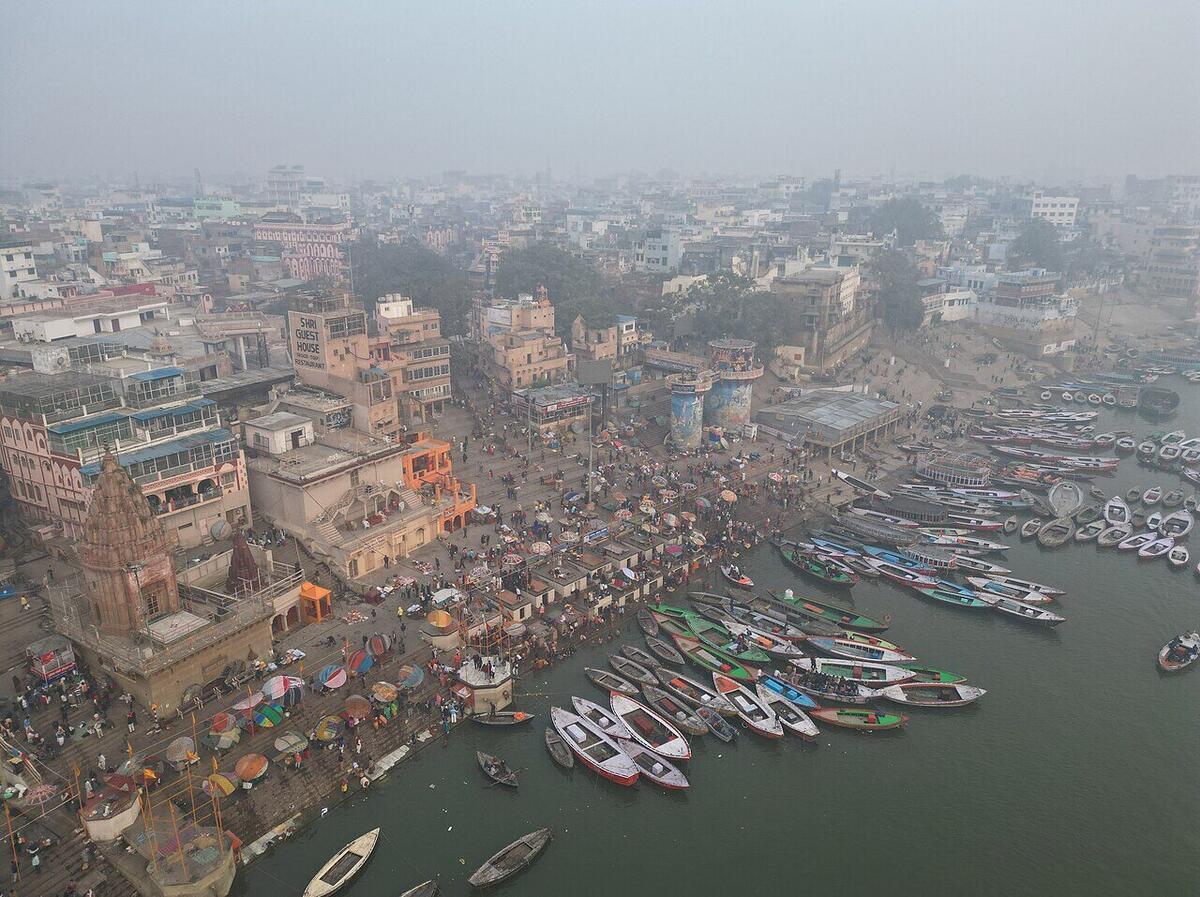
Dwarkadhish Mathura is held to be a unique tirtha because it brings Krishna's two great forms — the Vraja-Krishna of Mathura-birth and the Dwarkadhish-Krishna of Saurashtra-kingdom — together in one shrine. The Pushti Marga seva-paddhati, with its eight daily darshans, elaborate floral decoration, and seasonally-changing bhog, is among the richest devotional traditions in India. The Mathura temple is the bhakti centre for Pushti Marga followers across north India.
For pilgrims of all traditions, the temple is a beloved part of the Mathura yatra circuit alongside Krishna Janmasthan and Vishram Ghat. The walk from the Janmasthan to Dwarkadhish through the old-city lanes is itself a small pilgrimage — past sweet-shops famous for Mathura pedha, brassware bazaars, and dozens of smaller Krishna shrines.
History
Dwarkadhish was built in 1814 by Seth Gokul Das Parikh, treasurer of the princely state of Gwalior. The Goswami family of Vrindavan's Dwarkadhish Goswamis manages the seva and is descended in direct line from Vallabhacharya. The temple is among the central daily-darshan sites for Pushti Marga devotees across north and west India.
Renovations in the late nineteenth and twentieth centuries expanded the courtyard and the bhog facilities, but the original sanctum and the Pushti darshan rhythm have remained constant. The Mathura Dwarkadhish Trust manages the temple today.
Architecture
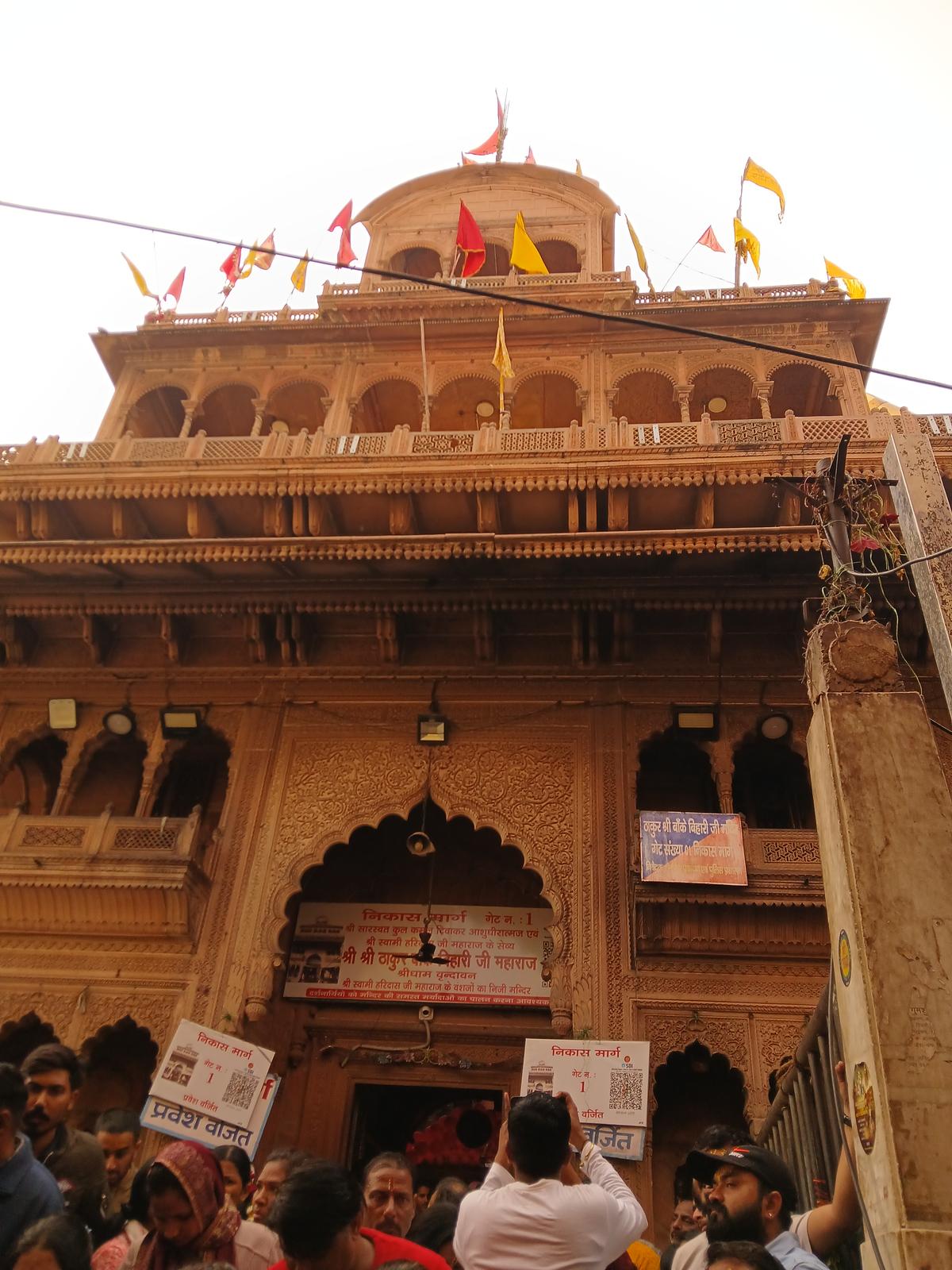
The Dwarkadhish temple is built in the Rajasthani-Pushti Marga haveli-mandir style — a courtyard temple with a high carved entrance, hanging brass lamps, and painted ceilings depicting Krishna lila. The main sanctum at one end of the courtyard holds the murti of Dwarkadhish — a small black-stone Krishna in royal four-armed Vishnu form, dressed in seasonal silks with elaborate ornamental layering.
The courtyard is bright with floral garlands and bhajan-mandalis throughout the day. Side chambers house subsidiary shrines to Yamuna Ji (river-goddess), Mahaprabhu Vallabhacharya (samadhi-shrine), and the smaller Pushti deities.
Rituals & Practices
Dwarkadhish follows the eight-darshan Pushti rhythm. Mangala Arati at around 6 AM begins the day; Sringar Darshan reveals the deity in his morning dress; Gwala marks the cow-grazing time; Rajbhog at noon is the principal bhog offering; Utthapan after the midday rest; Bhog in the late afternoon; Sandhya at sunset; Shayan at night. Verify exact timings on the day of darshan.
The traditional sequence in Mathura is: bath at Vishram Ghat (3-minute walk), darshan at Dwarkadhish, then darshan at Krishna Janmasthan. Many pilgrims also do the small Mathura parikrama which passes through these three sites.
Festivals at Dwarkadhish are particularly elaborate — Janmashtami midnight aarti, Holi (the famous Vaishnava Holi with abir-gulal showers on the deity), Tulsi Vivah in Kartik, and Geeta Jayanti in Margashirsha.
Festivals & Celebrations
| Festival | When | Crowd |
|---|---|---|
| Janmashtami | — | very_high |
| Holi | — | very_high |
| Tulsi Vivah | — | high |
| Geeta Jayanti | — | high |
Janmashtami: The most spiritually charged day.
Holi: The most photographed Holi tradition of Mathura.
Tulsi Vivah: The traditional Vaishnava wedding rite.
Geeta Jayanti: Honours Krishna''s teaching.
Prepare for Your Visit
Practical guidance to help you plan your pilgrimage
| Pilgrim Guidance | How to reachDwarkadhish is in the old city of Mathura, about 1.5 km from Mathura Junction railway station and 3 km from Vishram Ghat. Cycle-rickshaws and e-rickshaws drop pilgrims at the temple lane. Delhi (145 km) is the nearest international airport. PreparationModest clothes; full-sleeved kurtas. The temple courtyard is dense during arati times — keep small children close. Phones permitted in outer courtyard; not in the sanctum. Best time to visitOctober to March for pleasant weather. Mangala Arati (early morning) is the most peaceful; evening Sandhya Arati is the most beautiful. Janmashtami, Holi week, and Geeta Jayanti are the spiritual peaks. |
Location
Mathura, UP
Pilgrim photos
No pilgrim photos yet.
Community corrections
No corrections yet.
Edit history
No revisions yet.
Plan Your Visit to Dwarkadhish Temple, Mathura
Get a custom itinerary and pricing for your trip.
Recommended
Packages for this destination
Pilgrim Notes
On-ground observations from fellow pilgrims
No pilgrim notes yet. Be the first to share on-ground observations!
Sign in to share a note.
Pilgrim Reviews
Be the first to share your experience at Dwarkadhish Temple, Mathura.
Sign in to write a review.
Nearby sacred places
Discover other sacred places near Dwarkadhish Temple, Mathura
Explore temples, tirthas, and pilgrimage sites in UP
Explore nearbyPart of these circuits
Walk the traditional pilgrimage routes this destination belongs to.