Gokul is the village where the bal-lila of Shri Krishna began. On the night of his birth, Vasudeva carried the infant from Kansa's prison in Mathura across the swollen Yamuna and brought him to the home of his foster-parents in Gokul. Tradition holds that the infant Krishna spent his earliest years here — drinking Yashoda's milk, slaying Putana, breaking the cart of Sakatasura, and beginning the bal-lila that the Bhagavata Purana sings.
The town is the principal seat of the Pushti Marga of Vallabhacharya in Braj. The Gokulnath Temple, built by Goswami Vitthalnath in the sixteenth century, is the most beloved shrine; the murti of Bal Krishna in his playful childhood form is served by the Goswami descendants of Vallabhacharya. Nearby, Nandeshwar Mahadev, Chaurasi Khambha (the eighty-four pillared temple), Brahmand Ghat, and the Raman Reti grove are visited as part of the Gokul yatra.
Katha and local belief
Vasudeva's journey across the Yamuna with the infant Krishna is one of the most beloved kathas of Vaishnava tradition. The Bhagavata Purana tells how the swollen river parted before Vasudeva, how Sheshanaga held back the rain with his many hoods, and how the child Krishna touched the water of his beloved Yamuna for the first time on this crossing. The town of Gokul received the divine child, and Yashoda — having herself just given birth to a daughter — accepted him as her own, exchanging her child with Devaki's.
Gokul holds a special place in Vaishnava tradition as the birthplace of Krishna's bal-lila. The Pushti Marga, founded by Mahaprabhu Vallabhacharya in the early sixteenth century, considers Gokul its central seat in Braj; the lineage of Goswami descendants of Vallabhacharya have served the deities of Gokul for almost five centuries. Tradition holds that Vallabhacharya saw Krishna in his swayam-prakata form at Gokul and received the Vallabh-anugraha here, giving rise to the Pushti Marga way of devotion.
For the devotee, Gokul is the village of vatsalya-rasa — the parental love of Yashoda and Nanda for the infant Krishna. The bhajans of the Ashtachhap poets of the Pushti Marga — Surdas, Paramananddas, Krishnadas, Kumbhandas, Chaturbhujdas, Govindswami, Chitswami, Nanddas — turn again and again to the kathas of Gokul.
History
Gokul as a Vaishnava pilgrimage centre grew under the sixteenth-century Pushti Marga of Vallabhacharya. The Gokulnath Temple was established by Goswami Vitthalnath, Vallabhacharya's second son, around 1551. The Chaurasi Khambha temple, an architectural marvel with eighty-four carved pillars, is older — possibly Gupta-period — and remembered as the site where Nanda performed Krishna's naming ceremony with Garga muni. The town was the principal Pushti Marga centre until the eighteenth century, when the deity Shri Nathji was moved to Nathdwara in Rajasthan for safety during Aurangzeb's persecution. Even after that move, Gokul has remained one of the deepest seats of Vaishnava-Pushti devotion in Braj.
Architecture
The Gokulnath Temple is built in the haveli-mandir style of the Pushti Marga — a large havelied complex with multiple courtyards, ornamental gateways, and richly painted ceilings depicting Krishna-lila. The murti of Bal Krishna in the sanctum is served eight times a day in the elaborate Pushti darshan rhythm.
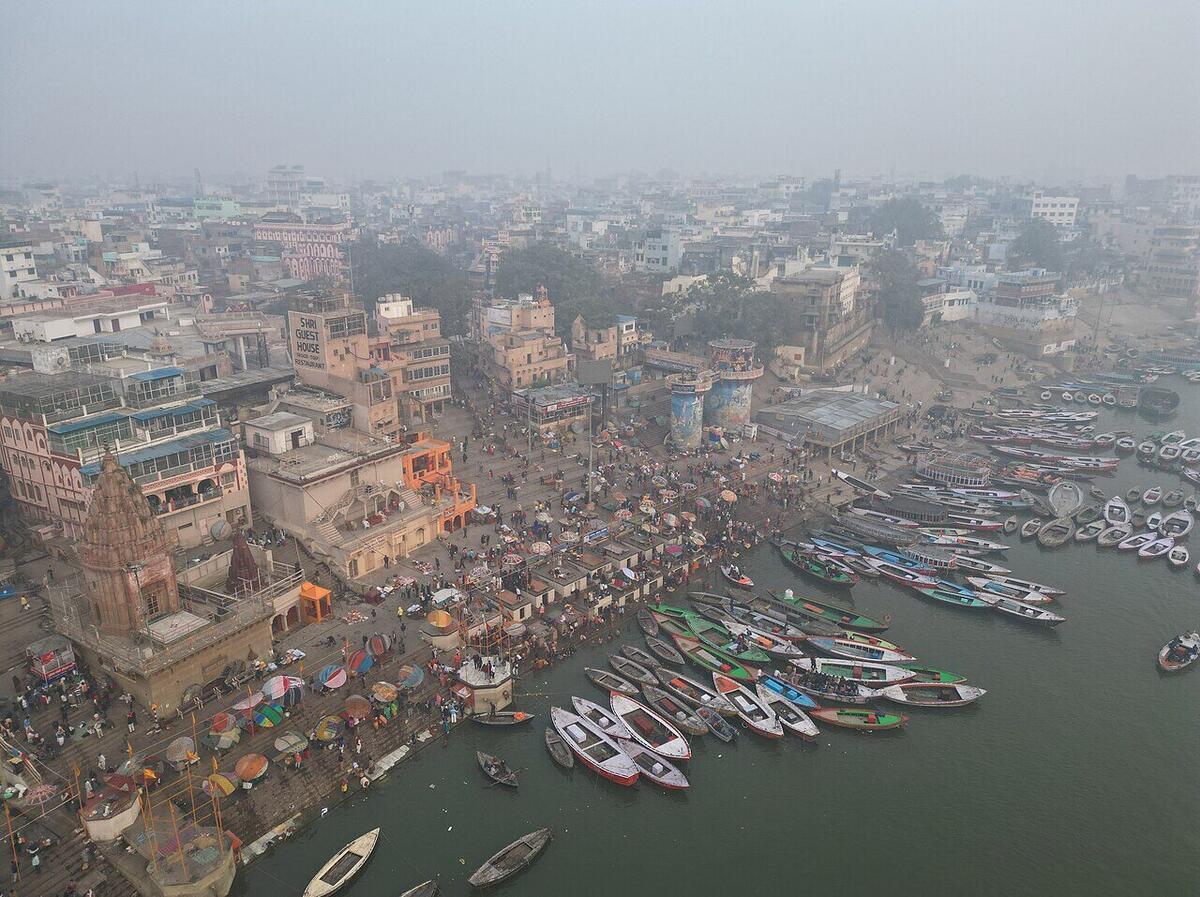
The Chaurasi Khambha temple stands apart for its eighty-four carved stone pillars — said to be from the Gupta period, making it one of the oldest temple structures in Braj. The Brahmand Ghat on the Yamuna is a long stone-paved riverbank with steps and small shrines.
Rituals & Practices
The Gokulnath Temple follows the Pushti Marga eight-darshan rhythm — Mangala, Shringar, Gwal, Rajbhog, Utthapan, Bhog, Sandhya, Shayan — each with its own bhog, costume, and decoration of the deity. Verify exact timings on the day of darshan as they shift seasonally. Other temples in Gokul follow simpler twice-daily aarti schedules.
The traditional sequence on a Gokul yatra is to first visit the Gokulnath Temple, then Chaurasi Khambha, then Nandeshwar Mahadev, then Brahmand Ghat for snan, and finally the Raman Reti grove. Pind-daan and tarpan are also offered at Brahmand Ghat.
Special pujas include Annakut on the day after Diwali (a massive offering of grains and sweets to Krishna), recitation of the Bhagavata Purana's Krishna-katha, and the bhog of fifty-six items on Janmashtami.
Festivals & Celebrations
| Festival | When | Crowd |
|---|---|---|
| Janmashtami | — | very_high |
| Annakut | — | very_high |
| Nand Mahotsav | — | very_high |
| Kartik (full month) | — | high |
Janmashtami: The night of Krishna''s birth â observed at the very village where Yashoda received him.
Annakut: Honours Krishna lifting Govardhan.
Nand Mahotsav: Honours Nanda''s joy at receiving Krishna into his home.
Kartik (full month): The month dear to Damodar Krishna.
Prepare for Your Visit
Practical guidance to help you plan your pilgrimage
| Pilgrim Guidance | How to reach GokulGokul is 15 km from Mathura by road, on the eastern bank of the Yamuna. The drive takes about 30 minutes. Most pilgrims combine Gokul with Mathura and Vrindavan in a single day, or as part of the wider Braj Chaurasi Kos Parikrama. Preparation for pilgrimsGokul is a small town with limited hotel options; most pilgrims stay in Mathura or Vrindavan. The Pushti Marga darshan rhythm requires advance knowledge — if you wish to attend a specific darshan (Rajbhog, Shringar, etc), check timings ahead and arrive with time to spare. The town's lanes are narrow; e-rickshaws and cycle-rickshaws are best for moving between sites. Best time to visitOctober to March for pleasant weather. Janmashtami in Bhadrapada (August-September) is the spiritual peak — the night of Krishna's birth, with midnight aarti at Gokulnath and Brahmand Ghat. Annakut the day after Diwali is also major. Kartik month sees daily bhajan and parikrama. |
Location
Mathura, UP
Pilgrim photos
No pilgrim photos yet.
Community corrections
No corrections yet.
Edit history
No revisions yet.
Plan Your Visit to Gokul
Get a custom itinerary and pricing for your trip.
Recommended
Packages for this destination
Pilgrim Notes
On-ground observations from fellow pilgrims
No pilgrim notes yet. Be the first to share on-ground observations!
Sign in to share a note.
Pilgrim Reviews
Be the first to share your experience at Gokul.
Sign in to write a review.
Nearby sacred places
Discover other sacred places near Gokul
Explore temples, tirthas, and pilgrimage sites in UP
Explore nearbyPart of these circuits
Walk the traditional pilgrimage routes this destination belongs to.