Gokulnath Mandir stands in the heart of Mahavan-Gokul, on the eastern bank of the Yamuna, in the very landscape where Hindu tradition holds that Krishna spent his infant lila in the home of Nanda and Yashoda. For followers of Pushtimarga — the path of divine grace established by Shri Vallabhacharya in the early sixteenth century — this haveli is not simply a temple. It is the founding seat of Gokulnathji, the svarup brought into seva by Gusainji (Shri Vitthalnathji), Vallabhacharya's second son and the great organiser of the Pushti sampradaya.
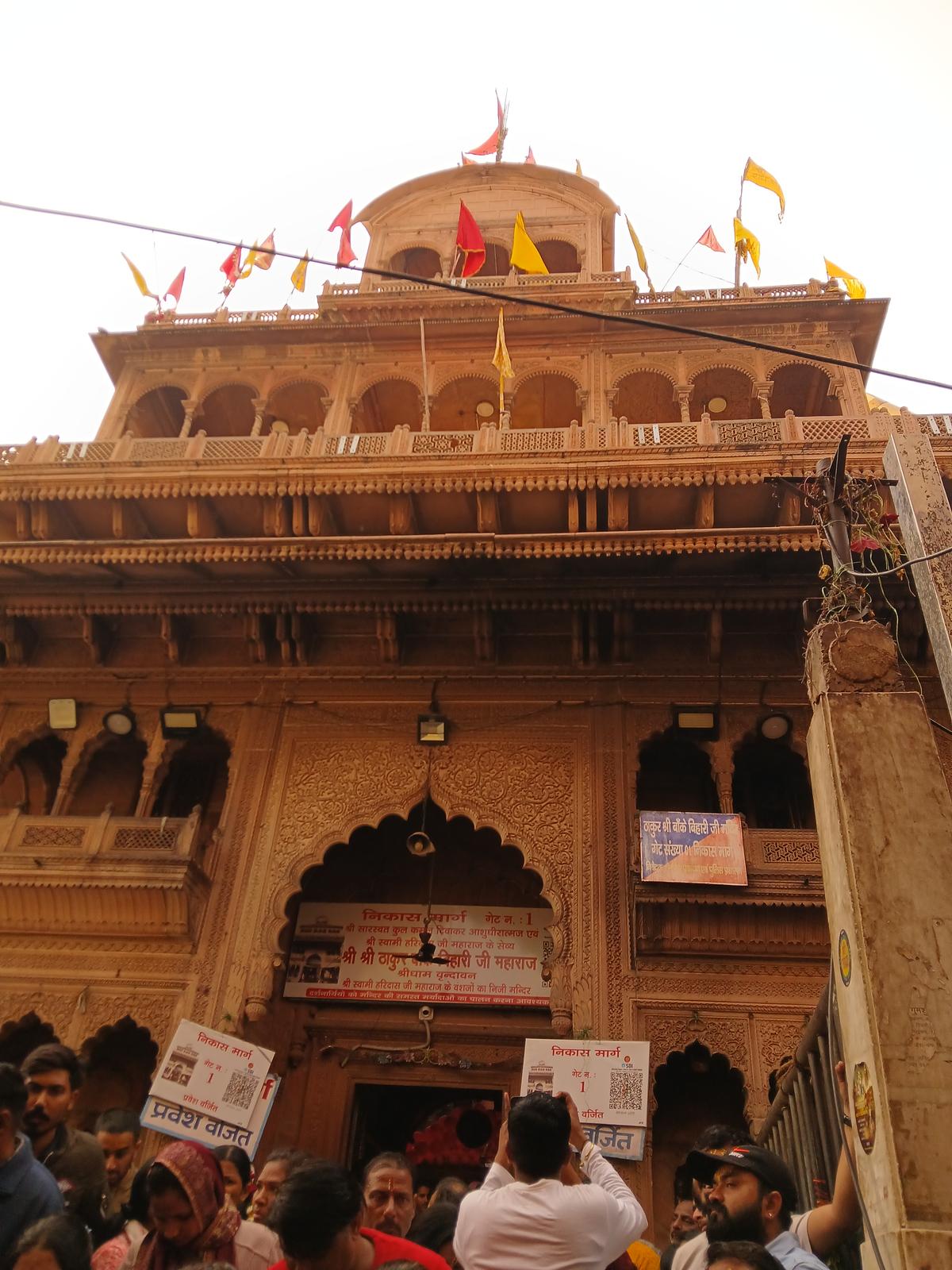
Pilgrims approach Gokulnath through the narrow lanes of old Gokul, past sweet-shops, kirtan-mandalis, and the small shrines of Mahavan that mark the lila-sthals of Krishna's infancy. The mandir is built in the traditional haveli style of Pushtimarga: an inward-facing courtyard, modest exterior, and a sanctum opened to the devotee only at the eight appointed darshans of the day (ashtayama seva). To enter is to step into a household where Thakurji is treated not as a distant deity but as a beloved member of the family — bathed, dressed, fed, sung to, and rested through the rhythm of every day.
Gokulnathji is the central svarup at this haveli, and in the wider Pushti tradition he is held to be the form through whom Gusainji extended the seva established by his father. From this seat the saptaswarup — the seven principal svarups of Pushtimarga, distributed among Gusainji's seven sons — went forth to their respective houses (Nathdwara, Kankroli, Kamavan, Gokul, Surat, Bhuj, Kamavan-Bithoor), each carrying a particular bhava of seva. Gokulnathji remained at Gokul, anchoring the sampradaya at its founding place.
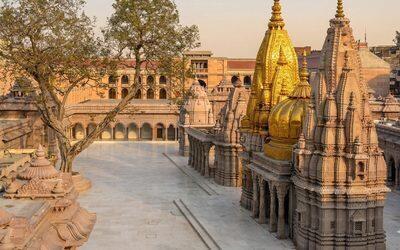
In Pushtimarga, devotion is understood as pushti — the path of pure divine grace, freely given. Shri Vallabhacharya established this path in the early 1500s; his son Gusainji (Vitthalnathji, 1515-1585) shaped its seva, ritual, and household-mandir form into the living tradition it remains today. Gokulnath Mandir is the principal seat of that organising work. For Pushti vaishnavas, darshan here is darshan of the very place from which the sampradaya's seva-rachana spread into the wider Braj-mandal.
The shrine is held to be especially close to vatsalya bhava — the loving regard a mother and father hold for their child. Gokul is the place of Krishna's infant lila — the makhan-chori, the kaliya-mardan at the nearby Yamuna, the lifting of Govardhan that lies just beyond. Gokulnathji is worshipped in this bhava: as the beloved child Krishna whom Yashoda nursed and Nanda cradled. The seva is therefore tender, domestic, and emotionally near.
A long-cherished understanding of the Pushti tradition is that the svarups are not made — they are prakatita, self-revealed, and given by the Lord himself to the acharyas for the upliftment of devotees. Gokulnathji at this haveli carries that traditional standing. Devotees come not to view an image but to enter a relationship of seva that has been carried forward across nearly five centuries through an unbroken line of Pushti acharyas descended from Gusainji.
Gokul, Mahavan, and the saptaswarup memory
Local devotional tradition distinguishes carefully between Gokul and Mahavan, though they sit together in pilgrim memory. Mahavan (the older settlement, on the eastern bank) is held to be the original Brajbhumi of Nanda Baba's home — the sthal of Krishna's earliest lila. Gokul as a Pushtimarga centre grew around the haveli established by Gusainji on the riverbank near Mahavan, and the two have flowed together in pilgrimage usage ever since. The Gokulnath Mandir lies at the spiritual centre of this combined sacred geography.
The saptaswarup tradition holds that Gusainji entrusted seven principal svarups to his seven sons, each becoming the founding deity of a Pushti haveli. Shrinathji went to Nathdwara, Vitthalnathji to Nathdwara-Kankroli, Dwarkadhish to Kankroli, Gokulnathji remained at Gokul, Mathuradhish to Kota and later Mathura, Balkrishnaji and Madanmohanji to other seats. The Pushti pilgrim's yatra often traces this saptaswarup remembrance, and Gokul is one of its essential stations.
History
The story of Gokulnath Mandir begins with the early sixteenth-century arrival of Pushtimarga in Braj. Shri Vallabhacharya (1479-1531) is held by tradition to have received the svarup of Shrinathji at Mount Govardhan and to have established the foundational principles of Pushtimarga — bhakti as divine grace, seva as householder worship, and Brahmasambandha as the initiating rite. He travelled across India three times, but Braj remained his devotional centre.
His second son, Shri Vitthalnathji — known to the tradition as Gusainji — took up the organising work of the sampradaya after his father. Gusainji is credited with codifying the eight daily darshans (ashtayama seva), the seasonal cycle of utsavas, the kirtan repertoire of the ashtachhap poets (Surdas, Kumbhandas, Paramanandadas, Krishnadas, and four others), and the household-haveli form of Pushti worship. The Gokulnath Mandir at Gokul was established in this period as a principal haveli — both a place of seva for Gokulnathji and an organising seat for the sampradaya.
After Gusainji's passing in 1585, his seven sons each received a principal svarup and founded their respective houses, giving rise to the saptaswarup tradition. The Gokul haveli continued under the descendants of Gusainji's line, holding Gokulnathji in continuous seva. During the seventeenth century, when Aurangzeb's persecution forced many Braj deities to be evacuated, several Pushti svarups journeyed to safer territories — Shrinathji to Mewar (Nathdwara), Dwarkadhish to Kankroli, and others to Rajasthan and Gujarat. Gokulnathji's seva continued at Gokul through this difficult period, and the haveli has remained a living centre of Pushtimarga ever since.
Across the centuries, generations of Pushti acharyas, householder devotees, and pilgrim families have sustained the seva. The mandir today is administered within the traditional Pushti hierarchy, with daily worship carried out by initiated sevaks according to the rhythm Gusainji established more than four hundred years ago.
Architecture
Gokulnath Mandir is built in the haveli style characteristic of Pushtimarga seats. Unlike the towering shikharas of Nagara temples or the gopurams of the south, Pushti havelis are inward in form: a household courtyard, plain external walls, a richly appointed inner sanctum, and a flow of small adjoining chambers for the various items of seva — the bhog kitchen, the shringar room, the kirtan space, and the storerooms of utsav cloth and ornament.
The haveli at Gokul follows this discipline. The exterior is restrained; the devotional intensity is gathered inside. The sanctum opens only at the eight appointed darshans, and between them the curtain (pat) is drawn so that Thakurji may eat, rest, and be cared for in privacy — the household idiom that defines Pushti worship. The architectural form is therefore inseparable from the seva-rachana itself: the building is shaped to serve the rhythm of household devotion.
Inside, the sanctum holds Gokulnathji at the central sinhasana, dressed each day in seasonal silks, ornaments, and pichhwai backdrops appropriate to the season and utsav. The pichhwai tradition of Pushtimarga — large painted cloth backdrops depicting Krishna's lila — finds one of its great living homes in the Pushti havelis, and Gokul is among the centres where this devotional art continues.
Rituals & Practices
The daily seva at Gokulnath Mandir follows the ashtayama seva — the eight darshans of the day codified by Gusainji. Each darshan corresponds to a phase of Thakurji's day, from waking to sleeping, and each carries its own bhog, raag, and bhava. Exact timings shift with the season and the utsav calendar; pilgrims should verify the current darshan schedule on arrival.
The eight darshans are traditionally:
- Mangala — the early-morning waking darshan
- Shringar — the dressing and ornamentation
- Gwal — the cowherd darshan, after the morning duties
- Rajbhog — the midday meal
- Utthapan — the afternoon rising from rest
- Bhog — the evening offering
- Sandhya Aarti — the dusk aarti
- Shayan — the night rest darshan
Between the darshans, the pat is drawn and Thakurji is in seclusion. Pilgrims who wish to witness several darshans typically time their day around them. During major utsavas — Janmashtami, Annakoot, Holi, Sharad Purnima — the seva expands greatly, with extended kirtan, elaborate bhog of chhappan-bhog or annakoot, and special pichhwai for the occasion.
Offerings at Pushti havelis differ from many other Vaishnava traditions: there are no flowers thrown at the deity by individual devotees, no public abhishek, and no general puja conducted by pilgrims themselves. The seva is held by the sevaks of the haveli on behalf of the entire sampradaya, and the pilgrim's role is to receive darshan with quiet reverence. Those formally initiated through Brahmasambandha undertake their own household seva at home.
Festivals & Celebrations
| Festival | When | Crowd |
|---|---|---|
| Janmashtami | — | Extremely high â Gokul is among the most beloved Janmashtami centres of Braj |
| Annakoot | — | Very high |
| Holi (Phag and Dol) | — | Very high |
| Sharad Purnima | — | High |
| Vitthalnathji Pragatya Utsav | — | High |
Janmashtami: Janmashtami at Gokul carries particular bhava in the Pushti tradition because Gokul itself is held to be the place where Yashoda received the infant Krishna. The utsav is felt as a return to that original lila.
Annakoot: Annakoot is a foundational utsav of Pushtimarga, given its central place in Vallabhacharya's devotional vision of Govardhan-puja.
Holi (Phag and Dol): Braj Holi is held in special regard by Pushti devotees because the playful bhava is understood as Krishna's intimate sharing of joy with the gopas and gopis.
Sharad Purnima: Sharad Purnima is held by tradition to be the night of Krishna's maharaas, and the Pushti seva on this evening carries that bhava.
Vitthalnathji Pragatya Utsav: Honours the founder of the Gokul haveli and the great organiser of Pushtimarga seva-rachana.
Prepare for Your Visit
Practical guidance to help you plan your pilgrimage
| Pilgrim Guidance | How to reachGokulnath Mandir is in old Gokul-Mahavan, about 15 km southeast of Mathura on the eastern bank of the Yamuna. From Mathura Junction (the nearest railhead), auto-rickshaws and shared vehicles reach Gokul in roughly 30-40 minutes. Vrindavan is about 25 km away; many pilgrims combine the two in a single Braj yatra. The nearest airports are Agra (about 65 km) and Delhi (about 165 km). Traditional Pilgrim SequenceA Pushti pilgrim's Braj yatra often follows the saptaswarup memory, weaving Gokulnathji at Gokul together with related havelis and the wider lila-sthal landscape. A commonly followed approach for those visiting Gokul includes:
Preparation for Pilgrims
Best Time to VisitOctober to March is the most comfortable season. Janmashtami (August-September) at Gokul is among the most beloved utsavas of Pushtimarga, with extended seva and immense devotional gatherings. Annakoot (the day after Diwali) and Holi (especially the Phag and Dol festivities) are also major occasions. For quieter darshan, ordinary weekdays outside the festival season are ideal. |
Location
Mathura, UP
Pilgrim photos
No pilgrim photos yet.
Community corrections
No corrections yet.
Edit history
No revisions yet.
Plan Your Visit to Gokulnath Mandir
Get a custom itinerary and pricing for your trip.
Recommended
Packages for this destination
Pilgrim Notes
On-ground observations from fellow pilgrims
No pilgrim notes yet. Be the first to share on-ground observations!
Sign in to share a note.
Pilgrim Reviews
Be the first to share your experience at Gokulnath Mandir.
Sign in to write a review.
Nearby sacred places
Discover other sacred places near Gokulnath Mandir
Explore temples, tirthas, and pilgrimage sites in UP
Explore nearbyPart of these circuits
Walk the traditional pilgrimage routes this destination belongs to.