Govardhan is not a hill that is visited so much as a hill that is circumambulated. In the devotional understanding of Vaishnava tradition, Govardhan is Shri Krishna in his form as Giriraj Maharaj — the very body of Krishna manifest as the mountain that shelters the Braj region. Pilgrims do not climb Govardhan (climbing is traditionally not done out of respect for the deity-hill); they walk the 23-kilometre parikrama around its base, often barefoot, often in early hours before dawn.
The hill rises in the centre of the Braj region, twenty-two kilometres from Mathura, and is surrounded by the most sacred geography of Vaishnava memory. Mansi Ganga, the sacred lake said to have been created by Krishna with a flick of his flute, sits at the centre of Govardhan town. Dan Ghati, the gap in the hill where Krishna once collected dan (tribute) from the milkmaids, marks the conventional starting point of parikrama. Radha Kund and Shyam Kund, twin sacred ponds at the southern end, are held by tradition to be the most sacred bodies of water on earth for a Gaudiya Vaishnava.
Katha and local belief
The Bhagavata Purana tells the well-loved story. When the cowherds of Braj prepared their annual Indra Yajna, young Krishna asked them to worship Govardhan instead — the hill that gave them grass, water, and shelter. Indra, enraged at being ignored, sent a terrible storm. For seven days and seven nights the rain fell. Krishna lifted Govardhan on his little finger and held it aloft as a great umbrella, while all the cowherds, the cows, and the people of Braj took shelter beneath. Indra was humbled, and the festival of Govardhan Puja on the day after Diwali commemorates this act of grace.
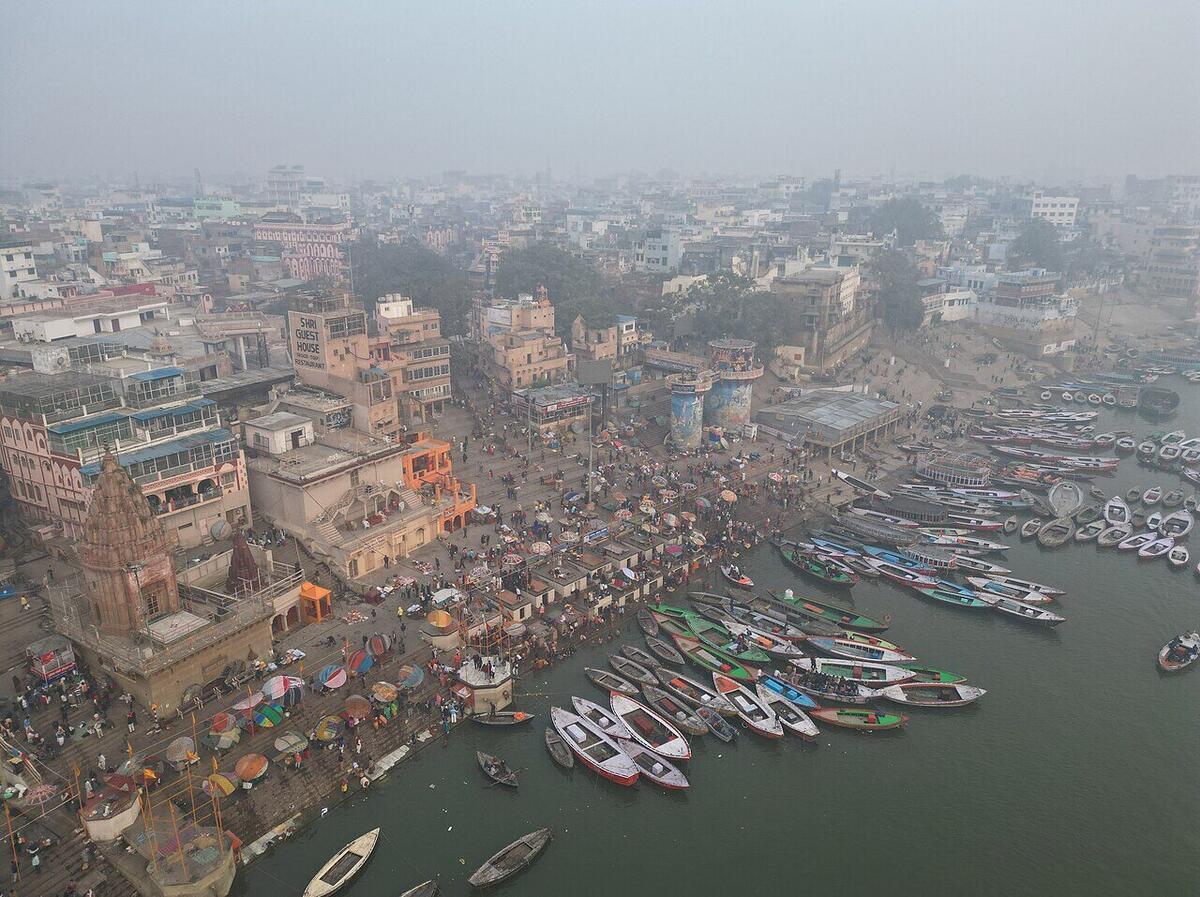
Govardhan is among the most beloved tirthas of Vaishnava tradition. Tradition holds that the hill is Krishna himself — to walk parikrama around it is to circumambulate Bhagavan in his most accessible and tangible form. The Gaudiya Vaishnavas, the Pushti Marga, the Radha Vallabha Sampradaya, and devotees from every Vaishnava school undertake the Govardhan parikrama as one of the supreme aspirations of their devotional life.
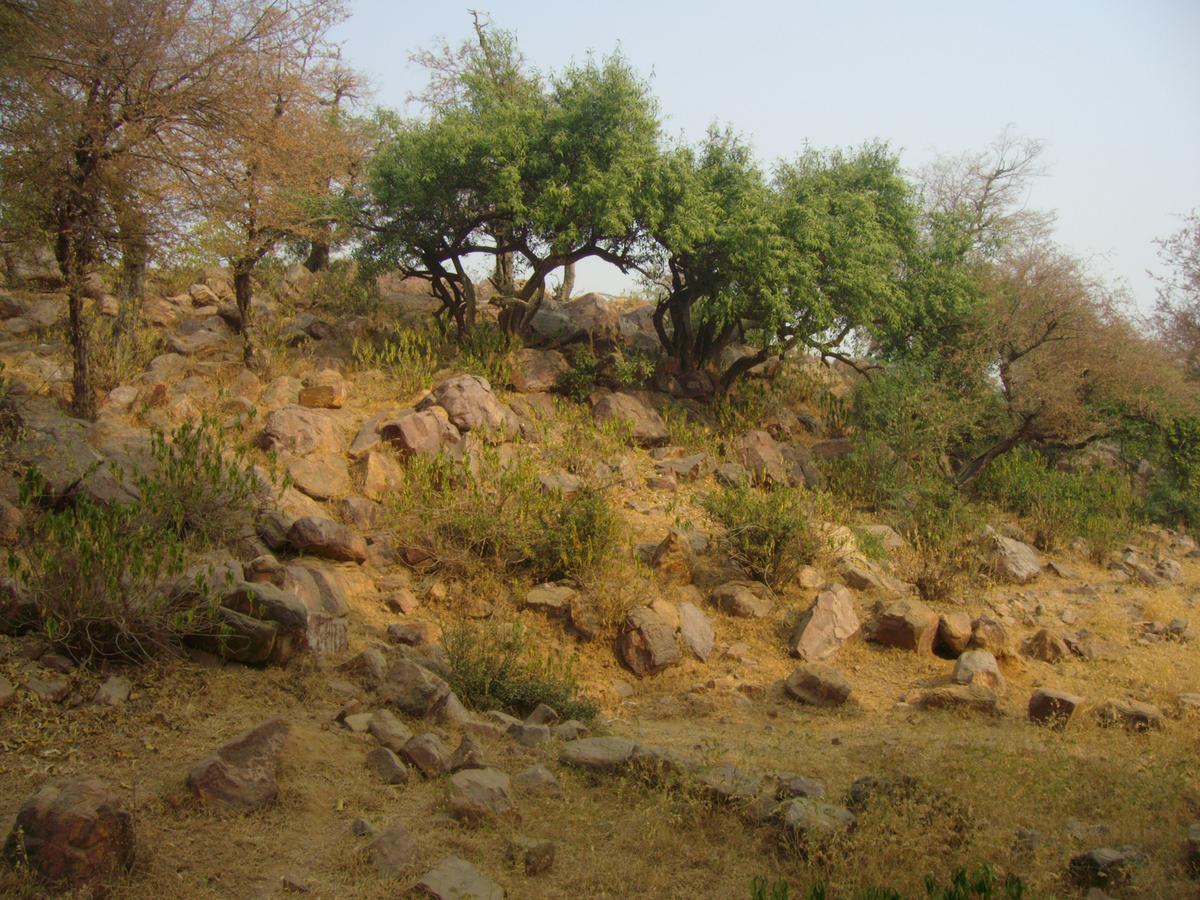
The hill is held to be self-manifest (svayam-prakata) and not built by human hands. Each silaka — sacred stone — from Govardhan is worshipped on family altars across the Vaishnava world. The hill is held by tradition to have become smaller each Krita yuga since being cursed by Pulastya rishi — once a great mountain reaching the heavens, it is now small enough that pilgrims can walk around it in a day.
Radha Kund and Shyam Kund
The twin kunds at the southern end of Govardhan are held by Gaudiya tradition to be the most sacred bodies of water on earth. Tradition tells that Krishna once slew the asura Arishtasura in the form of a bull. Radha pointed out that he had committed go-hatya (cow-killing) and asked him to bathe in all the tirthas of the world. Krishna struck the ground with his heel and brought all the tirthas to him — Shyam Kund. Radha, in playful response, dug Radha Kund with her bangles, and the gopis brought water from Mansi Ganga in their pitchers. The twin kunds remain sacred to Radha-Krishna lila and are visited on Bahulashtami in Kartik.
History
Govardhan's history as a sacred site reaches into the Bhagavata Purana and the long oral tradition of Krishna katha. The town of Govardhan was rediscovered as a tirtha centre by the Gaudiya saints in the sixteenth century. Sanatan Goswami, Rupa Goswami, and Raghunath Das Goswami spent decades at Radha Kund, and their bhajan kutirs along the kund remain pilgrim sites. The Govardhan temples — Haridev Mandir on the Mansi Ganga (built by Raja Bhagwant Das in the sixteenth century), Brahma Kund Mandir, and the smaller shrines along the parikrama path — were built between the 16th and 19th centuries by Vaishnava patrons from across north India.
The Krishna Janmashtami of 1968 saw the establishment of the Govardhan-Vrindavan parikrama in its modern form by Gaudiya Vaishnava sampradayas. Today the parikrama draws lakhs of pilgrims on Govardhan Puja, Guru Purnima, and Ekadashi days.
Architecture
Govardhan town centres on the Mansi Ganga — a large stone-paved lake at the heart of the town, surrounded by ghats and small temples. Haridev Mandir, built in red sandstone in the late Mughal style, sits on the Mansi Ganga and houses the deity Haridev (Krishna) in a fine sixteenth-century shrine.
Along the parikrama path are smaller stone temples to Daan Ghati Krishna, Mukharavind (the lotus-mouth of Govardhan), Punchhari (the tail), Apsara Kund, Surya Kund, and finally Radha Kund and Shyam Kund with their many goswami bhajan kutirs. The architecture is intimate, weathered, and continuous with the natural rock of the hill.
Rituals & Practices
The Govardhan parikrama is the central rite — 23 kilometres on foot around the hill. Traditional pilgrims walk barefoot; many do dandavat parikrama, prostrating their full length at every step, which takes days to complete. The conventional start is at Dan Ghati (or Mansi Ganga); the path passes Punchhari, Aniyor, Jatipura (where Vallabhacharya saw Krishna), Radha Kund, Shyam Kund, Kusum Sarovar, and returns to Dan Ghati. The walk takes about six to eight hours at a comfortable pace.
Special practices include the Annakut offering on the day after Diwali — vast mounds of grains, sweets, and seasonal vegetables are offered to Giriraj Maharaj, then distributed as prasad. Govardhan-darshan from any one of the seven Govardhan ridges is held to be especially auspicious. Pilgrims also collect a small silaka (stone) from the hill — but tradition holds that one should not take the silaka without permission and a strong devotional reason.
Pujas commonly arranged include Giriraj abhishek with milk, ghee, and panchamrit; recitation of the Govardhan Ashtakam by Sri Vallabhacharya; and the chappan bhog offering of fifty-six items to Giriraj on festival days.
Festivals & Celebrations
| Festival | When | Crowd |
|---|---|---|
| Govardhan Puja (Annakut) | — | very_high |
| Bahulashtami | — | high |
| Guru Purnima | — | high |
| Janmashtami | — | high |
Govardhan Puja (Annakut): Commemorates Krishna lifting Govardhan to shelter the cowherds from Indra''s storm. The most spiritually charged day of the Govardhan year.
Bahulashtami: Honours the lila of Radha digging Radha Kund.
Guru Purnima: Honours the spiritual lineage of the Gaudiya tradition.
Janmashtami: Birthday of Shri Krishna.
Prepare for Your Visit
Practical guidance to help you plan your pilgrimage
| Pilgrim Guidance | How to reach GovardhanGovardhan is 22 km from Mathura by road and about 25 km from Vrindavan. The nearest major airport is Delhi (IGIA, 170 km, 3.5 hours by Yamuna Expressway and local road). Mathura Junction is the nearest railhead. Most pilgrims drive from Mathura or Vrindavan to Dan Ghati and either walk the parikrama from there or do the shorter car parikrama, which is a roughly circular road around the hill. Preparation for pilgrimsThe Govardhan parikrama is 23 km on foot — walk it only if you are physically able. Start before dawn in summer, before sunrise in winter; carry water, glucose, and basic medicines. Wear comfortable walking shoes (or go barefoot if you can — many devotees do). Pilgrims doing dandavat parikrama require multiple days and basic camping support; we can arrange this for groups of devotees committed to the practice. The car parikrama is the alternative for elders, families with small children, or those short on time — it follows the outer road and takes 1 to 1.5 hours by car with darshan stops at Dan Ghati, Radha Kund, and Jatipura. The road can be crowded on Govardhan Puja day; plan accordingly. Best time to visitOctober to March is the most pleasant weather. The peak occasions are Govardhan Puja (the day after Diwali, October-November), Guru Purnima (July), and Bahulashtami (Kartik Krishna Ashtami, October-November — the day Radha Kund is celebrated). On Govardhan Puja day the parikrama and the temples are intensely crowded but the bhav is unmatched. Avoid May-June (very hot) and the deep monsoon if walking the full parikrama. |
Location
Mathura, UP
Pilgrim photos
No pilgrim photos yet.
Community corrections
No corrections yet.
Edit history
No revisions yet.
Plan Your Visit to Govardhan
Get a custom itinerary and pricing for your trip.
Recommended
Packages for this destination
Pilgrim Notes
On-ground observations from fellow pilgrims
No pilgrim notes yet. Be the first to share on-ground observations!
Sign in to share a note.
Pilgrim Reviews
Be the first to share your experience at Govardhan.
Sign in to write a review.
Nearby sacred places
Discover other sacred places near Govardhan
Explore temples, tirthas, and pilgrimage sites in UP
Explore nearbyPart of these circuits
Walk the traditional pilgrimage routes this destination belongs to.