The Sri Sri Krishna-Balaram Mandir of ISKCON sits on the Raman Reti — the sacred sandy land where, in the Bhagavata Purana, the boy Krishna and his elder brother Balaram played, wrestled, and herded cows. The temple was founded by His Divine Grace A.C. Bhaktivedanta Swami Srila Prabhupada in 1975, near the end of his life, as the Vrindavan headquarters of the International Society for Krishna Consciousness (ISKCON).
The temple holds three altars in white marble — the central altar with the murtis of Krishna and Balaram, the right altar with Radha-Shyamasundar (with the asta-sakhis), and the left altar with Gaura-Nitai (Sri Chaitanya Mahaprabhu and Nityananda Prabhu). Each altar follows the eight-darshan Gaudiya rhythm with continuous bhajan and sankirtan through the day. The Mangala Arati at 4:30 AM is among the most well-attended of any temple in India.
Katha and local belief
The Bhagavata Purana places Krishna and Balaram's bal-lila here at the Raman Reti — they played here, broke pots of curd, stole butter, and wrestled with their friends in the sandy expanse. Srila Prabhupada is said to have chosen this site specifically for its connection to the bal-lila. His samadhi (the Pushpa Samadhi) is at the temple complex, and his teachings continue to draw devotees from every continent.
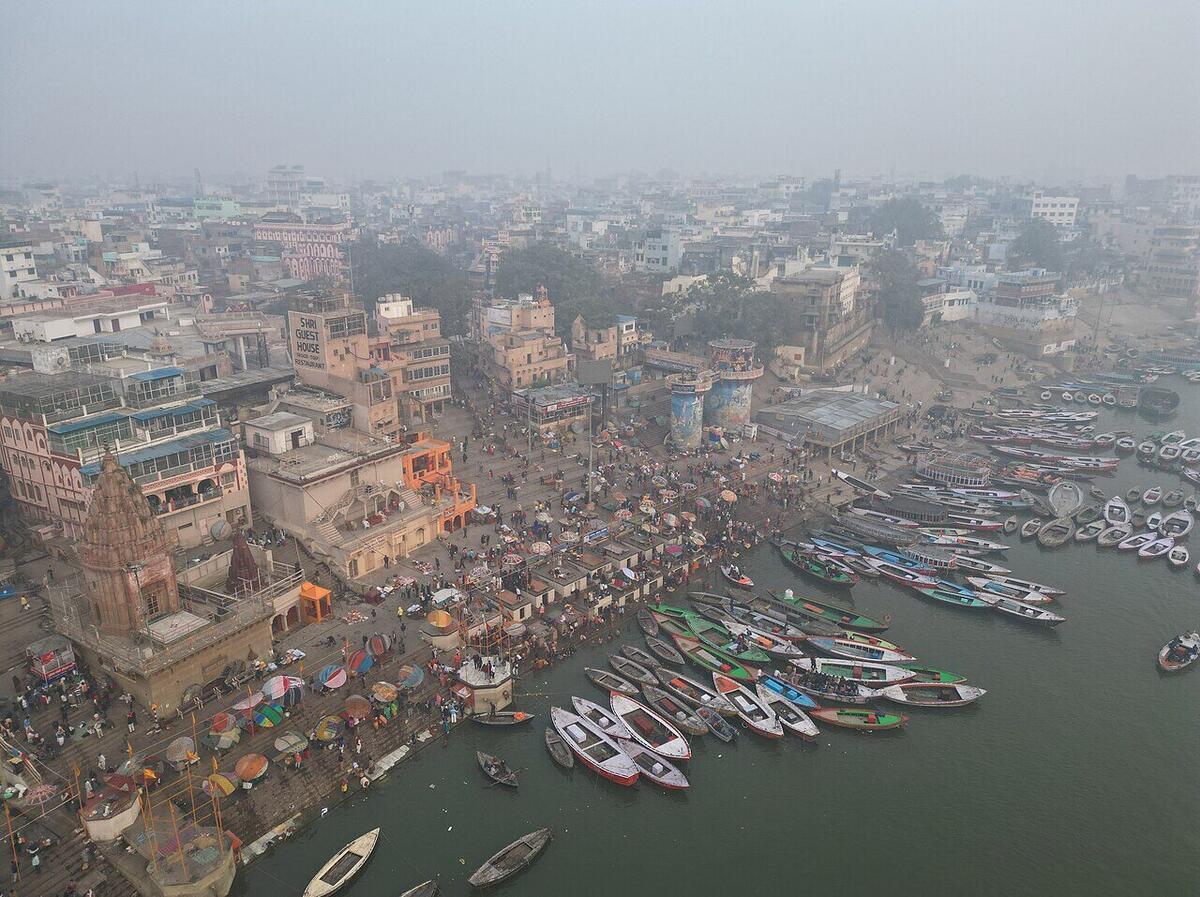
ISKCON Vrindavan is the international seat of the Gaudiya Vaishnava tradition in Vrindavan. The Gaudiya Vaishnavism founded by Sri Chaitanya Mahaprabhu in the sixteenth century is the same tradition that established the Banke Bihari, Radha Raman, and many other temples of Vrindavan; ISKCON is the modern global expression of that tradition founded by Srila Prabhupada.
The chanting of the Hare Krishna mahamantra — Hare Krishna Hare Krishna Krishna Krishna Hare Hare / Hare Rama Hare Rama Rama Rama Hare Hare — is at the heart of the temple's rhythm. Devotees from across the world come to chant, hear discourses on the Bhagavad Gita and Bhagavata Purana, and immerse themselves in the bhajan-sankirtan culture. The temple has guest accommodation, a Govinda's vegetarian restaurant, a book stall, and the world-famous Krishna Cultural Centre.
History
Srila Prabhupada (1896-1977) was a Bengali Vaishnava acharya in the line of Sri Chaitanya Mahaprabhu. He founded ISKCON in New York in 1966 and, in the decade that followed, established temples across the world. In 1975 — two years before his samadhi — he established the Krishna-Balaram Mandir at Vrindavan as the spiritual heart of the global movement. The deity-installation ceremony in April 1975 was attended by thousands.
After Srila Prabhupada's samadhi in 1977, his Pushpa Samadhi (memorial) was built within the temple complex; pilgrims pay respects here before the main temple darshan. ISKCON Vrindavan today is one of the most-visited modern temples in the Braj region, drawing both international devotees and Indian pilgrim families who appreciate the temple's organisation, cleanliness, and the continuous bhajan environment.
Architecture
The Krishna-Balaram Mandir is built in modern white marble in a contemporary Vaishnava temple style. The main hall opens onto three large altars set within carved marble niches; the entire interior is bright white with floral decorations, gold trim, and brass lamps. The temple complex includes the main mandir, the Pushpa Samadhi of Srila Prabhupada, a kirtan hall, the Govinda's restaurant, a guesthouse, and the Krishna Cultural Centre.
The outer courtyard has a Tulsi vrindavan (sacred basil grove), a small library/bookstore stocked with Bhagavad Gita As It Is, Srimad Bhagavatam, and other ISKCON publications, and a meditation garden. Murals along the walls depict scenes from the Krishna-katha and the lila of Sri Chaitanya Mahaprabhu.
Rituals & Practices
The temple follows the traditional Gaudiya eight-darshan rhythm. Mangala Arati at 4:30 AM is the opening; followed by Tulsi Arati, Sringar Darshan, Guru Puja, Bhagavatam class, Rajbhog Arati, afternoon break, Dhupa Arati (evening), Sandhya Arati, and Shayan Arati at night. Verify exact timings on the day of darshan. Continuous bhajan and kirtan fill the gaps between formal aratis.
Special pujas include Govardhan Puja annakut, Janmashtami midnight aarti, Radhashtami, Gaura Purnima (Sri Chaitanya's appearance day), and Srila Prabhupada's Vyasa Puja (appearance day). Many international devotees time their visit to coincide with one of these.
Bhog at Govinda's — the temple restaurant — is sattvic vegetarian cuisine (no onion, no garlic) prepared on offering principles and served to pilgrims at modest prices. Many international devotees consider Govinda's as part of their Vrindavan yatra.
Festivals & Celebrations
| Festival | When | Crowd |
|---|---|---|
| Janmashtami | — | very_high |
| Gaura Purnima | — | very_high |
| Radhashtami | — | very_high |
| Govardhan Puja (Annakut) | — | very_high |
| Vyasa Puja (Prabhupada appearance day) | — | high |
Janmashtami: The spiritual peak of the ISKCON year.
Gaura Purnima: Honours the founder of the Gaudiya tradition that ISKCON continues.
Radhashtami: Honours Radharani as the dearmost devotee of Krishna.
Govardhan Puja (Annakut): Honours Krishna as Giridhari.
Vyasa Puja (Prabhupada appearance day): Honours the spiritual master who established the temple and the worldwide movement.
Prepare for Your Visit
Practical guidance to help you plan your pilgrimage
| Pilgrim Guidance | How to reach ISKCON VrindavanThe temple sits on Bhaktivedanta Marg, off the Vrindavan-Mathura road, about 3 km from the main Vrindavan parikrama-marg and 4 km from Mathura Junction. From Mathura station and Delhi, the approach is by road; e-rickshaws drop pilgrims at the gate. Delhi (150 km) is the nearest international airport. Preparation for pilgrimsThe temple is welcoming to all — international devotees, Indian pilgrims, families, students. Wear modest clothes; remove footwear at the gate (a chappal stand is available). Photography is permitted in the courtyard and at the murtis (during open darshan; not during the aarti). The temple is well-managed; expect to find clean facilities, helpful volunteers, and printed information in multiple languages. Guesthouse rooms can be booked through the ISKCON Vrindavan website; basic to comfortable categories are available. The Govinda's restaurant is open from 11 AM to 9 PM. Many devotees combine an ISKCON visit with the traditional saptadevalaya parikrama of Vrindavan. Best time to visitThe temple is open year-round. The spiritual peaks are Janmashtami (August-September — Krishna's birthday), Gaura Purnima (March — Sri Chaitanya's appearance day), Radhashtami (August-September), and Govardhan Puja with annakut (October-November). October to March is the most pleasant weather. The Sunday feast (free meal after the evening aarti) draws many pilgrims to the Sunday evening kirtans. |
Location
Mathura, UP
Pilgrim photos
No pilgrim photos yet.
Community corrections
No corrections yet.
Edit history
No revisions yet.
Plan Your Visit to ISKCON Vrindavan
Get a custom itinerary and pricing for your trip.
Recommended
Packages for this destination
Pilgrim Notes
On-ground observations from fellow pilgrims
No pilgrim notes yet. Be the first to share on-ground observations!
Sign in to share a note.
Pilgrim Reviews
Be the first to share your experience at ISKCON Vrindavan.
Sign in to write a review.
Nearby sacred places
Discover other sacred places near ISKCON Vrindavan
Explore temples, tirthas, and pilgrimage sites in UP
Explore nearbyPart of these circuits
Walk the traditional pilgrimage routes this destination belongs to.