Janaki Kund sits on the gentle curve of the Mandakini river at Chitrakoot, about 2 km upstream from Ram Ghat. The bank here is densely forested — neem, peepal, and tamarind canopying the water — and the kund itself is a quiet stone-bound pool fed by the river. Above the kund, on a small rise reached by a flight of worn stone steps, sits a modest Sita-mandir; nearby, on a flat rock at the water's edge, the tradition preserves a small Sita-charana (footprint) said to mark where Mata Sita stepped from the bath. Unlike the bustling Ram Ghat downstream, Janaki Kund is a contemplative site — the bhav is of intimate Sita-darshan rather than of crowded ritual.
Tradition holds Janaki Kund to be the very spot where Mata Sita bathed daily during the Chitrakoot years of vanvas — the eleven-and-a-half years that Bhagavan Ram, Sita, and Lakshman spent in the Chitrakoot forest before moving deeper south. The Ramayana places these years as the most peaceful of the entire vanvas; Chitrakoot was their forest-home, and the Mandakini their daily companion. Sita-bhaktas across India consider Janaki Kund the most intimate of all Sita-sites — closer than Sitamarhi (her birthplace), more personal than Ashok Vatika (her captivity), more daily than Panchavati (their forest cottage further south).
The katha
The Ramayana's Ayodhya Kanda and Aranya Kanda describe Bhagavan Ram, Mata Sita, and Lakshman arriving at Chitrakoot in the early months of their vanvas. They built a small kutia near the river and lived there for many years, visited by Maharishi Atri and Mata Anasuya, and later by Bharat coming to plead for Ram's return. Tradition holds that during these years Mata Sita came each morning to this very kund on the Mandakini to bathe — accompanied at times by Bhagavan Ram, who would sit on a nearby crystal-rock (the Sphatik Shila, just upstream from Janaki Kund) while she completed her snan. The Sita-charana on the rock at the kund is held by long tradition to mark where she stepped out of the water; the small Sita-shrine above commemorates her daily presence here. Sphatik Shila itself bears two impressions — held to be the seat where Ram and Sita sat together in the Mandakini's morning sun.
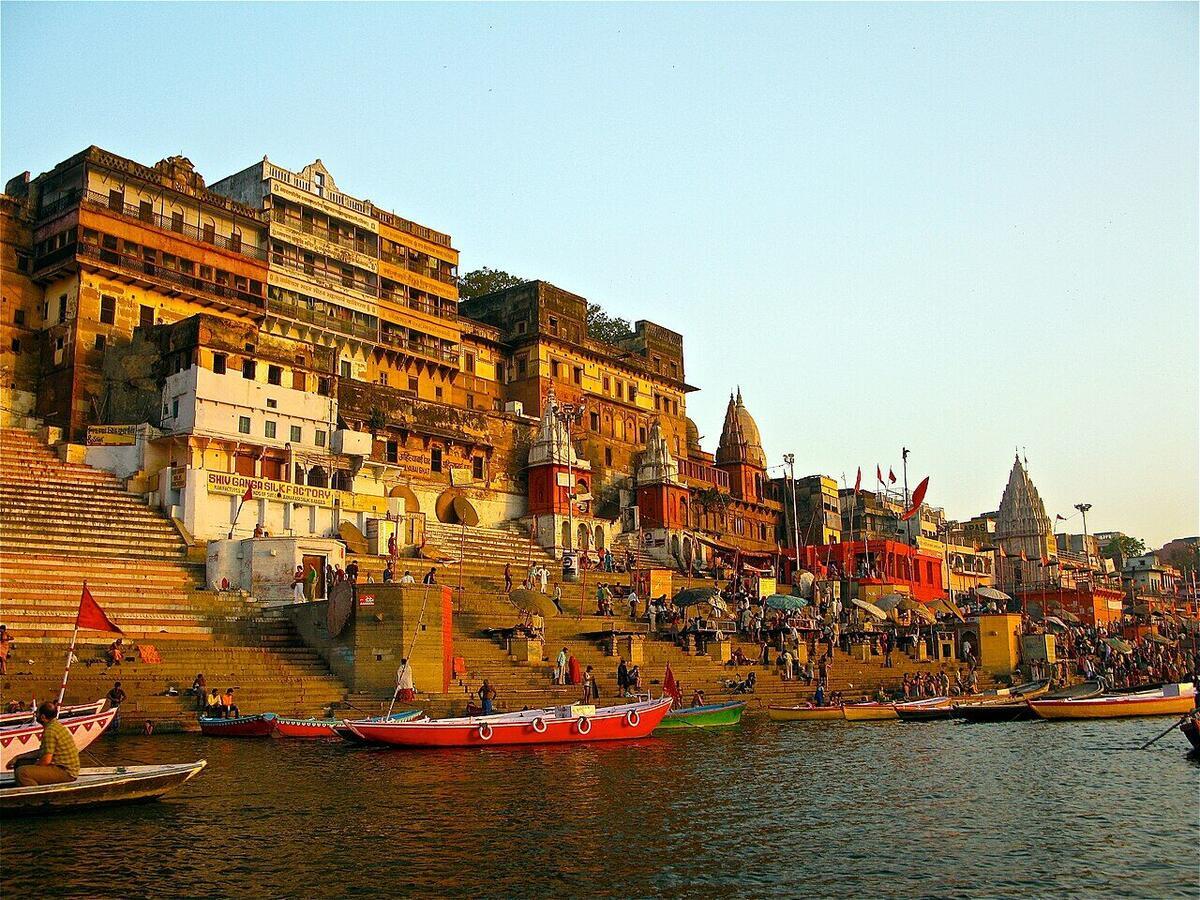
Janaki Kund is the supreme intimate Sita-darshan of Chitrakoot — the kund of her daily presence, of her forest-years, of her quiet bhakti before the great trials of her later vanvas. Vaishnava and Rama-bhakti tradition holds Mata Sita not merely as Bhagavan Ram's consort but as Lakshmi-svarupa, as Maha-shakti, as the supreme example of pati-vrata-dharma. The bhav at Janaki Kund is gentler and more inward than at Ram Ghat — pilgrims come here not for crowded aartis but for darshan of the Sita-charana, for a snan in the kund where she bathed, for the simple bhav of being where she was each morning for years. Many Sita-bhaktas — especially women — consider a Chitrakoot yatra incomplete without sitting in quiet contemplation beside Janaki Kund, reciting the Sita-stotra, and offering a red chunari at the small shrine above.
History
Janaki Kund is held by the Ramayana tradition to be the Mandakini-bath of Mata Sita during the vanvas years (treta-yuga). The kund as a maintained tirtha has been worshipped at least since the medieval period — local temple-renovation inscriptions and Bundeli pilgrimage texts from the 15th-17th centuries mention Janaki Kund alongside Ram Ghat and Sphatik Shila as the principal Chitrakoot sites. The present small shrine above the kund was last renovated in the 19th-20th centuries by local Bundeli families and Chitrakoot mahants; the Mandakini bank itself has been preserved largely in its forest character.
Architecture
Janaki Kund is not a built temple-complex but a sacred natural site — a stone-bound pool on the Mandakini's bank, reached by worn steps. The kund itself is small (about 15 metres across), set into the rock at the river's edge. Above it, the modest Sita-shrine is a small whitewashed structure with a tiled roof, housing a simple murti of Mata Sita and a permanent oil-lamp. The Sita-charana is preserved in the open on a flat rock beside the kund, marked by a small canopy. The forest setting — old peepal and tamarind trees overhanging the water — is itself part of the site's sacredness; pilgrims sit on the stone-steps for long quiet darshan.
Rituals & Practices
The kund is open from sunrise to sunset. Pilgrims descend the steps for a snan in the kund (the water is considered Mandakini-tirtha), then climb to the small shrine above to offer flowers, a red chunari, and sweets to Mata Sita. The Sita-stotra and selections from the Sundarakanda or Aranya Kanda of the Ramayana are commonly recited beside the kund. Many pilgrims combine Janaki Kund with the upstream Sphatik Shila (5 minutes upstream by foot) where Ram and Sita are held to have sat together, and the Hanuman Dhara climb (a short steep climb up the cliff above).
The traditional Chitrakoot sequence on the Mandakini: arrive at Ram Ghat, do darshan and snan there, then proceed upstream by foot or boat to Janaki Kund, then Sphatik Shila, then Hanuman Dhara — the whole circuit takes a half-day at quiet pace.
Festivals & Celebrations
| Festival | When | Crowd |
|---|---|---|
| Sita Navami | — | very_high |
| Ram Navami | — | high |
| Akshaya Navami | — | high |
| Diwali Mela | — | very_high |
Sita Navami: The supreme spiritual peak at Janaki Kund.
Ram Navami: The supreme Rama-bhakti day.
Akshaya Navami: A vanvas-return remembrance.
Diwali Mela: The annual Chitrakoot pilgrim festival.
Prepare for Your Visit
Practical guidance to help you plan your pilgrimage
| Pilgrim Guidance | How to reachJanaki Kund is 2 km upstream from Ram Ghat, Chitrakoot. From Ram Ghat the kund is reached either by a short forest-road drive (10 minutes by auto), by a boat from the ghat (15-20 minutes), or by a pleasant walk along the river-bank (45 minutes). Chitrakoot itself is 130 km from Allahabad/Prayagraj, 150 km from Khajuraho, and connected by train to the nearby Karwi station. PreparationModest dress, especially for women (sari or salwar-kameez preferred for the small shrine). Carry a red chunari and small flowers — available at stalls near Ram Ghat. A change of clothes if planning snan. Carry water and a stick (the path through the forest can be slippery in monsoon). The Sita-charana area is uncovered; small umbrella useful in sun. Best time to visitOctober to March most pleasant; the Mandakini forest is at its quietest. Sita Navami (Vaishakha Shukla Navami, April-May — Mata Sita's birth-day) is the supreme spiritual peak. Ram Navami (March-April), Akshaya Navami (October-November), and the Diwali Mela at Chitrakoot all draw extra flow to Janaki Kund. Avoid peak monsoon (July-August) when the path is slippery. |
Location
Chitrakoot, UP
Pilgrim photos
No pilgrim photos yet.
Community corrections
No corrections yet.
Edit history
No revisions yet.
Plan Your Visit to Janaki Kund, Chitrakoot
Get a custom itinerary and pricing for your trip.
Recommended
Packages for this destination
Pilgrim Notes
On-ground observations from fellow pilgrims
No pilgrim notes yet. Be the first to share on-ground observations!
Sign in to share a note.
Pilgrim Reviews
Be the first to share your experience at Janaki Kund, Chitrakoot.
Sign in to write a review.
Nearby sacred places
Discover other sacred places near Janaki Kund, Chitrakoot
Explore temples, tirthas, and pilgrimage sites in UP
Explore nearbyPart of these circuits
Walk the traditional pilgrimage routes this destination belongs to.