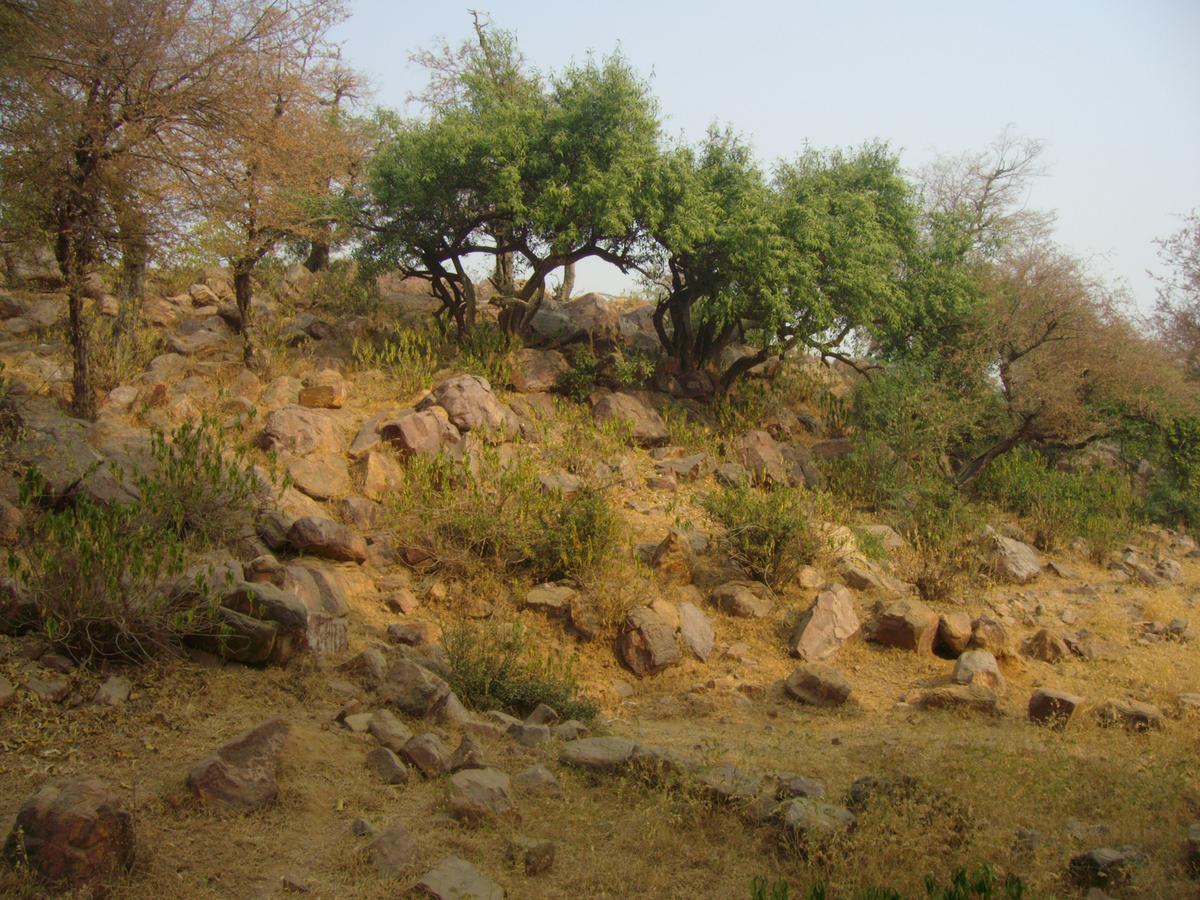
Kamadgiri sits at the heart of Chitrakoot on the Uttar Pradesh-Madhya Pradesh border, 5 km from the Ram Ghat in central Chitrakoot town. The name Kamad-giri means the "wish-fulfilling hill" — devotees believe that a parikrama of this hill, performed with sankalpa and shraddha, fulfils every sincere prayer. The hill is the most sacred feature of the Chitrakoot landscape; tradition holds that Shri Ram, Sita, and Lakshman spent the longest stretch of their 11.5 years of vanvas living in the forests around Kamadgiri, and the hill itself became saturated with their presence.
The deepest tradition of Chitrakoot holds that the hill is not merely associated with Shri Ram — the hill is Shri Ram in his vanvas-form, the form known here as Kamadnath. Pilgrims do not climb Kamadgiri; climbing the hill is forbidden by long tradition because the hill is held to be Bhagavan himself. Instead, devotees walk the 5-km parikrama path around its base, barefoot wherever they are able, pausing at the connecting shrines that ring the hill — Bharat Milap Mandir, Mukharvind, Ram-Sita Sphatik Shila viewpoint, and the various sannidhis where Ram-katha events are remembered.
The katha
The Ramayana of Maharishi Valmiki and the Ramcharitmanas of Goswami Tulsidas both describe Shri Ram's arrival at Chitrakoot. After leaving Ayodhya on the morning of the abhisheka that was never to be, Shri Ram, Sita Maiya, and Lakshman crossed the Ganga at Shringverpur, met Bharadwaja Muni at Prayag, and were directed by the rishi to settle at Chitrakoot — a forested region of great sanctity, sheltered, watered by the Mandakini, ringed by ashramas of the rishis. The brothers built a parna-kuti at the foot of Kamadgiri. Tradition holds it was here that Bharat — having refused the throne of Ayodhya — came to seek his elder brother, and at the foot of Kamadgiri the meeting of Bharat-Milap took place. The Bharat Milap Mandir on the parikrama path marks the very ground where the brothers wept and embraced. Ram lived at Kamadgiri until the rishis advised the family to move deeper south; many traditions place between 7 and 11.5 of the vanvas years at Chitrakoot.
The Padma Purana tells that Kamadgiri grants every wish placed at its feet because the hill carries within it the impression of Bhagavan's own vanvas-footsteps. Pilgrims walk the parikrama with their wishes silently held in heart — for marriage, for children, for healing, for the welfare of family, for moksha itself.
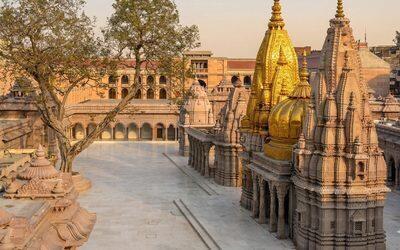
Kamadgiri is held by Vaishnava and Rama-bhakti tradition to be the most concentrated Ram-tirtha in northern India — a place where Bhagavan is not merely worshipped but present as the very form of the hill. The bhav at Kamadgiri is distinct: it is the bhav of vanvas itself, of the exile-form of Shri Ram, of the Ram who walks barefoot in the forest with Sita and Lakshman. Devotees come to Kamadgiri not for grandeur but for intimacy — to walk where Ram walked, to rest where the brothers rested, to feel the forest-quiet that held the divine family for the years of exile. The 5-km parikrama is considered equal in punya to many longer yatras precisely because the ground itself is held to be saturated with the divine presence. Tradition holds that a single sincere parikrama of Kamadgiri removes the obstacles of seven lifetimes, and that performing the parikrama on Somvar Amavasya or on Kartik Amavasya (Diwali) carries multiplied fruit.
History
The Kamadgiri tradition is documented from the earliest Ramayana texts; the Valmiki Ramayana's Ayodhya Kanda describes the Chitrakoot residence at length. The Ramcharitmanas of Goswami Tulsidas (16th century) brought renewed popular devotion to Chitrakoot, and Tulsidas himself is held to have spent significant time at Kamadgiri. The shrines ringing the parikrama path — Bharat Milap Mandir, Mukharvind — were consolidated under medieval Bundela and later patronage; the present principal structures date from the 17th-19th centuries. The parikrama path itself is older and has been walked continuously through every century recorded.
Architecture
Kamadgiri is not a single temple but a sacred-hill complex. The hill itself is the principal "structure" — a low forested ridge of roughly 200 metres elevation. The 5-km parikrama path circumambulates the base on the UP and MP sides combined. Along the path stand the principal shrines: Mukharvind Mandir (the "mouth" of Kamadnath, the principal darshan-point of the hill-form), Bharat Milap Mandir (where Bharat and Ram met), Ram-Sita Sphatik Shila viewpoint, and several smaller sannidhis to Hanuman, Lakshman, and the rishis. The Mukharvind has the most prominent murti of Kamadnath-Ram in seated forest-form. Most pilgrim infrastructure — guest houses, parikrama-marg shops, water points — sits on the UP side at the foot of the hill in Ramghat-side Chitrakoot.
Rituals & Practices
The parikrama is the central ritual at Kamadgiri. The path opens before dawn and remains accessible until late evening; the most spiritually powerful time is dawn (4:30-7 AM), when the forest is cool and silent. Pilgrims begin at the Mukharvind, take darshan, take sankalpa, and walk the 5-km circuit clockwise. The traditional practice is to walk barefoot, though the path is mostly flat-to-rolling forest with stretches of stone and earth that most pilgrims can manage barefoot. Devotees pause at each connecting shrine, offer pranam, and continue. The full parikrama takes 1.5-2 hours at a devotional pace. Some pilgrims perform dandavat parikrama — full prostrations the entire way — which takes a full day or more. At the completion, pilgrims return to Mukharvind for final darshan.
The traditional sequence at Chitrakoot: arrive at Chitrakoot, snan at Ram Ghat on the Mandakini, darshan at the Ram Ghat shrines, then proceed to Kamadgiri for the parikrama, then visit Sphatik Shila, Hanuman Dhara, and Gupt Godavari to complete the Chitrakoot panchkroshi.
Festivals & Celebrations
| Festival | When | Crowd |
|---|---|---|
| Diwali Mela (Kartik Amavasya) | — | very_high |
| Ram Navami | — | very_high |
| Somvar Amavasya | — | high |
| Hanuman Jayanti | — | high |
| Sharad Purnima | — | high |
Diwali Mela (Kartik Amavasya): The most powerful parikrama-night of the year.
Ram Navami: The principal Ram-festival at the Ram-tirtha.
Somvar Amavasya: The principal monthly parikrama occasion.
Hanuman Jayanti: Hanuman-bhakti in the Ram-tirtha.
Sharad Purnima: A favoured devotional night.
Prepare for Your Visit
Practical guidance to help you plan your pilgrimage
| Pilgrim Guidance | How to reachChitrakoot lies on the UP-MP border. The Kamadgiri parikrama path is 5 km from Ram Ghat in central Chitrakoot. The nearest railway station is Chitrakoot Dham Karwi (8 km, frequent trains from Lucknow, Kanpur, Allahabad/Prayagraj, Jhansi, and Satna). Khajuraho airport (175 km) and Prayagraj airport (135 km) are the nearest airports. Auto-rickshaws and shared tempos run frequently between Karwi, Ram Ghat, and the Kamadgiri parikrama start-point. PreparationWear loose comfortable clothes; barefoot is traditional but not mandatory. Carry water; the path has occasional shops but they are sparse in the early-morning hours. A small bag with extra socks or sandals is wise if the feet tire. The path is gentle but 5 km is significant for the elderly — allow extra time. The barefoot tradition is moving but practical: the path is forest-soft for most of its length. Best time to visitOctober to March is most pleasant; the forest is green, the mornings are crisp. Kartik Amavasya (Diwali Mela) is the supreme spiritual peak — lakhs of pilgrims perform the dawn parikrama on this night-into-morning, considered the most powerful single occasion at Kamadgiri. Ram Navami (March-April), Somvar Amavasya (each lunar month), and Hanuman Jayanti also draw heavy flow. |
Location
Chitrakoot, UP
Pilgrim photos
No pilgrim photos yet.
Community corrections
No corrections yet.
Edit history
No revisions yet.
Plan Your Visit to Kamadgiri, Chitrakoot
Get a custom itinerary and pricing for your trip.
Recommended
Packages for this destination
Braj Yatra with Govardhan Parikrama from Delhi — 3 Days
Braj Yatra — Chaurasi Kos Parikrama from Delhi (6 Days)
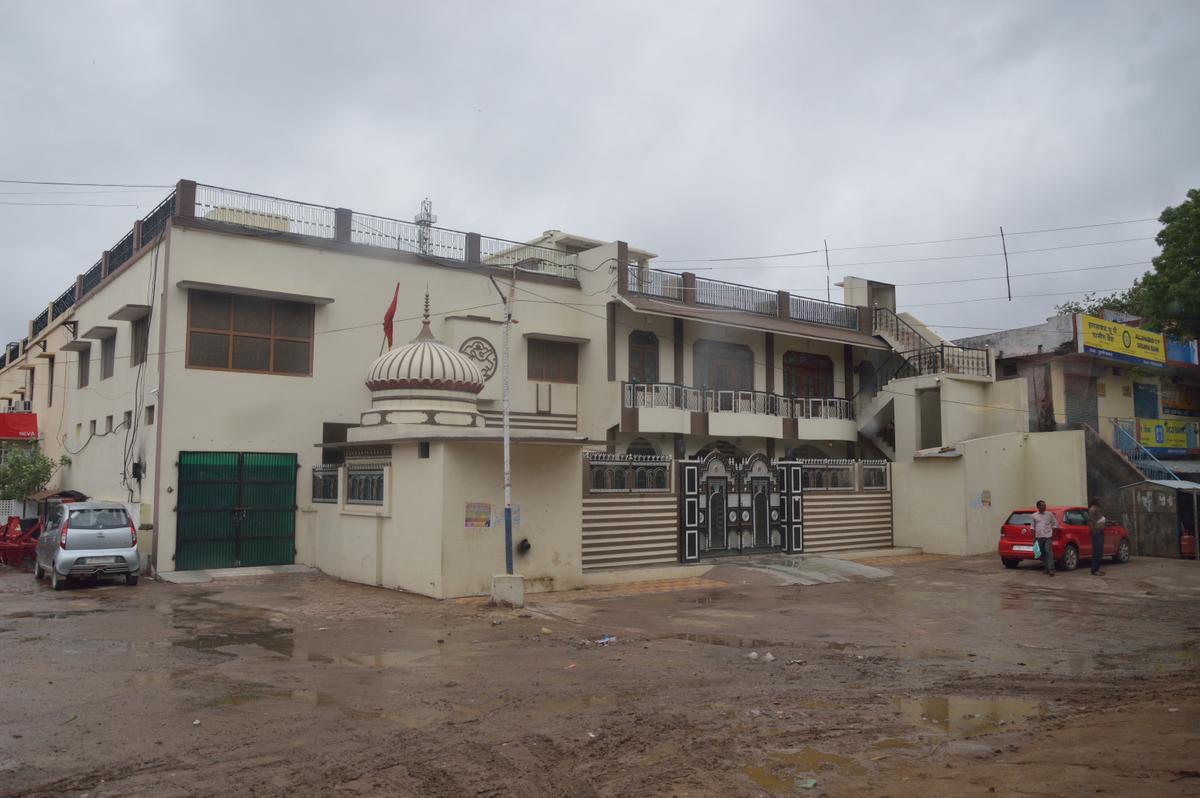
Chitrakoot Yatra from Delhi — Kamadgiri, Bharat Milap and Hanuman Dhara in 3 Days
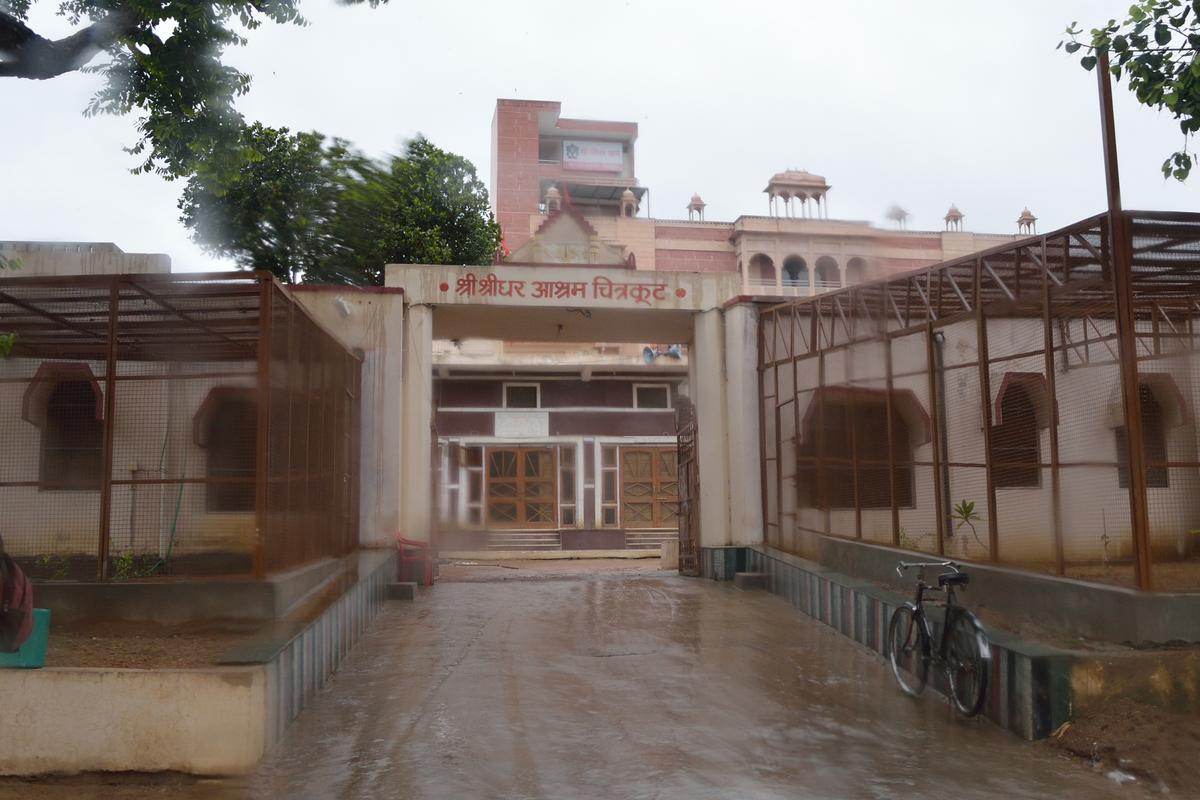
Chitrakoot Yatra from Prayagraj — Kamadgiri and Ram Ghat in 2 Days
Pilgrim Notes
On-ground observations from fellow pilgrims
No pilgrim notes yet. Be the first to share on-ground observations!
Sign in to share a note.
Pilgrim Reviews
Be the first to share your experience at Kamadgiri, Chitrakoot.
Sign in to write a review.
Nearby sacred places
Discover other sacred places near Kamadgiri, Chitrakoot
Explore temples, tirthas, and pilgrimage sites in UP
Explore nearbyPart of these circuits
Walk the traditional pilgrimage routes this destination belongs to.