Mathura is the birthplace of Shri Krishna and one of the most ancient cities of India. The Bhagavata Purana, the Vishnu Purana, and the long Krishna-katha tradition place Krishna's birth in Kansa's prison in Mathura on Bhadrapada Krishna Ashtami at midnight, with Vasudeva carrying the infant across the flooded Yamuna to Gokul. The city today centres on the Krishna Janmasthan — the present temple complex marks the site of Kansa's prison and Krishna's birth — and on the Vishram Ghat on the Yamuna where Krishna rested after slaying Kansa.
A traditional Mathura yatra includes the Krishna Janmasthan, the Dwarkadhish Temple in the old city, Vishram Ghat for the evening Yamuna Aarti, the smaller temples of Gokulnath, Dwarkadhish, and Bhuteshwar Mahadev (the kotwal of Mathura), and ideally the parikrama of the city. Many pilgrims combine Mathura with Vrindavan (12 km away) and the wider Braj-mandal parikrama of 84 kos.
Katha and local belief
The Bhagavata Purana tells the well-loved story: Kansa imprisoned his sister Devaki and brother-in-law Vasudeva, killing each of their newborns to prevent the prophecy of his death by Devaki's eighth child. When Krishna was born at midnight on Bhadrapada Krishna Ashtami, the prison locks opened by divine grace; Vasudeva carried the infant across the swollen Yamuna, the waters parting for him as Sheshanaga held the rain off; and Krishna was exchanged with the daughter of Yashoda in Gokul. Years later Krishna returned to Mathura, slew Kansa at Rangbhoomi, and liberated Devaki and Vasudeva.
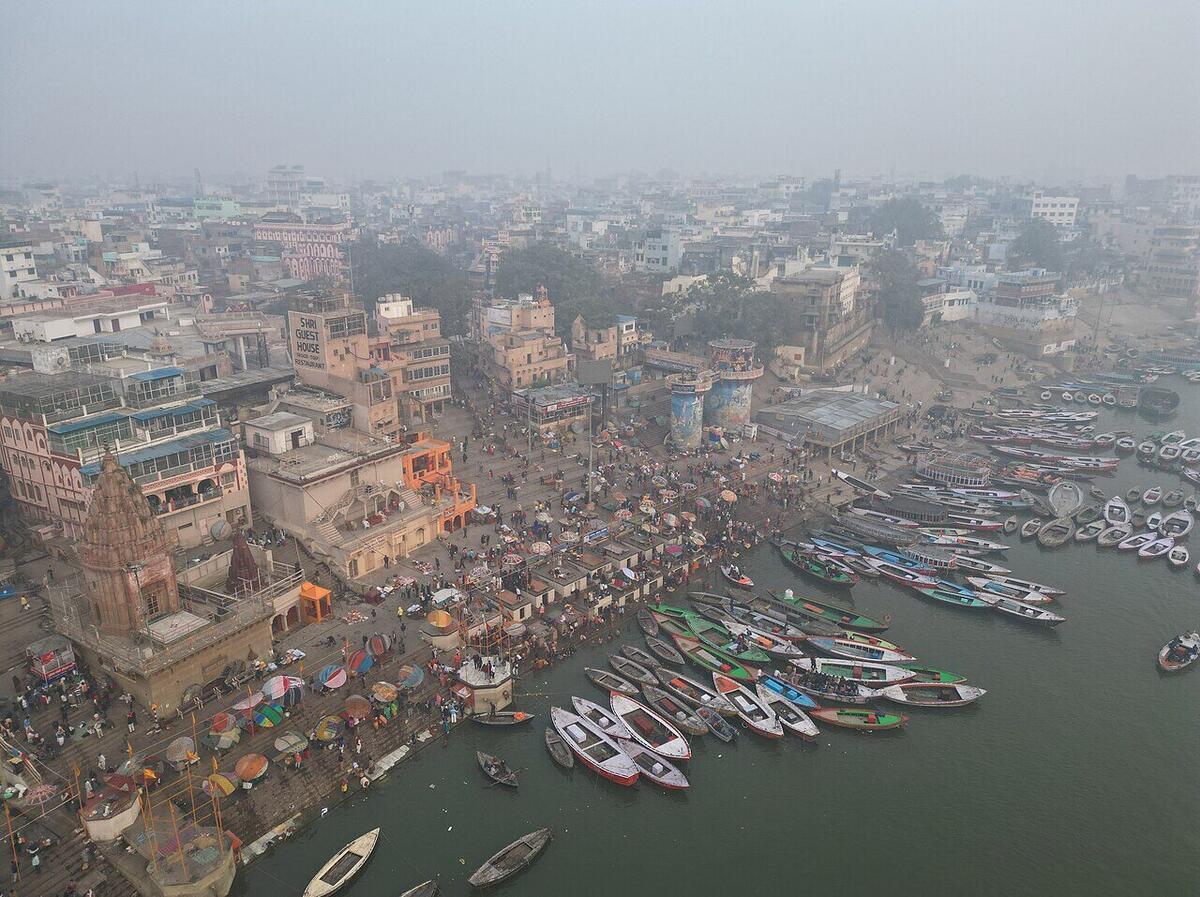
Mathura is among the most revered cities of Hindu tradition. The Garuda Purana names her as one of the seven Mokshapuris alongside Ayodhya, Kashi, Haridwar, Dwarka, Kanchipuram, and Ujjain. To bathe in the Yamuna at Vishram Ghat, to bow at the Krishna Janmasthan, and to walk the Mathura parikrama is held to grant the merit of countless Krishna-bhakti tirthas.
Mathura is the eastern terminus of the larger Braj Chaurasi Kos Parikrama — the 84-kos (about 250 km) parikrama of the Braj-mandal that traverses Mathura, Vrindavan, Gokul, Mahavan, Govardhan, Barsana, Nandgaon, and many smaller lila-sthals. Tradition holds that walking this parikrama at least once in a lifetime is the highest aspiration of every Vaishnava devotee.
History
Mathura is one of the most ancient cities of India. Archaeological evidence places her among the great early-historical cities of the Surasena janapada from at least the sixth century BCE. The Mathura Museum preserves remarkable sculpture from the Kushana period — the Mathura school of art is one of the foundational schools of Indian sculpture. The city was a major centre for Buddhist, Jain, and Vaishnava religious life for centuries.
The Krishna Janmasthan was an important temple from antiquity. Its history through the medieval period is well-documented; the temple was damaged and rebuilt multiple times. The present Sri Krishna Janmasthan temple complex was built in the twentieth century by the Krishna Janmasthan Trust, with the underground garbha-griha believed to mark the site of Kansa's prison. The adjoining structure is a contested heritage that continues to be the subject of legal proceedings; pilgrims focus on the Janmasthan temple complex and the underground prison-cell darshan.
Architecture
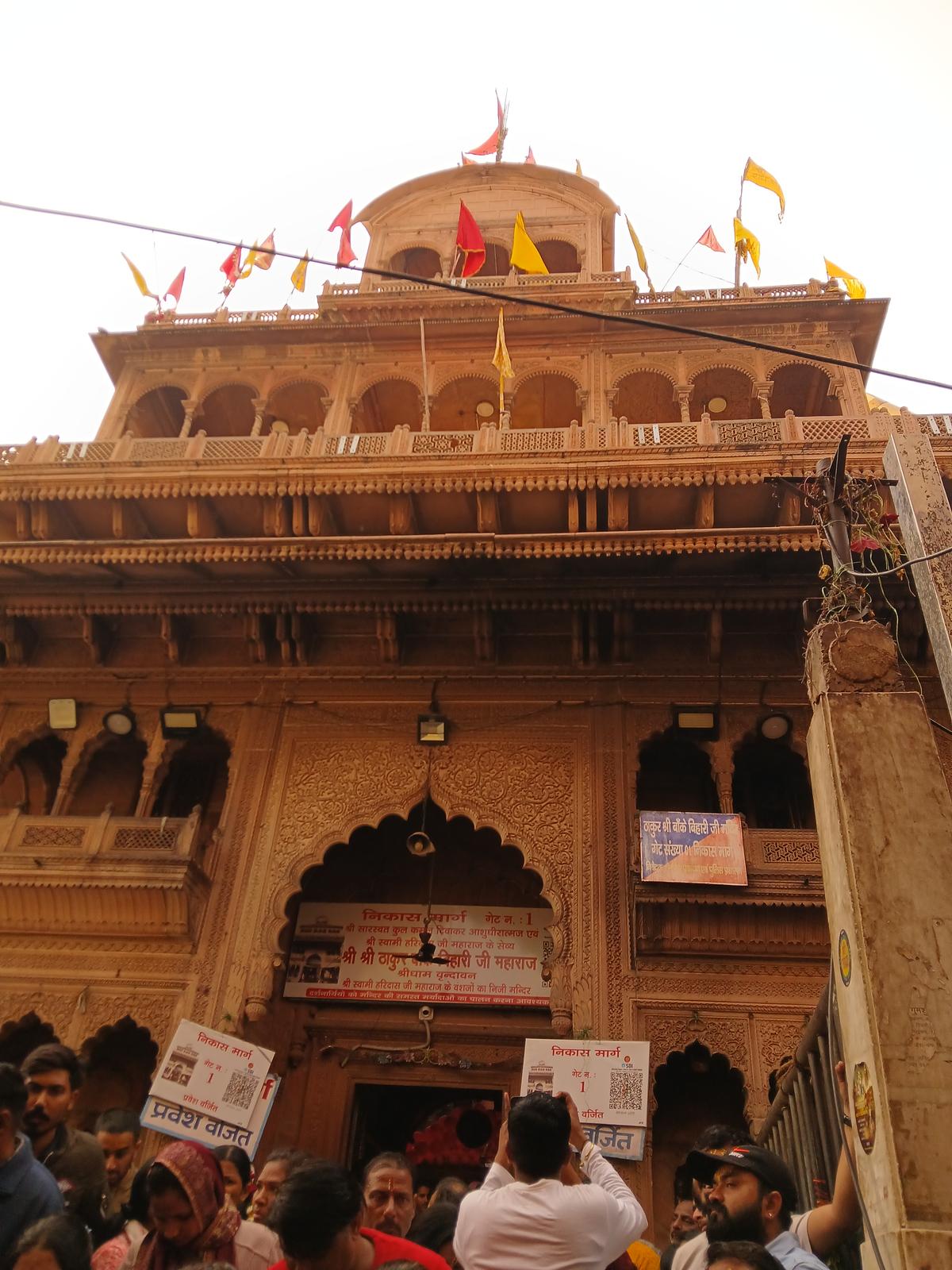
The Krishna Janmasthan complex includes the main Garbha-Griha shrine (with the underground prison cell), the Keshavdev Mandir, and several smaller subsidiary shrines. The Dwarkadhish Temple in the old city is built in the Rajasthani-Vallabh tradition with a high carved entrance, hanging brass lamps, and characteristic painted ceilings. Vishram Ghat is a long stone-paved riverbank with steps, brass pillars for the evening aarti, and a small Yamuna shrine.
Rituals & Practices
Krishna Janmasthan runs five aratis through the day, with the Mangala Arati shortly after sunrise. The Janmashtami midnight aarti — the very moment of Krishna's birth — is one of the most spiritually charged moments of the Hindu year and is broadcast across the world. Dwarkadhish has its own daily aarti schedule from the Pushti-Marga tradition. Vishram Ghat has the evening Yamuna Aarti (around sunset) with brass lamps and Yamuna stotra recitation. Verify exact timings with each temple on the day of darshan.
The traditional sequence is to begin at the Krishna Janmasthan, then Dwarkadhish, then the Mathura parikrama (smaller path that includes the Bhuteshwar Mahadev kotwal), then Vishram Ghat for snan and Yamuna Aarti. Tarpan and pind-daan are also performed at the ghats for ancestor rites.
Festivals & Celebrations
| Festival | When | Crowd |
|---|---|---|
| Janmashtami | — | very_high |
| Holi | — | very_high |
| Govardhan Puja | — | very_high |
| Yamuna Chhath | — | high |
| Braj Chaurasi Kos Parikrama | — | high |
Janmashtami: The very day and place of Shri Krishna''s birth. The spiritual peak of the Mathura calendar.
Holi: Honours Radha-Krishna leela and the playful nature of Braj devotion.
Govardhan Puja: Honours Krishna as Giridhari.
Yamuna Chhath: Honours the river that received the infant Krishna.
Braj Chaurasi Kos Parikrama: The deepest pilgrimage of the Vaishnava tradition.
Prepare for Your Visit
Practical guidance to help you plan your pilgrimage
| Pilgrim Guidance | How to reach MathuraMathura is highly accessible. Mathura Junction is on the main Delhi-Mumbai railway trunk with frequent trains. The Yamuna Expressway connects Delhi to Mathura in about 2.5 hours by road. The nearest airport is Delhi (IGIA, 145 km, 2.5 hours). From Mathura, Vrindavan is 12 km, Govardhan is 22 km, and Barsana is 50 km. Preparation for pilgrimsMathura is a busy historic city. Security at the Krishna Janmasthan is robust — phones, cameras, leather wallets, and large bags are not permitted inside; cloakroom is available at the entrance. Carry a printed ID. The old city is congested; e-rickshaws and cycle-rickshaws are best for moving between the Janmasthan, Dwarkadhish, and Vishram Ghat. Hotels are plentiful around the Junction and near the Janmasthan; Vrindavan accommodations are quieter for many pilgrims. Best time to visitOctober to March for pleasant weather. Janmashtami in Bhadrapada (August-September) is the spiritual peak. Holi in March extends from Barsana's Lathmar Holi through to Dauji-Baldev's Huranga Holi the day after Holi — Mathura is the gateway to all of Braj's Holi celebrations. November-December (after Diwali) is excellent for the Braj Chaurasi Kos Parikrama. Avoid May-June (hot) and the deep monsoon if mobility is a concern. |
Location
Mathura, UP
Pilgrim photos
No pilgrim photos yet.
Community corrections
No corrections yet.
Edit history
No revisions yet.
Plan Your Visit to Mathura
Get a custom itinerary and pricing for your trip.
Recommended
Packages for this destination
Pilgrim Notes
On-ground observations from fellow pilgrims
No pilgrim notes yet. Be the first to share on-ground observations!
Sign in to share a note.
Pilgrim Reviews
Be the first to share your experience at Mathura.
Sign in to write a review.
Nearby sacred places
Discover other sacred places near Mathura
Explore temples, tirthas, and pilgrimage sites in UP
Explore nearbyPart of these circuits
Walk the traditional pilgrimage routes this destination belongs to.