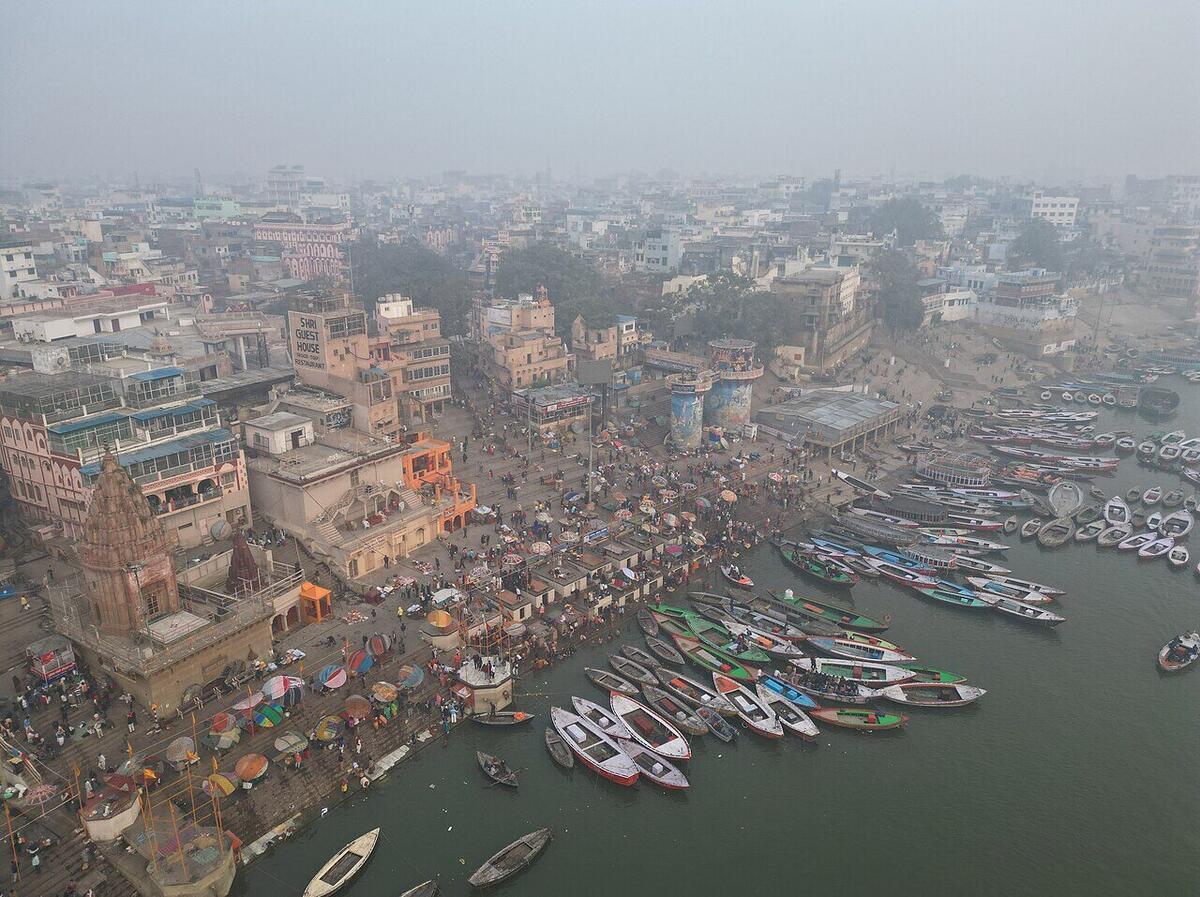
Nandgaon is the village where Shri Krishna grew from infancy through his Brindavan-lila years. After Vasudeva carried the newborn Krishna across the Yamuna from Kansa's prison in Mathura to Gokul, the child was raised by Yashoda and Nanda Maharaj — the foster-parents of devotional memory. Krishna spent the years of his bal-lila here, on the slopes of Nandishvar Hill, in the lanes and groves where Vaishnava memory locates the most beloved kathas of stealing butter, tending the cows, and the first meetings with Radha.
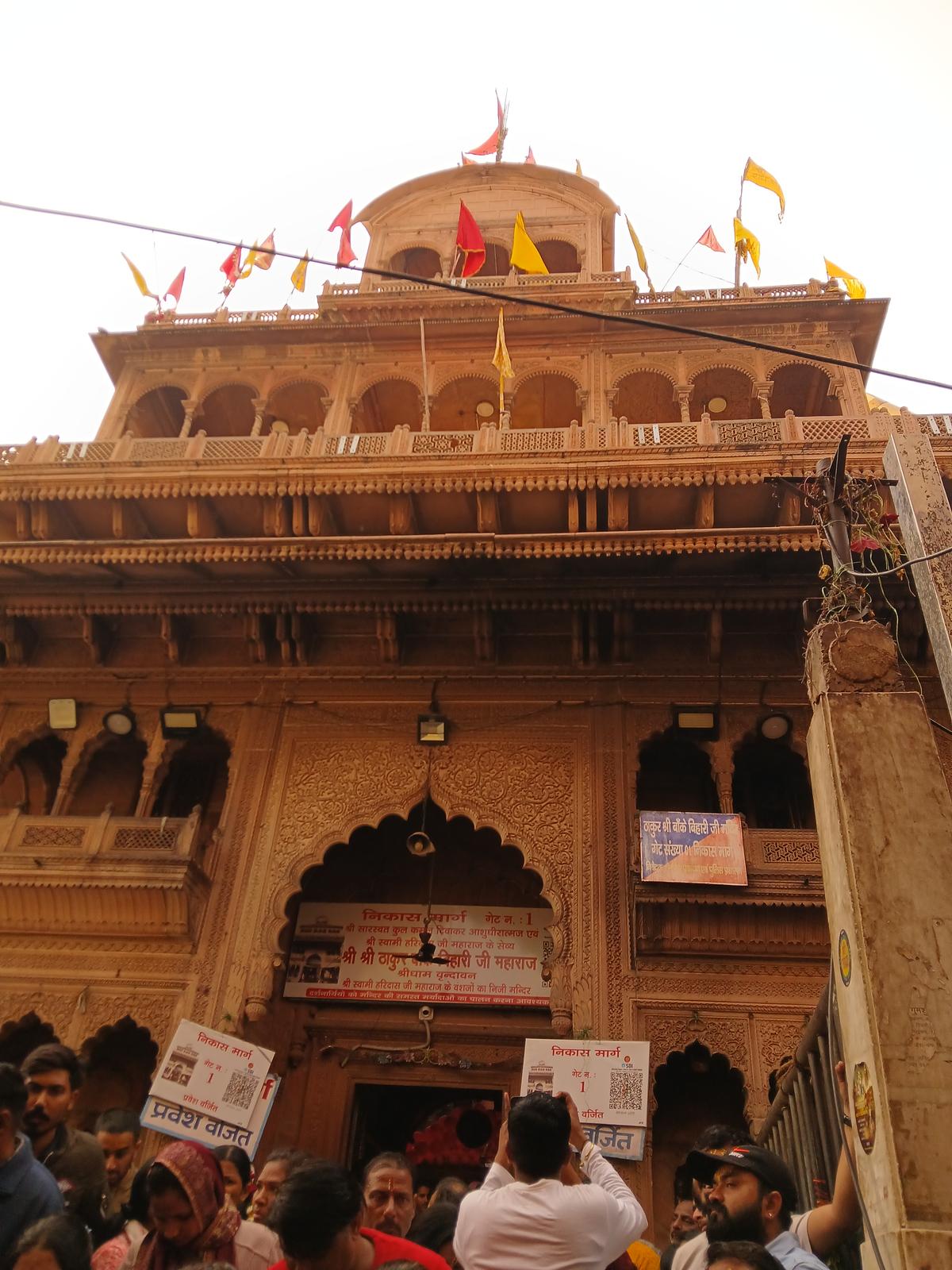
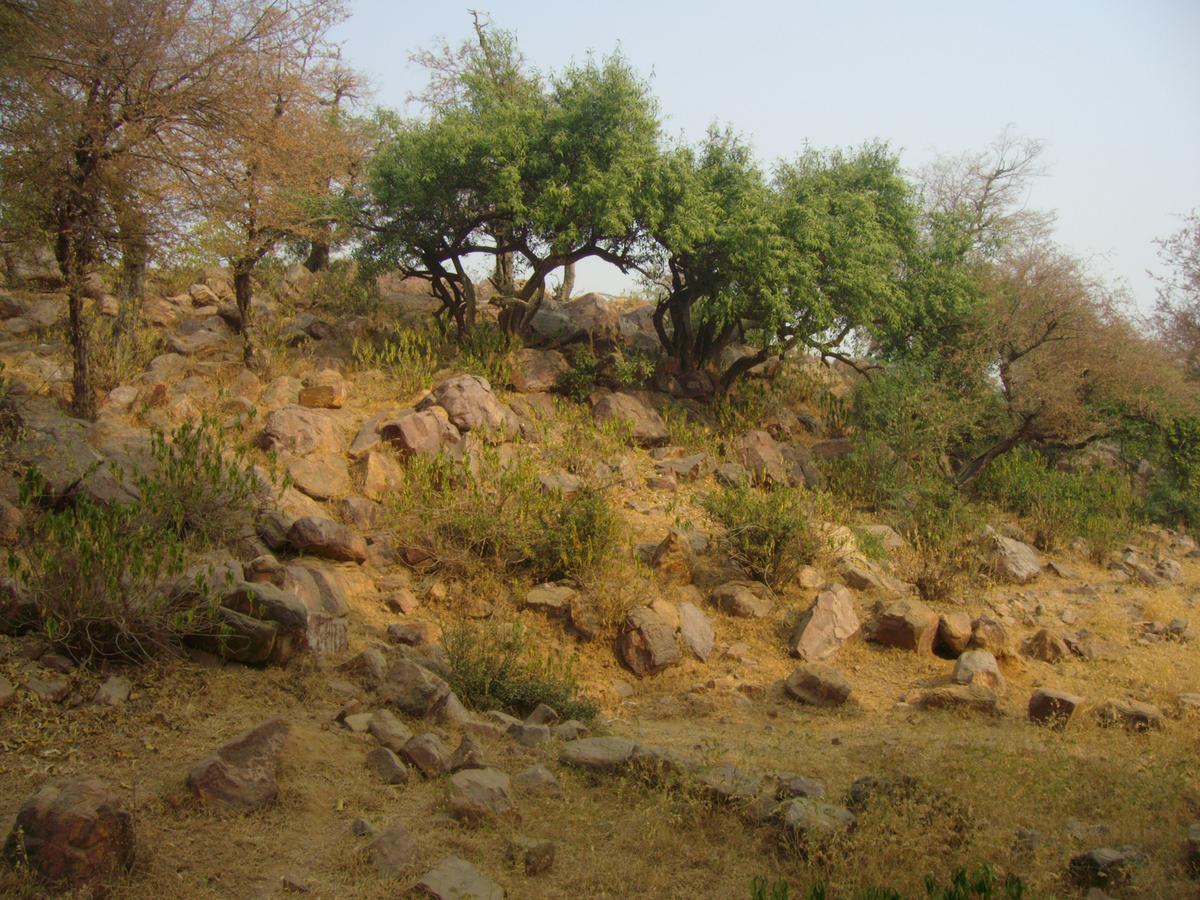
The town centres on Nand Bhawan — the temple complex at the top of Nandishvar Hill, traditionally identified as the very house of Nanda where Krishna was raised. The complex holds the murtis of Krishna, Balaram, Yashoda, and Nanda, and is reached by a long flight of stone steps from the town below.
Katha and local belief
Tradition holds that Nandishvar Hill is Shiva in his form as the guardian of Nanda's home. When Vasudeva brought Krishna to Gokul, Nanda and Yashoda eventually moved with their growing son to this hill village for safety from Kansa's assassins. Here Krishna grew, played the flute, herded cows, and met Radha — who lived in Barsana, ten kilometres away. The bantering rivalry of Nandgaon and Barsana is the bantering rivalry of Krishna and Radha — and remains alive in the famous reciprocal Lathmar Holi celebrations.
Nandgaon is a tirtha of bal-Krishna lila — Krishna in his playful childhood form. For devotees of the Gaudiya, Pushti Marga, and other Vaishnava traditions, Nandgaon offers the rasa of vatsalya-bhakti — the devotion-as-parental-love that one feels toward the child Krishna who was raised here. The Yashoda-bhajans of Surdas, Mirabai, and many bhakti saints turn to this village in their songs.
Tradition pairs Nandgaon with Barsana. As Krishna grew, the village of Krishna (Nandgaon) and the village of Radha (Barsana) became inseparable in Vaishnava memory. The two towns are visited together by pilgrims and form the heart of the smaller Braj parikrama.
History
Nandgaon as a pilgrimage centre grew under the same sixteenth-century Gaudiya rediscovery as the rest of Braj. The Nand Bhawan temple in its current form was built and renovated by Rajputana patrons through the 17th to 19th centuries. The hill is dotted with small shrines — the Yashoda Kund where Yashoda is said to have bathed Krishna, Pavan Sarovar sacred to Hanuman, and the Charan Pahari where Krishna's footprints are revered.
Architecture
The Nand Bhawan temple complex is built in the regional Rajputana style — sandstone walls, courtyards, and a sloping roof of carved stone. The garbha-griha holds the murtis of Krishna as a child with Balaram, flanked by Yashoda and Nanda Maharaj. The complex includes a smaller shrine to Nandishvar Mahadev — Shiva as the protector of Krishna's home — and several outer courtyards used for festival processions.
Rituals & Practices
Nand Bhawan opens with morning aarti shortly after sunrise. The schedule follows the typical Braj rhythm — Mangala, Shringar, Rajbhog, Sandhya, Shayan. The traditional sequence at Nandgaon is to first climb to Nand Bhawan, then visit Yashoda Kund, Pavan Sarovar, Charan Pahari, and the Sankarshan Kund. The full Nandgaon parikrama is short — about 4 km — and is often combined with the Barsana parikrama in a single day.
The most famous event of the Nandgaon year is the Holi visit to Barsana. On Phag Ekadashi (a day before Lathmar Holi), the men of Nandgaon walk to Barsana to play Holi, dressed in traditional clothes and singing Krishna bhajans. The women of Barsana welcome them with sticks (lathmar) and the famous play unfolds. The next day, the women of Barsana visit Nandgaon for the reciprocal Lathmar Holi.
Festivals & Celebrations
| Festival | When | Crowd |
|---|---|---|
| Lathmar Holi (Barsana visit) | — | very_high |
| Janmashtami | — | very_high |
| Annakut | — | high |
| Kartik (full month) | — | moderate |
Lathmar Holi (Barsana visit): Among the most beloved Holi traditions of India.
Janmashtami: The most spiritually charged day in the village where Krishna was raised.
Annakut: Honours Krishna lifting Govardhan.
Kartik (full month): The month dear to Damodar Krishna.
Prepare for Your Visit
Practical guidance to help you plan your pilgrimage
| Pilgrim Guidance | How to reach NandgaonNandgaon is 50 km from Mathura and 10 km from Barsana. The drive from Mathura takes about 1.5 hours via local roads. Most pilgrims combine Nandgaon and Barsana in a single day or as part of the wider Braj parikrama. Direct taxis run from Mathura and Vrindavan. Preparation for pilgrimsThe climb to Nand Bhawan is about 100 stone steps — manageable for most pilgrims. Carry water and basic medicines. Hotels in Nandgaon are very limited; most pilgrims stay in Vrindavan or Mathura and day-trip. For Lathmar Holi (a week before main Holi), book viewing arrangements in advance — these are extremely popular days. Best time to visitOctober to March for pleasant weather. The spiritual peaks are Janmashtami (Krishna's birthday in Bhadrapada), Lathmar Holi (Phalguna), and Govardhan Puja (the day after Diwali in Kartik). Kartik month is the most devotionally rich extended stay; the month-long bhajan and parikrama traditions are alive here. |
Location
Mathura, UP
Pilgrim photos
No pilgrim photos yet.
Community corrections
No corrections yet.
Edit history
No revisions yet.
Plan Your Visit to Nandgaon
Get a custom itinerary and pricing for your trip.
Recommended
Packages for this destination
Pilgrim Notes
On-ground observations from fellow pilgrims
No pilgrim notes yet. Be the first to share on-ground observations!
Sign in to share a note.
Pilgrim Reviews
Be the first to share your experience at Nandgaon.
Sign in to write a review.
Nearby sacred places
Discover other sacred places near Nandgaon
Explore temples, tirthas, and pilgrimage sites in UP
Explore nearbyPart of these circuits
Walk the traditional pilgrimage routes this destination belongs to.