Raman Reti lies on the southern edge of Mahavan (Gokul), close to the Yamuna, where the soil softens into fine silvery sand. The name carries its own meaning: ramana, the place of play, and reti, sand. For the Braj pilgrim this is not merely a stretch of riverine sand; it is the very ground on which, tradition holds, Krishna and Balarama crawled, took their first steps, and ran behind cowherd children in the long afternoons of Gokul.
The traditional approach is on foot. Pilgrims arriving from Nanda Bhavan, Chaurasi Khamba, or Brahmand Ghat reach Raman Reti through quiet lanes lined with kunj-ashrams. As one steps onto the open sand, footwear is removed and many devotees perform dhuli-snana — a "bath of dust" — by rolling gently on the warm sand. Children, elders, and renunciants alike fulfil this vow, often with tears, repeating Jai Shri Krishna and Jai Balaram.
Today Raman Reti is also a living center of Vaishnava sadhana. Several ashrams — including the well-known seat of Shri Krishna Janma Bhumi seva tradition and other Gaudiya, Pushtimarg, and Nimbarka establishments — surround the sandy ground, offering kirtan, Bhagavata katha, and gau-seva. The cows that wander here are honoured as descendants of the very herd Krishna once tended.
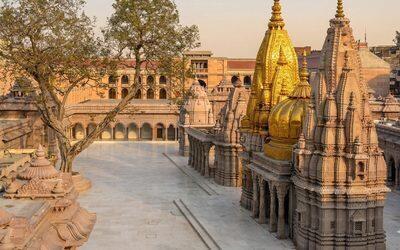
Devotional tradition holds that Raman Reti is the sand where Krishna and Balarama spent their earliest childhood after Nanda Maharaj brought the family to Gokul. The Bhagavata Purana's Dashama Skandha tenderly describes the brothers crawling on the courtyard, smearing themselves with dust and butter, and being scolded with love by Yashoda. Braj tradition identifies this very sand as the ground of those lilas.
Among the bal-leelas held in special memory here are: the binding of Krishna by Yashoda (Damodar lila), the breaking of the twin Arjuna trees that liberated the sons of Kubera, the slaying of Trinavarta and Putana, and the long afternoons when Krishna and Balaram, with cowherd companions, ran across this very sand. The dust raised by their feet is praised in many bhakti compositions as charana-renu — the dust of the Lord's feet, the highest object of devotional longing.
The practice of dhuli-snana is rooted in this understanding. To roll on the sand of Raman Reti is, for the devotee, not a mere custom but a vow: to take upon one's body the dust touched by Krishna and Balarama, and to ask for the inward humility that allows one to remain in their remembrance. Many pilgrims make a sankalp to visit Raman Reti barefoot, walk a parikrama of the sandy ground, and roll once on the sand before leaving Gokul.
Raman Reti is counted as one of the principal stations of the Gokul-darshan and the broader Braj-yatra, which traditionally moves from Mathura through Gokul, Mahavan, Vrindavan, Govardhan, Barsana, and Nandgaon. Within Gokul itself, pilgrims typically combine Raman Reti with Nanda Bhavan, Chaurasi Khamba, Yashoda Kund, and Brahmand Ghat.
History
The sacred memory of Raman Reti reaches into the deepest layer of Braj tradition — the early Gokul period of Krishna's life, before the family moved to Vrindavan. Puranic and bhakti literature, especially the Bhagavata Purana and the works of the Six Goswamis, locate the bal-leelas in the Mahavan-Gokul region; Raman Reti is the open sandy ground that local tradition has long identified with those leelas.
Through the medieval period, Raman Reti drew Vaishnava acharyas of every sampradaya. Vallabhacharya is held to have rested and meditated here during his Braj parikrama in the late fifteenth and early sixteenth centuries, and Pushtimarg tradition preserves the memory of his sankalp on this sand. Gaudiya tradition records that Sri Chaitanya Mahaprabhu, during his Braj-yatra of 1515, rolled in the dust of Raman Reti in an outpouring of love. The Nimbarka and Radhavallabha sampradayas, too, hold ashrams in the surrounding area.
In the modern era, Raman Reti has grown as a center of organised seva. The Shri Raman Reti Ashram (also called Shri Krishna Janmasthan Seva Sansthan's Gokul branch) and several other establishments offer Bhagavata katha, sadhu-seva, gau-shala, and accommodation for pilgrims. The Mathura district administration and the Braj Tirtha Vikas Parishad have undertaken sand-conservation and pilgrim-facility work in recent years; the open sandy character of the site has been carefully preserved.
Architecture
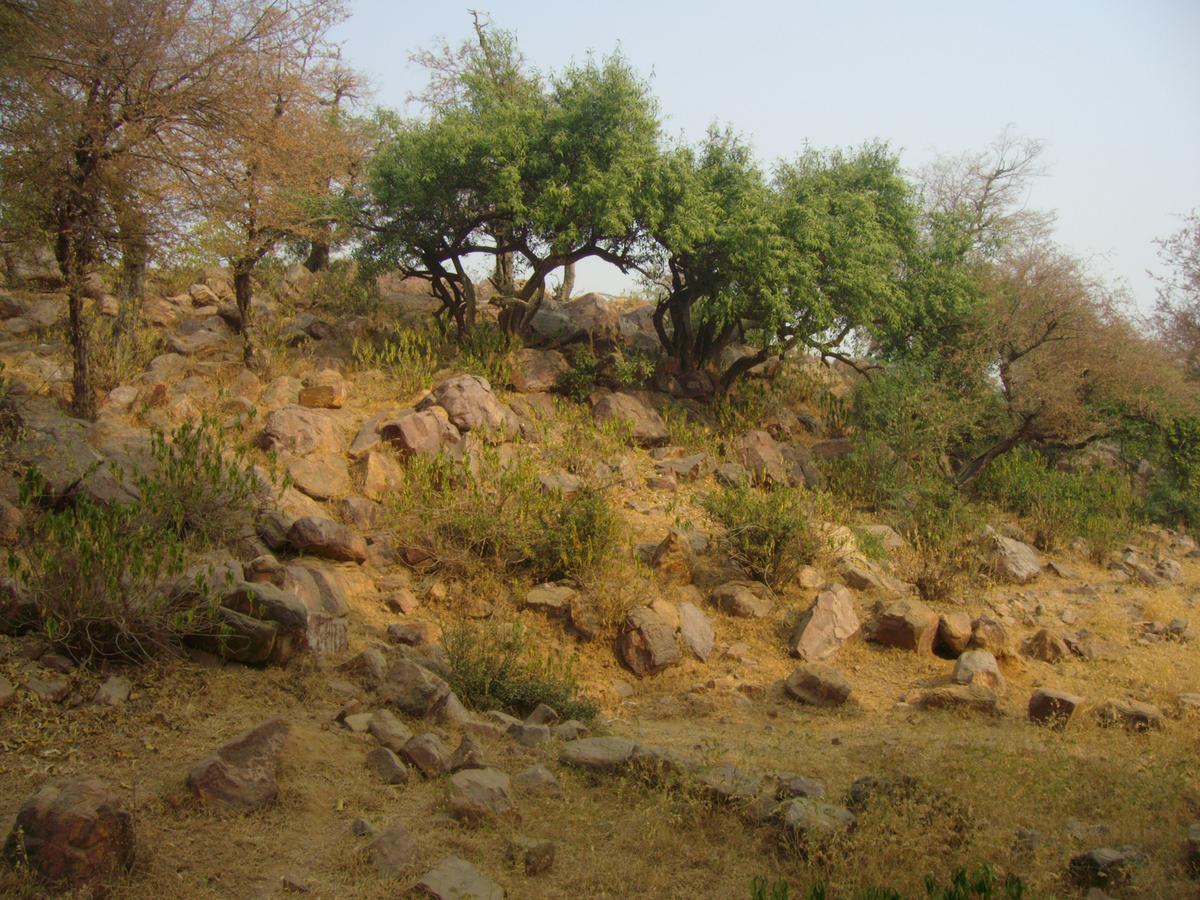
Raman Reti is not a built monument but a sacred landscape. Its character is given by the open expanse of fine, pale sand, dotted with neem and pilu trees, and bounded by the ashrams and kunjs of various sampradayas. The sand is soft enough to walk on barefoot through most of the year, though it warms considerably in the summer afternoons.
The surrounding ashram complexes are built in simple north-Indian Vaishnava style — single-storey courtyards with covered verandahs, small thakur-ghars enshrining Krishna-Balarama or Radha-Krishna, and attached gau-shalas. Several modern temples nearby — notably the well-known Raman Reti temple complex with its tall shikhara — have been built in restrained Nagara style and house finely carved marble murtis of the brothers. A small parikrama path circles the principal sandy ground; many ashrams maintain their own kunj-courtyards opening onto the sand.
Rituals & Practices
Raman Reti is approached as a place of vow and remembrance rather than formal temple worship. The principal devotional act is dhuli-snana — entering the sand barefoot and rolling gently, often three times or in a number sanctified by family tradition, while repeating Krishna and Balarama's names. Pilgrims then take a small handful of the sand home as charana-renu prasad.
The surrounding ashrams maintain their own seva-rhythm. Mangala arati is offered around 5:00–5:30 AM in most thakur-ghars, followed by shringar darshan, rajbhog, sandhya arati at dusk, and shayan in the late evening. Exact timings vary by sampradaya and season; pilgrims should verify at each ashram on arrival.
Bhagavata katha is held almost continuously through the year in one or another ashram. Gau-seva — feeding the cows of Raman Reti with grass, gur, or roti — is a beloved practice and is supported by every ashram on the ground. Many pilgrims also offer kirtan-seva or food-seva to resident sadhus and Brahmins.
Festivals & Celebrations
| Festival | When | Crowd |
|---|---|---|
| Janmashtami | — | Extremely high |
| Nandotsava | — | Very high |
| Annakut | — | High |
| Holi | — | Very high |
| Braj Chaurasi Kos Parikrama | — | High through the parikrama season |
Janmashtami: Celebrates the appearance of Krishna in Mathura and his arrival in Gokul the same night. Raman Reti, as the ground of his earliest lilas, is held in special remembrance.
Nandotsava: Marks the joy of Gokul at the arrival of the divine child. Distinctly a Gokul-Mahavan festival, observed with great affection.
Annakut: Celebrates Krishna as Giridhari, the protector of Braj. Bhog is later distributed as prasad to all pilgrims.
Holi: Commemorates the playful lila of Krishna and the gopis; one of Braj''s most beloved festivals.
Braj Chaurasi Kos Parikrama: The traditional pilgrimage that binds together the 84 sacred sites of Braj. Raman Reti is a beloved halt on the Gokul leg of the parikrama.
Prepare for Your Visit
Practical guidance to help you plan your pilgrimage
| Pilgrim Guidance | Traditional pilgrim sequenceWithin Gokul, Raman Reti is usually visited as part of a wider sequence. A commonly followed order is:
Pilgrims undertaking the full Braj Chaurasi Kos Parikrama reach Raman Reti on the Gokul leg of the yatra; the sandy ground is among the most beloved stations of the entire parikrama. How to reachRaman Reti lies in Gokul, about 12 km south-east of Mathura city. From Mathura Junction (the nearest railhead) e-rickshaws, autos, and taxis run to Gokul throughout the day; the road journey takes 25–35 minutes depending on traffic. From Vrindavan, the route via Mathura is roughly 22 km. The nearest airport is Delhi (around 150 km); Agra (around 60 km) is the next nearest. Preparation for pilgrims
Best time to visitOctober to March is the most comfortable period; the sand is gentle and the air cool. Janmashtami, Nandotsava, Annakut, and Holi are the major occasions when Gokul is at its devotional height, though crowds are also at their largest. The Braj Chaurasi Kos Parikrama (Bhadra and Phalgun seasons) brings continuous streams of pilgrims through Raman Reti. Early mornings, especially between Mangala arati and sunrise, offer the most contemplative darshan. |
Location
Mathura, UP
Pilgrim photos
No pilgrim photos yet.
Community corrections
No corrections yet.
Edit history
No revisions yet.
Plan Your Visit to Raman Reti
Get a custom itinerary and pricing for your trip.
Recommended
Packages for this destination
Pilgrim Notes
On-ground observations from fellow pilgrims
No pilgrim notes yet. Be the first to share on-ground observations!
Sign in to share a note.
Pilgrim Reviews
Be the first to share your experience at Raman Reti.
Sign in to write a review.
Nearby sacred places
Discover other sacred places near Raman Reti
Explore temples, tirthas, and pilgrimage sites in UP
Explore nearbyPart of these circuits
Walk the traditional pilgrimage routes this destination belongs to.