Sita Ki Rasoi is one of the most quietly moving of Ayodhya's shrines. The small chamber, set near the Ram Janmabhoomi, is the place where tradition holds Mata Sita herself cooked for Shri Ram, Lakshman, Bharat, Shatrughna, and the royal family during the household years before the vanvas. The shrine is not large — pilgrims often walk past it on the way to the Janmabhoomi — but those who pause find a deeply intimate atmosphere unlike any other in the city.
The chamber preserves a set of symbolic utensils — a wooden rolling-pin (belan), a small ladle (karchhi), a stone chakla (pastry-board), and a stone chulha (cooking-hearth) — all said by tradition to have been Sita's own. Whether the present items date to the Treta Yuga (as tradition holds) or to the medieval period (as scholars suggest), they are venerated as symbolic relics of Mata Sita's domestic devotion. Pilgrims offer small rolled-out chapatis, jaggery, and rice — the simple offerings a mother's kitchen would prepare.
The bhav of Mata-grihalakshmi
Sita Ki Rasoi is the temple of Sita in her form as grihalakshmi — the goddess of the household, the mother who feeds her family. The Ramcharitmanas and other Vaishnava texts dwell at length on Sita's preparation of meals for Ram and his brothers; the bhav of these passages is the bhav of Sita Ki Rasoi. For women pilgrims especially, the shrine is held to be auspicious for grihastha-blessing — blessings on the household and on the duties of a wife and mother.
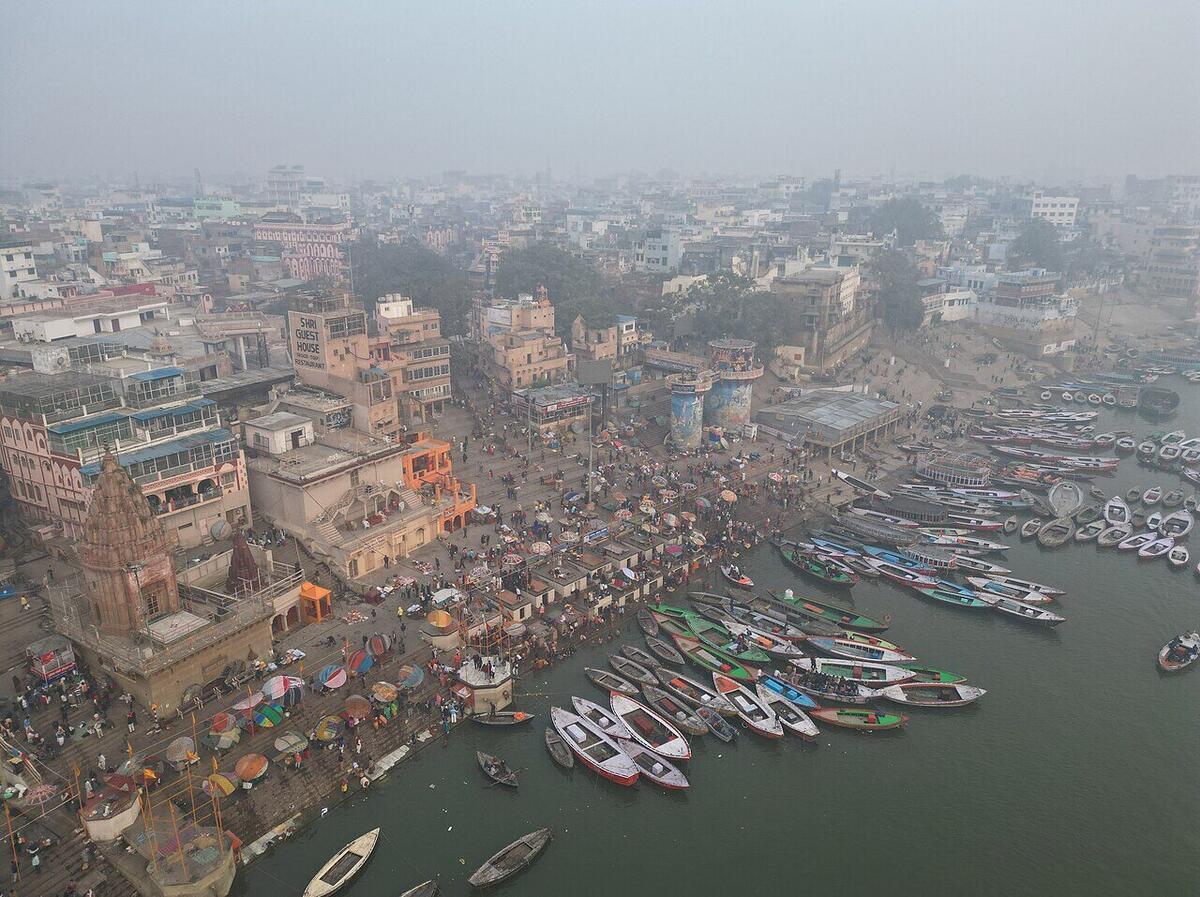
Sita Ki Rasoi holds a special place in Ayodhya's Sita-bhakti tradition. While Kanak Bhawan honours Sita-Ram in their married joy, Sita Ki Rasoi honours Sita alone as the grihalakshmi of the divine household. Women devotees often visit Sita Ki Rasoi after Janmabhoomi darshan, take a small handful of rice or jaggery as prasad, and carry it home for the family kitchen — a tradition that brings Sita's grace into ordinary domestic life.
History
The Sita Ki Rasoi tradition reaches deep into the Ayodhya pilgrim circuit. The current small chamber was rebuilt during the late medieval period and restored in the twentieth century. The shrine has continued under priestly families closely tied to the broader Janmabhoomi complex; today it is part of the official Ayodhya temple circuit managed in coordination with the larger Trust.
Architecture
Sita Ki Rasoi is a small one-room shrine with a low entrance arch, plastered walls in cream and ochre, and a stone-paved floor. The preserved utensils are set on a low platform behind a glass screen; a single dim lamp lights the chamber. The atmosphere is hushed and warm — many pilgrims report feeling that the room still smells faintly of cooking spices and devotional smoke.
Rituals & Practices
The shrine opens around 6 AM and closes around 9 PM with the surrounding Janmabhoomi area. Simple aarti is conducted twice daily — morning and evening. Pilgrims offer small chapati, jaggery (gud), rice, and seasonal sweets. The traditional sequence is to first complete the Janmabhoomi darshan, then visit Kanak Bhawan, then Sita Ki Rasoi as a final, intimate close to the central Ayodhya darshan.
Festivals & Celebrations
| Festival | When | Crowd |
|---|---|---|
| Sita Navami | — | very_high |
| Karva Chauth | — | high |
| Vivah Panchami | — | high |
| Akshaya Tritiya | — | moderate |
Sita Navami: The supreme day at Sita Ki Rasoi.
Karva Chauth: Honours Sita as the ideal wife.
Vivah Panchami: Honours the divine wedding.
Akshaya Tritiya: Akshaya Tritiya brings abundance into the household.
Prepare for Your Visit
Practical guidance to help you plan your pilgrimage
| Pilgrim Guidance | How to reachSita Ki Rasoi is in central Ayodhya, walking distance from Ram Janmabhoomi (200 metres) and Kanak Bhawan (300 metres). All standard rickshaw drops in the Janmabhoomi area put pilgrims within walking distance. PreparationModest dress. The shrine is small and intimate — visit in a small group, do not crowd the chamber. Phones permitted in outer courtyard but not in the shrine room. The prasad offered (rice, jaggery, chapati) is sold by small stalls outside. Best time to visitEarly morning or evening for the gentlest atmosphere. Sita Navami (Vaishakha — April-May) is the spiritual peak. Karva Chauth in Kartik is particularly observed by women devotees at the shrine. Mornings after Janmabhoomi darshan are the standard time of visit. |
Location
Ayodhya, UP
Pilgrim photos
No pilgrim photos yet.
Community corrections
No corrections yet.
Edit history
No revisions yet.
Plan Your Visit to Sita Ki Rasoi
Get a custom itinerary and pricing for your trip.
Recommended
Packages for this destination
Pilgrim Notes
On-ground observations from fellow pilgrims
No pilgrim notes yet. Be the first to share on-ground observations!
Sign in to share a note.
Pilgrim Reviews
Be the first to share your experience at Sita Ki Rasoi.
Sign in to write a review.
Nearby sacred places
Discover other sacred places near Sita Ki Rasoi
Explore temples, tirthas, and pilgrimage sites in UP
Explore nearbyPart of these circuits
Walk the traditional pilgrimage routes this destination belongs to.