Tulsi Peeth stands at Janki Kund in Chitrakoot, on the Mandakini within the sacred landscape of Kamadgiri and Ram Ghat. It is a modern seat of Ram-bhakti, founded in 1987 by Jagadguru Rambhadracharya and named in honour of Goswami Tulsidas, whose Ramcharitmanas the Peeth serves through scholarship, publication, and daily katha. The Peeth does not claim the antiquity of Chitrakoot's older tirthas; its place in the yatra comes from the living devotional and scholarly work that flows from it.
The heart of the campus is the Kanch Mandir — the glass temple of Sita-Ram, whose mirrored and coloured-glass interior has made it one of modern Chitrakoot's most visited shrines. Around it stand the institutions of the Sri Tulsi Peeth Seva Nyas: a school for the blind, the Jagadguru Rambhadracharya Divyanga University for differently-abled students, and a discourse-hall where Ram Katha, bhajan-sankirtan, and Manas-paath continue daily.
The Peeth and the Tulsidas tradition
Chitrakoot holds a deep place in the memory of Tulsidas — the famous katha of the sandal-paste tilak at Ram Ghat, when the saint is held to have received darshan of Shri Ram himself, is remembered across the town's bhakti-tradition. Tulsi Peeth was established within this landscape to carry that heritage forward: its scholars have produced editions and commentaries of the Ramcharitmanas, and its katha-programmes draw devotees from across north India. Pilgrims come to the Peeth for the Kanch Mandir darshan, for the Manas-paath, and for the quiet, service-centred bhav of a living institution of Ram-bhakti.
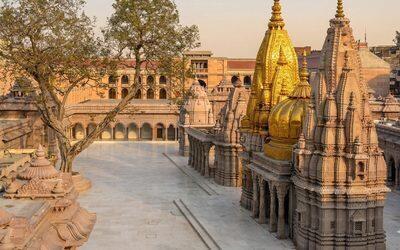
Tulsi Peeth's significance lies in the meeting of scholarship and bhakti. The Ramcharitmanas is, for hundreds of millions of north Indians, not merely a literary work but the living scripture of Ram-bhakti — recited daily in homes, sung in akhand-paaths during festivals, the source of countless dohas and chaupais that punctuate everyday Hindi speech. At Tulsi Peeth this scripture is served in the present tense: recited, taught, edited, and sung within sight of Kamadgiri, in the town most intimately woven into the vanvas of Shri Ram. Pilgrims describe a quiet, gentle bhav here — the luminous darshan of Sita-Ram in the Kanch Mandir, the steady rhythm of Manas-paath, and the seva of the Peeth's schools, where devotion takes the form of care for the blind and the differently-abled.
History
Tulsi Peeth was founded in 1987 by Jagadguru Rambhadracharya at Janki Kund, Chitrakoot, as a seat of Ram-bhakti and Manas scholarship named in honour of Goswami Tulsidas. From a small beginning it grew into the Sri Tulsi Peeth Seva Nyas, a wider mission of devotion and service. The Kanch Mandir of Sita-Ram rose on the campus and became one of modern Chitrakoot's best-known shrines; a school for the blind was established as part of the Peeth's service-mission; and the Jagadguru Rambhadracharya Divyanga University for differently-abled students followed in the same landscape. The Peeth's scholarly work — editions, commentaries, and daily recitation of the Ramcharitmanas — continues alongside its educational and social institutions, and Ram Katha programmes are held through the year.
Architecture
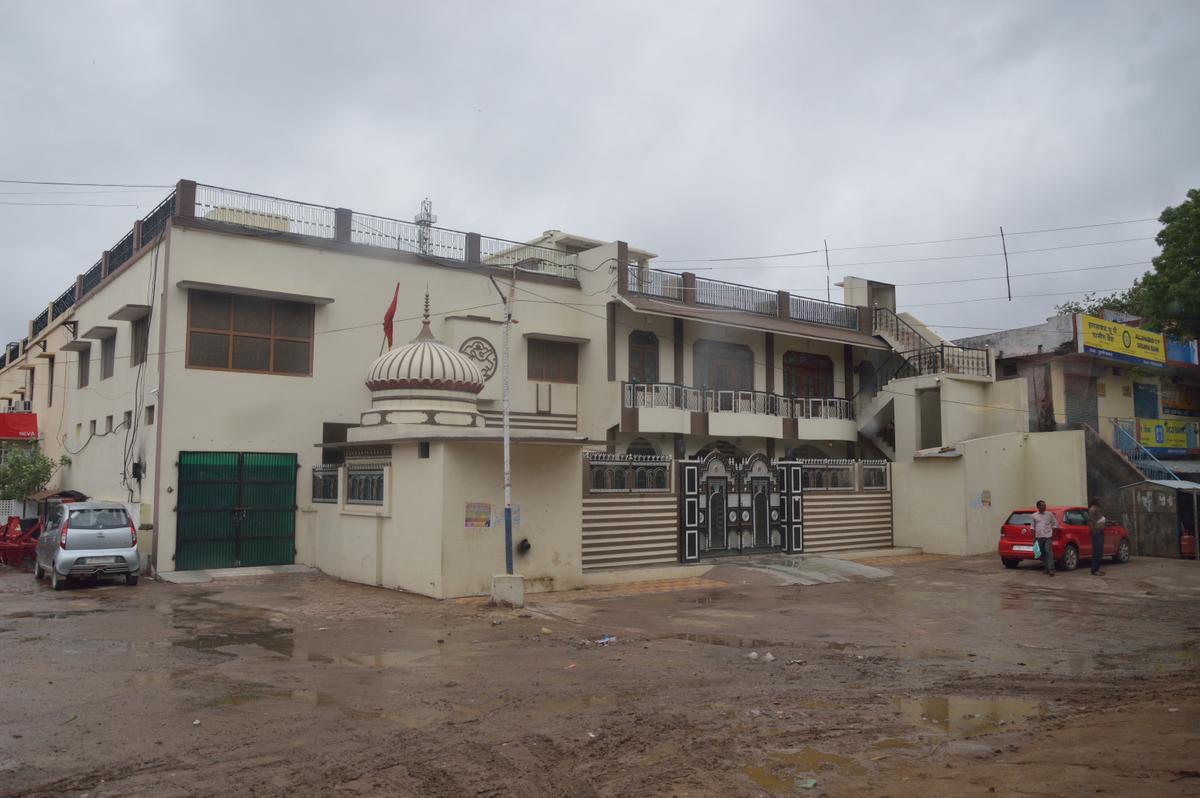
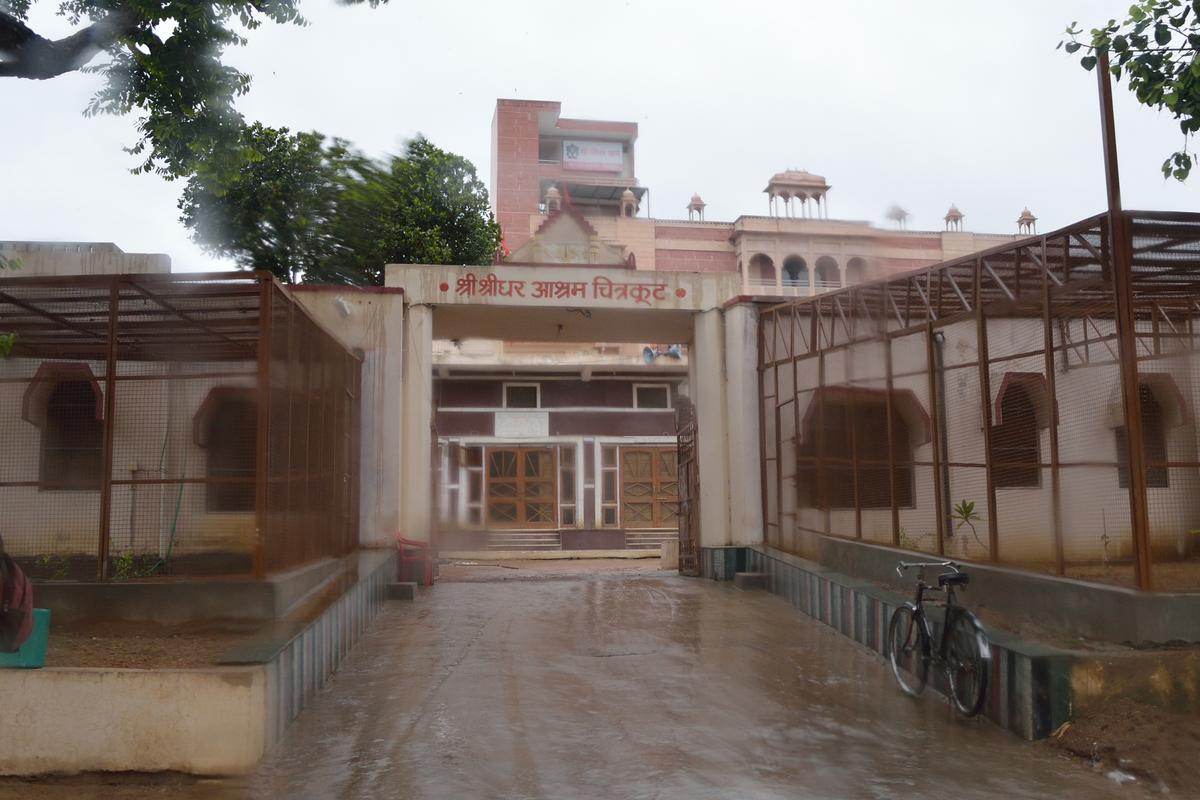
The Peeth is a modern campus in simple north Indian ashram style, centred on the Kanch Mandir — the glass temple of Sita-Ram, its interior worked in mirrored and coloured glass so that lamplight multiplies across every surface. Around it stand the discourse-hall (pravachan-bhavan), the library of Manas scholarship gathered under Jagadguru Rambhadracharya's stewardship, the school for the blind, and accommodations for resident sadhus and students. Outside the Kanch Mandir the architecture is deliberately understated — the focus is on seva and scholarship rather than monumentality. The discourse-hall seats several hundred and hosts Ram Katha programmes through the year.
Rituals & Practices
Tulsi Peeth opens early — around 5 AM — with mangala-aarti at the Ram-Sita shrine, followed by Ramcharitmanas paath that continues through the morning. Pilgrims sit in the discourse-hall during paath; the recitation of the Manas in its native Avadhi, by trained reciters, is itself the principal seva of the Peeth. Visitors offer flowers, tulsi-leaves, and small dakshina; many bring their own Manas-copies to be touched to the shrine. The Peeth distributes prasad — usually simple sweets and tulsi-charanamrit. Ram Katha programmes by Jagadguru Rambhadracharya and other vidwans are held periodically and announced in advance.
The traditional sequence at Chitrakoot: bathe at Ram Ghat on the Mandakini, do darshan at Tulsi Peeth, undertake the Kamadgiri parikrama (5 km around the sacred hill), visit Hanuman Dhara, Sphatik Shila, Gupt Godavari, and Bharat Milap. Tulsi Peeth fits naturally into the morning of a Chitrakoot yatra.
Festivals & Celebrations
| Festival | When | Crowd |
|---|---|---|
| Tulsi Jayanti | — | very_high |
| Ram Navami | — | very_high |
| Akhand Ramcharitmanas Paath | — | high |
| Diwali | — | high |
| Hanuman Jayanti | — | high |
Tulsi Jayanti: The saint''s own day.
Ram Navami: The Ramayana-cycle peak.
Akhand Ramcharitmanas Paath: The Peeth''s principal seva.
Diwali: The Ramayana''s joyful conclusion.
Hanuman Jayanti: Hanuman''s day at the Sundara Kanda''s home.
Prepare for Your Visit
Practical guidance to help you plan your pilgrimage
| Pilgrim Guidance | How to reachChitrakoot is on the UP-MP border; the nearest railway station is Chitrakoot Dham Karwi (8 km), with connections to Allahabad/Prayagraj (130 km), Lucknow, and Delhi. Allahabad airport is the nearest major airport. Tulsi Peeth is at Janki Kund, about 2 km from Ram Ghat, reached by auto-rickshaw or by a riverside walk from most Chitrakoot dharamshalas. Auto-rickshaws and cycle-rickshaws run within the town. PreparationModest dress; full-sleeved kurtas for the discourse-hall. Bring a personal copy of the Ramcharitmanas if you have one — it is auspicious to have it touched to the shrine. Phones permitted but kept silent in the hall. Photography of the murti is restricted; the outer compound is fine. Best time to visitOctober to March is most pleasant in Chitrakoot. Tulsi Jayanti (Shravan Shukla Saptami, July-August — Tulsidas's birth anniversary) is the supreme spiritual peak. Ram Navami (March-April) and Diwali bring large flows. The annual Akhand Manas-paath draws devotees from across north India. |
Location
Satna, UP
Pilgrim photos
No pilgrim photos yet.
Community corrections
No corrections yet.
Edit history
No revisions yet.
Plan Your Visit to Tulsi Peeth, Chitrakoot
Get a custom itinerary and pricing for your trip.
Recommended
Packages for this destination
Pilgrim Notes
On-ground observations from fellow pilgrims
No pilgrim notes yet. Be the first to share on-ground observations!
Sign in to share a note.
Pilgrim Reviews
Be the first to share your experience at Tulsi Peeth, Chitrakoot.
Sign in to write a review.
Nearby sacred places
Discover other sacred places near Tulsi Peeth, Chitrakoot
Explore temples, tirthas, and pilgrimage sites in UP
Explore nearbyPart of these circuits
Walk the traditional pilgrimage routes this destination belongs to.