Ask any old priest in Varanasi whose city this really is, and you will get a smile and the same answer you would have gotten five hundred years ago: Baba Vishwanath is the king of Kashi, but Kaal Bhairav is its Kotwal — the police chief, the enforcer, the keeper of the gate. Nothing moves in this city without his leave. The dead cannot enter and the living cannot leave, the saying goes, without Bhairav ji's permission — and by the same ancient logic, a Kashi yatra is held to be incomplete until you have stood before him. Pilgrims by the thousand take darshan at the great Vishwanath temple and fly home never knowing that tradition asked one more stop of them, ten minutes' ride away, in a lane the tour buses cannot enter.
We take our yatris to the Kotwal every week — usually early, before the city fully wakes — and this guide gathers everything a first-time pilgrim needs: the story, the customs, the timings, the famous black thread, and how to actually find the temple in the folded lanes of the old city.
Who Is Kaal Bhairav?
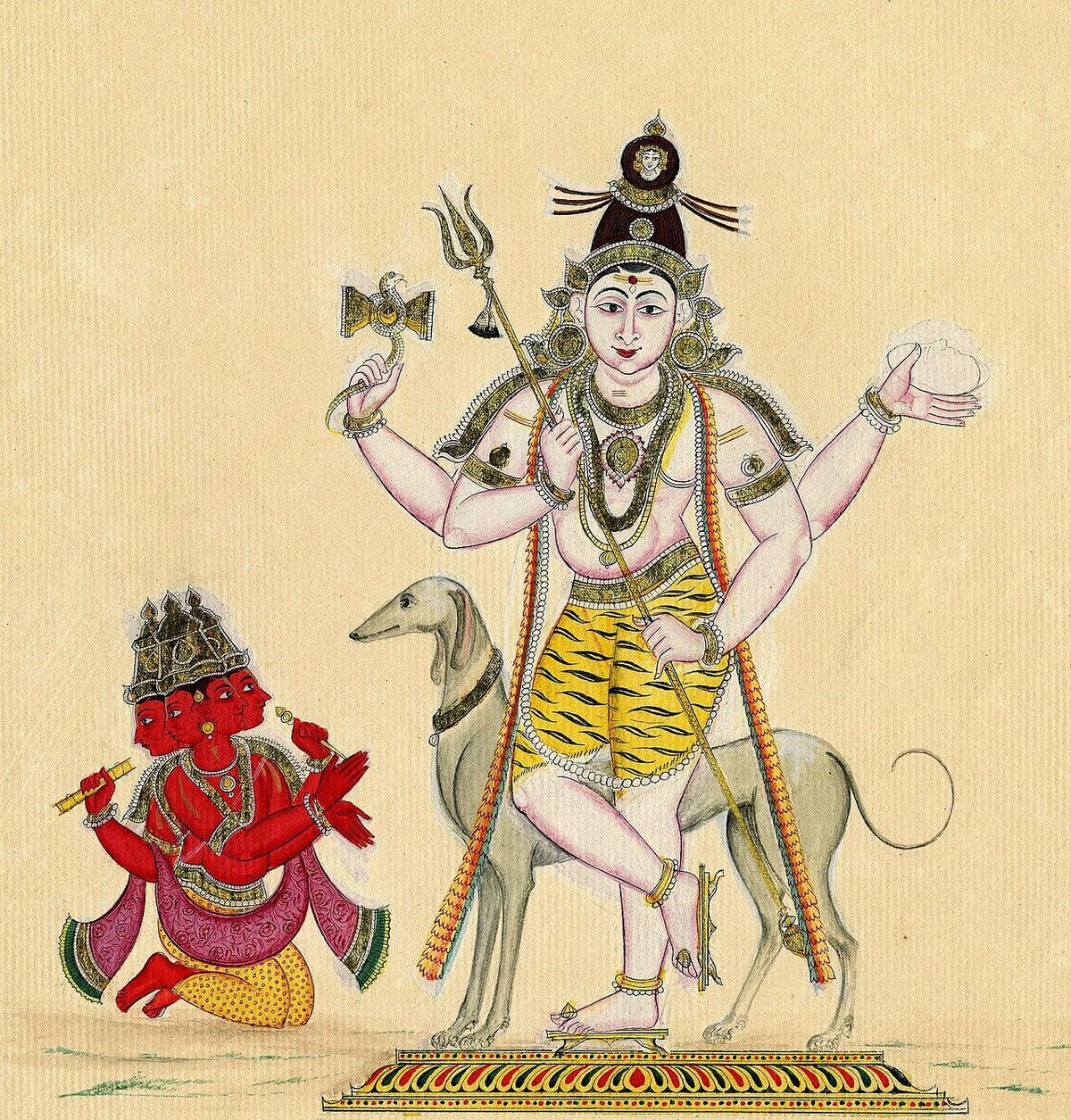
Kaal Bhairav is Shiva in his most terrifying and most protective form — Shiva as time (kaal), Shiva as the one whom even death fears. The Puranic story is told in Kashi with relish. When Brahma ji, swollen with pride, spoke arrogantly of his own supremacy, Shiva manifested Bhairav from his wrath, and Bhairav severed Brahma's fifth head — the head that had spoken the arrogance. The skull clung to Bhairav's palm, and the sin of harming Brahma pursued him through the three worlds, until he wandered at last into Kashi — the city where all sins dissolve. Here the skull fell from his hand, at the place remembered as Kapal Mochan, and here Shiva appointed him forever: Bhairav would remain in Kashi as its Kotwal, guardian of the city and dispenser of its justice, punishing in an instant what would otherwise take lifetimes to burn away.
This is why Banarasis speak of him with a familiarity that startles outsiders — not the hushed distance reserved for Vishwanath ji, but the warm, wary respect a mohalla keeps for its strictest policeman. He is fierce, and he is theirs.
The Tradition: Darshan of the Kotwal Completes the Yatra
The custom, maintained by Kashi's pujaris for generations, runs in two directions. Some hold that the pilgrim should present himself to the Kotwal first — seeking permission to enter the king's city and take Vishwanath darshan — while others take Bhairav darshan straight after the jyotirlinga, as a report to the officer on the way out. Both are practised, both are accepted, and we tell our families not to lose sleep over the order. What the tradition insists on is simpler: do not leave Kashi without standing before him. The yatra that skips the Kotwal, the elders say, was never registered in the city's books at all.
Inside the sanctum, the murti shows Bhairav with his dog — his vahana, and the reason Banarasis feed street dogs on Bhairav Ashtami — and the darshan is close, quick, and charged in a way that surprises people. The priests move pilgrims through briskly with peacock-feather brooms, brushing each bowed head in blessing and to sweep away affliction — the jhaadu that devotees credit with removing fear, nazar, and obstacles of every kind.
The Black Thread: Bhairav Ji's Protection to Carry Home
The most beloved custom of this temple is the kala dhaga — the black thread, blessed before Bhairav ji, tied on the wrist (or worn at the neck) by the temple priests. It is the Kotwal's protection order, carried on the body: guarding the wearer against fear, evil eye, and unseen harm on the road and at home. Pilgrims returning from Kashi are often asked by neighbours to bring extra threads, and the temple sells them ready for blessing. Wear it on the right wrist for men, left for women, as commonly practised — and when it eventually frays and falls, tradition says its work is done; place it under a peepal tree or in running water rather than in the dustbin.
Offerings here also differ from other temples: mustard-oil lamps, black sesame, urad, and on certain days the famous offering of liquor — poured before the deity and returned as prasad — a tantric inheritance the temple carries openly and without embarrassment. You are not obliged to offer it; flowers, oil, and a sincere pranam are ample. Follow the priests' lead and nothing will go wrong.
Timings and When to Go
Set your expectations correctly about scale, too. This is not a corridor-sized complex; it is an old mohalla temple — a compact courtyard, a small pillared mandap, the sanctum a few steps beyond — and its power is in that intimacy. There is no lengthy queue infrastructure, no elaborate facilities: just the lane, the threshold, the bell, and the Kotwal. On a quiet morning the entire visit can feel less like sightseeing and more like calling on someone — which, Banarasis would say, is exactly what it is.
The temple follows the classic Kashi rhythm: open from early morning — around 5:00 AM — until roughly midday or early afternoon, then closed for a few hours, reopening in the late afternoon and running until night, around 9:30 or 10:00 PM, with aartis at opening, midday, and night. As with every temple in this city, timings shift on festival days — and on Bhairav Ashtami (his great annual festival, in the month of Margashirsha), on Sundays and Tuesdays (his days), and throughout certain sacred months the queues swell enormously. Verify locally for your dates.
- Best hour: 6:00 to 8:00 AM on a weekday — short queue, cool lanes, and the temple at its most intimate. This is when we bring our own groups.
- Avoid if you can: late mornings on Sundays and Tuesdays, when the wait can stretch past two hours.
- Time needed: twenty minutes at a quiet hour, door to door from Godowlia under an hour including the ride.
Finding the Temple in the Old City
The temple stands in the dense northern lanes of the old city, in the Bhairavnath–Visheshwarganj area — north of the Vishwanath corridor and a little inland from the ghats, near the head post office. No car reaches the door: an auto or e-rickshaw drops you at the mouth of the lane, and the final two hundred metres are on foot past the stalls of oil, threads, and marigold that announce every great temple in Kashi. Any shopkeeper on the main road will point the way at the words "Kaal Bhairav"; the lane knows its own landmark. As at Vishwanath, keep pockets light — phones are best left behind or with a companion outside, and the lane's usual old-city rules apply: mind your footing, mind your belongings, and give way to the occasional cow with the right of way she has held for three thousand years.
Pair the visit naturally: Kaal Bhairav sits well with an early Vishwanath darshan (see our darshan guide for that side of the morning), or as the first stop of your departure day, the Kotwal's leave taken before the journey home — exactly where we place him in our two-day Kashi itinerary.
Bhairav Ashtami and the Days of the Kotwal
If your travel dates allow a choice, know the temple's own calendar. Bhairav Ashtami — the eighth day of the dark fortnight of Margashirsha, usually falling in November or December — is his great annual utsav, commemorating the very manifestation of Kaal Bhairav, and the temple celebrates it through the night: special shringar, unbroken darshan queues, the lanes lit and singing, and the city's dogs — his vahana's kin — garlanded and fed by households across Banaras. It is the most intense darshan of the year and also the longest wait; go for the atmosphere, not for speed. Sundays and Tuesdays are his weekly days, when local devotees come in force; the entire month of Sawan swells everything in Kashi, this lane included; and the Ashtami of every dark fortnight draws a faithful monthly crowd. For the quietest, most personal darshan of the Kotwal, come on an ordinary Wednesday or Thursday at dawn, when the lane belongs to the milk sellers, the temple bell, and you.
The Ashta Bhairav: Eight Guardians of One City
Kaal Bhairav does not keep Kashi alone. Tradition arranges eight Bhairavs — the Ashta Bhairav — around the city as its directional guardians, each watching one quarter of the sacred zone: Ruru, Chanda, Asitanga, Kapali, Krodhana, Unmatta, Samhara, and Bhishana Bhairav, with Kaal Bhairav as their chief and commander. Dedicated pilgrims still make the Ashta Bhairav yatra, visiting all eight shrines — several tucked into lanes and temple courtyards that even many Banarasis would need directions to find — traditionally in the dark fortnight of Margashirsha leading up to Bhairav Ashtami. For most yatris on a short visit, darshan of the Kotwal himself suffices and is understood to carry the blessing of the whole watch. But if you have an extra morning and a taste for the deep city, ask us about the full circuit — it threads through neighbourhoods no tour ever sees, and it is one of our favourite walks in all of Kashi.
A related stop many families add: Mrityunjay Mahadev, the temple of Shiva as the conqueror of death, stands in the same quarter of the old city a short walk away, with its famous well whose waters are held to ward off untimely death and illness. Kotwal and Mrityunjaya in one morning make a fitting pair — protection for the road, and protection for the years beyond it.
How to Offer: A Simple Sequence for First-Timers
Nothing at this temple requires expertise, but pilgrims are calmer knowing the shape of things. Buy your offering at the lane stalls — a bottle of mustard oil, black thread, flowers, perhaps black til — and keep small notes ready. Join the line, and as you reach the sanctum, hand the oil to the attending priest (it feeds the lamps), bow for the peacock-feather jhaadu blessing, take darshan of Bhairav ji and his dog, and receive the thread, tied there or given into your hand. Offer what dakshina feels right — this temple has no fixed tariff and needs none. Outside, touch the threshold, circumambulate if space allows, and give a coin or a biscuit to the first dog you see in the lane; Banarasis will tell you the Kotwal notices. The whole rite, unhurried, takes a quarter of an hour and stays with people for years.
A Word for the Hesitant
Some pilgrims, hearing of the fierce form, the tantric offerings, the skull and the black thread, wonder whether this temple is somehow apart from the Kashi of Vishwanath ji and the Ganga aarti. It is not apart; it is the same single tradition, guarding its own gate. Bhairav is Shiva's wrath in the service of Shiva's compassion — the fear that protects the fearful. Families bring their smallest children to him; grandmothers argue with him under their breath like an old relative. Stand in his lane for ten minutes and you will see that the Kotwal of Kashi is feared by no one so much as he is loved.
So when you plan your Kashi yatra, plan for him. The river at dawn, Baba Vishwanath in the morning, the aarti at dusk — and one visit, early on some quiet morning, to the officer who has kept this city since before its history was written. Every Kashi Yatra we run includes his darshan, because we would not consider the yatra complete without it — and neither, tradition insists, would Kashi. Har Har Mahadev.
Related articles
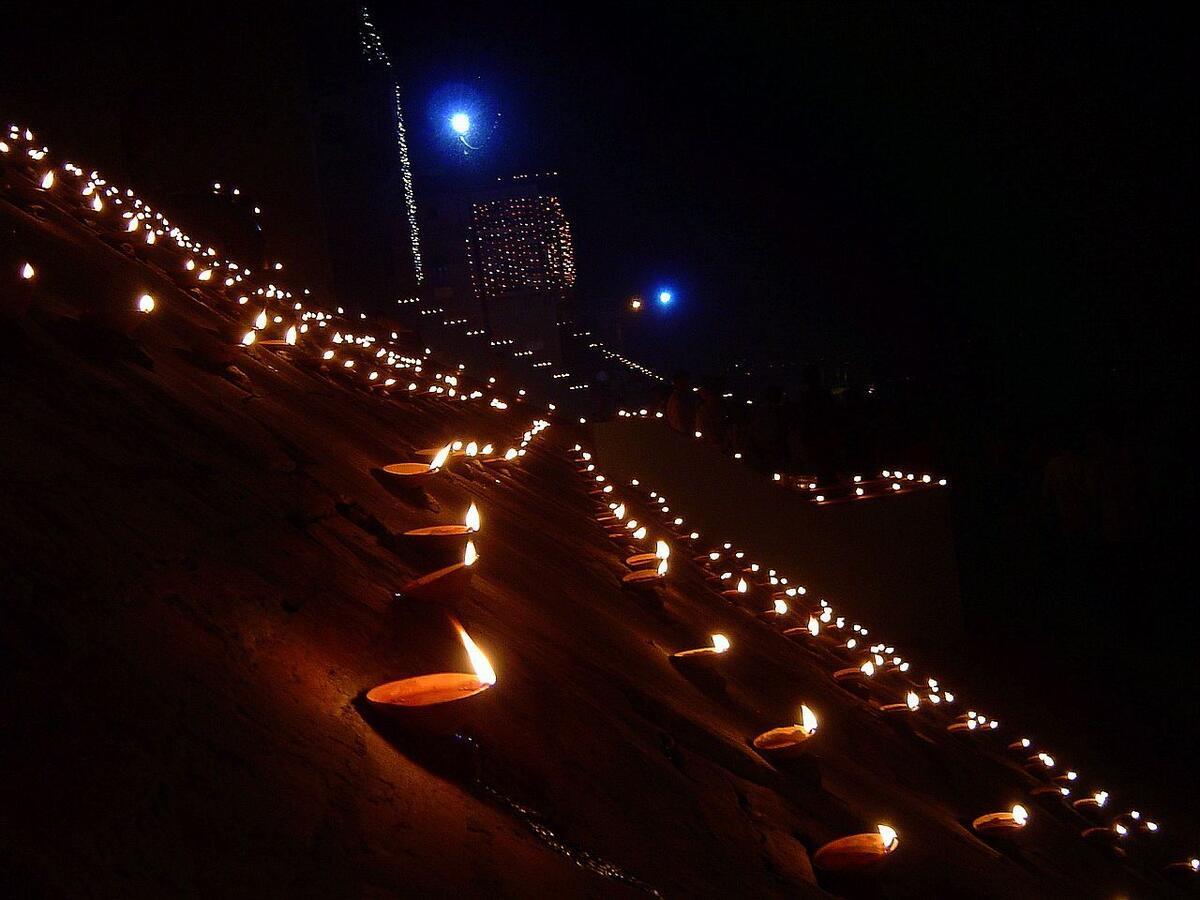
Varanasi in Winter: Dev Deepawali, Fog on the Ganga, and the Season of Malaiyo
November to February is Kashi at its kindest and most crowded — Dev Deepawali's lakhs of lamps, fog-wrapped dawn boat rides, the dawn-only dessert called malaiyo, what to pack, and why winter yatras must be booked months ahead.
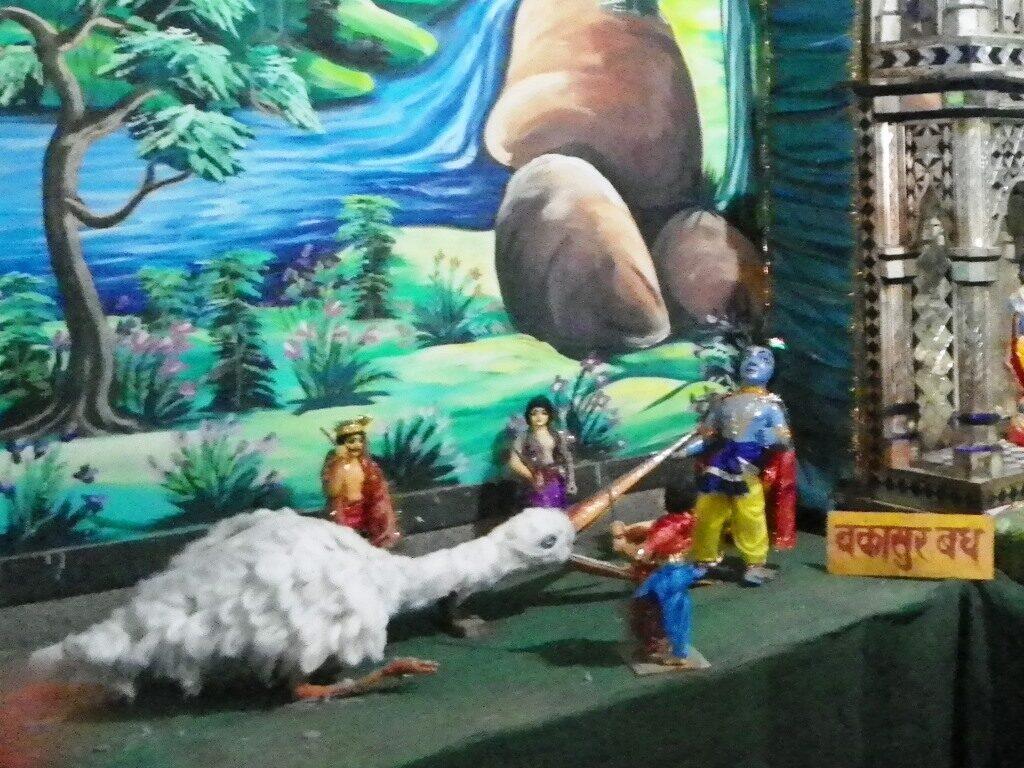
Tulsi Manas Mandir: The Temple Built Where the Ramcharitmanas Was Born
On the ground where Goswami Tulsidas composed the Ramcharitmanas stands a white marble temple whose walls carry his verses end to end. The story of the people's Ramayana, the moving tableaux upstairs, the Durga Mandir pairing, and a perfect evening plan.
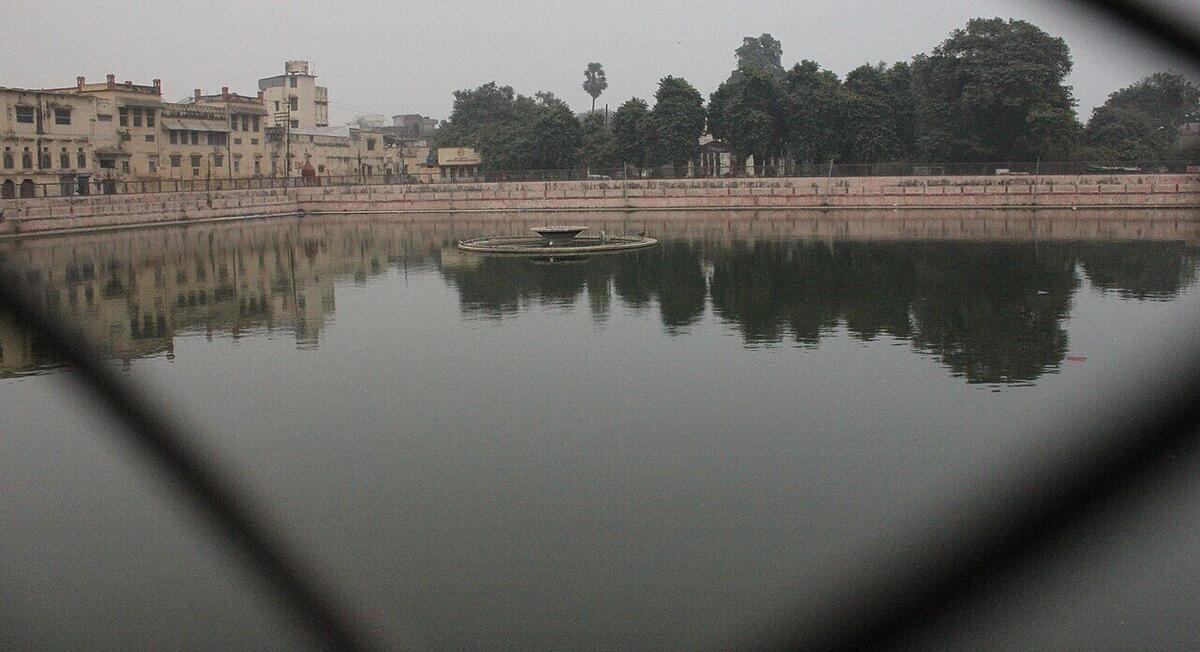
Durga Mandir and Durga Kund: The Red Temple Where the Devi Chose to Stay
The 18th-century red temple of Durga Kund — built by Rani Bhabani of Natore around a murti tradition holds no sculptor ever made, beside a sacred tank older than memory. History, legends, Navratri in Kashi, and a pilgrim's visit plan.