Two days in Kashi is not enough to know the city — a lifetime is not enough for that — but two days, planned with care, is enough for a complete and unhurried yatra. We arrange this exact circuit for pilgrim families every week, and the single biggest mistake we see is trying to fit too much into the hours between ten in the morning and four in the afternoon, which is precisely when Varanasi is at its hottest, most crowded, and least forgiving. The city gives its best darshan at dawn and at dusk. Build your two days around those hours, rest deliberately in the middle, and you will leave with the yatra you came for.
What follows is the itinerary we walk with our own yatris, hour by hour, with honest notes on where the plan strains, where to rest, and what elderly pilgrims should quietly skip.
Before You Begin: The Shape of the Two Days
Day 1 belongs to the river and the two great temples of the living tradition: a dawn boat on the Ganga, darshan at Shri Kashi Vishwanath, an afternoon of genuine rest, evening darshan at Sankat Mochan, and the Ganga Aarti at Dashashwamedh Ghat. Day 2 begins with Kaal Bhairav — the Kotwal of Kashi, whose darshan tradition holds is what makes a Kashi yatra complete — followed by a half-day at Sarnath, and a gentle final evening.
One honest note before the clock starts: temple timings in Varanasi shift on festival days, on Mondays in Sawan, and during major snan dates. Everything below reflects the normal daily rhythm; verify timings for your specific dates, or ask us — it is the first thing we check when we plan a Kashi yatra for a family.
Day 1, 4:45 AM — The River Before Sunrise
Wake early. This is the one alarm of the trip that must not be negotiated, because the dawn boat ride is the spiritual overture to everything that follows. Ask your hotel to arrange a wake-up, and be at Assi Ghat or Dashashwamedh Ghat by 5:15 AM. In winter it will still be dark; in summer the eastern sky is already pale. If you begin at Assi Ghat you may catch the tail of the Subah-e-Banaras morning aarti — a quieter, more contemplative ceremony than the evening spectacle.
The boat glides north past Tulsi Ghat, Harishchandra Ghat, Kedar Ghat, and the great crescent of stone that is unlike anything else in India. You will see pilgrims taking their snan, wrestlers exercising at the akharas, priests beginning the day's first rituals. A shared rowing boat costs little; a private one costs more and is worth it for elderly parents who need help stepping in and out. The full ride from Assi to Manikarnika and back takes about 75 to 90 minutes. As you pass Manikarnika Ghat, the boatman will lower his voice. Follow his example — no photographs of the cremation ground, ever.
By 6:45 AM you are back on the steps. If you intend to take a Ganga snan, do it now at Dashashwamedh or Assi, where the steps are broad and there are changing rooms nearby. Then a hot kulhad of chai on the ghat — you have earned it.
Day 1, 7:30 AM — Shri Kashi Vishwanath Darshan
From Dashashwamedh Ghat, the walk to the Kashi Vishwanath Dham entrance at Gate 4 (the Godowlia side) takes about ten minutes through waking lanes. Since the corridor opened in 2021, the approach is far easier than the old squeeze through Vishwanath Gali, and pilgrims arriving from the river can also enter through the Ganga Dwar at Lalita Ghat directly from the boat.
Go now, not later. The queue between 7:00 and 9:00 AM on a normal weekday moves in 30 to 60 minutes; by late morning it can triple, and Mondays and festival days are another matter entirely. Mobile phones, cameras, and leather items must go into the free lockers before the security check — carry nothing you do not need. Inside, the darshan itself is brief: a few seconds before Baba Vishwanath's jyotirlinga, the crush of devotion around you, the sound of "Har Har Mahadev" moving through the queue like a wave. It is enough. It has always been enough.
We have written a complete, separate guide to the temple — queue types, Sugam darshan tickets, dress notes, aarti bookings — in our Kashi Vishwanath darshan guide. Read it the night before.
9:30 AM — breakfast. You are now in the heart of the old city, and this is the hour for kachori-sabzi and jalebi in the lanes near Godowlia, or a proper sit-down breakfast back near your hotel. Eat well. The next item on the itinerary is the most important and the most ignored.
Day 1, 11:00 AM to 3:30 PM — Rest. Genuinely Rest.
We are firm about this with every family we host: go back to your hotel, eat a light lunch, and sleep. Varanasi's midday — hot for eight months of the year, airless in the lanes, loud everywhere — gives nothing to a pilgrim that the morning and evening do not give better. The yatris who skip this rest are the ones we see exhausted and short-tempered at the evening aarti, and exhaustion is the enemy of bhakti. Elderly pilgrims especially: this rest is not optional. Two full darshans and a dawn start is a serious day's work for any body.
Day 1, 4:00 PM — Sankat Mochan Hanuman Mandir
Refreshed, take an auto or cab to Sankat Mochan, the temple of Hanuman ji established by Goswami Tulsidas himself, about twenty minutes from Godowlia in the direction of BHU. The temple opens for evening darshan and the atmosphere here is entirely different from Vishwanath — trees, monkeys (hold your prasad and spectacles close), the continuous recitation of the Sundarkand, and the famous besan ke laddoo offered to Hanuman ji. Tuesdays and Saturdays are gloriously crowded; on other evenings you can sit in the courtyard for half an hour of real stillness. Phones go into lockers here too.
If your legs allow, the Durga Mandir and Tulsi Manas Mandir sit on the same road and a combined visit adds perhaps forty-five minutes. If you must choose one, choose Sankat Mochan.
Day 1, 6:00 PM — The Ganga Aarti at Dashashwamedh
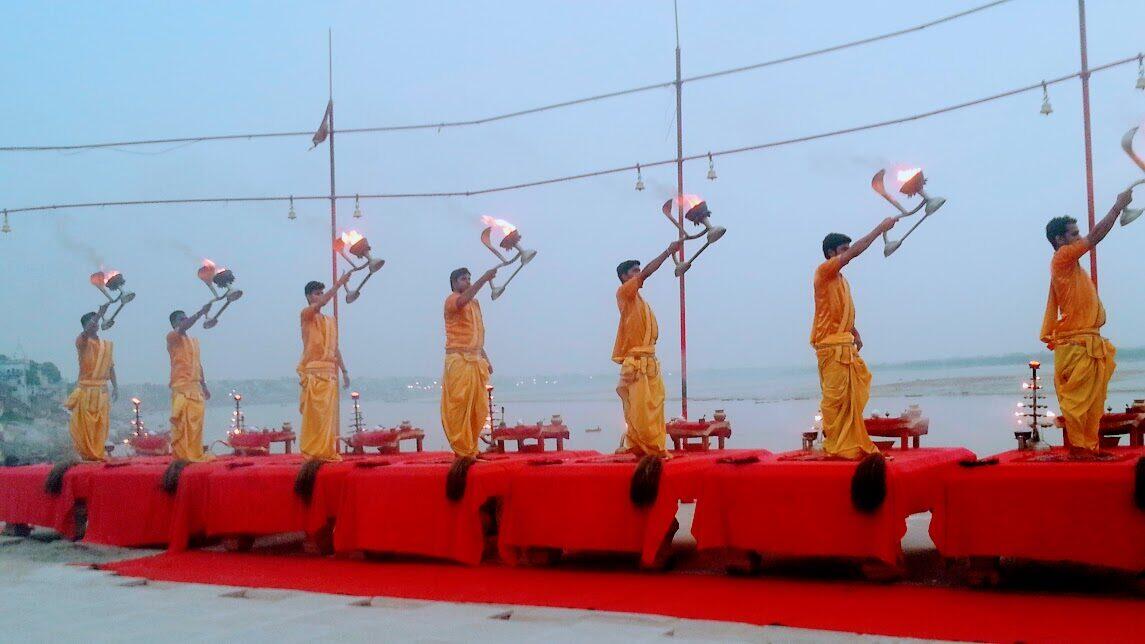
Return towards Dashashwamedh Ghat by 6:00 PM in winter, 6:30 in summer — the aarti begins around sunset and the good places go early. You have three choices, in ascending order of comfort: stand on the ghat steps among the crowd (free, intense, and hard on the knees), sit on the wooden platforms near the front (arrive very early), or watch from a boat on the water, which we consider the finest seat in Kashi — the seven flames rising in unison, reflected in the river, with the crowd's roar reaching you across the water. We arrange aarti boat seating for our guests for exactly this reason, and for elderly pilgrims the boat is not a luxury but a kindness: no stairs, no crush, a place to sit throughout.

The aarti runs about forty-five minutes. Dinner afterwards in Godowlia or back near the hotel, and sleep early. Day 2 also begins before the city does.
Day 2, 6:30 AM — Kaal Bhairav, the Kotwal of Kashi
Tradition in Kashi is unambiguous: the yatra is incomplete without the darshan of Baba Kaal Bhairav, the fierce form of Shiva who serves as the city's Kotwal — its divine police chief. Nothing moves in Kashi without his leave, the elders say, and pilgrims have sought his permission and protection for centuries. The temple stands in the dense lanes near Visheshwarganj, north of the Vishwanath corridor; go early, around 6:30 to 7:30 AM, when the queue is short and the mangala energy still hangs in the air. Receive the black thread — the kala dhaga — tied at the temple as Bhairav ji's protection for the journey home. The temple generally closes in the early afternoon and reopens for the evening; timings shift on festival days, so check locally.
Breakfast afterwards in the lanes — this is old, unpolished, workaday Kashi, and some of the best food of your trip is within two hundred metres of the temple door.
Day 2, 9:30 AM — Half a Day at Sarnath
Ten kilometres north of the city, Sarnath is where Bhagwan Buddha delivered his first sermon, and its broad lawns, the great Dhamek Stupa, and the superb archaeological museum (home of the Ashokan lion capital, our national emblem) make a profoundly calm counterpoint to the intensity of the ghats. A cab or auto takes thirty to forty minutes. Give it three hours: the excavated monastery grounds, the stupa parikrama, the museum, and if time permits the Mulagandha Kuti Vihar with its frescoes. The site is flat and open — easy walking, but carry water and a hat, for there is little shade on the paths. Return to the city by 1:30 PM for lunch and a short rest.
Day 2, 4:30 PM — The Last Evening
Spend the final evening gently. Walk the ghats south from Dashashwamedh towards Kedar and Harishchandra as the light softens, or sit at Assi Ghat with chai and watch the river you rose before dawn to meet. Pick up your Banarasi souvenirs — pukka silk from a government-certified shop, rudraksha malas, the city's famous sweets — in Thatheri Bazaar or Vishwanath Gali. If your train leaves late at night, a second aarti — this time from the steps, among the crowd — is a worthy farewell.
What Elderly Pilgrims Should Skip
- The full ghat walk. The stone steps are steep, uneven, and unrailed in long stretches. Do the dawn boat instead — it shows the same arc of ghats with none of the climbing.
- Standing at the aarti. Ninety minutes of standing in a dense crowd is punishing. Take the boat seating, without guilt.
- Manikarnika at close quarters. Pass it respectfully by boat. The lanes around it are congested and emotionally heavy.
- The 3:00 AM Mangala Aarti at Vishwanath — magnificent, but it wrecks the whole day's energy for anyone who needs proper sleep. The 7:30 AM darshan is gentler and no less blessed.
- Back-to-back temples in the midday heat. One temple per morning, one per evening. Kashi rewards slowness.
What to Carry Each Day
Pack the day-bag once, the night before, and the whole itinerary runs smoother. For the dawn outing: a shawl or light jacket eight months of the year (the river is cooler than the lanes), a small towel if you intend to take snan, and loose change for the boat and chai. For the temple hours: as little as possible — cash for offerings, and remember that phones, cameras, and leather go into lockers at both Vishwanath and Sankat Mochan, so ideally leave them at the hotel entirely and carry a small cloth jhola for prasad. For the evening aarti: water, patience, and nothing valuable in an outside pocket. Year-round essentials: a refillable water bottle, a hat or umbrella against sun, and any daily medicines in the bag rather than in the hotel — Kashi's traffic means you are never certain when you will be back in your room.
One more practical blessing: keep a photograph of your hotel's card, and the phone number of your driver or operator, written on paper in a pocket. The old city swallows phone batteries and phone signals alike, and the pilgrim who can show a chai-wallah a written address is never truly lost in Varanasi — the lanes themselves will walk you home.
A Word on Getting Around
Distances look short on the map and lie. Between Godowlia and Assi allow twenty minutes by auto in normal traffic and double during festivals; the last half-kilometre to most ghats and to Vishwanath is on foot regardless of what any driver promises. Wear shoes that slip on and off easily — you will remove them a dozen times in two days — and keep a small cloth bag for them at temples without shoe stands.
This is the two-day Kashi we would plan for our own parents: dawn on the river, Baba Vishwanath while the city is still kind, real rest at midday, Hanuman ji at dusk, the aarti from the water, Bhairav ji's thread on the wrist, and the Buddha's deer park before the journey home. If you would rather walk it with someone who walks it weekly — transport, darshan logistics, boat seating and all — our Kashi Yatra packages follow exactly this rhythm. Har Har Mahadev.
Related articles
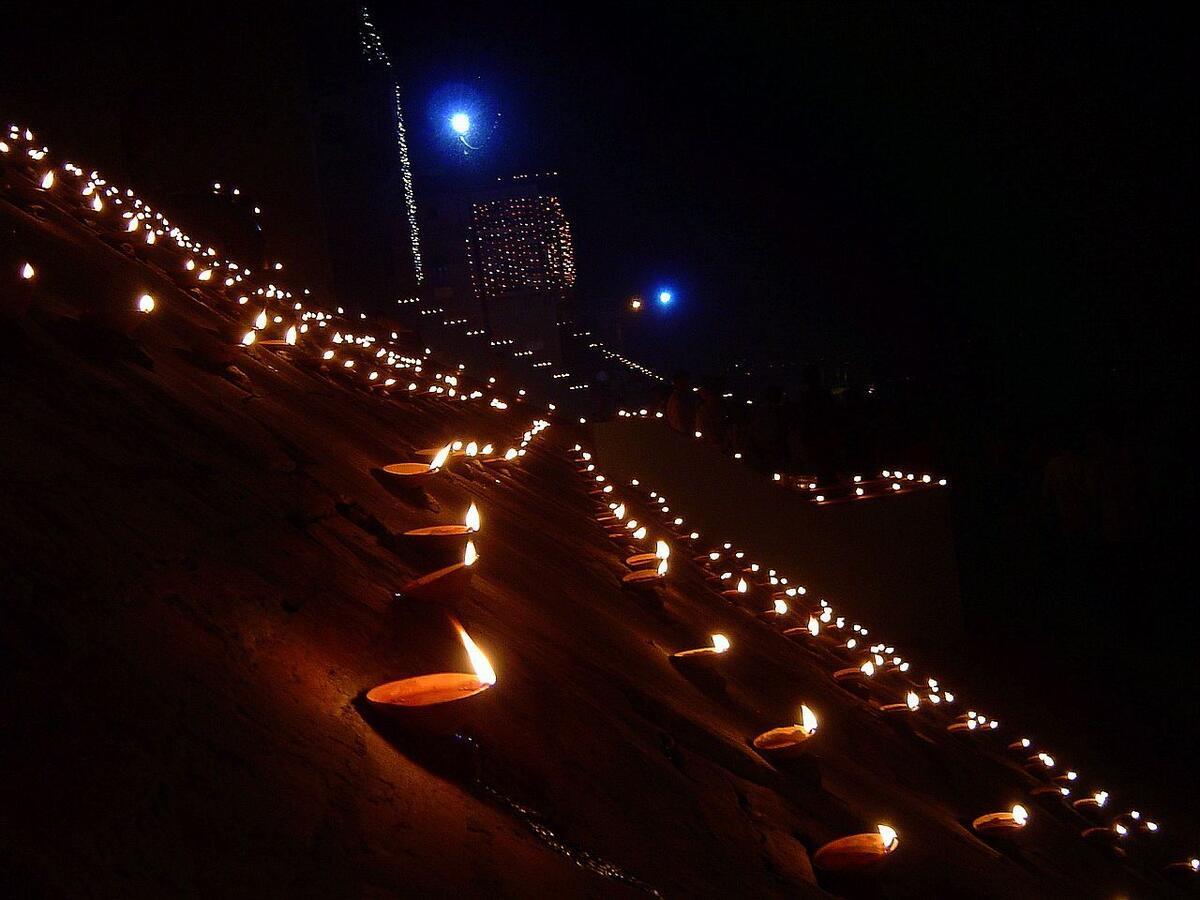
Varanasi in Winter: Dev Deepawali, Fog on the Ganga, and the Season of Malaiyo
November to February is Kashi at its kindest and most crowded — Dev Deepawali's lakhs of lamps, fog-wrapped dawn boat rides, the dawn-only dessert called malaiyo, what to pack, and why winter yatras must be booked months ahead.
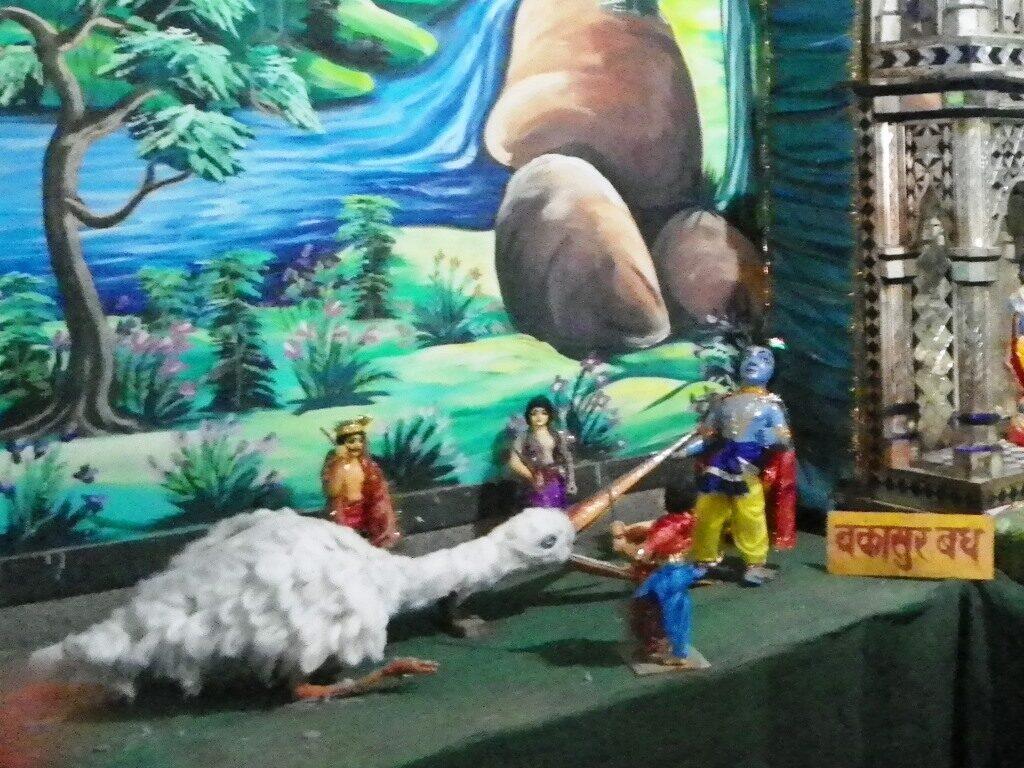
Tulsi Manas Mandir: The Temple Built Where the Ramcharitmanas Was Born
On the ground where Goswami Tulsidas composed the Ramcharitmanas stands a white marble temple whose walls carry his verses end to end. The story of the people's Ramayana, the moving tableaux upstairs, the Durga Mandir pairing, and a perfect evening plan.
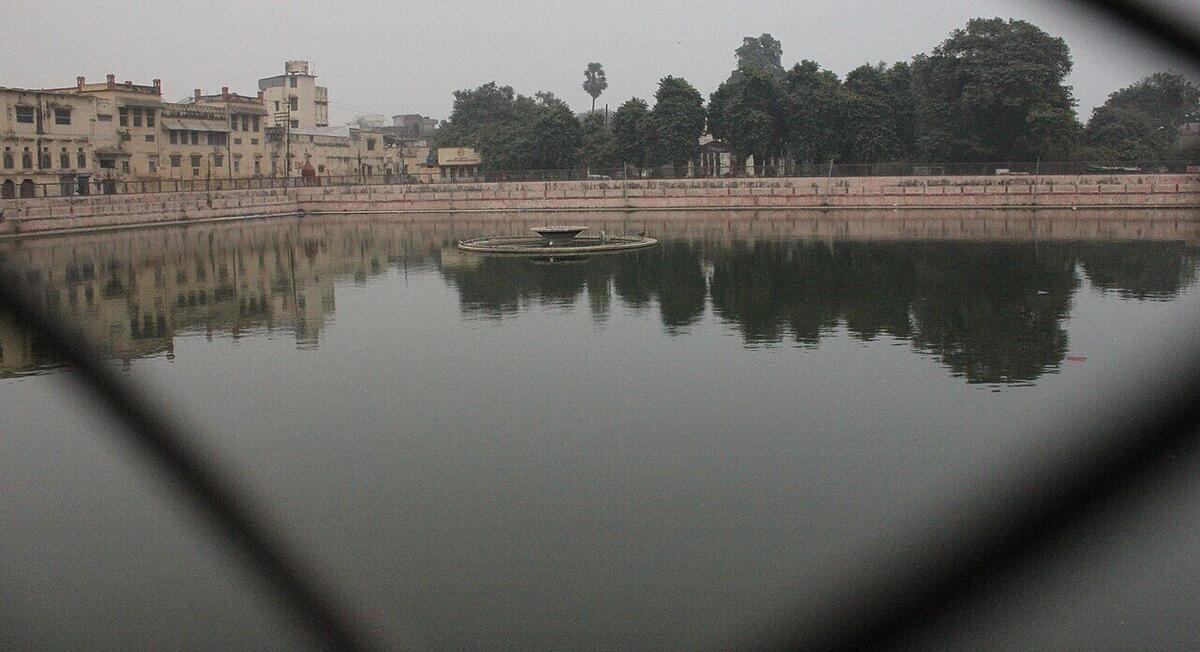
Durga Mandir and Durga Kund: The Red Temple Where the Devi Chose to Stay
The 18th-century red temple of Durga Kund — built by Rani Bhabani of Natore around a murti tradition holds no sculptor ever made, beside a sacred tank older than memory. History, legends, Navratri in Kashi, and a pilgrim's visit plan.