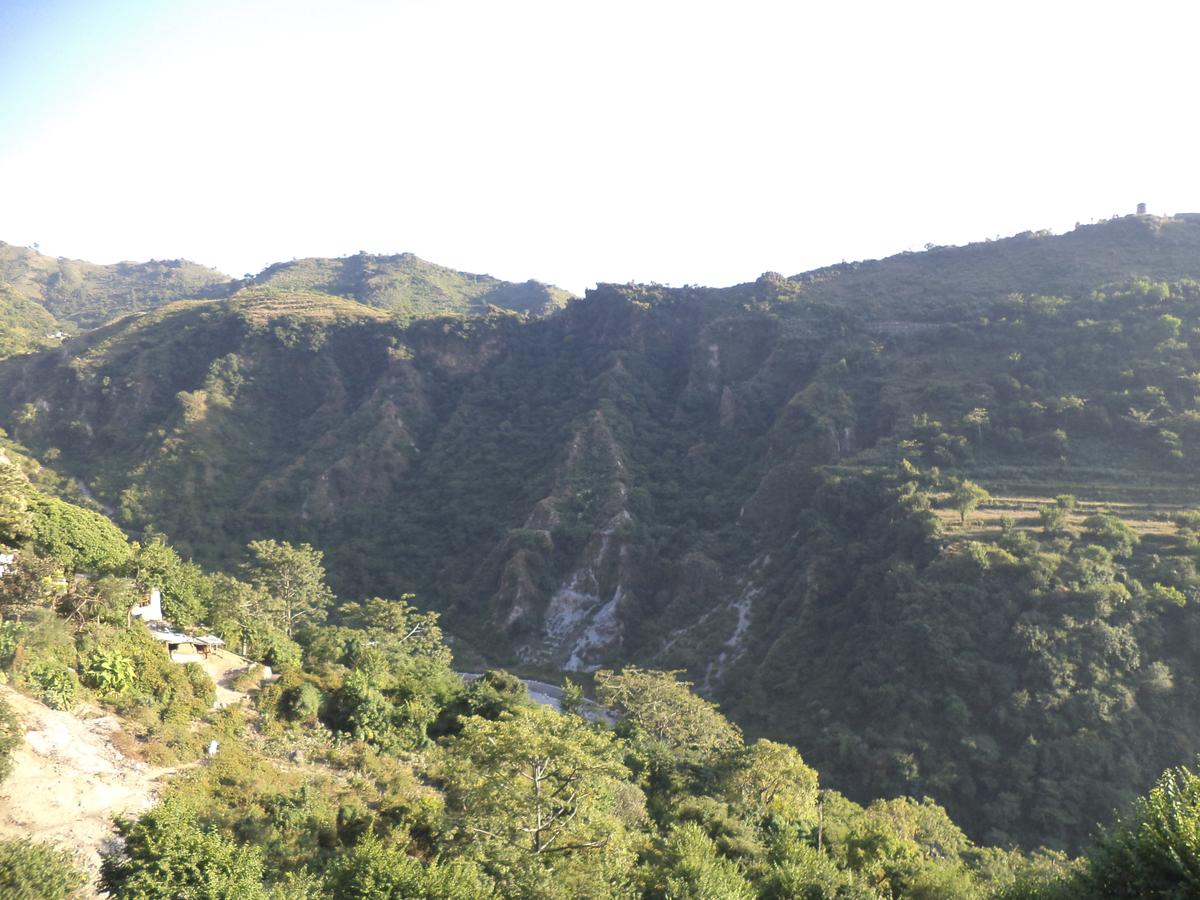
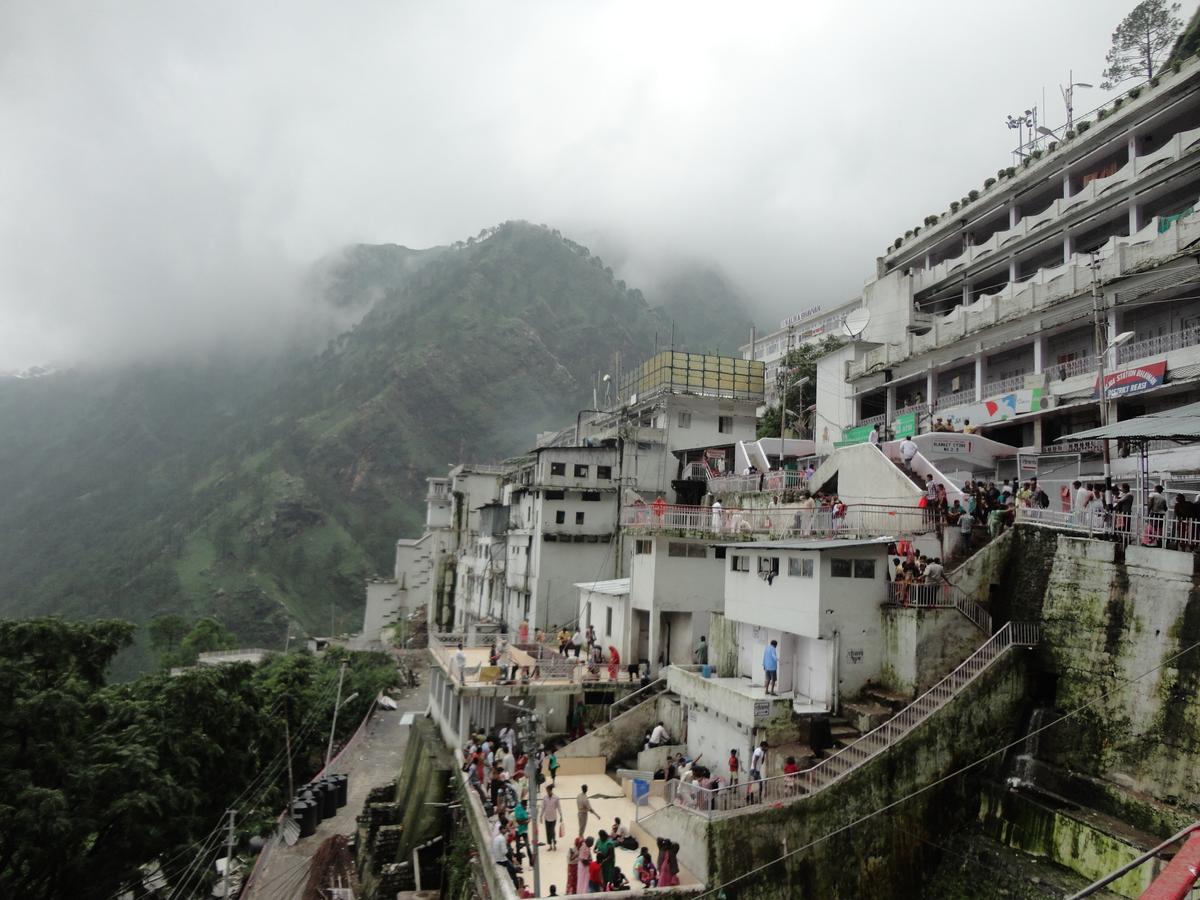
Adhkuwari — literally "half-virgin" or, in another reading, "half-way" — sits at 4,800 feet on the Trikuta hills, about 6 km from Katra and 6 km below Bhawan (Vaishno Devi cave). The site marks the mid-point of the 12-km Vaishno Devi trek and is the principal halt between the two ends of the yatra. Tradition holds that this is the cave where the young Vaishnavi (the human form of Mata Vaishno Devi during her early tapas) hid for nine months from the pursuit of Bhairon Nath — the asura who would not abandon his pursuit until he was finally slain at Bhawan.
The Adhkuwari cave is the most spiritually charged stop on the trek. The cave itself is small and the passage through it is narrow — a stone tunnel about 15 metres long where pilgrims crawl or stoop. The narrowness is held by tradition to symbolise the womb (garbh-jun, the womb-cave); to pass through is to be reborn, with past karmas left behind. Pilgrims often emerge with tears in their eyes; the symbolism is direct and powerful.
The nine-month hiding
The Vaishno Devi katha tells: Vaishnavi, the young form of the Goddess, performed tapas in the Trikuta hills. Bhairon Nath, a powerful asura prince, pursued her. To escape him, Vaishnavi entered this narrow cave and remained inside for nine months — the time of a full pregnancy. Bhairon could not find the entrance; tradition holds that the cave-mouth closed itself behind her by divine will. When Vaishnavi finally emerged from the cave, she had taken on her full Mata-form and proceeded upward to Bhawan. Bhairon followed and was finally slain there.
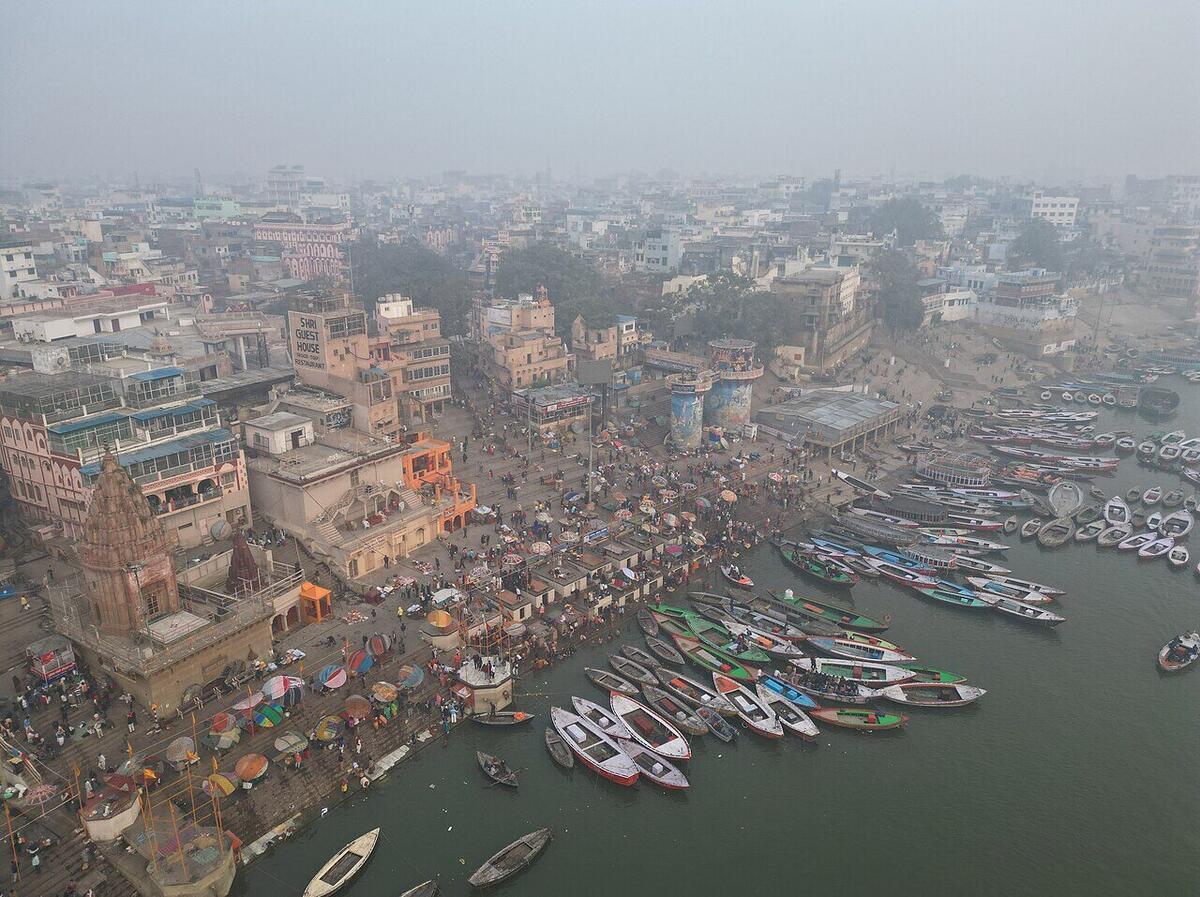
Adhkuwari is the symbolic rebirth-cave of the Vaishno Devi yatra. Pilgrims who pass through the narrow cave-passage are held to receive release from past sins — the body has been through a womb-rebirth, the karmas of the previous life ended at the entrance and a new spiritual life begun at the exit. This is among the most beloved devotional symbols of the entire pilgrimage; many devotees consider the Adhkuwari passage more spiritually meaningful than even the final cave at Bhawan.
History
Adhkuwari has been a pilgrim site since the Vaishno Devi tradition itself was established. The cave-passage was historically unmanaged; pilgrims simply queued and entered as space allowed. Since 1986, the Shri Mata Vaishno Devi Shrine Board has managed access — a ticketing-system controls the number of pilgrims passing through the cave per hour. A modern shelter, restrooms, and a small dharma-shala have been built at Adhkuwari.
Architecture
Adhkuwari is a natural cave formation; no constructed temple. The cave-mouth opens onto a paved courtyard with a small Mata-shrine outside (for pilgrims who cannot enter the cave). The cave passage is about 15 metres of natural rock, narrowed in places to less than 60 cm of width. Inside the cave, a small Mata-murti is installed at the half-way point; pilgrims pause briefly for darshan and then continue through to the other side.
Rituals & Practices
The cave is open 24 hours during the yatra season (year-round, but peak access in Navaratri and summer months). The Shrine Board issues entry tokens at Adhkuwari arrival; expect 1-3 hours of wait time during peak season. Pilgrims with mobility limitations or claustrophobia can do darshan at the outer Mata-shrine instead — tradition holds this is equally meritorious.
The standard sequence: walk from Katra to Adhkuwari (6 km, 2-3 hours), take the cave-darshan, continue uphill to Bhawan (another 6 km, 2-3 hours). Most pilgrims plan a brief halt at Adhkuwari — eat at the bhojanalay, take cave-darshan, then continue. Some overnight at Adhkuwari and complete the yatra in two days.
Festivals & Celebrations
| Festival | When | Crowd |
|---|---|---|
| Navaratri (Chaitra) | — | very_high |
| Navaratri (Sharad) | — | very_high |
| Year-round daily | — | high |
| Maha Shivratri | — | high |
Navaratri (Chaitra): Honours the Goddess in her nine forms.
Navaratri (Sharad): The greater Devi season.
Year-round daily: The mid-trek rebirth tradition.
Maha Shivratri: Honours the asura who was granted moksha by Mata.
Prepare for Your Visit
Practical guidance to help you plan your pilgrimage
| Pilgrim Guidance | How to reachAdhkuwari is 6 km from Katra on the paved Vaishno Devi trek path. Battery cars (paid service) operate part of the Katra-Adhkuwari route. The path is well-lit and well-maintained. PreparationWear loose, comfortable clothes that allow easy movement through the narrow cave-passage. Carry minimal items — wallets and valuables can be deposited at the locker before entering. Pilgrims with claustrophobia, asthma, or large body-builds may find the cave difficult; the outer Mata-shrine is the alternative. Do not push during the cave-pass; the queue moves one pilgrim at a time. Best time to visitThroughout the year as part of the Vaishno Devi yatra. Navaratri (twice yearly) is the spiritual peak — but expect very long waits at the cave during these days. Weekday mornings outside Navaratri have the shortest waits. |
Location
Reasi, JK
Pilgrim photos
No pilgrim photos yet.
Community corrections
No corrections yet.
Edit history
No revisions yet.
Plan Your Visit to Adhkuwari
Get a custom itinerary and pricing for your trip.
Recommended
Packages for this destination
Pilgrim Notes
On-ground observations from fellow pilgrims
No pilgrim notes yet. Be the first to share on-ground observations!
Sign in to share a note.
Pilgrim Reviews
Be the first to share your experience at Adhkuwari.
Sign in to write a review.
Nearby sacred places
Discover other sacred places near Adhkuwari
Explore temples, tirthas, and pilgrimage sites in JK
Explore nearbyPart of these circuits
Walk the traditional pilgrimage routes this destination belongs to.