Chakra Tirtha sits at the heart of Naimisharanya in Sitapur district of Uttar Pradesh, 90 km north of Lucknow on the Lucknow-Sitapur-Lakhimpur road. The kund is the central sacred site of the Naimisha forest — the very forest where the eighteen Mahapuranas were first narrated to the rishis, and where the Bhagavata Purana itself opens. Tradition holds that during a cosmic struggle in the early ages, Bhagavan Vishnu released his Sudarshan Chakra; the Chakra travelled through the worlds and finally paused at this spot in the forest. The place where the Chakra came to rest became the sacred kund, and the forest took its name from the event — Naimisha meaning "a single moment / instant," and aranya meaning "forest." Naimisharanya is therefore literally "the forest where the chakra paused."
The kund is octagonal, stone-paved, with steps descending on all sides; ancient stone-carved depictions of the Chakra mark the rim. Around the kund lie the small shrines of the rishi-mandalas — the assembly-spots of the 88,000 rishis. Pilgrims bathe at Chakra Tirtha, perform tarpan for their ancestors, and circumambulate the kund in reverence. The adjacent shrines of Lalita Devi (a Shakti Peetha), Dadhichi Kund, and Hanuman Garhi are visited as part of the wider Naimisharanya parikrama.
The katha of the Chakra
Tradition tells that at the close of one cosmic age, when the demonic forces threatened the order of the worlds, the rishis approached Brahma seeking a place pure enough to perform a long satra-yajna for the protection of dharma. Brahma released his manomaya chakra (a chakra of pure thought) and instructed the rishis to follow it; the chakra would pause at the spot most sacred for their yajna. The chakra travelled across Bharatavarsha and finally paused — its rim sinking into the earth — at this very spot in the forest of Naimisha. A kund formed where the rim touched. There the rishis settled, and there the satra was performed; there too, in later ages, Suta Ji (the disciple of Vyas) narrated the eighteen Mahapuranas to the 88,000 rishis assembled in the forest. The Bhagavata Purana itself opens at Naimisharanya with the rishis questioning Suta Ji at this very tirtha.
The puran-tradition
Naimisharanya is held in the Sanskrit tradition to be the place where the entire corpus of the Mahapuranas was first transmitted orally. Suta Ji, having received the Puranas from Maharishi Vyas, narrated them here to the rishis in a satra spanning many years. For this reason, Chakra Tirtha is the supreme puran-tirtha — the source-tirtha of the Puranas themselves. Reciters of the Puranas, students of Vedanta, and bhakti-practitioners hold a darshan at Chakra Tirtha to be a darshan of the very ground where the divine narratives of Bharatavarsha entered the world.
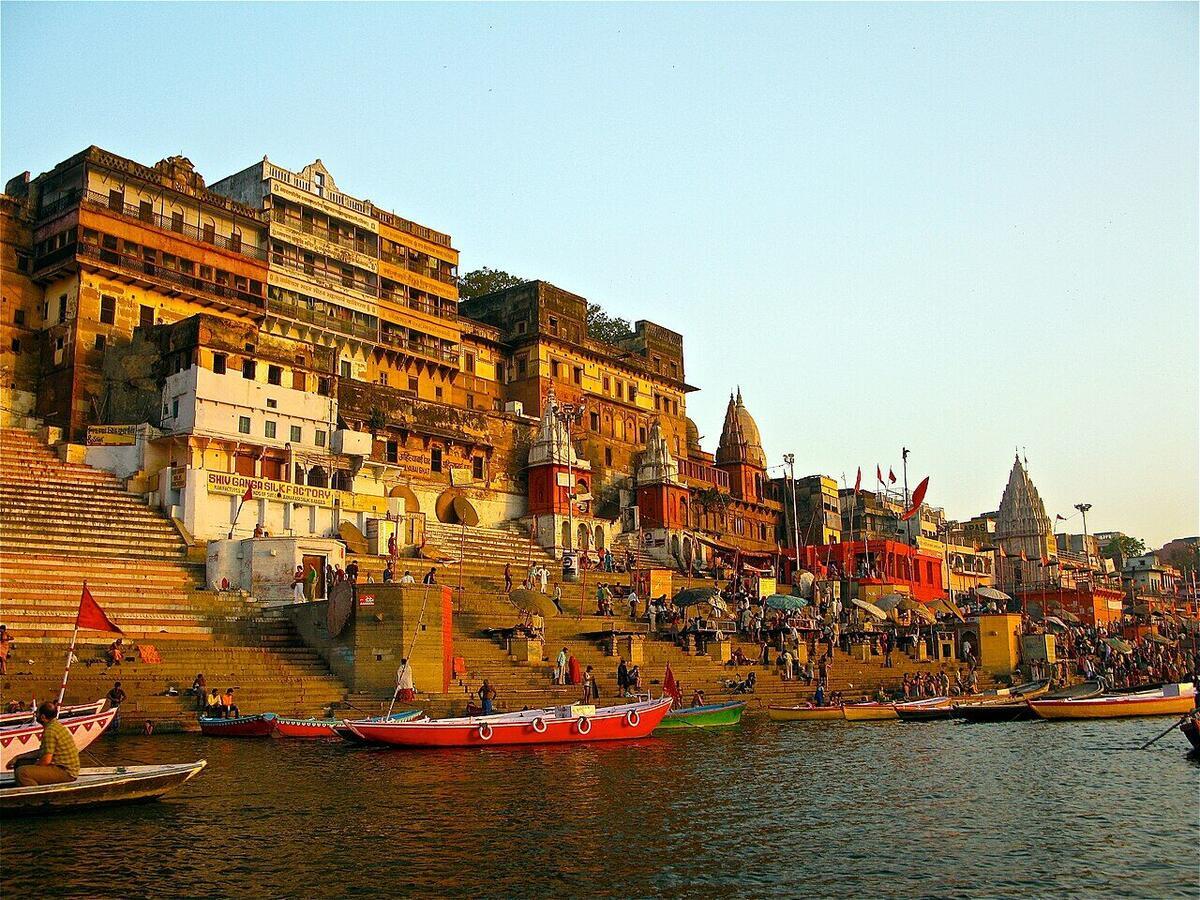
Chakra Tirtha is the supreme puran-tirtha of Bharatavarsha — the source-place from which the eighteen Mahapuranas entered human transmission. To bathe in this kund is held to be a bath in the waters consecrated by the Sudarshan Chakra itself; to sit by its banks is held to be a sitting at the assembly of the 88,000 rishis who first heard the Puranas. The bhav is of antiquity beyond measure — the sense that this forest existed before the human ages and that the rishi-tradition has continued here in unbroken line. Vaishnava tradition holds Chakra Tirtha to be a tirtha of Vishnu's own weapon, sanctified by the Chakra's touch; the smarta tradition honours it as the foundation-tirtha of the Vedantic-puranic learning. Pilgrims come for bath and tarpan, for darshan of the Naimisha forest, and for the rare bhav of standing where Suta Ji once stood. The Mahabharata, the Bhagavata Purana, the Vishnu Purana, and Adi Shankara's commentaries all mention Naimisharanya by name and praise the merit of pilgrimage here.
History
Chakra Tirtha's antiquity is beyond constructed date — the kund is mentioned in the Mahabharata, in all the major Puranas, and in Adi Shankara's commentaries. The Naimisha forest is referenced in the Rig Veda itself as a place of rishi-settlement, and continuous tradition holds that the kund has existed since the puranic ages. The stone-paving of the present kund and the surrounding shrine-structures date from successive periods of medieval and modern restoration — pilgrim records from the 16th-19th centuries describe Naimisharanya as a major Vaishnava and smarta tirtha. The site is today maintained under the wider Naimisharanya tirtha-administration, with daily bathing access and full pilgrim infrastructure.
Architecture
The kund is octagonal, stone-paved, with descending steps on all eight sides and a low parapet around the rim. Ancient stone-carved depictions of the Chakra mark the rim-stones; small niches around the kund hold images of Vishnu, Hanuman, and the rishis. The surrounding shrine-complex includes small mandapas for the rishi-assemblies, a Vyas-Suta shrine, and pathways connecting to Lalita Devi and Dadhichi Kund. Banyan and pipal trees shade the kund — the same species of forest-trees described in the Puranas as the trees of Naimisha.
Rituals & Practices
The traditional sequence at Chakra Tirtha: arrive at the kund, take a bath at the steps (women bathe at designated sections), perform tarpan with til and water for the ancestors, then circumambulate the kund in reverence. After the kund-rituals, pilgrims visit Lalita Devi (a few hundred metres away — the Shakti Peetha of Naimisharanya), then Dadhichi Kund (where Maharishi Dadhichi gave his bones for Indra's vajra), and Hanuman Garhi. Daily aartis are held at the kund-edge at dawn and dusk. Recitation of the Bhagavata Purana's opening verses by the kund is a long-standing devotional practice.
Festivals & Celebrations
| Festival | When | Crowd |
|---|---|---|
| Kartik Purnima | — | very_high |
| Mauni Amavasya | — | high |
| Akshaya Tritiya | — | high |
| Vyas Purnima / Guru Purnima | — | high |
| Daily | — | moderate |
Kartik Purnima: The supreme bath-day of the puran-tirtha.
Mauni Amavasya: The auspicious amavasya bath.
Akshaya Tritiya: The day of imperishable merit.
Vyas Purnima / Guru Purnima: The day of the puran-narrators.
Daily: The continuous tirtha-flow of Naimisharanya.
Prepare for Your Visit
Practical guidance to help you plan your pilgrimage
| Pilgrim Guidance | How to reachChakra Tirtha is 90 km north of Lucknow (2 hours by car) on the Lucknow-Sitapur-Lakhimpur road. The nearest railway station is Naimisharanya / Sandila; Lucknow Charbagh is the major railhead. Buses run regularly from Lucknow and Sitapur to Naimisharanya town; the kund is in the centre of the tirtha-area, walkable from the bus stand. PreparationModest dress; bring a change of clothes for the bath. Carry a small offering of til (sesame) and water-pot for tarpan. Phones permitted at the kund-edge. The Naimisharanya parikrama (which includes Chakra Tirtha, Lalita Devi, Dadhichi Kund, Hanuman Garhi, and Vyas Gaddi) takes a full day; many pilgrims stay overnight at one of the Naimisharanya dharmashalas. Best time to visitOctober to March most pleasant. Kartik Purnima (November) is the supreme bath day — lakhs of pilgrims gather at Chakra Tirtha. Mauni Amavasya (January-February) and Akshaya Tritiya (April-May) also bring great flow. Vyas Purnima / Guru Purnima (June-July) honours Vyas and Suta Ji. |
Location
Sitapur, UP
Pilgrim photos
No pilgrim photos yet.
Community corrections
No corrections yet.
Edit history
No revisions yet.
Plan Your Visit to Chakra Tirtha, Naimisharanya
Get a custom itinerary and pricing for your trip.
Recommended
Packages for this destination

Pilgrim Notes
On-ground observations from fellow pilgrims
No pilgrim notes yet. Be the first to share on-ground observations!
Sign in to share a note.
Pilgrim Reviews
Be the first to share your experience at Chakra Tirtha, Naimisharanya.
Sign in to write a review.
Nearby sacred places
Discover other sacred places near Chakra Tirtha, Naimisharanya
Explore temples, tirthas, and pilgrimage sites in UP
Explore nearbyPart of these circuits
Walk the traditional pilgrimage routes this destination belongs to.