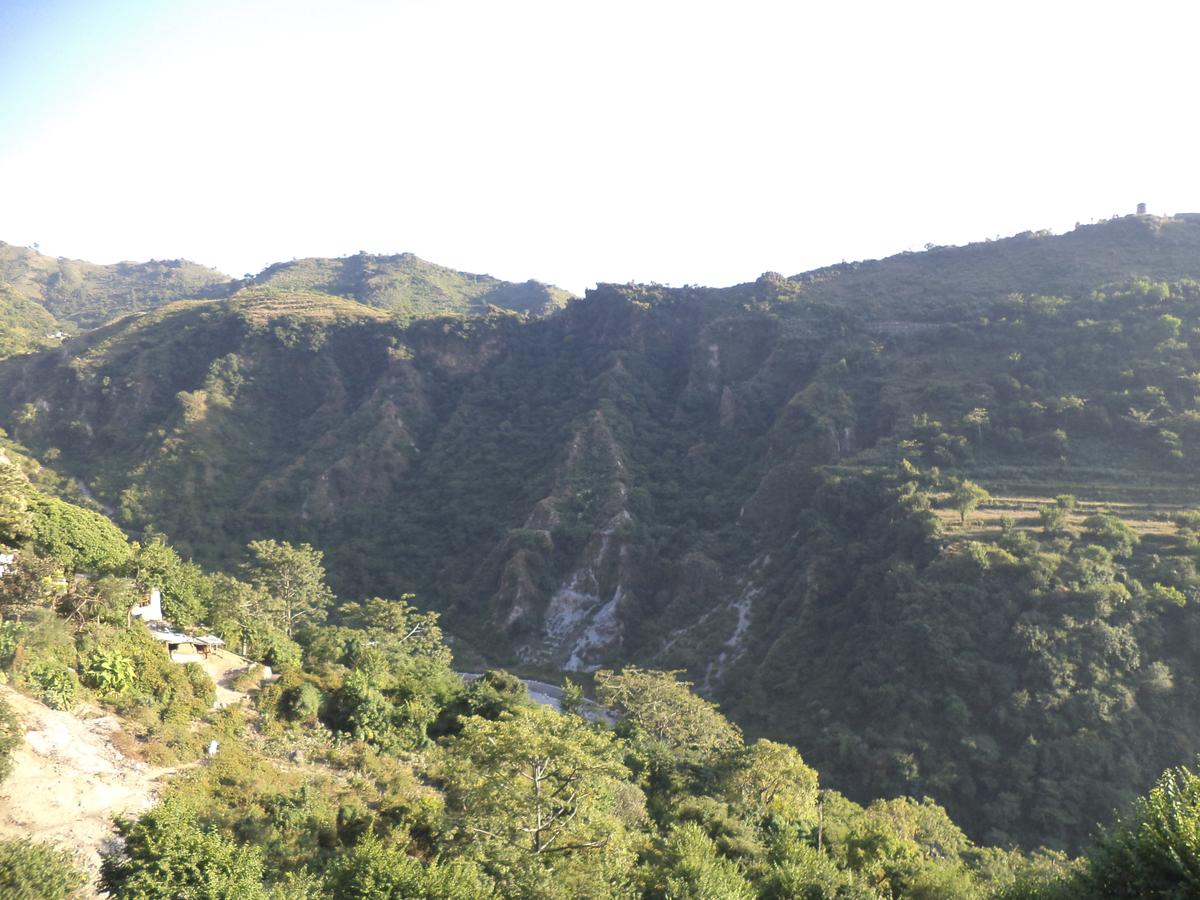
Vaishno Devi is not approached as a temple alone but as a yatra — a journey of devotion that begins in Katra at the base of the Trikuta hills and rises through the long Himalayan path to the cave at Bhawan. Tradition holds that the Mother grants darshan only to those whom she calls. The pilgrim who reaches the shrine has, in the words of the bhakti songs, already received her bulava (call).
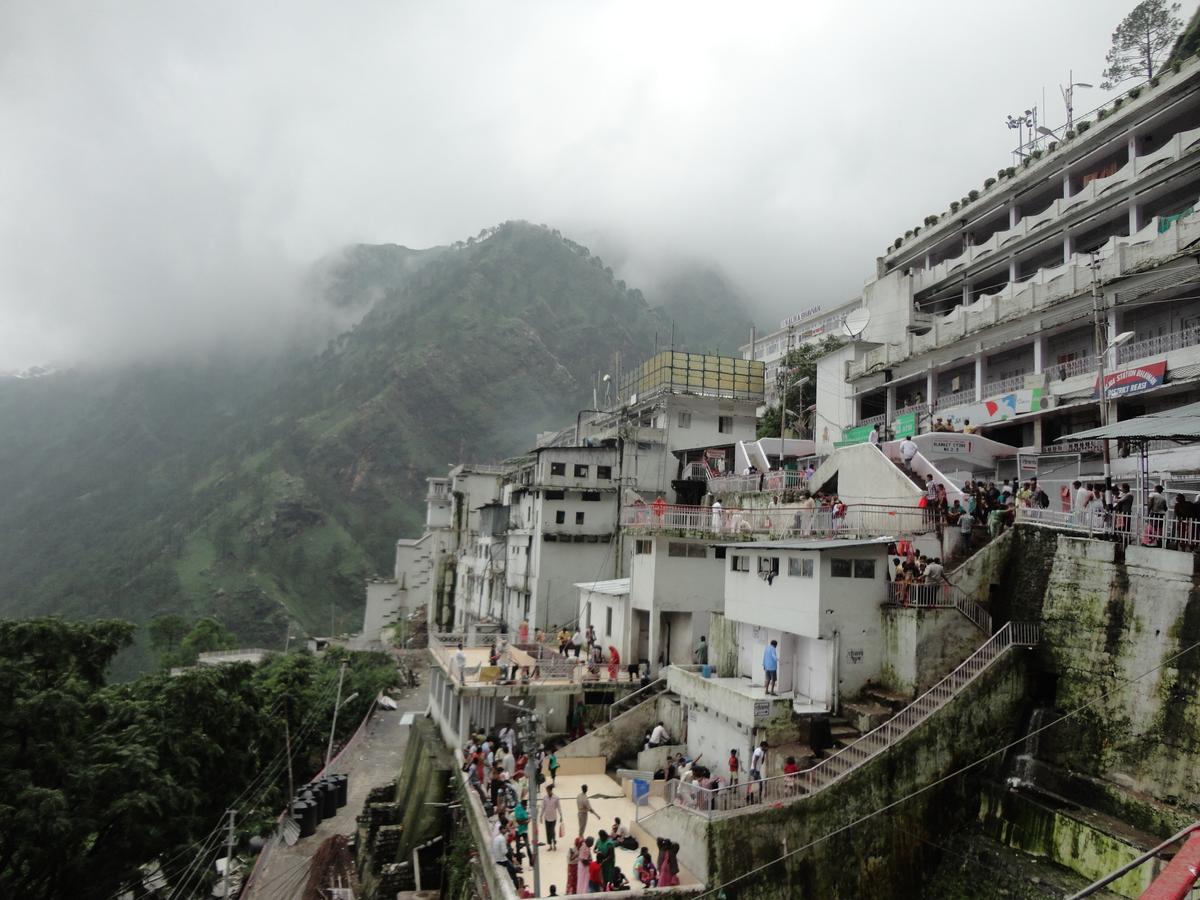
The shrine sits at 5,200 feet above sea level. Pilgrims climb the 12-kilometre path from Katra through Banganga, Charan Paduka, Adhkuwari, Himkoti, and Sanjichhat, and arrive at the holy cave at Bhawan, where the Goddess is worshipped in her three self-manifest pindis. Bhairon Baba, half a kilometre above Bhawan, is visited after Mata's darshan — tradition holds that the yatra is incomplete without it.
Katha and local belief
Tradition holds that the Goddess in the form of a young girl named Vaishnavi was born in south India to please Lord Vishnu, who said she would attain her full divinity in the Kalyuga as a yogini. She left for the north and settled in the Trikuta hills to perform tapas. The asura-king Bhairon Nath pursued her; in the cave at Adhkuwari, Vaishnavi waited nine months (giving the cave its name), then continued upward. At Bhawan she took the form of Maha Kali and slew Bhairon. Tradition then says that Bhairon repented in his last moments, and the Goddess granted him the boon that her yatra would be incomplete without his darshan.
Vaishno Devi is among the most revered Shakti Peethas of Hindu tradition. Many traditions revere the shrine as a Shakti Peetha. She is worshipped in three forms in one shrine — the three Mahavidyas, Maha Kali on the right, Maha Lakshmi in the centre, Maha Saraswati on the left — each pindi a self-manifest stone form, never carved by human hands.
To the devotee, the Trikuta hills are the body of the Goddess herself. The yatra is held to grant fulfilment of righteous desires, removal of obstacles, and the Mother's protection through life. Tradition holds that those who complete the yatra with sankalpa receive the answer to whatever prayer they have brought; the cave is a place where Mata receives the prayers of her children with a mother's ear.
History
Vaishno Devi as a pilgrim shrine has been known for many centuries, though its modern infrastructure dates from the twentieth century. The Shri Mata Vaishno Devi Shrine Board (SMVDSB), established in 1986 by the Government of Jammu and Kashmir, manages the yatra in its present form. The original holy cave at Bhawan is opened only seasonally and on special days; the regular darshan today happens via the new cave passage opened in 1977 to accommodate the rapidly growing pilgrim numbers (now over a crore pilgrims a year).
The Shrine Board runs the yatra registration system (mandatory for every pilgrim), maintains the path, the helicopter service, and the Battery Cars and ropeways at various stages. The path was extensively widened and modernised through the 1990s and 2000s.
Architecture
The shrine itself is a natural cave in the Trikuta hill — the path through the cave is narrow and winding, with the three pindis at the far end. The cave is approached now through a gallery extension built around the original opening. The Bhairon Baba mandir is a small hilltop shrine half a kilometre above Bhawan.
Along the path are smaller shrines — Banganga (where Mata struck the rock with her arrow to bring forth a stream), Charan Paduka (her footprints), Adhkuwari (the womb-cave), Himkoti, and Sanjichhat. The path is paved, well-lit at night, and lined with food-stalls, water-points, and rest-halts maintained by the Shrine Board.
Rituals & Practices
Darshan at the cave is offered around the clock; the queue moves continuously. The shrine Board manages slot-based entry to control crowding. Aratis are conducted twice daily — morning (around 5 AM) and evening (around 7:30 PM) — during which darshan is briefly suspended; verify exact timings on the day. Pilgrims offer chunari (red cloth), coconut, sweets, and sankalpa-rolls at the cave. Bhog of the Shrine Board is available at multiple bhojanalays along the path.
The traditional sequence is: register at Katra, walk or take helicopter to Bhawan, take a bath at the kund near the cave, queue for darshan, complete darshan at the three pindis, then visit Bhairon Baba. Many pilgrims undertake the entire trek barefoot.
Festivals & Celebrations
| Festival | When | Crowd |
|---|---|---|
| Navaratri (Chaitra) | — | very_high |
| Navaratri (Sharad) | — | very_high |
| Navami special darshan | — | very_high |
| Pious birthday of Mata | — | high |
| New Year's Eve | — | very_high |
Navaratri (Chaitra): Honours the Goddess in her nine forms â the year''s most sacred Devi season.
Navaratri (Sharad): The greater of the two Navaratris in popular Devi tradition.
Navami special darshan: The day of Maha Kali''s victory.
Pious birthday of Mata: Honours the Goddess''s descent.
New Year's Eve: Auspicious turn of the year.
Prepare for Your Visit
Practical guidance to help you plan your pilgrimage
| Pilgrim Guidance | How to reach Vaishno DeviThe nearest airport is Jammu (Satwari), about 50 km from Katra (1.5 hours by road). Katra is also the railhead — direct trains from Delhi, Mumbai, and other cities terminate at Shri Mata Vaishno Devi Katra station. From Katra, the yatra begins. Helicopter service runs from Katra (Sanjichhat helipad) for those who cannot trek; book in advance on the Shrine Board website. Preparation for pilgrimsOnline registration with the Shrine Board is mandatory before the yatra. Carry a printed Yatra Parchi and a government photo ID. The 12-km trek takes 6 to 8 hours at a comfortable pace; battery cars, ponies, and palkis are available on different stages. Helicopter from Katra to Sanjichhat (and then a short trek/battery car to Bhawan) is the option for elders or those with limited time. The path is paved and well-equipped, but the altitude and walking distance are real. Pilgrims with heart, respiratory, or knee conditions should consider helicopter or palki options. Carry warm clothes (Bhawan can be cold even in summer), comfortable walking shoes, basic medicines, and a light raincoat. ATMs and digital payments work in Katra and at most main stages along the path. Best time to visitVaishno Devi is open year-round. The peak crowds are during Navaratri (twice a year — Chaitra in March-April and Sharad in September-October), summer school holidays (May-June), and the Diwali to New Year period (October-January). For lighter crowds, plan for February, August, or the post-Diwali November dip. Winter (December-February) brings snow at Bhawan; the path remains open but is slower. |
Location
Reasi, JK
Pilgrim photos
No pilgrim photos yet.
Community corrections
No corrections yet.
Edit history
No revisions yet.
Plan Your Visit to Vaishno Devi
Get a custom itinerary and pricing for your trip.
Recommended
Packages for this destination
Pilgrim Notes
On-ground observations from fellow pilgrims
No pilgrim notes yet. Be the first to share on-ground observations!
Sign in to share a note.
Pilgrim Reviews
Be the first to share your experience at Vaishno Devi.
Sign in to write a review.
Nearby sacred places
Discover other sacred places near Vaishno Devi
Explore temples, tirthas, and pilgrimage sites in JK
Explore nearbyPart of these circuits
Walk the traditional pilgrimage routes this destination belongs to.