For centuries, reaching Baba Vishwanath meant surrendering to the lanes. You entered a gali barely wider than your shoulders somewhere near Godowlia, followed the flow of pilgrims past sweet shops and brass sellers and sleeping dogs, lost your sense of direction entirely, and emerged — suddenly, always suddenly — at the golden shikhara of the holiest Shiva temple on earth. The Ganga was two hundred metres away and might as well have been in another city; no pilgrim could see the river from the temple, or the temple from the river.
In December 2021 that changed more dramatically than anything in the temple's modern history. The Shri Kashi Vishwanath Dham corridor — inaugurated after three years of construction that cleared and rebuilt roughly five acres between the sanctum and the river — reconnected the jyotirlinga to the Ganga for the first time in centuries of dense urban accretion. We walk this corridor with yatris several times a week, and this guide covers what actually changed, which gate you should use, the rules that catch first-time pilgrims off guard, and what the transformation meant for the old lanes it replaced.
What the Corridor Actually Changed
Before 2021, the temple sat locked inside the old city's fabric — magnificent, but approached only through congested lanes where a festival crowd became genuinely dangerous and where elderly or wheelchair-bound pilgrims simply could not go. The corridor project acquired and cleared some three hundred properties between the temple and Lalita Ghat, and in doing so uncovered dozens of small shrines that had been swallowed inside private houses over the centuries — many now restored and standing in the open within the Dham complex.
What stands today is a broad, stone-paved processional route from the river to the sanctum, flanked by facilities the old approach never had: a spacious darshan queue system, free lockers and shoe stands, drinking water, clean toilets, wheelchair assistance, a Mumukshu Bhavan, guest houses, and viewing spaces from which the temple's spire and the river can be seen in one sweep of the eye. The darshan itself — those few seconds before the jyotirlinga — is unchanged and eternal. Everything around it breathes differently now.
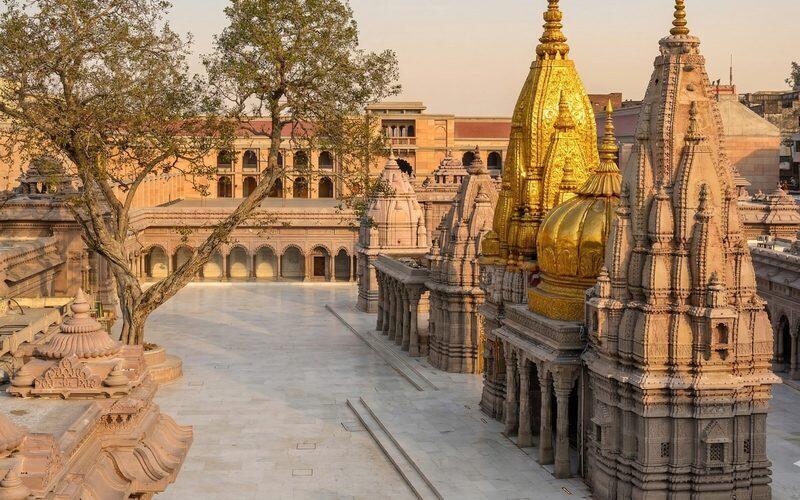
The Gates: Which Entry Point Should You Use?
The Dham has four principal entry gates, and choosing the right one saves real time and walking. Signage inside refers to them by number; every local knows them by their landmark.
- Gate 4 — the Godowlia side. The workhorse gate, and for most pilgrims the correct answer. It faces the direction of Godowlia crossing and Dashashwamedh Ghat, connects to the main road where autos and rickshaws drop you, and leads onto the widest stretch of the corridor. If you are staying anywhere in the Godowlia–Dashashwamedh–Bansphatak area, come here.
- Ganga Dwar — the river gate at Lalita Ghat. The most beautiful arrival in all of Kashi: step off a boat at Lalita Ghat, climb the broad new steps, and enter the Dham with the river at your back. Pilgrims combining a dawn boat ride with darshan should use this gate without hesitation. There is also an escalator alongside the steps for those who cannot climb.
- Gate 1 — the Saraswati Phatak side, approached from the lanes to the south, convenient if you are walking from the direction of Meer Ghat or staying in the old-city guesthouses on that flank.
- The Dhundhiraj Ganesh entrance, the traditional lane-side approach past the Dhundhiraj Ganesh shrine, which preserves something of the old gali arrival for those who want it.
On ordinary days any gate serves. On Mondays, in Sawan, and on Mahashivratri, the administration routes the crowd through designated gates and the queues can begin hundreds of metres out — on those days, go at dawn, and treat every timing in this article as advisory, for timings and entry arrangements shift on festival days.
Lockers, Mobiles, and What You Cannot Carry
This is where first-time pilgrims lose the most time, so read this list twice. Inside the security perimeter of the sanctum area, mobile phones are not permitted. Nor are cameras, smartwatches, earphones, pen drives, or any electronics; nor leather items — belts, wallets, bags; nor tobacco, paan, or lighters. Free locker facilities stand near each major gate, and the staff are practised and quick, but a family that arrives with four phones, two handbags, and a camera will spend twenty minutes at the lockers that a prepared family spends nowhere.
Our standing advice to yatris: leave everything at the hotel except cash for offerings, and one phone for the group left in the locker. Carry the locker token carefully — tie it into a dupatta corner or button it into a shirt pocket. Wear slip-on footwear, deposit it at the shoe stand, and walk in unburdened. There is a particular lightness to entering Baba's presence carrying nothing at all; the rule, inconvenient at first, ends up feeling like part of the ritual.
Prasad, flowers, and offerings are available inside the complex, so nothing essential needs to come through security with you. For the full darshan sequence inside — the queue types, Sugam (paid) darshan, aarti bookings, and Sparsh darshan rules — see our detailed Kashi Vishwanath darshan guide.
The Walk from the Ganga to the Temple
If you take one piece of advice from this page, take this: arrive once by the river. Even if you enter through Gate 4 on your main darshan day, find one morning — ideally the dawn after a Ganga Aarti evening — to approach by boat. From the water, the Dham announces itself long before you reach it: the ghats' crescent, then Lalita Ghat's pale new stone, then the rising terraces of the corridor stacked above the bank, and at the summit the gold of the shikhara catching first light.
The walk itself, from boat to sanctum, takes ten to fifteen unhurried minutes: up the ghat steps through the Ganga Dwar, across the viewing terraces where pilgrims pause to look back at the river, past the restored shrines and the great courtyard, through security, and into the queue. Pilgrims have described the old approach as being swallowed by Kashi and the new one as being received by it; both are true, and both end at the same threshold where every yatra in this city has always ended.
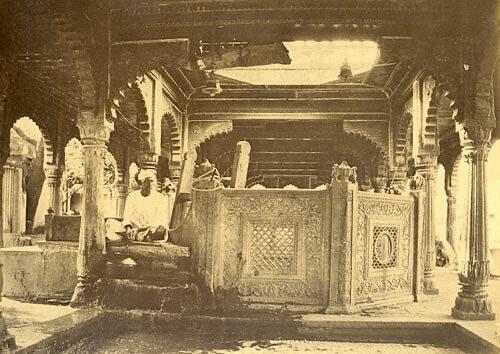
What Happened to the Old Lanes
Honesty requires saying plainly: the corridor was built by unbuilding a neighbourhood. The tight weave of galis between the temple and the river — houses, shops, generations of settled life — was acquired and cleared, and for those who lived there the loss was real, however generous the compensation. Something of old Kashi's density went with it, and older Banarasis will tell you so over chai without much prompting.
Yet the lanes did not disappear; they were reordered around the Dham rather than through it. Vishwanath Gali still runs its glittering course from the Godowlia side — sweets, rudraksha, silk, toys, the whole bazaar of devotion — and now ends at the corridor precinct instead of dissolving into it. Thatheri Bazaar, Kachori Gali, and the deep old city north towards Kaal Bhairav remain exactly as labyrinthine as ever. The practical effect for pilgrims: the sacred core is now legible and accessible, while the old city — five minutes' walk in any direction — still offers every bit of the beautiful disorientation it always has. Walk both. They are two halves of one darshan.
Practical Notes We Give Every Yatri
- Best hours: 5:30–9:00 AM for the shortest queues and the kindest light; late evening after the Shringar Aarti is often quiet too. The temple's daily schedule runs from the pre-dawn Mangala Aarti (around 3:00 AM, ticketed) to closing near 11:00 PM, with darshan pauses around the midday Bhog Aarti — verify the current schedule for your dates, and assume festival days rewrite everything.
- Time to budget: 60–90 minutes door to door on a normal weekday morning including lockers and queue; two to three hours on weekends; more on Mondays.
- Elderly pilgrims: wheelchairs and attendants are available at the gates — ask, they are provided without fuss. The Ganga Dwar escalator makes the river approach possible even for those who cannot manage steps.
- Dress: traditional and modest is respected and practical; men offering Sparsh darshan or attending aartis will want a dhoti-kurta or similar. Read the temple's current rules before travelling.
- Kotwal first: tradition holds that a Kashi yatra begins with the permission of Baba Kaal Bhairav, the city's Kotwal, and many families take his darshan before or straight after Vishwanath ji. The temples are a short rickshaw ride apart.
A Short History, for Those Who Like Their Stone with Context
The corridor is only the latest chapter in a temple biography that reads like the history of India itself. The Vishweshwara jyotirlinga is praised in the Skanda Purana's Kashi Khanda; the medieval temple was destroyed and rebuilt repeatedly, and the present sanctum — the one you will enter — was raised in 1780 by Ahilyabai Holkar, the saintly Maratha queen of Indore whose name you will meet on ghats and temples across the whole sacred geography of India. The gold that sheathes the shikhara came from Maharaja Ranjit Singh of Punjab in 1835. Seen against that lineage, the 2021 corridor is simply the newest act of raja-seva: each age's power laying its offering at the same threshold. The queue you stand in was, in a real sense, eight hundred years in the making.
It is also worth knowing what the corridor did not touch. The Gyanvapi well precinct, the ancient Nandi facing the old sanctum direction, the Shringar Gauri niche, and the temple's ritual calendar — the five daily aartis from Mangala before dawn to Shayan at night — continue precisely as before. Pilgrims who took darshan here decades ago will find the sanctum unchanged to the last stone; it is only the approach, the waiting, and the facilities that belong to the new era.
If You Have Taken Darshan Before 2021
Returning pilgrims are the ones the corridor moves most visibly. Come prepared for disorientation of a happy kind: landmarks you remember — the particular sweet shop, the turn where the queue used to double back, the crush at the old gate — are gone, and in their place is open sky where no one now living had ever seen open sky. Our honest advice to returnees: enter once through Gate 4 for the ease of it, and once through the old Dhundhiraj lane for memory's sake, and let the two approaches argue it out in your heart. Most settle, as we have, on gratitude for both.
The Corridor as a Pilgrim Experiences It
We have taken hundreds of families through the Dham since it opened, and the pattern of reactions is remarkably consistent. First, relief — especially from those who remember the old crush — at the space, the shade, the drinking water, the ease with grandparents. Then, somewhere on the terraces between the river and the sanctum, the thing the corridor was actually built for: the realisation that Ganga ji and Baba Vishwanath are once again within a single field of vision, a single unbroken walk — jal and jyoti, the river and the light, joined as the shastras always described them.
The darshan has not changed. It was never going to. What changed is that the city's holiest walk is now open to every pilgrim who comes — the young, the old, the wheelchair-bound, the first-timer with no guide and no idea where the lane turns. If you would like to walk it with us — boat to Ganga Dwar, darshan arranged, lockers and timing handled — it is the centrepiece of every Kashi Yatra we run. Har Har Mahadev.
Related articles
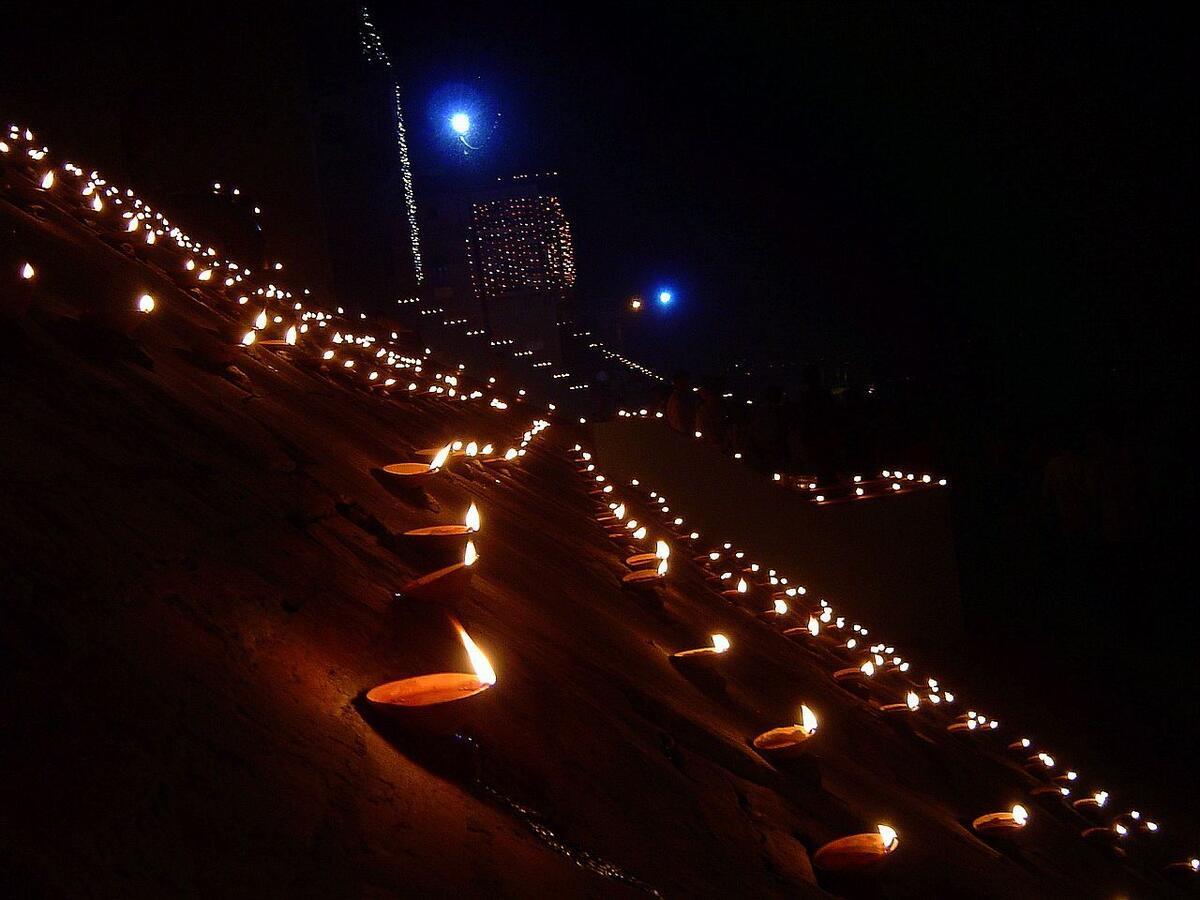
Varanasi in Winter: Dev Deepawali, Fog on the Ganga, and the Season of Malaiyo
November to February is Kashi at its kindest and most crowded — Dev Deepawali's lakhs of lamps, fog-wrapped dawn boat rides, the dawn-only dessert called malaiyo, what to pack, and why winter yatras must be booked months ahead.
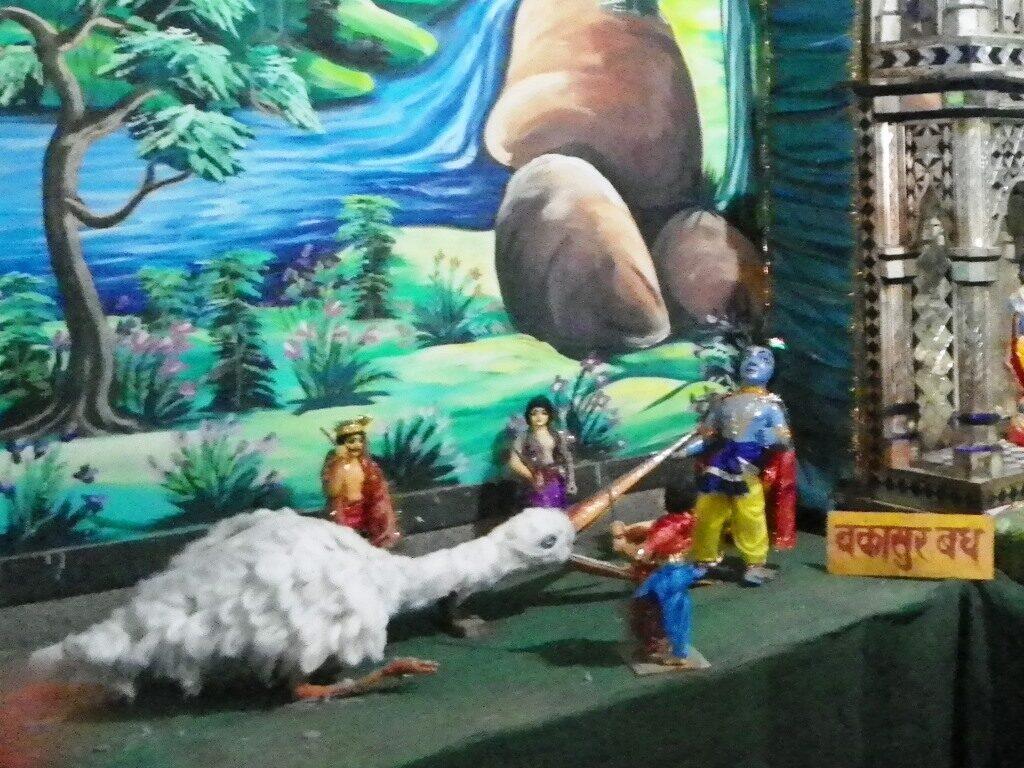
Tulsi Manas Mandir: The Temple Built Where the Ramcharitmanas Was Born
On the ground where Goswami Tulsidas composed the Ramcharitmanas stands a white marble temple whose walls carry his verses end to end. The story of the people's Ramayana, the moving tableaux upstairs, the Durga Mandir pairing, and a perfect evening plan.
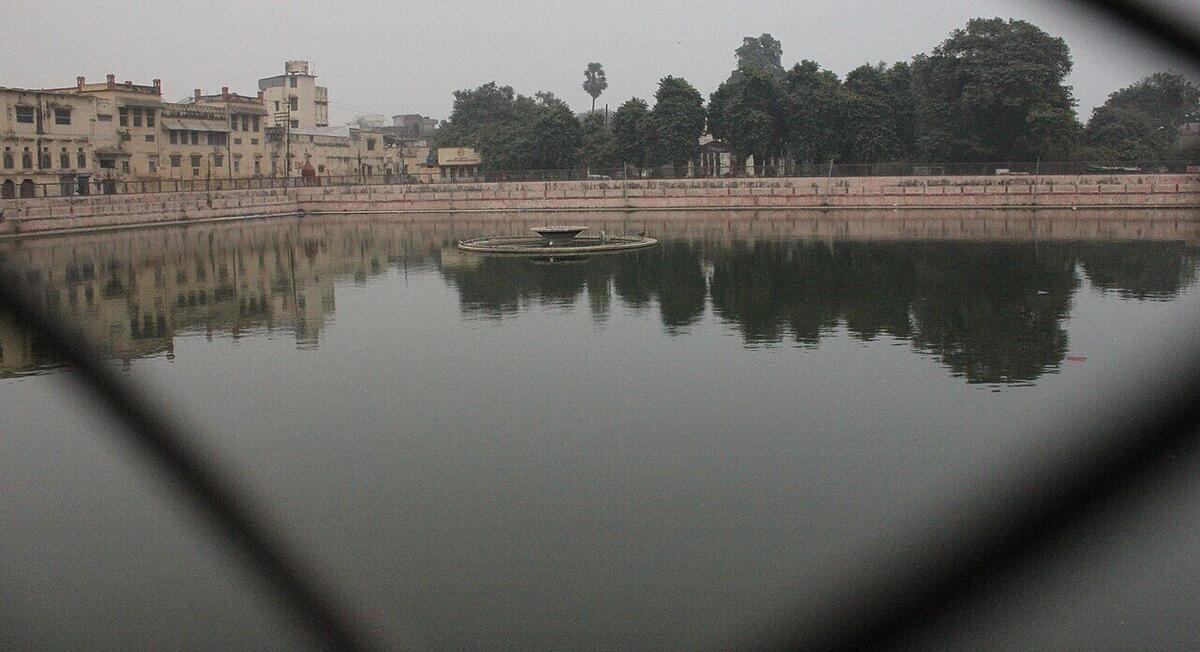
Durga Mandir and Durga Kund: The Red Temple Where the Devi Chose to Stay
The 18th-century red temple of Durga Kund — built by Rani Bhabani of Natore around a murti tradition holds no sculptor ever made, beside a sacred tank older than memory. History, legends, Navratri in Kashi, and a pilgrim's visit plan.