Ayodhya is not approached as a place but as a presence. In the devotional understanding of Sanatan Dharma, the city is Saket, the eternal city of Shri Ram, the place where Maryada Purushottam was born and where the Ramayana unfolded. Pilgrims come not merely to see temples; they come to walk the lanes of the city the Ramcharitmanas sings, to bathe in the Sarayu, and to bow at the Ram Janmabhoomi which after generations of waiting has been consecrated as a Hindu mandir.
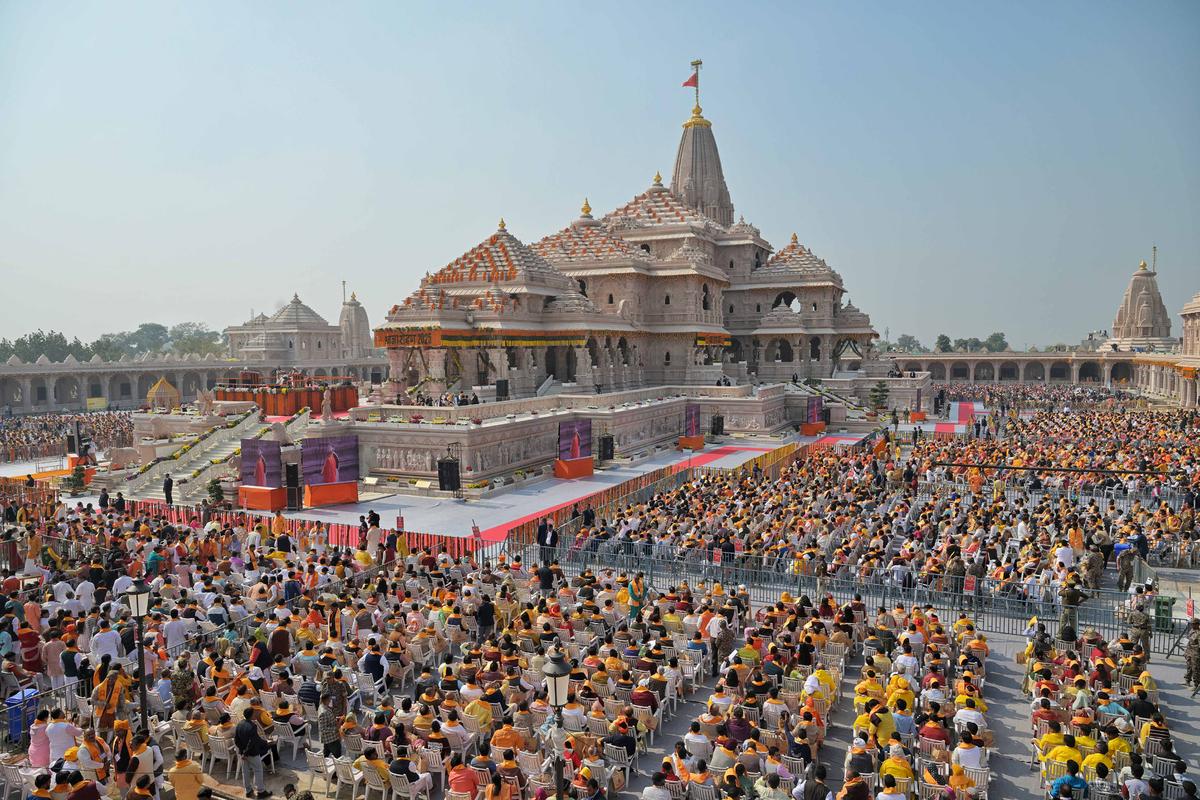
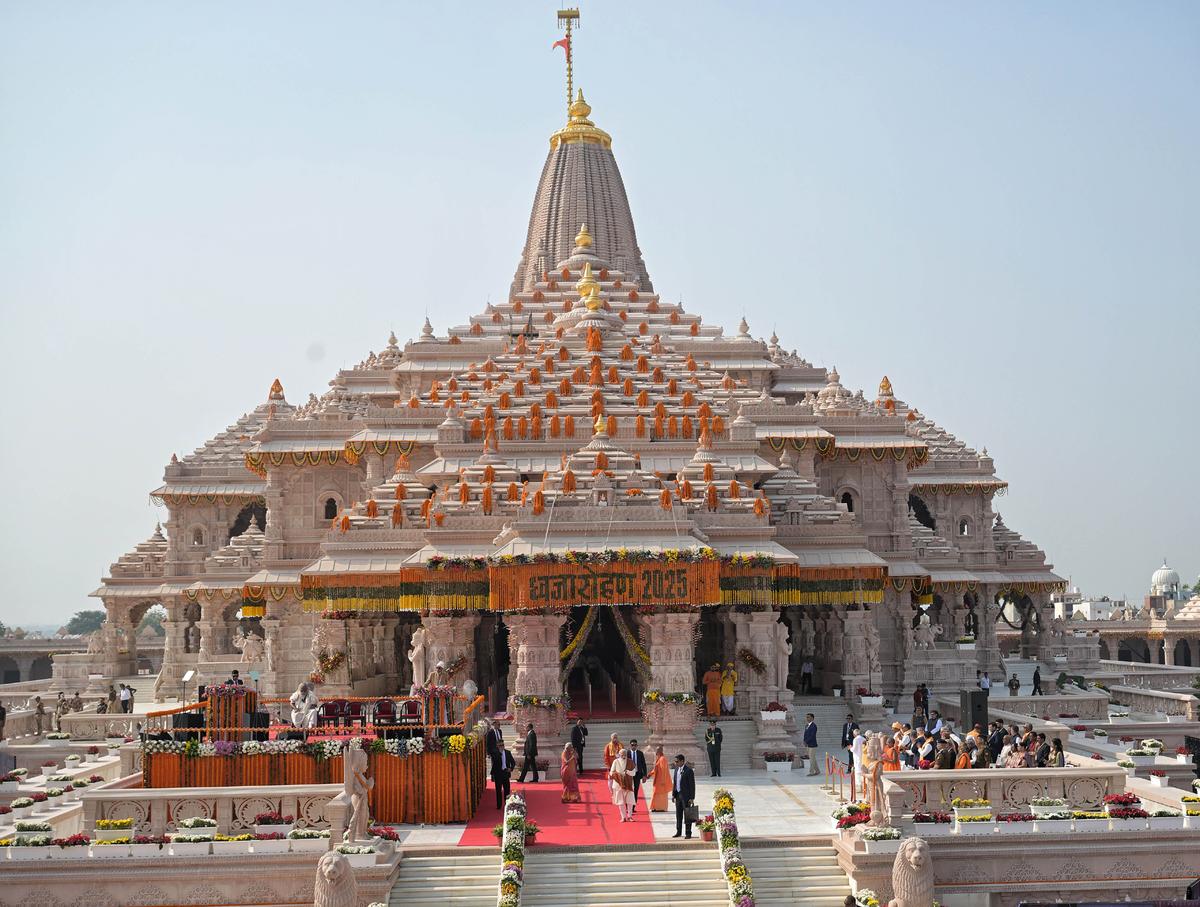
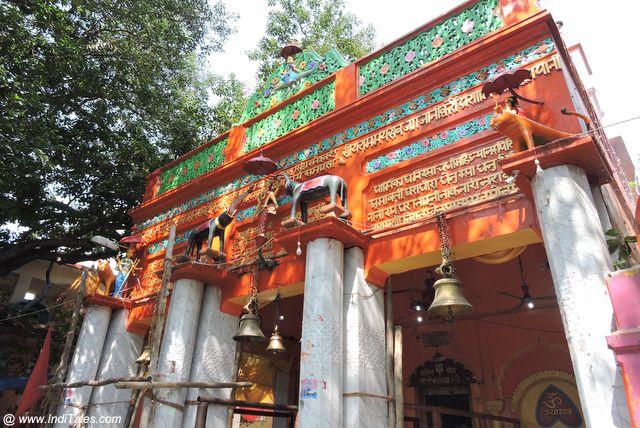
The city today has three centres of devotion. The new Shri Ram Janmabhoomi Mandir, consecrated on 22 January 2024 in the Pran Pratishtha conducted by Acharyas of the Vishwa Hindu Parishad and the Shri Ram Janmabhoomi Teerth Kshetra Trust, is the focus for almost every modern pilgrim. Hanuman Garhi, the fort-temple of Hanuman atop a small hill, is by tradition visited first — Hanuman is the dwarpal of Ayodhya, and his darshan is sought before approaching Ram. Kanak Bhawan, said to have been given by Queen Kaikeyi to Sita as a wedding gift, holds the murtis of Ram and Sita in their grihastha sweetness.
Beyond these three, the city is dense with smaller shrines and ghats — Nageshwarnath of the Shiva tradition, Treta Ke Thakur where the Ashvamedha Yajna of Shri Ram is remembered, Sita Ki Rasoi, Choti Devkali, the Saryu ghats, and the long inner-parikrama path of Ayodhya. To walk Ayodhya as a pilgrim is to walk inside the Ramayana itself.
Katha and local belief
Tradition holds that Ayodhya was founded by Manu, the progenitor of the human race, and that the city has never been destroyed across the great yugas. The Ramayana tells of the birth of Shri Ram in the palace of King Dasharatha and Queen Kaushalya, the marriage of Ram and Sita, the fourteen-year vanvas, the war at Lanka, and the joyous return when the city was lit with deep-lamps for the homecoming — the very first Diwali. The festival is observed in Ayodhya with the Deep Utsav, when the Sarayu ghats and every lane are filled with lamps each Kartik Amavasya.
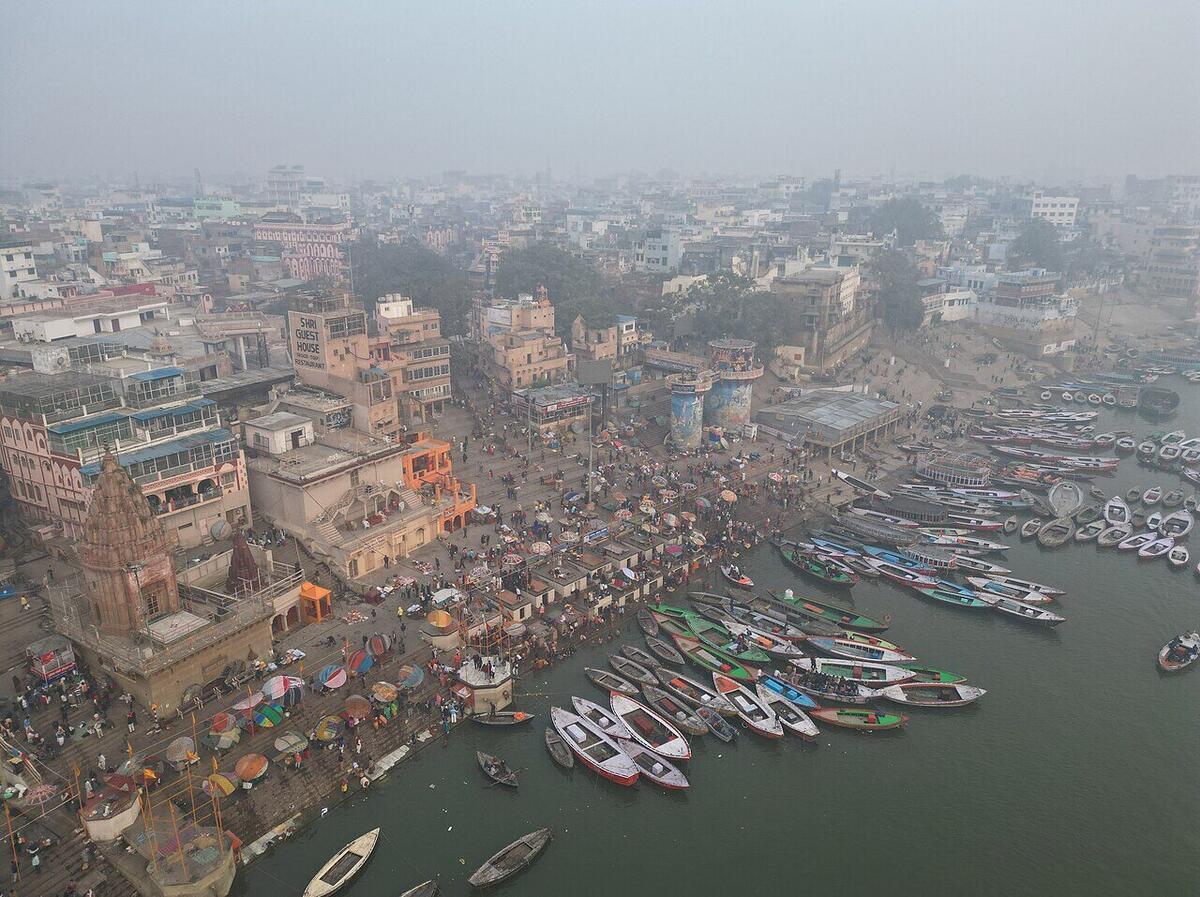
Ayodhya is among the most deeply venerated cities of Hindu tradition. The Garuda Purana names her as one of the seven Mokshapuris — Ayodhya, Mathura, Maya (Haridwar), Kashi, Kanchi, Avantika (Ujjain), and Dwaravati — the seven sacred cities held to grant moksha to those who die within them. To bathe in the Sarayu, to walk the inner parikrama, and to bow before Ram Lalla is held in tradition to lighten the burden of countless lives.
Ayodhya is the heart of Rama-bhakti, the tradition of devotion to Shri Ram that flows through the Vaishnava sampradayas of north India. The Ramcharitmanas of Goswami Tulsidas, the Adhyatma Ramayana, and the bhajans of Maharaja Bharthari, Surdas, Mirabai, and the Ramanandi Sampradaya all turn toward Ayodhya as the source. Tradition holds that the very name of Ram — Rama-nama — is sufficient to free a devotee from the cycle of birth and death, and Ayodhya is the place where that name first sounded in the world.
The new Shri Ram Janmabhoomi mandir is held by the millions of pilgrims who have visited since 22 January 2024 not merely as a temple, but as the fulfilment of a long-cherished devotional aspiration of Sanatan Dharma. The murti of Ram Lalla — Bal Roop, the child form of Ram — was sculpted by Arun Yogiraj of Mysuru and was consecrated by the Vedic Pran Pratishtha rites of the Acharyas appointed by the Shri Ram Janmabhoomi Teerth Kshetra Trust.
The seven shrines that complete an Ayodhya yatra
A traditional Ayodhya yatra includes at least seven darshan: Hanuman Garhi (the dwarpal), Shri Ram Janmabhoomi (the heart of the city), Kanak Bhawan (Ram-Sita in grihastha), Nageshwarnath (Shiva, said to have been installed by Kush), Treta Ke Thakur (where Shri Ram performed the Ashvamedha), the Sarayu Ghat (for snan and tarpan), and the long inner Ayodhya Parikrama on the day of Akshaya Navami in Kartik. Each of these has its own kathas, its own offerings, and its own place in the rhythm of the city's devotion.
History
Ayodhya's sacred memory reaches into the earliest layers of Hindu tradition. The Ramayana, the Atharva Veda, the Puranas, and the Skanda Purana's Ayodhya Mahatmya praise the city as the eternal seat of the Ikshvaku dynasty and the birthplace of Shri Ram. Buddhist and Jain traditions also remember her — Ayodhya is associated with five Jain Tirthankaras, and as Saketa she was an important early-historical city of the Kosala janapada.
Through the centuries Ayodhya has remained a city of temples, ascetics, and pilgrim families. The Ramanandi Sampradaya has its principal seat here. The Mughal-period sources mention Ayodhya as a city of mandirs along the Sarayu. The Hanuman Garhi temple was rebuilt by the Nawabs of Awadh in the mid-eighteenth century; the Kanak Bhawan was rebuilt by the Maharaja of Tikamgarh and his wife in the late nineteenth century.
The Ram Janmabhoomi site has been at the centre of a long and well-documented history. After many decades of legal proceedings, the Supreme Court of India delivered its judgement on 9 November 2019 granting the disputed site for the construction of a Ram temple. The foundation-laying ceremony (bhumi pujan) took place on 5 August 2020. The Pran Pratishtha of the murti of Ram Lalla in the new mandir was conducted on 22 January 2024 by the Acharyas of the Shri Ram Janmabhoomi Teerth Kshetra Trust, in the presence of the Prime Minister of India. The temple complex is being built in phases and is expected to be completed in the years ahead.
Architecture
The new Shri Ram Janmabhoomi Mandir is built in the Nagara style of north Indian temple architecture, designed by the Sompura family of Ahmedabad — temple architects whose lineage has worked on the Somnath rebuilt under Sardar Patel and on the Akshardham mandir in Delhi. The mandir is constructed in pink Bansi Paharpur sandstone from Rajasthan, on a high adhisthana. The grand garbhagriha holds the murti of Ram Lalla in Bal Roop, sculpted in Krishna-Shaila black stone by Arun Yogiraj of Mysuru. The temple complex spans about 70 acres and will eventually include shrines to Sita, Lakshman, Hanuman, Bharat, Shatrughna, the saptarishis, and Maharishi Valmiki.
Hanuman Garhi, atop a small hill in the heart of Ayodhya, is reached by climbing seventy-six steps. The shrine itself is intimate — a quadrangular structure with the murti of Hanuman as a child, said to be one of the most powerful expressions of Hanuman in north India.
Kanak Bhawan, the "Golden House," is built in the Bundeli style typical of Tikamgarh patronage. The sanctum holds three pairs of Ram-Sita murtis, the most prominent in golden ornament. Nageshwarnath is a simple riverbank Shiva shrine, traditionally held to have been installed by Kush, son of Shri Ram.
Rituals & Practices
The Shri Ram Janmabhoomi mandir conducts five aratis through the day, beginning with the Mangala Arati shortly before sunrise (around 4:30 AM in summer) and ending with the Shayan Arati at night. Bookings for the aratis are made through the Shri Ram Janmabhoomi Teerth Kshetra Trust portal in advance; verify timings and slots with the Trust before travel as they shift seasonally. Hanuman Garhi and Kanak Bhawan run their own daily rhythms with morning and evening aratis open to all pilgrims without prior booking.
The traditional sequence is to begin at Hanuman Garhi, then Shri Ram Janmabhoomi (entry via the designated yatri gates and security checks), then Kanak Bhawan, then Nageshwarnath, and finally bathing and tarpan at the Sarayu Ghat. On Akshaya Navami in Kartik the full inner parikrama of Ayodhya is undertaken; the path is about fourteen kilometres long and is walked from the early hours of dawn.
Special pujas commonly arranged for pilgrims include Ram-naam sankirtan, recitation of the Ramcharitmanas or the Hanuman Chalisa, and abhishek at Nageshwarnath. Sarayu Snan and tarpan for ancestors are central to the yatra — Ayodhya is one of the major north Indian places for ancestor rites.
Festivals & Celebrations
| Festival | When | Crowd |
|---|---|---|
| Ram Navami | — | very_high |
| Deep Utsav â Choti Diwali | — | very_high |
| Akshaya Navami â Ayodhya Parikrama | — | very_high |
| Hanuman Jayanti | — | high |
| Pran Pratishtha Anniversary | — | very_high |
Ram Navami: The most spiritually charged day of the year at Ayodhya.
Deep Utsav â Choti Diwali: Honours the homecoming of Shri Ram, Sita, and Lakshman to Ayodhya after fourteen years of vanvas.
Akshaya Navami â Ayodhya Parikrama: Confers the merit of an entire Ayodhya yatra in a single day.
Hanuman Jayanti: Hanuman is the dwarpal of Ayodhya; his birthday is one of the central festivals of the city.
Pran Pratishtha Anniversary: Honoured by the Shri Ram Janmabhoomi Teerth Kshetra Trust with special pujas and processions.
Prepare for Your Visit
Practical guidance to help you plan your pilgrimage
| Pilgrim Guidance | How to reach AyodhyaAyodhya is well connected by rail, road, and now by air. The Maharishi Valmiki International Airport, Ayodhya Dham (AYJ), inaugurated in January 2024, has direct flights from Delhi, Mumbai, Ahmedabad, Bengaluru, and a growing list of cities. The Ayodhya Dham Junction railway station, also renewed in 2024, has frequent connections to Lucknow, Delhi, Varanasi, and Prayagraj. By road, Ayodhya is about 135 km from Lucknow (3 hours), 165 km from Gorakhpur (3.5 hours), and 220 km from Varanasi (5 hours). Lucknow remains the most common gateway. From Lucknow Chaudhary Charan Singh International Airport, pilgrims drive to Ayodhya in about three hours along the Lucknow-Ayodhya highway. Many families combine Ayodhya with Varanasi, Prayagraj, and Naimisharanya in a single Saket-Kashi-Prayag yatra. Preparation for pilgrimsBookings for Shri Ram Janmabhoomi darshan and arati are made through the official Trust portal. Carry a printed copy along with a government photo ID. Mobile phones, cameras, leather wallets, and large bags are not allowed inside the Janmabhoomi complex — there is a cloakroom at the entrance. Wear modest, clean clothes; the security checks are thorough, especially during festivals. The city is hot and humid from April to June (35-42°C) and pleasantly cool from October to February. The monsoon (July to September) brings heavy rain but is also when the Saryu fills, which has its own beauty. Carry water, light cotton clothing, sun protection in summer, and warm clothing in winter. ATM and digital payments work well; small purchases at temple stalls are best made in cash. Best time to visitThe most popular months for Ayodhya yatra are October to March — pleasant weather and the great festivals fall in this window. The biggest single occasion is the Deep Utsav on Choti Diwali in Kartik, when over a million diyas are lit along the Saryu ghats; the city is extremely crowded but devotionally unmatched. Ram Navami in Chaitra (March-April) is the birthday of Shri Ram and the most spiritually charged darshan day at the Janmabhoomi. The kapat-opening and consecration anniversary on 22 January draws large crowds as well. For quieter darshan, plan for November (after Diwali) or late January (after the 22 January peak). |
Location
Ayodhya, UP
Pilgrim photos
No pilgrim photos yet.
Community corrections
No corrections yet.
Edit history
No revisions yet.
Plan Your Visit to Ayodhya
Get a custom itinerary and pricing for your trip.
Recommended
Packages for this destination
Pilgrim Notes
On-ground observations from fellow pilgrims
No pilgrim notes yet. Be the first to share on-ground observations!
Sign in to share a note.
Pilgrim Reviews
Be the first to share your experience at Ayodhya.
Sign in to write a review.
Nearby sacred places
Discover other sacred places near Ayodhya
Explore temples, tirthas, and pilgrimage sites in UP
Explore nearbyPart of these circuits
Walk the traditional pilgrimage routes this destination belongs to.