Every great temple in Kashi has its own emotional register. Vishwanath is awe; Kaal Bhairav is holy fear; Annapurna is a mother's kitchen. And Sankat Mochan — the temple of Hanuman ji that Goswami Tulsidas himself established on the city's southern edge — is something rarer and harder to name: relief. The name says it plainly. Sankat Mochan, the deliverer from distress. People do not come here for spectacle; they come with the specific troubles of specific lives — an illness, a court date, a marriage delayed, a son's visa, a fear that will not loosen — and they hand them, with a laddoo, to the one being in the Hindu imagination who has never once failed anyone who called on him sincerely. We bring yatris here on nearly every Kashi circuit we run, and we have watched hard-faced men leave the courtyard lighter. This guide is everything a pilgrim should know before joining them.
The Tulsidas Story: Where the Manas Met Its Hanuman
The temple's founding is inseparable from the greatest devotional poet of North India. Goswami Tulsidas — author of the Ramcharitmanas, the retelling of the Ramayana that put Ram katha into the mouths of millions — lived and worked in Kashi in the sixteenth century, much of it at Tulsi Ghat, where his math and relics remain to this day. Tradition tells that Tulsidas longed above all for the darshan of Hanuman ji, the eternal devotee who is present, the shastras promise, wherever Ram katha is sung. The accounts describe how his longing was answered: Hanuman ji revealed himself to Tulsidas at this spot near the old Assi river channel, and the poet established a temple to hold the vision — the deity's murti, it is said, self-manifest at the place of the encounter.
What gives the story its enduring power is the relationship it encodes. Sankat Mochan is not a temple built by a king to display power, but by a poet to mark a meeting. Hanuman ji here faces the direction of his Lord — and pilgrims complete the circuit by taking darshan of Ram, Lakshman, and Sita ji in the same complex. The temple's mahants have historically come from Tulsidas's spiritual lineage, and — in a touch that says everything about Kashi — the modern mahants have included distinguished professors at Banaras Hindu University, scholars by day and servants of Hanuman by dawn. Half a millennium on, the Ramcharitmanas is still recited daily within these walls. Tulsidas's two gifts to the world — the Manas and this mandir — have never stopped speaking to each other.
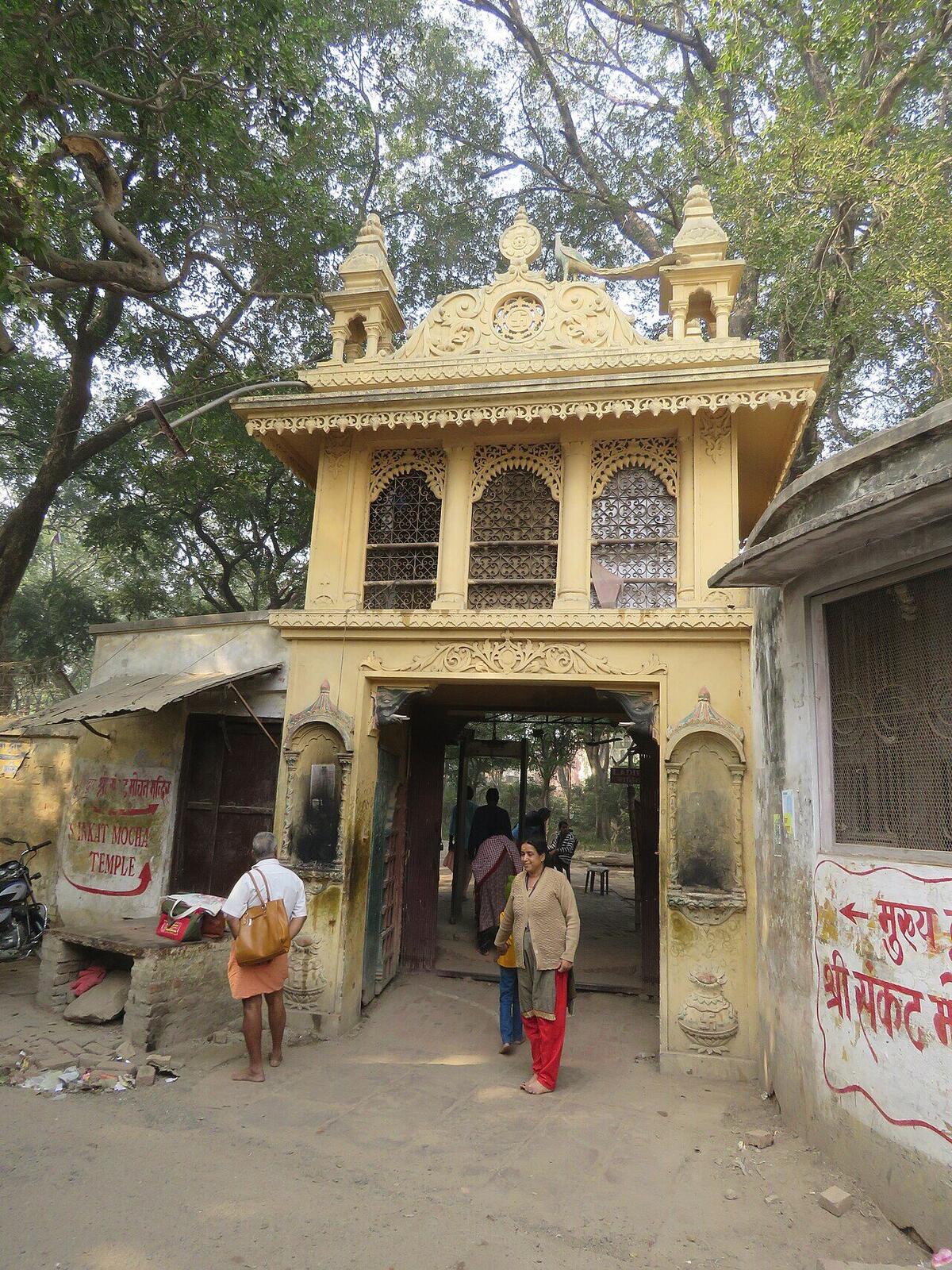
Tuesdays and Saturdays: Why the Temple Overflows
Come on a Tuesday or Saturday evening and you will find the approach road lined with marigold and laddoo stalls, the queue folding back on itself, and the courtyard humming like a beehive of petition and gratitude. These are Hanuman ji's own days across North India — Tuesday, Mangalvar, linked to Mangal (Mars), whose harshness in a horoscope Hanuman ji is besought to soften; Saturday, Shanivar, the day of Shani dev, whose slow trials send perhaps more devotees to Hanuman than any other cause, for the tradition holds that Shani's gaze softens on those under Hanuman's protection. Many devotees observe fasts on these days, and many Banarasis have kept an unbroken weekly appointment here for decades — it is a city habit as fixed as the evening aarti.
Should you come on those days, or avoid them? Our honest counsel: if you want the temple's full electricity — the massed Hanuman Chalisa, the sindoor-bright murti glimpsed over a hundred shoulders, the sense of a whole city leaning on one strong shoulder — come on Tuesday or Saturday evening and surrender to the crowd. If you want stillness, come on any other morning: the courtyard under its old trees is then one of the most peaceful places in all of Varanasi, and you can sit with the Sundarkand recitation for an unhurried hour. Both are true darshans. Elderly pilgrims should take the quiet option without hesitation.
Timings, and the Rhythm of the Day
The temple opens before dawn and closes at night — typically from around 5 AM to 10 PM, with a customary closure of the sanctum in the early afternoon, and extended evening hours on Tuesdays and Saturdays. We give these hours with a pilgrim's hedge: timings in Kashi shift with festivals, seasons, and special occasions, so verify locally for your dates — your hotel or any laddoo seller at the gate will know the day's schedule precisely. The aartis frame the day, from the pre-dawn awakening to the night's final offering; the early-morning hours are the connoisseur's darshan, when the murti is freshly dressed in sindoor and the courtyard belongs to the regulars and the birds.
Special days to know: Hanuman Jayanti — celebrated here in the Chaitra tradition, usually falling in April — is the temple's grandest festival, with special shringar, unbroken recitation, and crowds to match Vishwanath's; the whole month of Sawan lifts attendance, as does every Tuesday within it; and Ram Navami is kept with the devotion you would expect of Tulsidas's house.
The Besan Laddoo: Prasad as the Temple's Second Language
No account of Sankat Mochan is complete without its prasad. The offering here is the besan laddoo — gram flour roasted slow in ghee, sweetened, pressed warm into rounds — and at this temple it is not a formality but a currency of devotion. Buy from the shops within and around the temple precinct; they exist for this purpose and the turnover keeps everything fresh. The rhythm every regular knows: offer the laddoos at Hanuman ji's feet, receive them back sanctified, keep some for family at home, and — this is the part visitors remember — share the rest freely, beginning with the nearest child. Some of the offering traditionally goes to the temple's other permanent residents: the monkeys, who are Sankat Mochan's honour guard and its comedians.
About those monkeys, practical truth: they are quick, confident, and professionally interested in your prasad bag, your spectacles, and anything dangling. Hold the laddoo bag firmly against your chest, keep sunglasses in a pocket, and do not tease or feed them by hand. They are part of the temple's personality — Hanuman ji's own retinue, the regulars say fondly — and a little alertness keeps the relationship comic rather than costly.
The No-Phone Rule, and Why It Is a Blessing
Security at Sankat Mochan is serious and has been for years: mobile phones, cameras, smartwatches, and electronic devices are not permitted inside, and free lockers stand at the gate to hold them. Bags go to the lockers too; footwear to the stands. Plan for this — carry little, and the whole entry takes two minutes.
And then discover, as nearly everyone does, that the rule is the temple's quiet gift. An hour without a phone has become the rarest of modern experiences, and Sankat Mochan enforces it at exactly the place you would want it enforced. Nobody is filming the murti over your head; nobody is composing a caption instead of a prayer. You sit in the courtyard, the Sundarkand rises and falls, a monkey patrols the wall, the laddoo is sweet, and for one hour your troubles have Hanuman ji's full attention and you have theirs. Pilgrims who arrive irritated by the rule leave grateful for it, almost without exception.
The Way of Petition: How Devotees Actually Ask
Because Sankat Mochan is above all a temple of asking, it has evolved a whole grammar of petition that first-time visitors sense but do not always know how to join. The commonest vow is the simplest: a fixed run of Tuesdays or Saturdays — five, seven, eleven — with darshan and a laddoo offering each week until the trouble lifts, and one visit of pure thanksgiving after it does. Devotees with a heavier sankat undertake recitation — the Hanuman Chalisa repeated a vowed number of times in the courtyard, or the Sundarkand read through in a sitting — and those marking a prayer answered often offer a chola, the ceremonial dressing of the murti in sindoor and silver foil, arranged through the temple. None of this is required of a passing pilgrim; all of it is open to you. If you carry one specific trouble to Kashi, our suggestion is the smallest and oldest form: name it silently and completely before Hanuman ji — the tradition insists he prefers the whole truth — offer the laddoo, and leave the weight behind you in the courtyard. That is what the name promises, and five centuries of Banarasis will testify that the promise is kept.
One chapter of the temple's modern history belongs in every account, because it shows the promise under fire. In March 2006, a terrorist bomb exploded inside this temple on a crowded Tuesday evening, among the worst wounds Kashi has suffered in living memory. The temple's answer astonished the world: darshan resumed almost immediately, the mahant led the city in refusing hatred, and weeks later the Sangeet Samaroh convened as scheduled — musicians, it was said, playing their defiance and their grief into the same offering. Devotees will tell you the courtyard has felt subtly stronger ever since. The deliverer from distress, delivered from distress, by the ordinary courage of his devotees: there is no better summary of what this temple is.
The Sangeet Samaroh: When India's Greatest Musicians Sing for Hanuman Ji
Once a year, around Hanuman Jayanti in April, Sankat Mochan becomes the venue of one of the most extraordinary events in Indian classical music: the Sankat Mochan Sangeet Samaroh. Its roots go back to 1923, and over the decades — nurtured especially by the temple's scholar-mahants — it has grown into several consecutive nights of music and dance offered as seva at Hanuman ji's threshold. The country's greatest vocalists, instrumentalists, and dancers perform here — and this is the astonishing part — for no fee, to an audience that pays nothing, with performances running from evening deep into the small hours. Legends of every gharana have counted it an honour; artists who command the world's great halls sit on this temple stage and sing to the deity, the audience incidental and blessed.
For a pilgrim whose dates align, we say without hesitation: reorganise the itinerary around it. To hear a raga unfold at 2 AM in the open courtyard where Tulsidas met Hanuman, among thousands sitting in devout, unticketed silence, is to understand in one night how this civilisation braided art and worship into a single offering. Check the temple's announcements for exact dates each year, and arrive early — the courtyard fills as for a festival, because it is one.
Visiting Well: The Practical Circuit
The temple stands on the Durgakund road towards BHU, about twenty minutes by auto from Godowlia and ten from Assi. It slots naturally into an evening: darshan at Sankat Mochan around 4–5 PM, then the neighbouring Durga Mandir and Tulsi Manas Mandir — where the Ramcharitmanas is inscribed on the walls, closing the Tulsidas circle — and back to the river for the Ganga Aarti. This is exactly the evening we build into our two-day itinerary. Dress modestly; offer the laddoo with both hands; if you know the Hanuman Chalisa, this is its home ground, and if you do not, forty verses take one bus ride to learn. Sit in the courtyard for at least fifteen unhurried minutes before you leave — the sitting, regulars will tell you, is where the temple does its work.
Guests on our Kashi Yatra circuits sometimes ask us, standing in that courtyard, why a temple with no river view and no golden spire feels like the warmest place in Varanasi. The answer is in the name. Kashi's other shrines offer the pilgrim moksha, cosmic awe, the ending of all journeys. Sankat Mochan offers something nearer at hand: the strong shoulder, the loosened fear, the laddoo shared with a stranger's child, the specific trouble named and handed over. Jai Bajrangbali. Har Har Mahadev.
Related articles
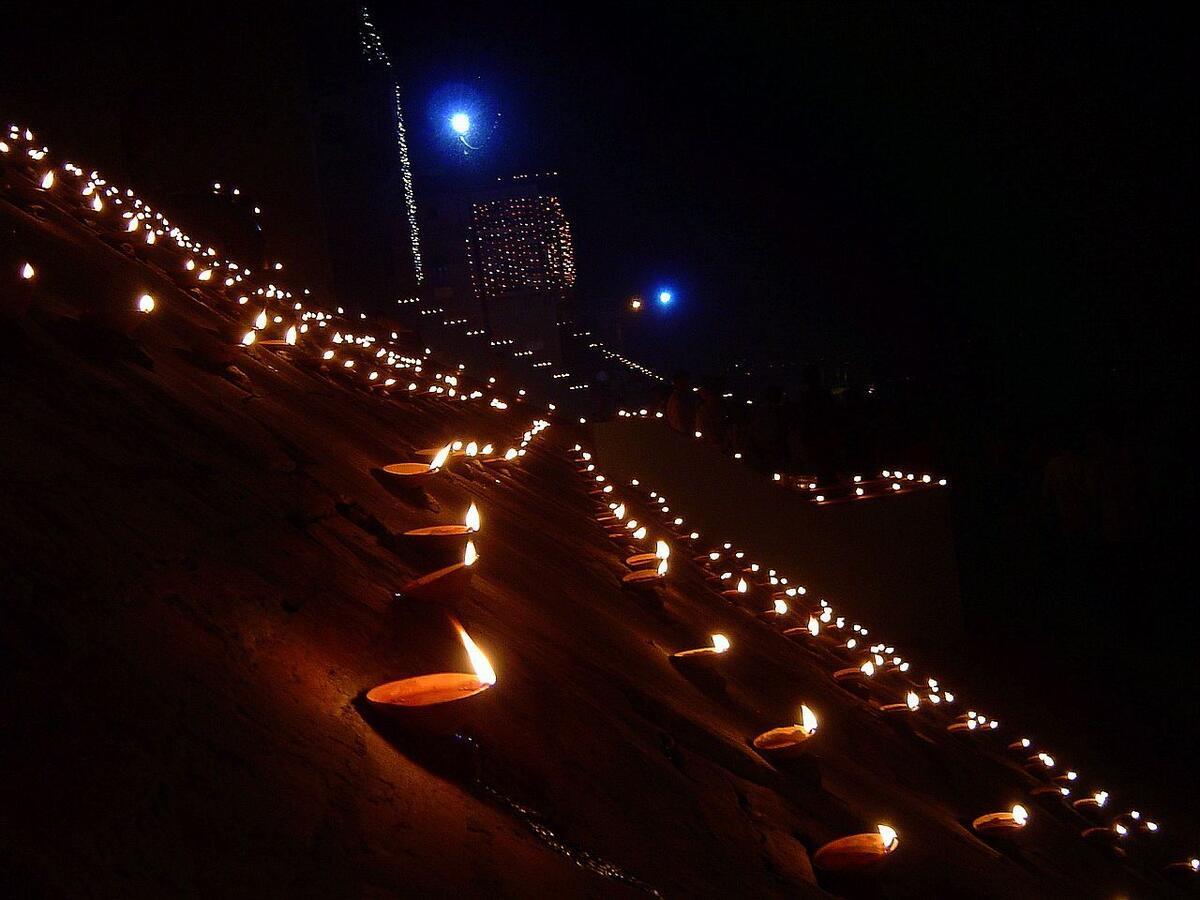
Varanasi in Winter: Dev Deepawali, Fog on the Ganga, and the Season of Malaiyo
November to February is Kashi at its kindest and most crowded — Dev Deepawali's lakhs of lamps, fog-wrapped dawn boat rides, the dawn-only dessert called malaiyo, what to pack, and why winter yatras must be booked months ahead.
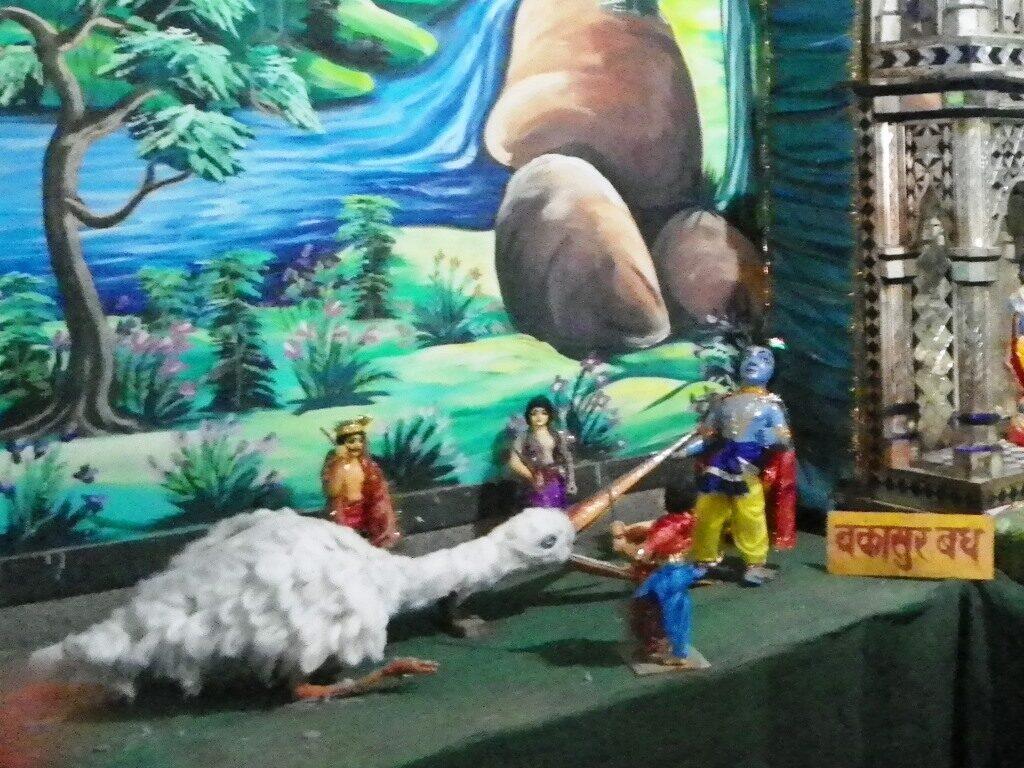
Tulsi Manas Mandir: The Temple Built Where the Ramcharitmanas Was Born
On the ground where Goswami Tulsidas composed the Ramcharitmanas stands a white marble temple whose walls carry his verses end to end. The story of the people's Ramayana, the moving tableaux upstairs, the Durga Mandir pairing, and a perfect evening plan.
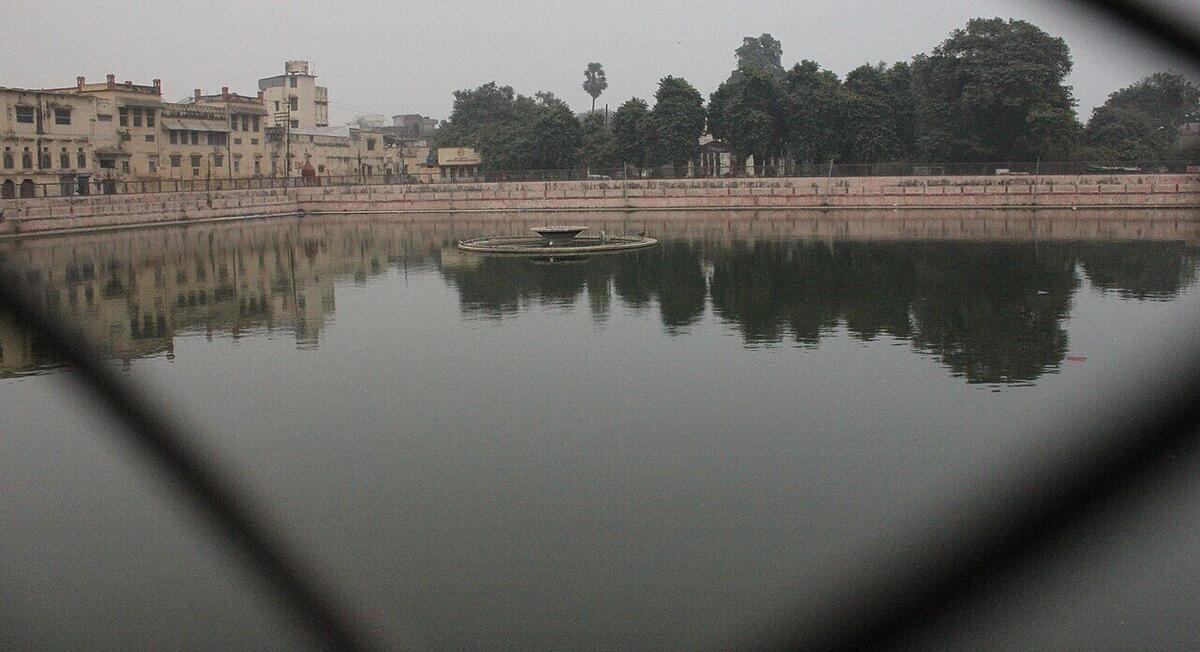
Durga Mandir and Durga Kund: The Red Temple Where the Devi Chose to Stay
The 18th-century red temple of Durga Kund — built by Rani Bhabani of Natore around a murti tradition holds no sculptor ever made, beside a sacred tank older than memory. History, legends, Navratri in Kashi, and a pilgrim's visit plan.