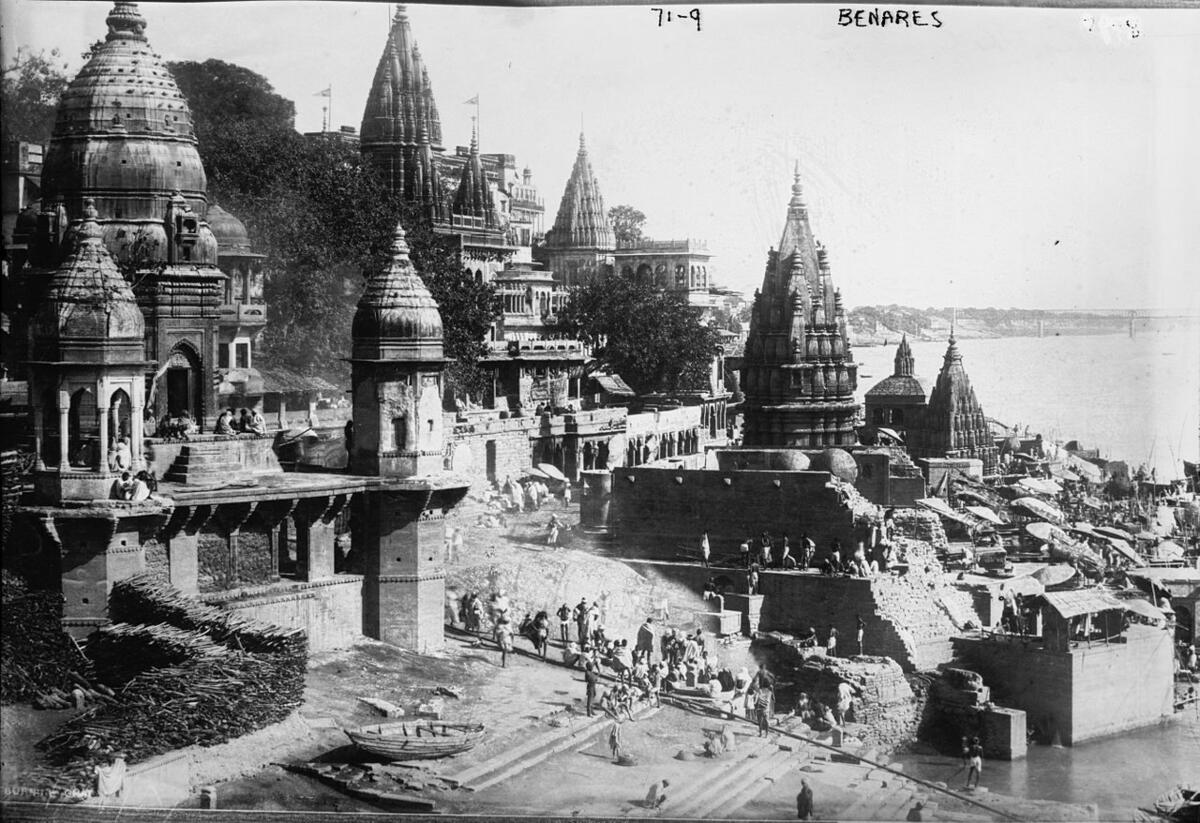
There are two entirely different cities called Varanasi, and the monsoon is the border between them. The winter city — the one on the postcards — has broad stone ghats descending grandly to a calm river, boats gliding at dawn, pilgrims spread along a kilometre of steps. The monsoon city has none of this. From July to September the Ganga rises — some years by many metres — swallowing the steps, silencing the boats, pressing the whole riverine life of Kashi up into the lanes. And in the very same weeks, the month of Sawan fills those lanes with the largest devotional crowds of the year. Pilgrims who arrive expecting the postcard are bewildered; pilgrims who arrive knowing what the season actually is often have the most intense yatra of their lives. We run yatras straight through the monsoon every year. This is the honest guide.
What the Rising River Actually Does
The Ganga at Varanasi answers not to local rain but to the whole Himalayan catchment, so the river can rise under a blue sky because it poured in Uttarakhand a week ago. The rise is gradual, monitored daily, and follows a pattern every boatman knows: the water climbs the ghat steps through late July and August, the lowest platforms go under first, and in a strong year the river crosses its official warning level (a shade above 70 metres on the Varanasi gauge) and approaches the danger mark about a metre higher. Some years the flood is mild and the ghats merely shrink; in heavy years the water reaches the lanes and touches the temples that stand halfway up the steps.
The consequences for a pilgrim, plainly stated:
- The ghat-to-ghat walk disappears. The continuous riverside promenade from Assi to Raj Ghat is a dry-season gift. At high water the connecting stretches drown, and you move between ghats through the lanes above instead.
- Boat rides are often suspended. When the river runs high and fast, the district administration halts boating outright — no dawn rides, no aarti-from-the-water — and the ban stays until levels drop. In a typical year this bites hardest from late July through early September, but it varies enormously; some monsoons see barely a week of closure, others more than a month. If the dawn boat is the heart of your planned yatra, the monsoon is the wrong season to bet on it.
- The Ganga Aarti moves uphill. Dashashwamedh's evening aarti is never cancelled — in flood weeks it shifts to the rooftops and upper platforms above the ghat, more compact and closer-pressed than the grand riverside ceremony. Seeing the lamps raised over a Ganga lapping just below the priests' feet is its own unforgettable version of the rite.
- Cremations climb too. At Manikarnika and Harishchandra, the pyres move to elevated platforms and rooftops above the drowned ghats — the fires never go out, whatever the river does.
- Ganga snan continues, carefully. Bathing shifts to designated safer points, and the current deserves absolute respect. Bathe only where others are bathing, at barricaded spots, never alone and never in the evening. The monsoon river is Ma Ganga in her fierce aspect.
Sawan: The Season Inside the Season
Into these flood weeks the calendar pours the holiest month of the Shaiva year. Sawan (Shravan) — which in 2026 runs from late July to late August by the North Indian reckoning, with the four great Sawan Somwars (Mondays) falling in August; check a panchang for your exact dates — is the month the tradition gives wholly to Mahadev, and no city on earth keeps it like his own. Kanwariyas in saffron stream in with Ganga jal; the lanes around the Kashi Vishwanath Dham become rivers of chanting; and on the Sawan Mondays the darshan queue is measured not in minutes but in lakhs of devotees, wound through barricaded circuits the administration plans for months.
Our counsel splits by temperament. If you seek quiet darshan, come on Sawan's ordinary weekdays — Tuesday through Sunday mornings are busy but workable, and the month's atmosphere (the special shringars of Baba Vishwanath, the har-har-bam-bam moving through the lanes, the whole city dressed for its beloved) is something no other season offers. If you seek the full immersion — standing among a devout multitude on a Sawan Somwar — go with realistic expectations: hours in queue, phones locked away, rain likely, and an experience of collective bhakti that yatris describe decades later. Families with elderly members or small children should take the weekday option without hesitation. Either way, book rooms well ahead: Sawan fills Varanasi like Kumbh fills Prayagraj, in miniature. Our Sawan 2026 Kashi yatra is built precisely around these trade-offs — weekday darshans, rudrabhishek arranged, and rooms held near the Dham.
The Case For the Monsoon
Having stated every difficulty, let us now say what the difficulties buy, because the monsoon partisans among our yatris — and they are many — are not mad.
The city is washed and green. Kashi spends eight months of the year dust-coloured; the rains rinse it. The neem and peepal trees blaze green above the lanes, the gardens at Sarnath are at their loveliest, and the light between showers — great silver rents in the cloud over a swollen brown river — is the most dramatic the city ever wears. Photographers who know Varanasi swear by August, and the evening sky above the aarti — thunderheads lit from within, lamps below — is a sight the dry months simply cannot stage.
The pilgrimage feels primal. A vast river in flood commands a reverence the placid winter Ganga does not. Standing at the top of the drowned steps watching Ma Ganga take back her ghats, you understand viscerally why this civilisation worships rivers — the seeing of it is a darshan in itself.
Beyond the Sawan hotspots, crowds thin. International tourism all but pauses; the non-Sawan sites — Sarnath, the BHU campus and its New Vishwanath temple, the museums, Ramnagar Fort across the river — are quiet. And the indoor Kashi (the akhara wrestling, the music, the weaving houses, the temple interiors) carries on regardless of weather.
It is the season of the satvik table. Sawan is a fasting month, and Varanasi's kitchens turn it into an art form — vrat thalis, kuttu and singhara delicacies, fruit feasts. Our satvik food guide is at its most useful in exactly these weeks.
The Monsoon's Other Festivals: Nag Panchami, Teej, and the Kajari
Sawan is the headline, but the season keeps a fuller calendar that visitors rarely hear about. Nag Panchami, falling within Sawan, is kept in Kashi with an intensity found almost nowhere else: the ancient Nag Kuan — the well associated with the grammarian-sage Patanjali's serpent lore — becomes the centre of the city's serpent-veneration for a day, drawing crowds for a ritual bathing tradition at the old stepped well, while the wrestling akharas hold their traditional displays. Hariyali Teej brings the season's green — swings hung in temple courtyards, mehndi, songs for Parvati who won Shiva by tapasya — and Krishna Janmashtami closes the season's arc with midnight jhankis across the city's Vaishnava temples.
And running under all of it is the monsoon's own music. This is the season of Kajari — the rain-song of Banaras and Mirzapur, sung when the clouds bank up, full of longing and wet earth and the beloved's absence. You may catch it at a temple gathering, from a music teacher's window in the lanes, or sung informally on a ghat-top evening; the city's musicians treat the first true downpour as a season's invitation. Winter visitors hear Kashi's grandeur; monsoon visitors hear its tenderness. Ask your hosts where Kajari is being sung that week — Banarasis light up at the question.
Planning a Monsoon Yatra That Works
The monsoon rewards a different itinerary shape, so do not simply transplant the winter plan. Build around temples and lanes rather than river mornings: Kashi Vishwanath early, Sankat Mochan (glorious in Sawan, when Hanuman ji's Tuesdays double with the season), Kaal Bhairav, Annapurna, the Durga Mandir in its scarlet Sawan best. Treat any boat ride as a bonus, never a plan — if the river happens to be low and boats are running, take the ride the same day rather than saving it for departure morning. Keep the aarti for a rooftop vantage and go early, since the compressed flood-season venue holds fewer people. Leave slack in the schedule: monsoon Varanasi runs late, floods reroute traffic, and the yatri with a loose plan smiles more. And if your dates are flexible within the season, early July and late September are the gentler shoulders — usually before and after the highest water — while the flood peak most often lands in August. All this said with the pilgrim's hedge the season demands: no two monsoons agree, so check river levels and boat status in the week you travel; we track the gauge daily through the season for exactly this reason.
What to Pack, Learned the Wet Way
- Footwear is the decision that matters. Leave the good shoes at home. Rubber sandals or floaters with grip — things that survive drowned lanes and slip off at temple doors — are the correct answer. The stone underfoot is lethally slick when wet; walk deliberately, especially on any steps.
- A compact umbrella beats a raincoat in the lanes (rain jackets steam in the humidity), but carry a light poncho for auto rides. Cotton clothes that dry overnight; one full change more than you think you need; nothing that trails to the ground.
- Waterproof the essentials. Phone in a zip pouch, cash and medicines in a second, and a dry-bag or plastic-lined daypack for the rest. Kashi's downpours arrive in minutes.
- Small health kit: ORS sachets, antiseptic cream for the inevitable scrape, mosquito repellent for the evenings (the monsoon breeds them), and any daily medicines carried in double, split between bags.
- Humidity discipline: the monsoon feels cooler but dehydrates just as surely. Drink bottled or filtered water constantly, and keep the midday rest rule — the wet heat tires the body faster than it admits.
The Honest Verdict
Should a first-time pilgrim choose the monsoon? If the dawn boat ride and the classic ghat walk are the heart of what you want, no — come in the October-to-March window our best-time guide describes, and see the postcard first. But if you have seen the postcard, or if what draws you is Sawan itself — Mahadev's own month in Mahadev's own city — then come, and come knowingly. There is a moment we wait for with our monsoon yatris: evening at the top of the drowned steps, rain just passed, the aarti flames going up from the rooftops, the vast brown river moving where the crowds usually stand, and the chant rising anyway — har har Mahadev, as it has risen through three thousand monsoons before this one. The city does not pause for the flood. It never has. That, in the end, is the darshan the monsoon gives. Har Har Mahadev.
Related articles
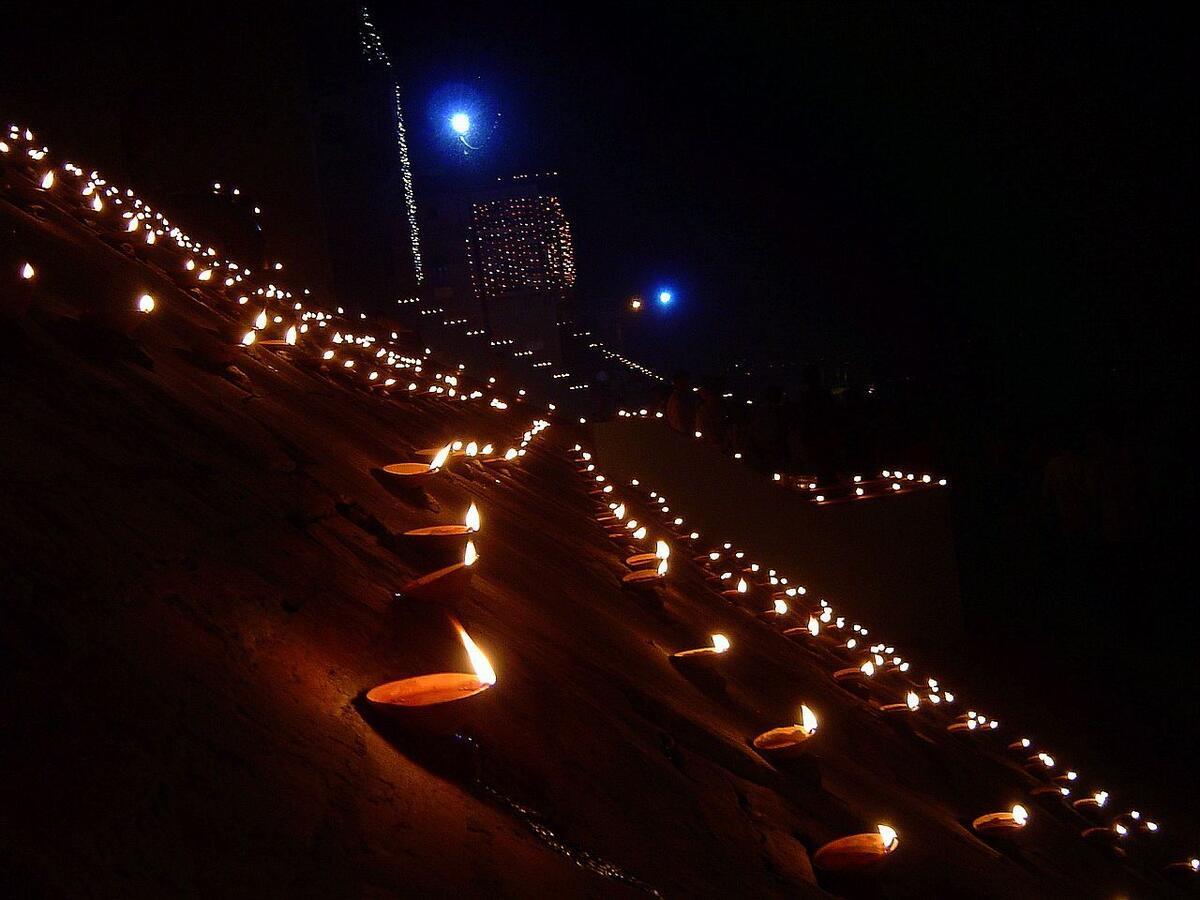
Varanasi in Winter: Dev Deepawali, Fog on the Ganga, and the Season of Malaiyo
November to February is Kashi at its kindest and most crowded — Dev Deepawali's lakhs of lamps, fog-wrapped dawn boat rides, the dawn-only dessert called malaiyo, what to pack, and why winter yatras must be booked months ahead.
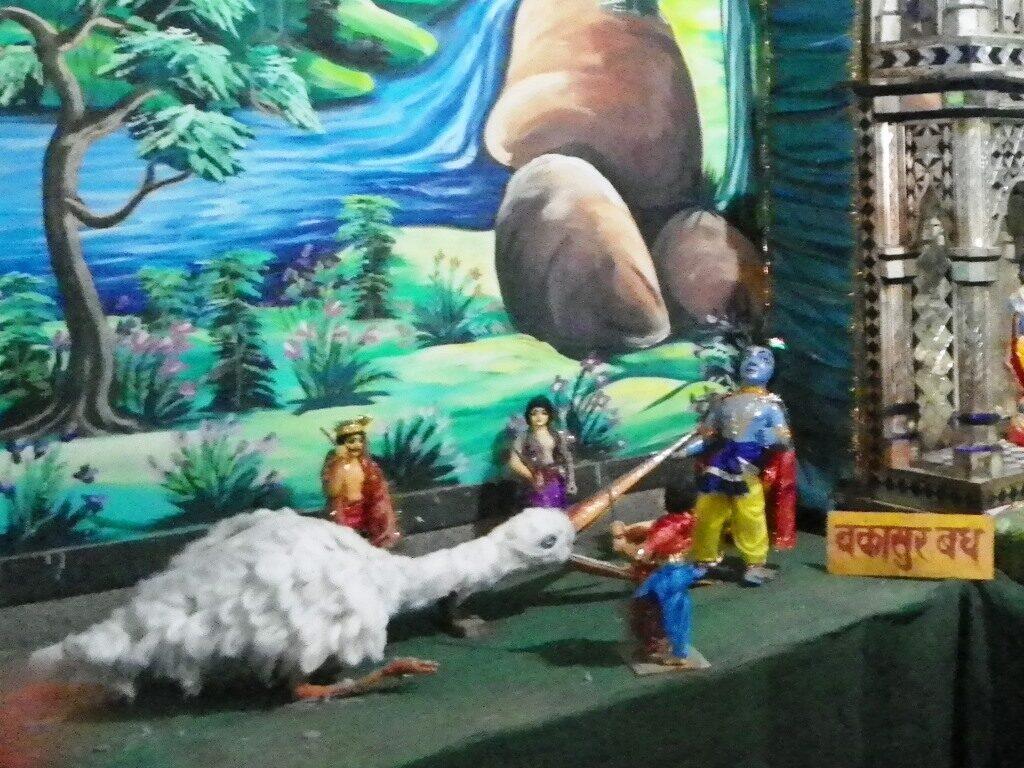
Tulsi Manas Mandir: The Temple Built Where the Ramcharitmanas Was Born
On the ground where Goswami Tulsidas composed the Ramcharitmanas stands a white marble temple whose walls carry his verses end to end. The story of the people's Ramayana, the moving tableaux upstairs, the Durga Mandir pairing, and a perfect evening plan.
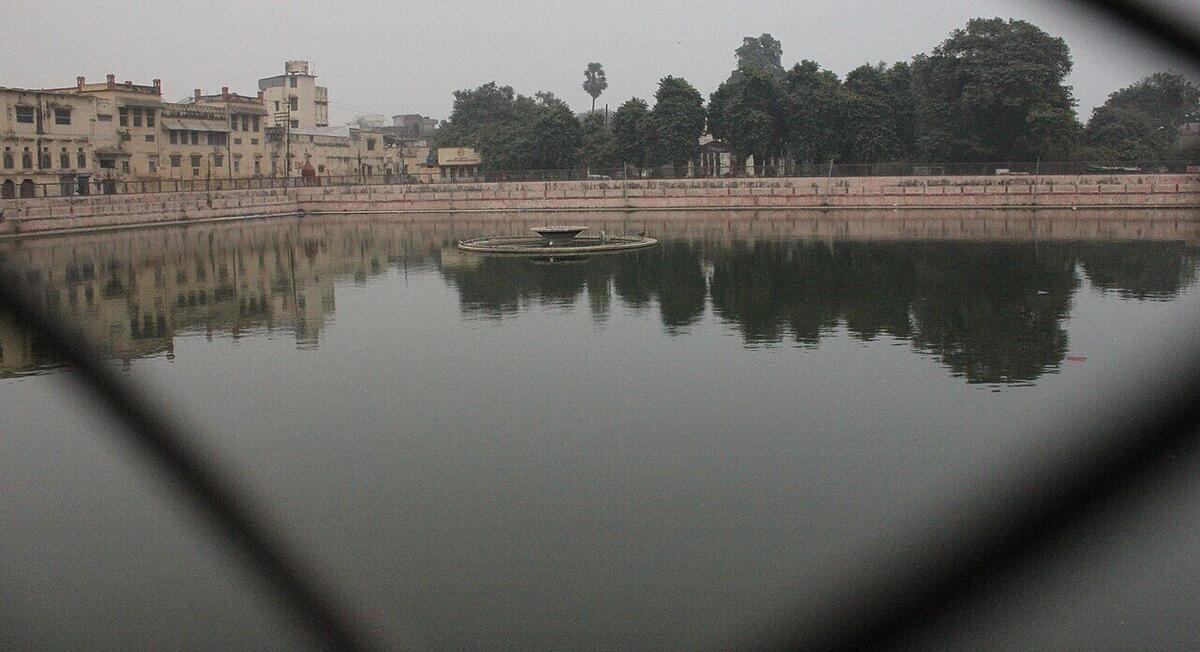
Durga Mandir and Durga Kund: The Red Temple Where the Devi Chose to Stay
The 18th-century red temple of Durga Kund — built by Rani Bhabani of Natore around a murti tradition holds no sculptor ever made, beside a sacred tank older than memory. History, legends, Navratri in Kashi, and a pilgrim's visit plan.