Every day, a few steps from the jyotirlinga of Kashi Vishwanath, thousands of pilgrims take a second darshan that many of them had not planned — and that Kashi's own tradition insists is not second at all. The temple of Mata Annapurna, the goddess of food and nourishment, stands in the lanes beside the Vishwanath corridor, and the wisdom of this city has always paired the two: Baba Vishwanath grants liberation; Mata Annapurna makes sure no one goes hungry while they wait for it. We bring every family we host to her door, and the ones who linger longest are rarely the ones we expect. This is her story, her temple, and the practical guide to taking her darshan well.
The Legend: When Shiva Himself Held Out a Bowl
The story is one of the most beloved in all of Hindu tradition. In a discussion on the nature of reality, Bhagwan Shiva declared that the entire material world — food included — is maya, illusion. Mata Parvati, who as the mother of the universe embodies all that is material and nourishing, decided to show him precisely what the world looks like when the illusion is withdrawn: she vanished, and with her vanished all food from creation. The seasons continued, but nothing ripened. The fires burned, but nothing cooked. Gods, humans, and every living creature began to starve — and Shiva understood that what he had called illusion was also grace.
Moved by the world's hunger, Parvati appeared in Kashi and set up a kitchen. And to Kashi came Shiva himself, bhiksha patra — the begging bowl — in hand, to receive food from his own consort. She fed him with her own ladle, and in that moment the tradition of this city was fixed forever: in Kashi, Annapurna feeds everyone, Shiva included. The iconography you will see everywhere in Varanasi shows exactly this scene — the Mother enthroned with her golden ladle and pot, Mahadev standing before her with his bowl extended. The theological point is made with a mother's bluntness: even the Lord of the universe must eat, and even renunciation is fed by someone's kitchen.
It is also why, of all the goddess's homes in India, this one is supreme: Kashi is called the city of moksha, but the old promise of the city — kept to this day, as we shall see — is that no one within it sleeps hungry.
The Temple: Small Door, Vast Presence
The present temple was raised in its familiar form in the early eighteenth century under Maratha patronage — the Peshwa Baji Rao's name is traditionally attached to its construction, part of that great Maratha age of rebuilding that gave Kashi so much of its present stone. From the lane it is easy to miss: a carved doorway among shops, a threshold worn smooth by centuries of feet. Inside, the courtyard opens into an unexpectedly serene precinct — shrines to Shankar, Hanuman, and Surya around the edges, and at the heart of it the garbhagriha of the Mother.
There are, famously, two murtis of Annapurna here. The everyday darshan is of the brass murti — the Mother with her ladle, dressed and adorned with a tenderness the pujaris here are known for. Behind and above her sits the temple's greatest treasure: a solid gold murti of Annapurna, shown to the public only once a year, during the days around Diwali — by long custom from Dhanteras through Annakut, though the exact arrangements are the temple's to declare each year. On Annakut day itself, the day after Diwali, the temple celebrates its great festival: a mountain of food offerings raised before the Mother, and coins and grain distributed to devotees as her prasad — tokens that Banarasi households keep in their cash boxes and grain stores all year, so that Annapurna's plenty never leaves the house.
The Kitchen That Never Judges
The legend would be beautiful even as a story. What makes it overwhelming is that it is still literally true. The temple's Annakshetra — its free kitchen — feeds thousands of people every single day, pilgrim and pauper alike, seated in rows without any distinction of caste, wealth, or origin, in what may be the most direct piece of theology in India: the goddess of food, worshipped by feeding whoever comes. The scale is astonishing — on ordinary days the count runs into many thousands of plates, and on great festivals far beyond that. The meal is simple, satvik, unlimited, and served with the courtesy owed to a guest of the Mother — because that is precisely what tradition says every eater is.
We tell our yatris plainly: if your schedule allows only one meal in the old city, consider taking it here, seated on the floor among strangers, as Annapurna's guest. Many families also choose to contribute to the annadanam — the temple runs donation schemes for feeding — and there are few offerings in Kashi whose destination is more visible. The kitchen generally serves through the middle of the day; ask at the temple office for current hours and how to contribute.
And take a little of her prasad home — not for the journey, but for the kitchen shelf. Banarasi households keep Annapurna's prasad and the Annakut grain where the provisions live, the Mother's guarantee standing quietly over the family's rice tin. It is among the oldest household customs of this city, and it travels perfectly.
Why Her Darshan Belongs with Vishwanath's
Kashi's tradition does not treat Annapurna as an optional extra beside the jyotirlinga; it treats her as the other half of the sentence. The pairing is stated in the city's oldest self-descriptions: Vishweshwara is the lord of the city, Annapurna its queen and its cook; Bhairav is its kotwal, Vishalakshi its shakti-pitha. Pilgrims for centuries have taken the two darshans in a single circuit, and the geography makes the theology effortless — her temple stands in the lanes immediately beside the corridor precinct, two minutes from the queue you have just left.
Our suggested order, for what it is worth: Vishwanath first, Annapurna immediately after, while the darshan is still humming in you — asking the Mother for nourishment on the way out of the house of moksha, the way one stops at the kitchen on the way out of any well-run home. If you have taken our advice and come in the early morning, her courtyard will still be quiet, and you can sit a few minutes — something the Vishwanath crush does not permit — and recite, if you know it, a few verses of the Annapurna Stotram, Adi Shankaracharya's hymn to her whose refrain every Banarasi knows: bhiksham dehi, kripavalambanakari, Mata Annapurneshwari — grant me alms, O Mother, upholder of grace. Our full darshan logistics for the corridor itself are in the Kashi Vishwanath guide.
How Pilgrims Worship Her: A Simple Vidhi
Annapurna asks for nothing elaborate — she is the goddess of the kitchen, and kitchens value sincerity over ceremony. The worship pilgrims have offered here for centuries is simple enough to carry in memory: darshan of the Mother with folded hands; an offering of grain — rice, wheat, or dal purchased in the lane outside — placed in the temple's receiving vessels, the offering most literally hers; a contribution, according to means, to the annadanam that keeps her kitchen burning; and the recitation, aloud or in the heart, of a few verses of Shankaracharya's stotram. Many families also perform a quiet sankalpa here that we find more moving each year we witness it: a promise to feed a certain number of people at home — a monthly bhandara, a weekly plate for a hungry stranger, meals for a student — carried from her threshold back into ordinary life. That sankalpa, kept in a kitchen in Hyderabad or Kolkata or Delhi, is the Mother's worship continued by other means, and the tradition regards it as exactly that.
Mothers with young children should know one detail of custom: Annapurna is held to be especially attentive to prayers concerning the feeding and health of children — the first-grain ceremonies of infancy, a child who will not eat, a household's anxieties about provision. The pujaris here receive such prayers daily and treat them with unhurried seriousness; do not be shy of bringing the smallest domestic worry to the goddess whose entire theology is the domestic worry, raised to cosmic scale.
The Circuit at Her Door: Vishalakshi, Dhundhiraj, and the Kotwal
Annapurna's lanes reward an extra half hour. Two minutes away stands Dhundhiraj Ganesh, the remover of obstacles whose darshan tradition places at the very start of the Kashi yatra — many old pilgrim manuals begin the whole city with him. A short walk through the galis brings you to the Vishalakshi temple at Meer Ghat — the shakti-pitha of Kashi, the wide-eyed goddess whose shrine completes the city's feminine trinity: Annapurna who feeds, Vishalakshi who watches, and Ganga who carries away. And north of the corridor waits Baba Kaal Bhairav, the Kotwal whose leave tradition requires for any yatra in this city. String them together — Dhundhiraj, Vishwanath, Annapurna, Vishalakshi, and Bhairav — and you have walked, in a single morning, the essential devotional grammar of Kashi: permission, liberation, nourishment, protection, and the watching grace over it all. We walk this exact loop with families most weeks, and it takes less time than most people spend reaching the airport.
Timings, Season, and Practical Notes
- Hours: the temple keeps Kashi's classic rhythm — open from before dawn through late morning, closed through the middle of the day, and open again from evening into the night. Aarti times and the midday closure shift with season and festival; verify locally for your dates rather than trusting any printed schedule, ours included.
- When to come: early morning, with or after Vishwanath darshan, is the gentlest hour. Fridays and festival days bring heavier crowds to the Mother, as do the Navratris.
- The golden darshan: if your yatra can be timed to the Diwali days — Dhanteras through Annakut — you will see the gold Annapurna and witness the Annakut mountain of offerings; expect serious queues and bring patience to match. Our best-time guide covers the festival calendar.
- Offerings: grain, and contributions to the annadanam, are the offerings this temple was built for. Phones and cameras follow the same restraint as the corridor precinct — carry little, and check current rules at the gate.
- Accessibility: the lane approach is flat but narrow and crowded; for elderly pilgrims, pair her darshan with the corridor visit while wheelchair assistance is already arranged.
The Mother at the Heart of the City
There is a moment we have watched hundreds of times: a family emerges from the Vishwanath queue — elated, jostled, slightly stunned — turns into the lane, and steps into Annapurna's courtyard, and something in their shoulders lets go. The jyotirlinga is fire and immensity; the Mother's house is a kitchen, and everyone knows how to behave in a kitchen. Take her darshan, take her prasad, feed someone in her name — and take home a paisa of Annakut coin if the season blesses you with one. Every Kashi Yatra we plan includes her, because no yatra we plan could honestly be called complete otherwise. Annapurne sadapurne. Har Har Mahadev.
Related articles
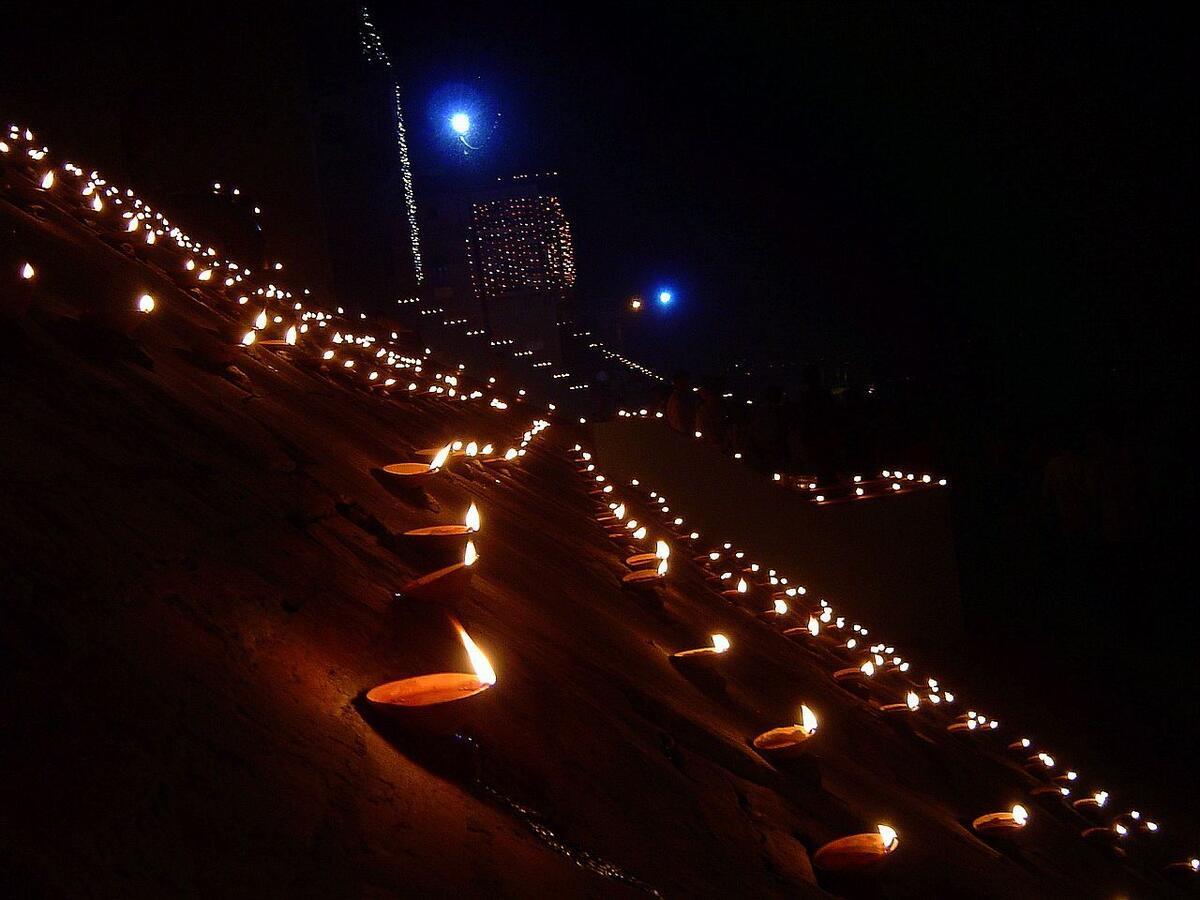
Varanasi in Winter: Dev Deepawali, Fog on the Ganga, and the Season of Malaiyo
November to February is Kashi at its kindest and most crowded — Dev Deepawali's lakhs of lamps, fog-wrapped dawn boat rides, the dawn-only dessert called malaiyo, what to pack, and why winter yatras must be booked months ahead.
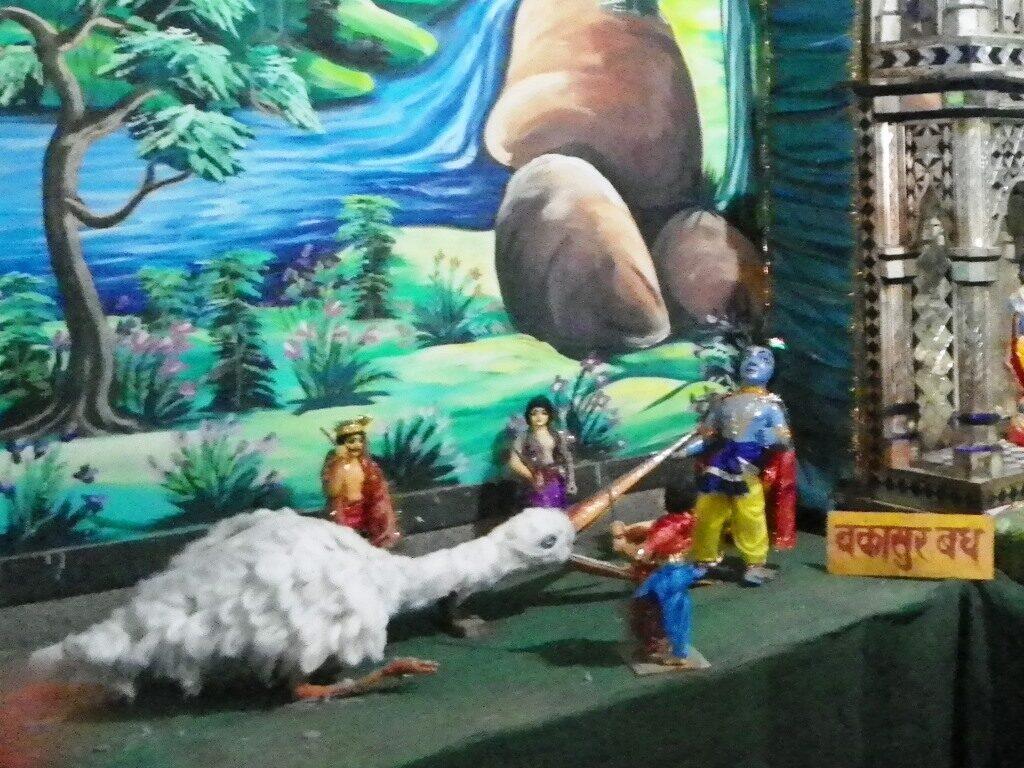
Tulsi Manas Mandir: The Temple Built Where the Ramcharitmanas Was Born
On the ground where Goswami Tulsidas composed the Ramcharitmanas stands a white marble temple whose walls carry his verses end to end. The story of the people's Ramayana, the moving tableaux upstairs, the Durga Mandir pairing, and a perfect evening plan.
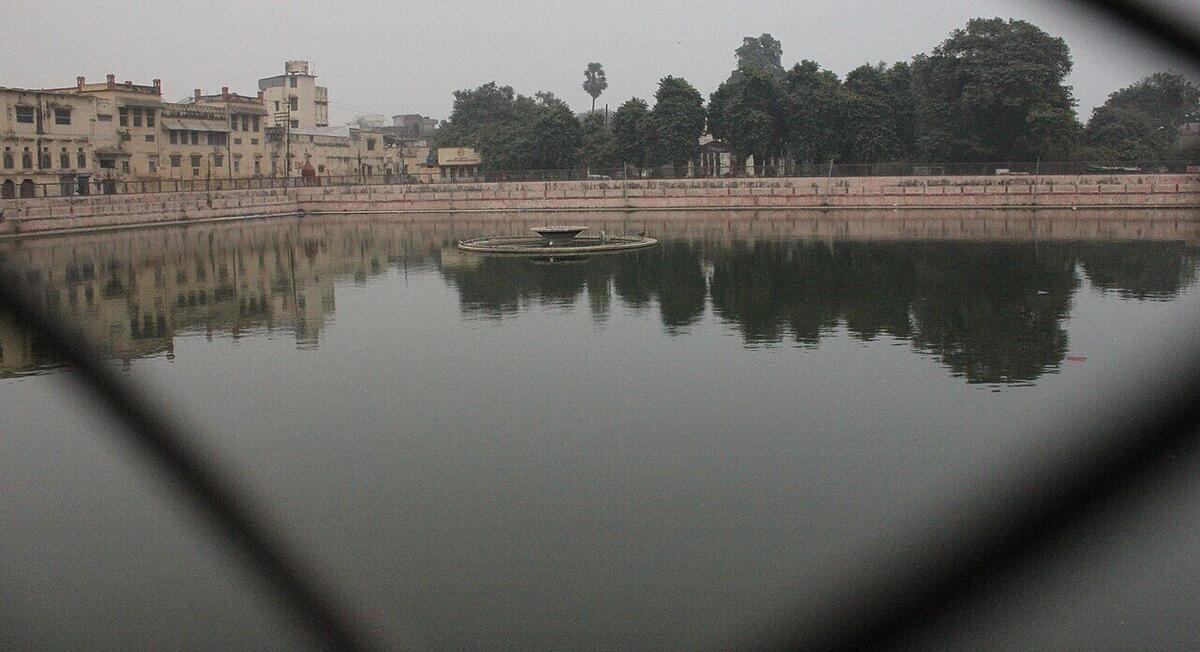
Durga Mandir and Durga Kund: The Red Temple Where the Devi Chose to Stay
The 18th-century red temple of Durga Kund — built by Rani Bhabani of Natore around a murti tradition holds no sculptor ever made, beside a sacred tank older than memory. History, legends, Navratri in Kashi, and a pilgrim's visit plan.