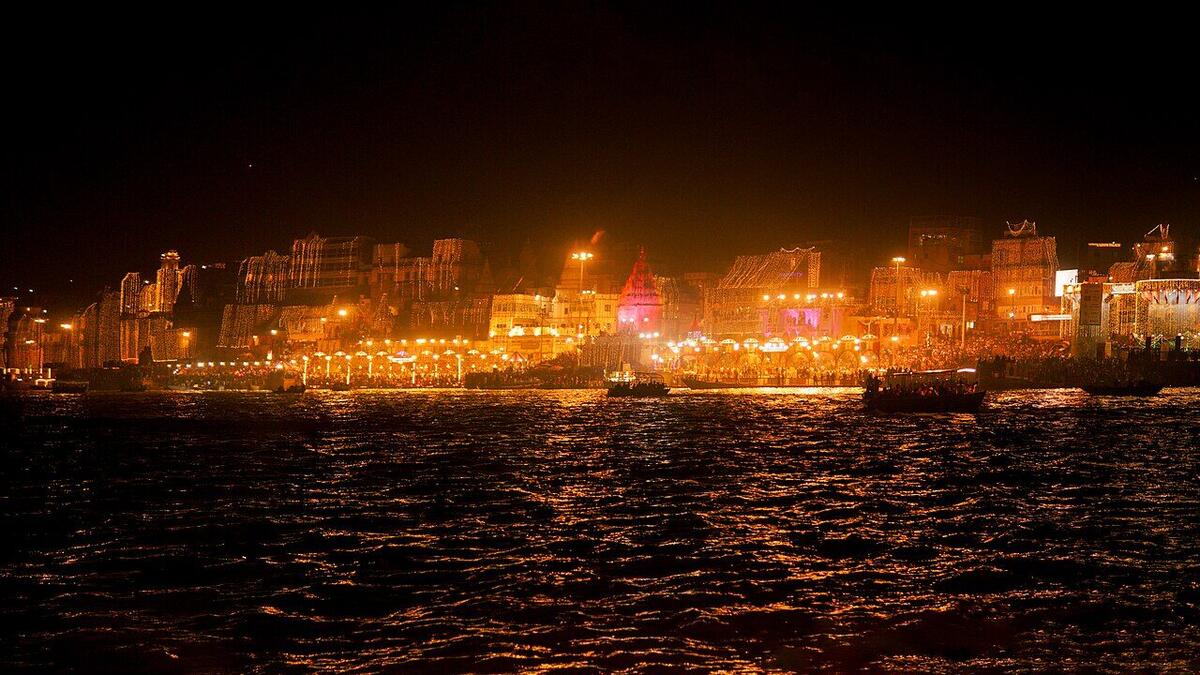
Every pilgrim who comes to Kashi hears first of Dashashwamedh — the roar of the evening aarti, the crush of the crowds, the seven flames. Fewer are told that the city keeps a second, gentler door at its southern end, and that for many families it is the better one to enter by. Assi Ghat anchors the great crescent of ghats where, tradition holds, the Assi stream once flowed into the Ganga — and it is here, in the dark before sunrise, that Banaras performs its most contemplative daily ritual: the Subah-e-Banaras morning aarti, sung to a river that has not yet caught the light.
We begin more of our yatras at Assi than anywhere else in the city, and this guide gathers everything we tell our own pilgrims: the story of the confluence, the morning aarti and its shifting seasonal clock, why the ghat suits elderly yatris and young children better than the great central ghats, and an honest word about the cafes and the crowd of students and travellers who share these steps — because a pilgrim deserves to know exactly what he is walking into, and why none of it diminishes the sanctity of the place.
The Confluence That Named a Ghat
The name Assi is the name of a river. The Kashi Khanda tells that after the Devi slew the demons Shumbha and Nishumbha, she cast down her great sword, and where it struck the earth a stream sprang up — the Assi — which flowed east to meet the Ganga at the city's southern edge. The sangam of the two rivers was counted among the most purifying bathing places of Kashi: the texts call this southern tirtha Saimbeda, and hold that a snan here at the confluence carries the merit of pilgrimage to far greater and far more distant tirthas. The little river itself has dwindled over the centuries to a covered nala that most visitors never notice — but the tirtha does not dwindle. The sanctity in Kashi belongs to the place, not to the plumbing, and pilgrims have taken the confluence snan at Assi for as long as anyone has kept records.
The ghat's other great association is Goswami Tulsidas. The saint-poet of the Ramcharitmanas lived his final years in this southern quarter — his home and akhara still stand at neighbouring Tulsi Ghat, two minutes' walk north — and tradition holds that he left his body here by the Assi sangam. When you stand on these steps at dawn, you stand where the man who gave Ram to the common tongue of North India said his last Ram-nam. That is not a small thing to stand on.
Subah-e-Banaras: The Morning Aarti Before the Sun
Most cities greet the sun. Banaras goes further — it formally worships the morning itself. Subah-e-Banaras ("the morning of Banaras") is a daily dawn programme begun on the ghat's upper platform in November 2014, and in the years since it has grown into one of the city's beloved daily rituals. It unfolds in movements, like a raga: Vedic chanting in the brahma-muhurta darkness, then the morning Ganga aarti — young pandits with lamps facing the river as the east turns pale — then a havan, then classical musicians offering the morning ragas, and finally an open yoga session on the platform as the sun clears the far bank. The whole arc runs roughly two hours, it is free, and no one will ask who you are or where you are from.
The clock shifts with the seasons, because the whole point is to finish the aarti as the sun rises. In summer the aarti begins around 4:45–5:00 AM; in winter closer to 5:30–6:00 AM. Timings also shift on festival days and big snan dates, so treat these as the normal rhythm and confirm locally for your specific morning — your hotel, your boatman, or we ourselves will know. Arrive twenty minutes early, take a place on the steps facing the river, and let the city wake up around you.
We are asked, often, how the morning aarti compares to the famous evening spectacle at Dashashwamedh. Honestly: they are different prayers. The evening Ganga Aarti is Kashi at full volume — thousands of witnesses, fire against the dark, devotion as grandeur. Subah-e-Banaras is Kashi speaking quietly — a few hundred people, birdsong under the shlokas, the river turning from grey to gold. Many of our pilgrims, especially the elderly ones, tell us afterwards that the morning moved them more. Do both if your days allow it. If you must choose one aarti to sit through from beginning to end without a crowd pressing your back, choose this one.
The Morning Snan and the Boats
Assi is one of the finest ghats on the river for the Ganga snan. The steps are broad and shallow, the bathing areas are well used and well watched, and there are changing facilities close by — practical mercies that matter greatly when you are helping an elderly mother down to the water. Take the snan after the aarti, at the traditional sangam edge of the ghat, and remember the simple disciplines: bathe in modest clothing, keep soap out of the river, and do not swim out — the Ganga's current is stronger than her surface admits.
Assi is also the classic southern starting point for the dawn boat ride up the crescent of ghats — in our view the single finest thing a pilgrim does in Kashi after darshan itself. Boats gather at the foot of the steps from first light; the row from Assi north past Tulsi, Harishchandra, Kedar and Dashashwamedh to Manikarnika and back takes 75 to 90 minutes. We have written the full hour-by-hour plan for this morning — boat, snan, and Vishwanath darshan in the right order — in our two-day Kashi itinerary.
Why Families and Elderly Pilgrims Love Assi
We plan yatras for three generations travelling together, and Assi Ghat solves problems that the central ghats cannot. Consider what it offers:
- Space. The ghat opens onto a wide plaza rather than a squeeze of lanes. Wheelchairs and slow walkers can actually reach the upper platform; autos and e-rickshaws drop you a short, flat walk away, where at Dashashwamedh the last half-kilometre is on foot through dense lanes.
- Gentler crowds. Even at aarti time the gathering is in the hundreds, not the thousands. Children can sit at the front and see; grandparents are not standing ninety minutes in a crush.
- An evening aarti of its own. Assi holds its own Ganga aarti at sunset — smaller and easier than Dashashwamedh's, with room to sit on the steps. For a family with very young children or very elderly members, we often recommend the Assi evening aarti outright, and keep Dashashwamedh for a boat-seat viewing another night.
- Food and rest within reach. Clean places to eat, drink chai, and use a washroom are minutes away — which, any parent will tell you, is half the yatra.
Our guide to Varanasi with children builds whole mornings around this ghat for exactly these reasons.
The Cafes and the Crowd: An Honest Word
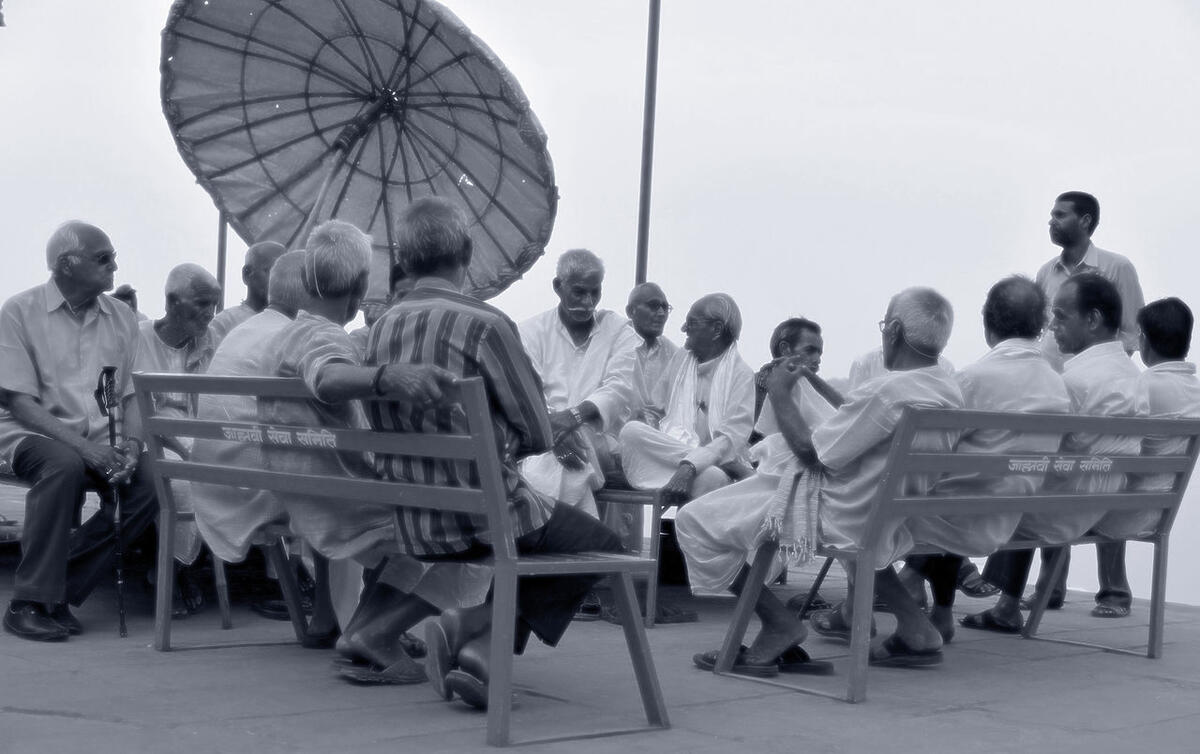
Let us say plainly what some guides tiptoe around. Assi is also the ghat of students from the nearby university, of long-staying foreign travellers, of poetry evenings and guitar players and cafes serving pancakes and espresso in the lanes behind the steps. On a winter evening you will hear three languages in thirty steps, and some pilgrims arrive expecting only bells and find this mixture disorienting.
Our counsel: do not let it trouble you, because it has never troubled Kashi. This city has absorbed scholars, wanderers and seekers of every description for three thousand years; the students debating on the steps are the same species as the debating pandits of every century before them. The ghat's sanctity does not live in a hush — it lives in the river, the confluence, the daily aarti, and the snan, and all of these continue at full strength through every espresso poured a lane away. If anything, the cafes serve the pilgrim honestly: a clean breakfast after the dawn snan, a place for tired legs at noon, a hot drink after the evening aarti. Use them without guilt and without confusion about why you came. And if you want the ghat at its most purely devotional, come at dawn — the seekers of the morning are all seeking the same thing.
A Pilgrim's Day Built Around Assi
5:00 AM — Subah-e-Banaras aarti on the platform (winter: closer to 5:30; confirm locally). 6:15 AM — Ganga snan at the confluence edge, or straight into a boat for the dawn ride up the ghats. 8:00 AM — kulhad chai on the steps, breakfast in the lanes. Morning — walk two minutes north to Tulsi Ghat for darshan at the saint's akhara, then onward by auto to the temples of the southern city: Sankat Mochan, Durga Kund, Tulsi Manas — all within ten minutes' ride. Midday — rest, as every wise pilgrim in Kashi does. Sunset — return for the Assi evening aarti, or take a boat from here to watch Dashashwamedh's aarti from the water. There are few better-shaped days in this city.
Questions Our Pilgrims Ask About Assi
Is the Ganga snan at Assi safe for the elderly? As safe as the river offers anywhere in the city, and safer than most: broad, shallow-stepped bathing areas, other bathers always present, and railings and chains at stretches of the waterline. Our rules for elderly yatris are unbendable — enter holding a younger arm, stay within a step or two of the edge, bathe after sunrise when the steps are visible and the first chill is off the air, and never bathe alone. Where a full snan is unwise, an argha — pouring Ganga jal over the head and offering it back to the river with a prayer — carries the intention completely, and no shastra was ever offended by prudence.
What does the dawn boat cost? Prices move with season and festival, so take this as shape rather than gospel: a seat in a shared rowing boat is modest; a private boat for a family is negotiated by the hour and rises steeply on festival mornings — on Dev Deepawali it is another economy altogether. Agree the price, the route and the duration before you step in, plainly and pleasantly. If bargaining at dawn is not your idea of a pilgrimage, this is precisely the kind of small friction we remove when we arrange the morning ourselves.
Morning aarti at Assi or evening aarti at Dashashwamedh — if we can only do one? For spectacle, Dashashwamedh and it is not close. For prayer you can hear yourself praying, Assi at dawn. Families with young children and elderly members usually get more from the Assi morning — seated, unhurried, cool — and our full comparison lives in the Ganga aarti guide.
Is Assi too far from the main temples? It is the near end, not the far end, for half of devotional Kashi: Sankat Mochan, Durga Kund, Tulsi Manas and the BHU temple are all closer to Assi than to Godowlia. Only the Vishwanath corridor and Kaal Bhairav sit meaningfully north — twenty to thirty minutes by auto, less by boat at dawn. Many of our families sleep near Assi precisely for the quiet, and treat the old city as a morning expedition.
Reaching Assi, and When to Come
Assi Ghat sits at the southern end of the riverfront, roughly 20–25 minutes by auto from the railway station and ten minutes from the Lanka gate of the university, at the end of a straight, drivable road — no lane-maze required. The ghat is at its best from October to March, when the mornings are cool and the aarti crowd is wrapped in shawls; in the monsoon the river climbs the lower steps and the boats may stop, though the aarti moves up the platform and continues. On Kartik Purnima — Dev Deepawali — Assi becomes one of the great galleries of the lamp-lit crescent, and every seat on every step is taken by late afternoon.
Assi is where we bring pilgrims on their first morning, because it teaches the city's true lesson gently: that in Kashi the extraordinary happens daily, at dawn, free of charge, to anyone willing to wake for it. If you would like that first morning arranged — boat, aarti, snan and all, in the company of someone who greets this ghat every week — our Kashi Yatra packages begin exactly here. Har Har Gange.
Related articles
Varanasi in Winter: Dev Deepawali, Fog on the Ganga, and the Season of Malaiyo
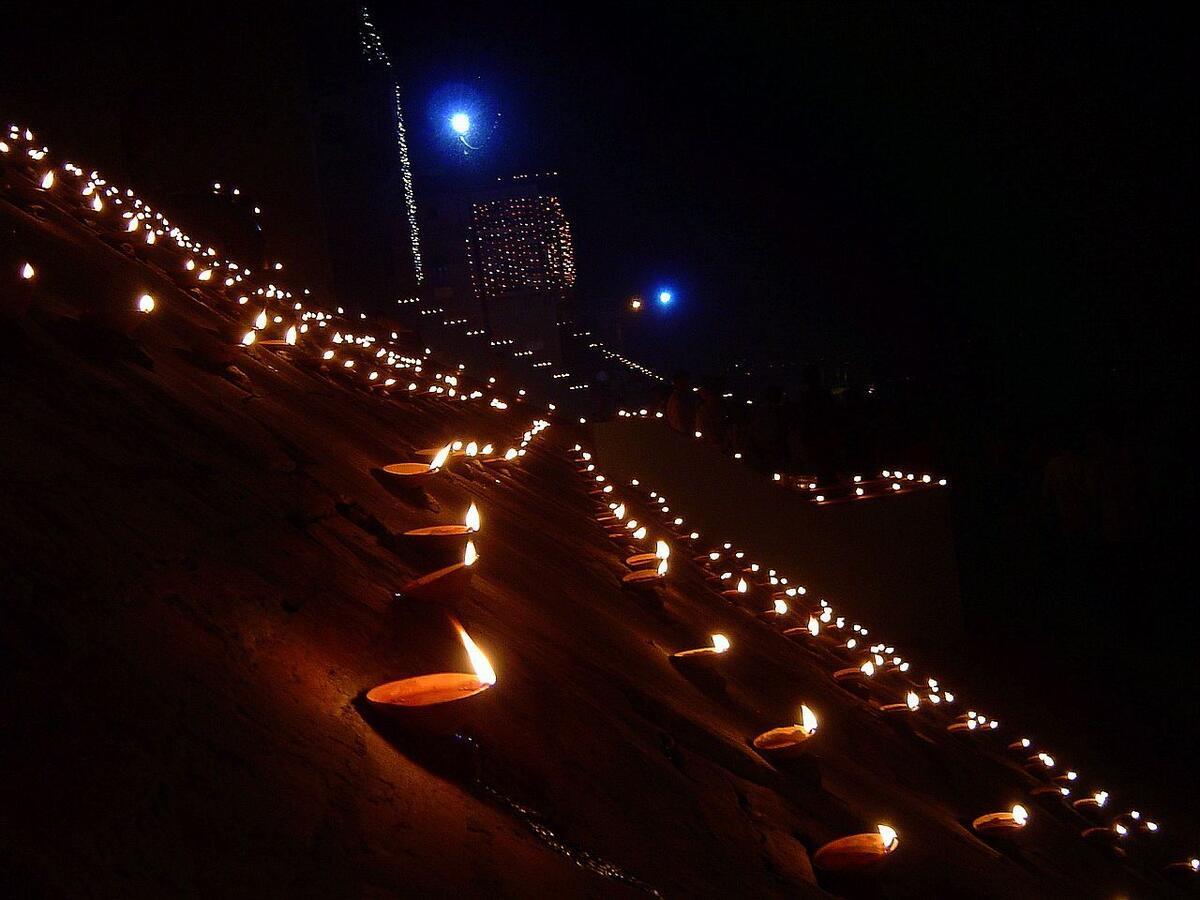
November to February is Kashi at its kindest and most crowded — Dev Deepawali's lakhs of lamps, fog-wrapped dawn boat rides, the dawn-only dessert called malaiyo, what to pack, and why winter yatras must be booked months ahead.
Tulsi Manas Mandir: The Temple Built Where the Ramcharitmanas Was Born
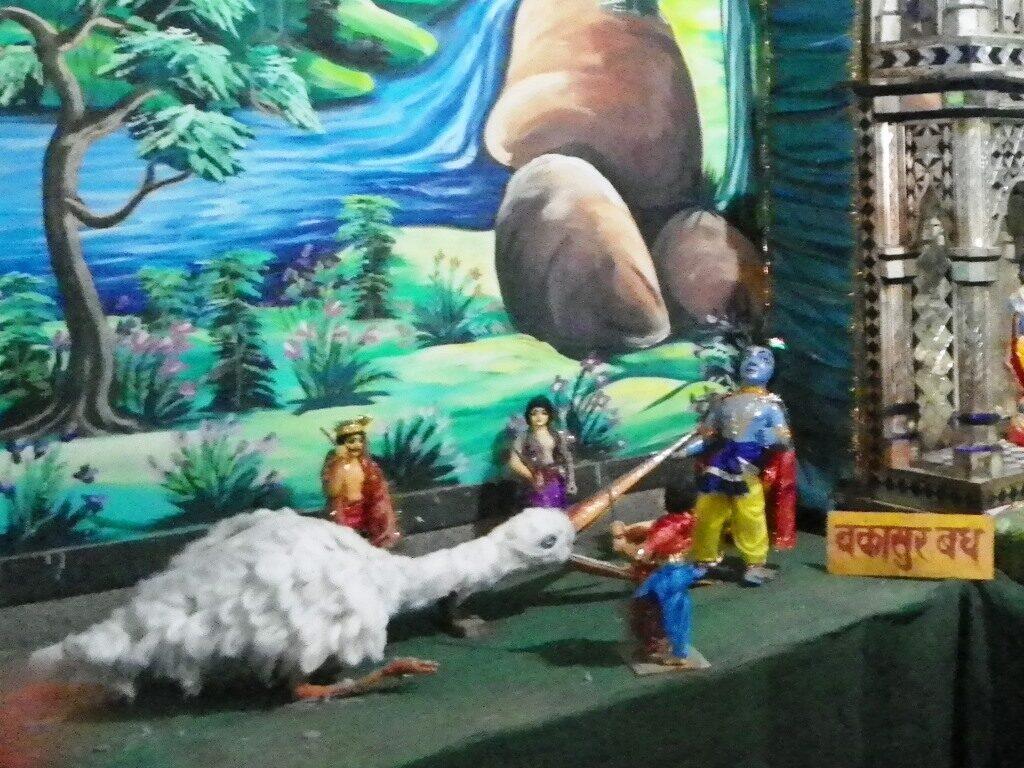
On the ground where Goswami Tulsidas composed the Ramcharitmanas stands a white marble temple whose walls carry his verses end to end. The story of the people's Ramayana, the moving tableaux upstairs, the Durga Mandir pairing, and a perfect evening plan.
Durga Mandir and Durga Kund: The Red Temple Where the Devi Chose to Stay
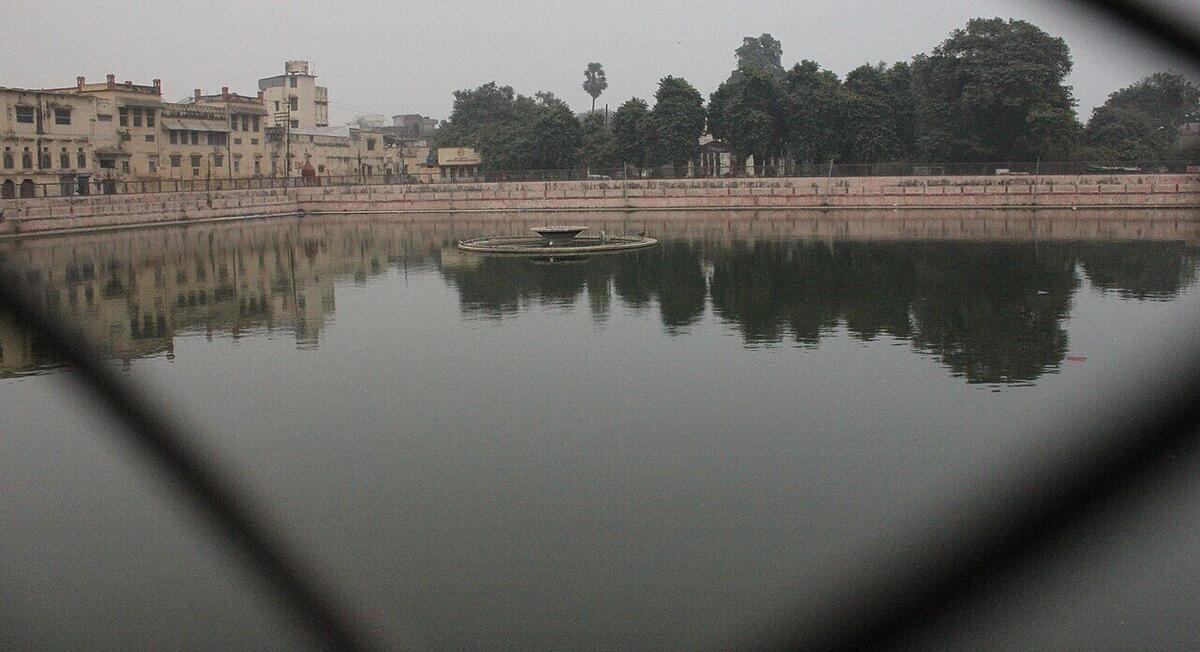
The 18th-century red temple of Durga Kund — built by Rani Bhabani of Natore around a murti tradition holds no sculptor ever made, beside a sacred tank older than memory. History, legends, Navratri in Kashi, and a pilgrim's visit plan.